

6 Tools to Track Anthropic and Claude AI Token Usage (2026)
 Chris Shuptrine
•
Jun 11, 2026
•
13 min read
Chris Shuptrine
•
Jun 11, 2026
•
13 min read

Compare the 6 best tools to track Anthropic and Claude AI token usage in 2026, and stop overspending on the Anthropic API and Claude.ai seats.
Ask about this article
Opens Claude in a new tab to answer, using this article as the source.
Claude token spend got harder to predict in 2026, not easier. The Claude Opus 4.7 tokenizer that shipped in April counts more tokens for the same text than the models before it. Anthropic’s migration guide puts the range at “roughly 1x to 1.35x as many tokens when processing text compared to models before Claude Opus 4.7” (Anthropic), and its pricing docs give the typical case as “approximately 30% more tokens for the same text,” noting that “the exact increase depends on the content and workload shape” (Anthropic pricing). Caching pulls the other way, because a cache hit costs 10 percent of the standard input price while a cache write costs 1.25x or 2x it, so two teams on the same model can post very different bills.
Agentic Claude Code usage widens the gap again. Anthropic’s engineering team measured it directly: “In our data, agents typically use about 4x more tokens than chat interactions, and multi-agent systems use about 15x more tokens than chats” (Anthropic Engineering). Faros AI showed where that lands on a real invoice, reporting that “one engineer, his most productive, shipping more customer-facing features than anyone else on the team, was running up $47,000 a month in AI token costs.” Anthropic’s Admin Usage and Cost APIs group usage by api_key_id, workspace_id, and model, not by person, which leaves shared-key teams without per-developer attribution by default.
The six tools below split the Claude token tracking stack into different layers. One covers SaaS seat and subscription visibility, the others handle proxy logging, gateway budget caps, prompt evaluation, and FinOps cost reporting. Pick the one that matches where your Claude spend is leaking right now. If Anthropic is just one of several providers, also see our roundup of tools for tracking AI token usage across vendors.
Claude Opus 4.7 counts up to 35 percent more tokens for the same input (Anthropic), agents use about 4x more tokens than chat and multi-agent systems about 15x more (Anthropic Engineering), and a cache hit costs 10 percent of the standard input price while a write costs 1.25x or 2x it (Anthropic pricing). The Anthropic console groups spend by API key, workspace, and model, not by the developers running the prompts.
★ = low · ★★ = medium · ★★★ = high
| Tool | Per-User Attribution | Cache & Batch Visibility | Multi-Provider Support | Enterprise Governance |
|---|---|---|---|---|
| Torii | ★★★ | ★★ | ★★★ | ★★★ |
| Helicone | ★★ | ★★★ | ★★ | ★ |
| Langfuse | ★★ | ★★★ | ★★ | ★★ |
| Portkey | ★★★ | ★★ | ★★★ | ★★ |
| Credal | ★★ | ★ | ★★ | ★★★ |
| Vantage | ★ | ★★ | ★★★ | ★★ |
Table of Contents
Torii
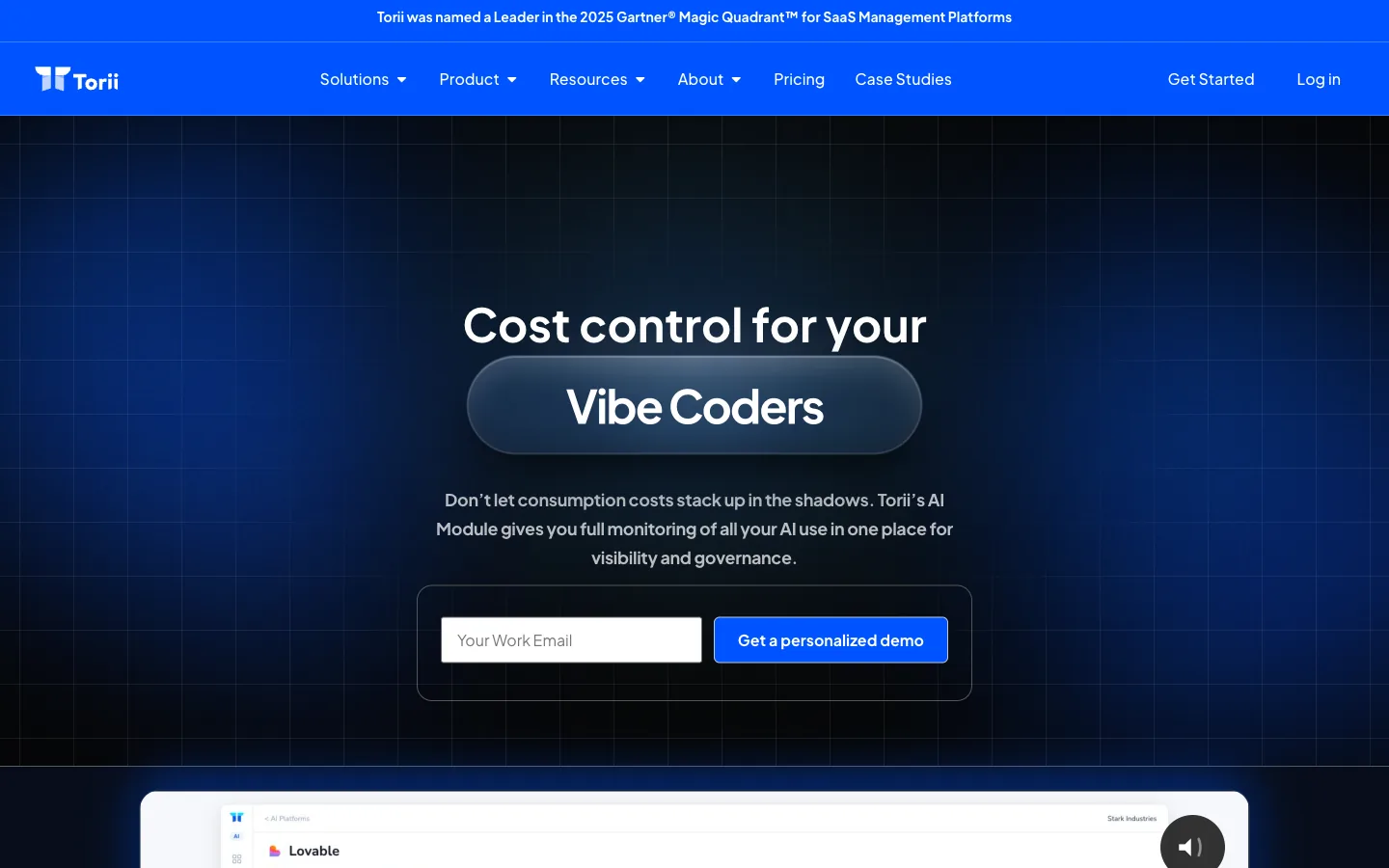
Torii tracks Claude as a SaaS application before it tracks Claude as an API line item. The platform pulls SSO logs, OAuth grants, browser activity, finance and expense data, and contract metadata to surface every Claude.ai and Anthropic account inside the company, including personal-card signups that never touch corporate SSO. Torii’s 2026 SaaS Benchmark Report, covering January to December 2025, found that 26 of the top 50 unsanctioned tools were pure-play AI products.
The Torii AI Management Platform (launched May 2026) breaks token and seat spend down by employee and model, then forecasts overages before the Anthropic invoice arrives. For broader context on this category, see our overview of AI management platforms. AWS Marketplace and Amazon Bedrock connectors capture Claude usage routed through AWS alongside the direct Claude.ai subscription. That same seat visibility feeds into periodic Claude access reviews to confirm who should still hold a license. Overlapping-tool detection flags simultaneous Claude, Copilot, and Gemini spend on the same team and ties each duplicate to a dollar figure.
What Torii adds that pure observability tools tend to miss:
- Discovery of Claude.ai accounts bought on personal cards
- Per-employee seat and token spend across Anthropic and AWS Bedrock
- Redundant Claude, Copilot, and Gemini subscription detection inside the same team
- Renewal forecasts on Claude.ai Enterprise contracts before true-up
Pros:
- Catches Claude.ai signups SSO and API logs never see
- Ties Anthropic spend to specific employees and departments
- Detects overlap between Claude and other AI subscriptions
- Forecasts Enterprise true-up exposure ahead of renewal
Cons:
- Pricing reflects enterprise-grade coverage, not entry-level point pricing
- Built for SaaS and shadow-IT environments; no on-premise deployment
| G2: 4.5/5 (303 reviews) | Capterra: 4.9/5 (26 reviews) |
Credal
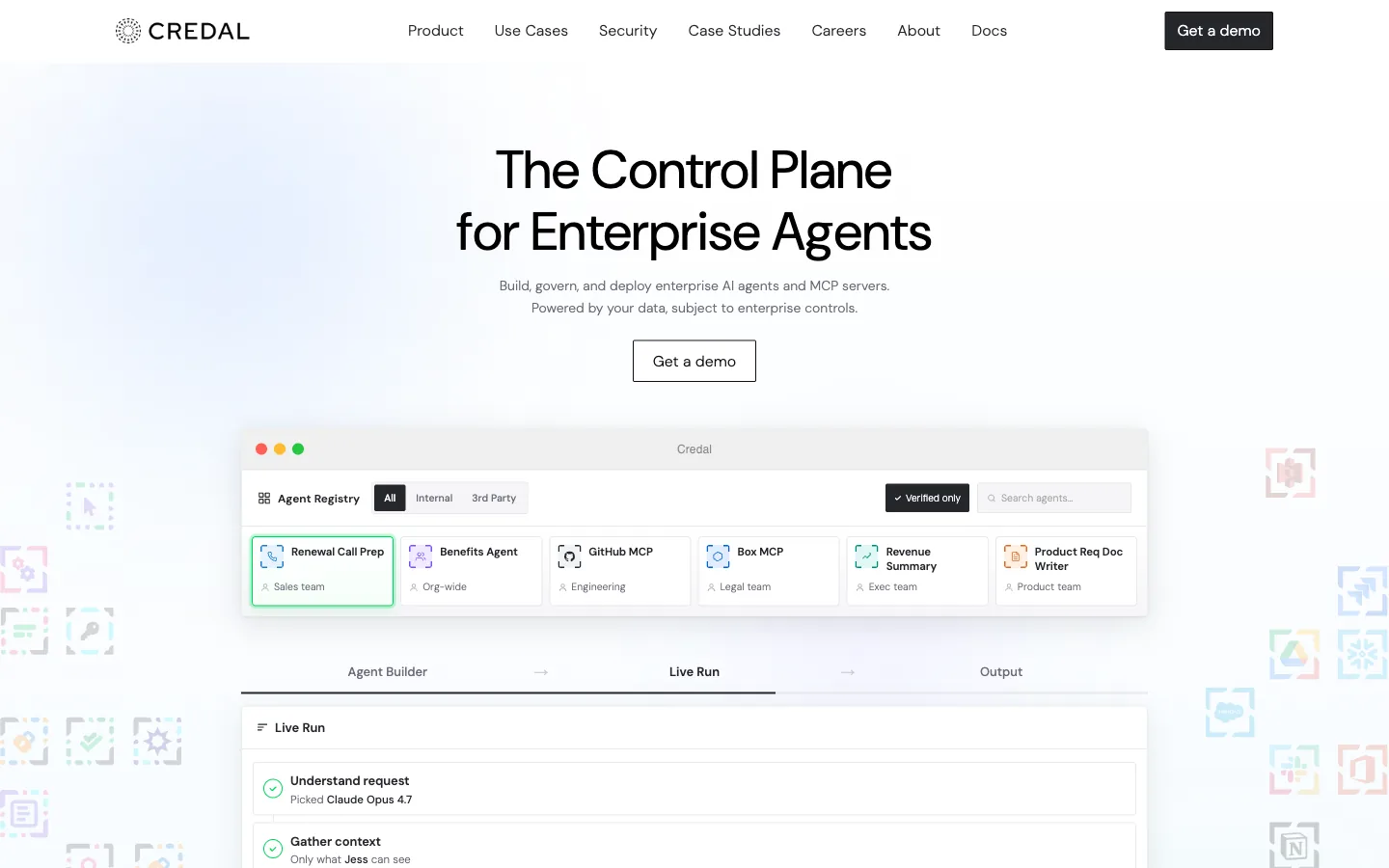
Credal logs every prompt, response, and tool invocation routed through it with full traceability to user, agent, and model. The platform’s focus is governing what Claude does with data, not measuring how many tokens Claude consumes. Automatic PII redaction runs before Claude processes each request, and source-system permissions mirror across 50+ connectors so Claude agents only access what the employee can already see.
Credal holds a zero-data-retention agreement with Anthropic, on top of SOC 2 Type 2, HIPAA, GDPR, and CCPA coverage. Audit logs export to Splunk and Datadog, and human-in-the-loop approval gates can block sensitive Claude agent actions before they fire. The Credal security overview details the governance flow.
Where Credal fits inside a Claude data governance and audit rollout:
- Per-prompt audit trails tied to specific employees and Claude agents
- DLP redaction running before Claude ever sees the payload
- Permission mirroring across Google Drive, Salesforce, and 48 other systems
- Approval workflows for high-risk Claude tool calls
Pros:
- Per-user audit trails on every Claude prompt and response
- Strong DLP and permission mirroring for regulated industries
- Zero-data-retention with Anthropic out of the box
Cons:
- Governance-first lens, not a token cost dashboard
- Heavier setup than gateway-only or SDK-only options
Helicone
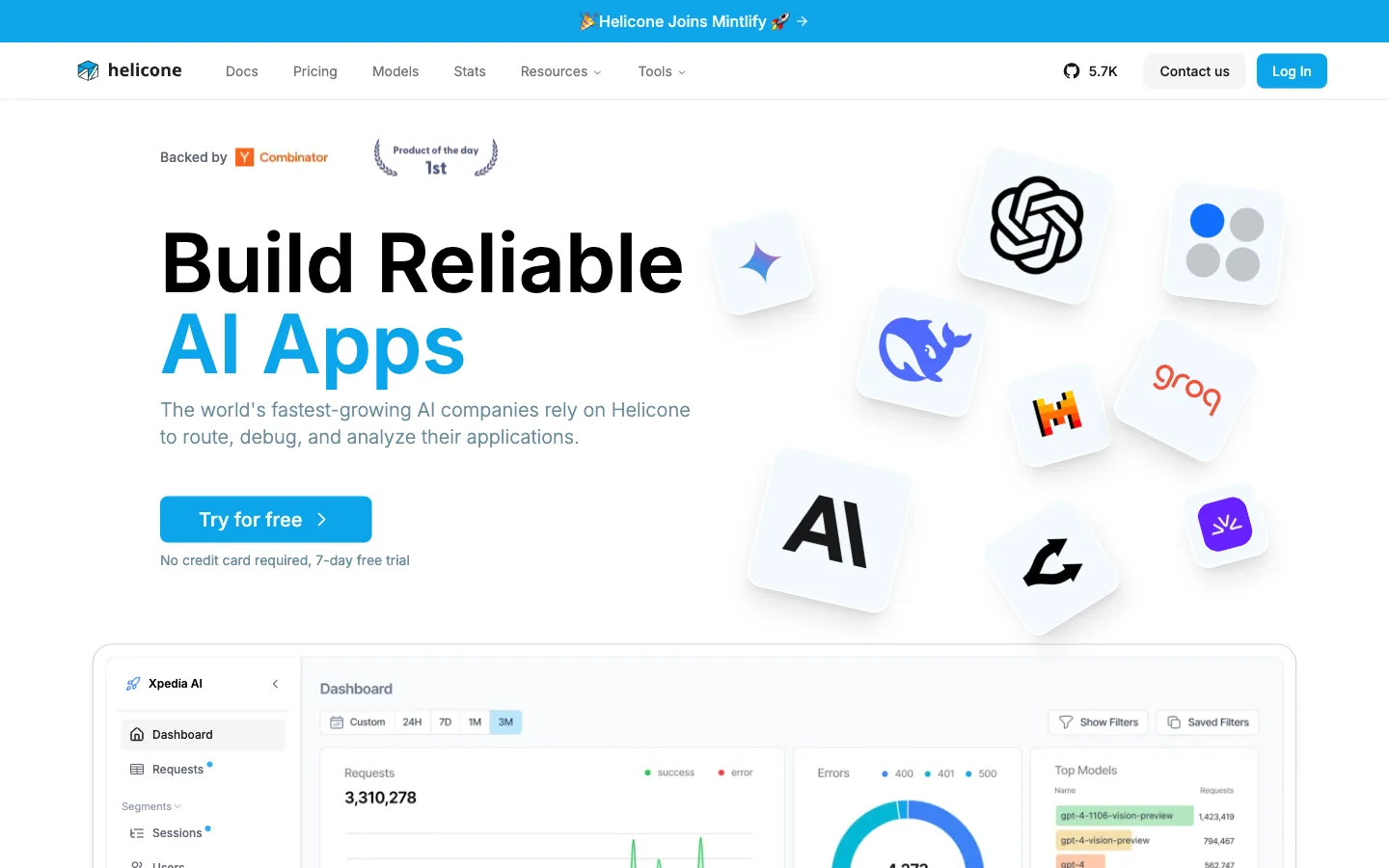
Helicone runs as an open-source proxy in front of the Anthropic API. Swap the base URL and every Claude request logs request, response, latency, exact per-request cost, and input and output token counts with no extra instrumentation. User-level attribution drops in through a Helicone-User-Id header, and Helicone-Property-* headers slice cost by environment, feature, or customer tier.
Native Anthropic prompt-caching support means cache_creation writes and cache_read hits appear as separate line items per request, priced by Anthropic at 1.25x base input for a 5-minute write, 2x for a 1-hour write, and 0.1x for a read. Helicone’s own edge cache is separate from that and runs longer: its docs put the ceiling at “365 days (max-age=31536000)” with a 7-day default (Helicone caching docs). Helicone is self-hostable, so Claude prompts and responses never leave your infrastructure if compliance demands it. The Helicone gateway guide walks through the proxy setup.
What Helicone surfaces that the Anthropic console cannot show on its own:
- Per-request Claude cost in real time, including cache writes and reads
- Custom property breakdowns by feature, customer, or environment
- User-level token attribution without code changes
- Self-host option for teams that cannot send Claude payloads to a vendor
Pros:
- Drop-in proxy with no SDK changes required
- Real per-request Claude cost including prompt-caching detail
- Self-host option satisfies strict data residency rules
Cons:
- Requires routing all Claude traffic through the proxy
- Lighter on evaluation and scoring than dedicated eval platforms
Proxy and SDK tools see what your code sends to Anthropic. They cannot see the Claude.ai Team seats, Anthropic console signups, and Bedrock subscriptions employees buy outside the engineering org. Torii surfaces every Claude account inside the company, ties seat and token spend back to specific employees, and forecasts Enterprise renewal exposure. See the Torii AI Management Platform.
Langfuse
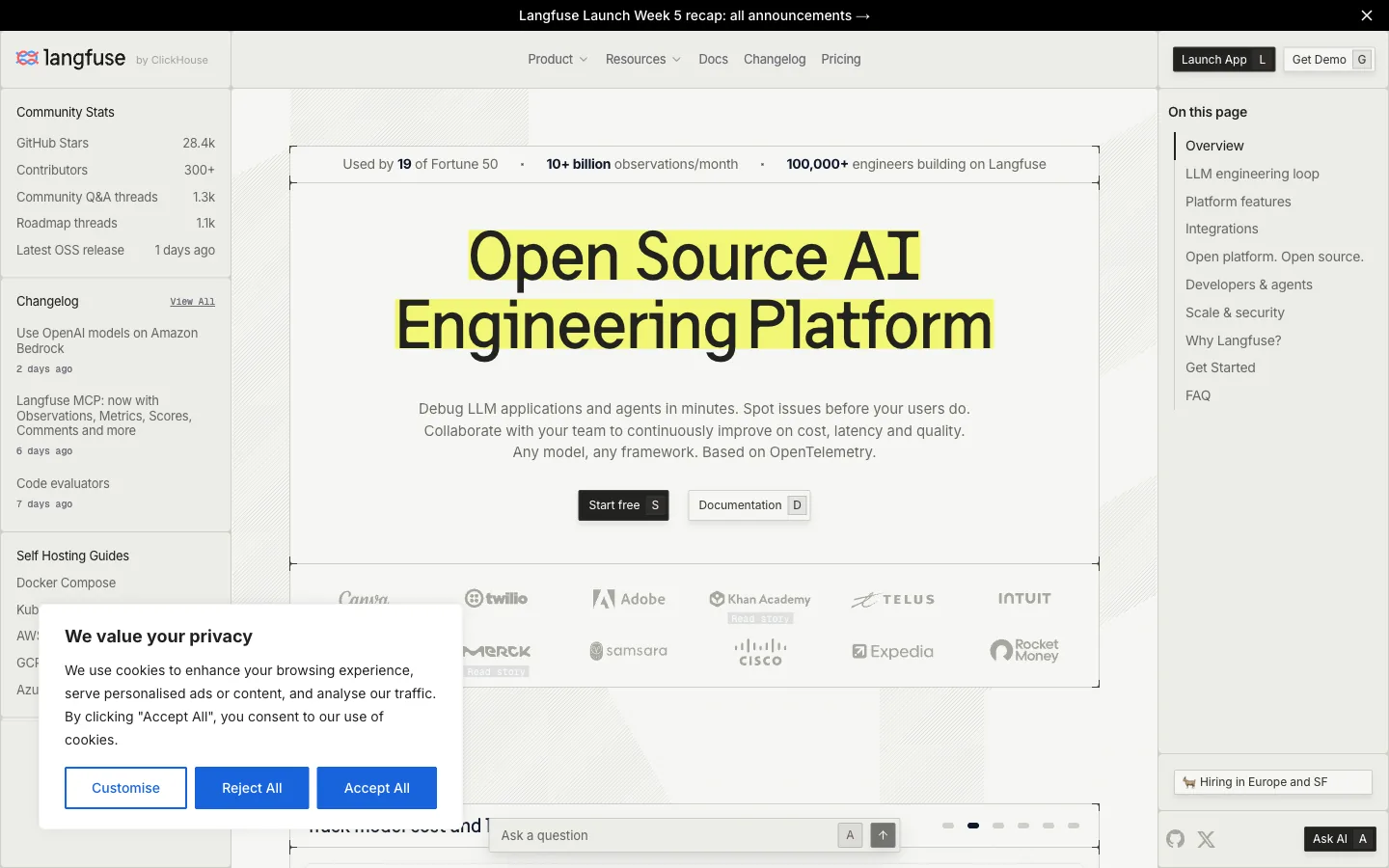
Langfuse pairs token cost tracking with structured LLM evaluation inside the same platform. The Python and TypeScript SDKs trace every Claude generation, capturing input tokens, output tokens, cache_read_input_tokens, latency, and USD cost. Ingested counts from the Anthropic response take priority over inferred values, so billing in the dashboard matches the invoice. The docs state the rule outright: “Ingested usage and cost are prioritized over inferred usage and cost” (Langfuse token and cost tracking docs).
Pricing tiers apply the higher rate when a model charges more above a 200K-input threshold, as Claude Sonnet 4.5 does, while Claude 4.6 and later models bill the full 1M-token context window at standard pricing, so the tier only matters on the older models. Dedicated integrations for the Claude Agent SDK and Claude Code trace every tool call and sub-agent invocation in multi-step workflows, which matters more in 2026 now that multi-agent runs use about 15x the tokens of a chat session. The Langfuse Anthropic integration page covers the trace structure.
Where Langfuse does double duty for teams tracking Claude spend and quality:
- Per-generation Claude token, cost, and latency trace data
- Dataset-driven evaluation, human scoring, and LLM-as-a-judge metrics
- Claude Agent SDK and Claude Code tracing across multi-step runs
- MIT-licensed, with Docker self-host and a managed cloud tier
Pros:
- Token tracking and evaluation under one roof
- Native Claude Agent SDK and Claude Code support
- Open source with Docker self-host for sensitive workloads
Cons:
- SDK instrumentation required for full trace coverage
- Less focused on gateway-level budget enforcement
Portkey
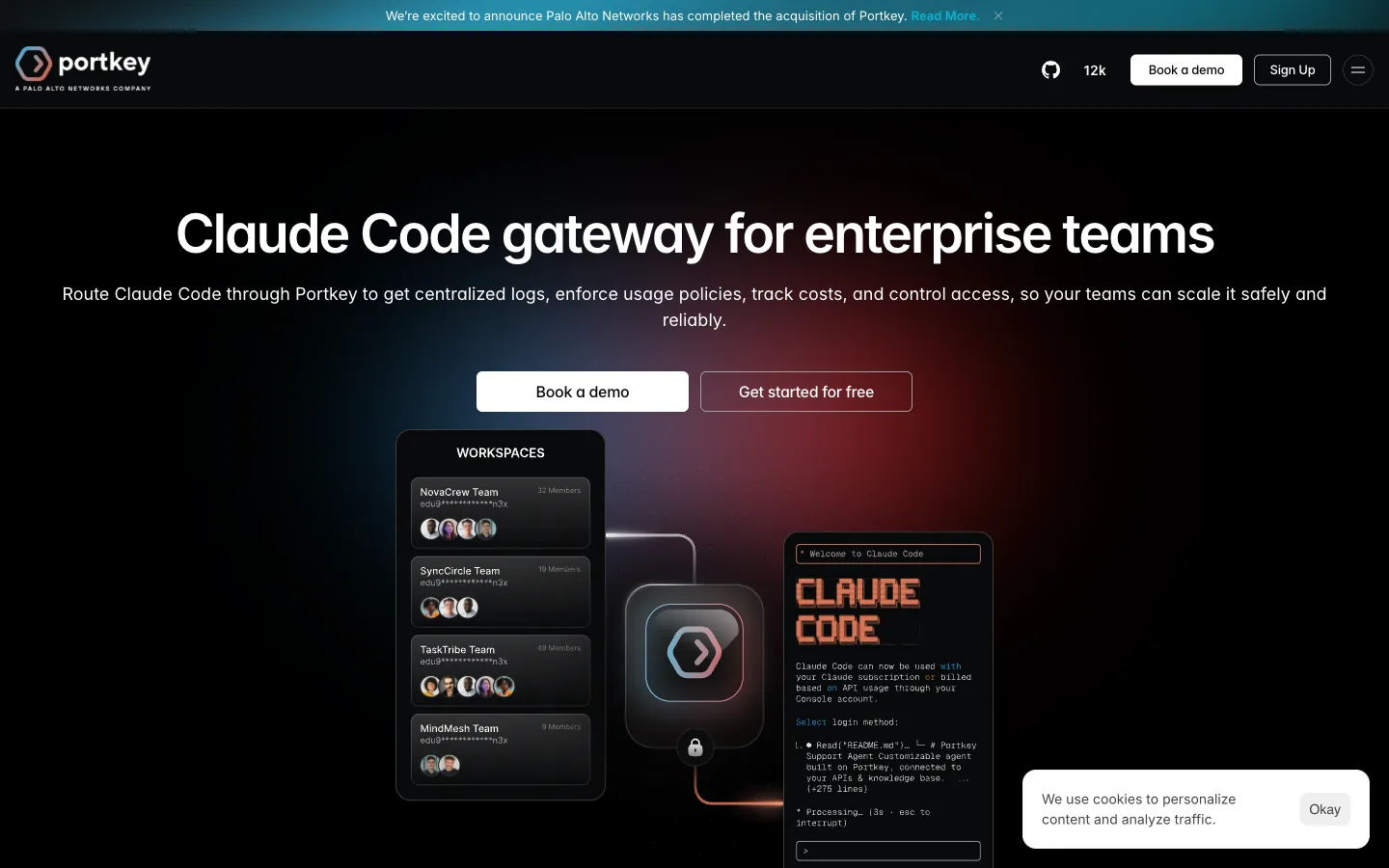
Portkey runs as a multi-provider AI gateway with virtual-key budgeting on top. The vault stores the real Anthropic API key, and the platform issues scoped virtual keys to teams, developers, or individual services. Each virtual key can carry a hard cost or token budget plus per-minute, per-hour, or per-day rate limits enforced before spend ever happens.
Every Claude request through the gateway logs against 40+ metrics with full cost attribution by user, team, route, or project. Automatic failover and load balancing route across multiple Anthropic keys to dodge rate limits, with configurable fallbacks to OpenAI or Gemini when Claude returns 5xx errors. Portkey publishes Claude Code guidance for exposing per-developer budgets and spike alerts, which catches the runaway sub-agent pattern before the invoice does. The Portkey AI gateway page covers the policy layer.
Where Portkey does the most work inside a Claude deployment:
- Hard cost and token caps on every Claude virtual key
- Load balancing across multiple Anthropic accounts
- Centralized banned-keyword, prompt-length, and approved-model rules
- Failover to OpenAI or Gemini when Anthropic is down
Pros:
- Pre-spend budget enforcement, not after-the-fact alerts
- Virtual keys give clean per-team Claude attribution
- Failover and key rotation absorb rate-limit pressure
Cons:
- Gateway introduces a network hop in front of Anthropic
- Best fit for teams running Claude across many services
Vantage
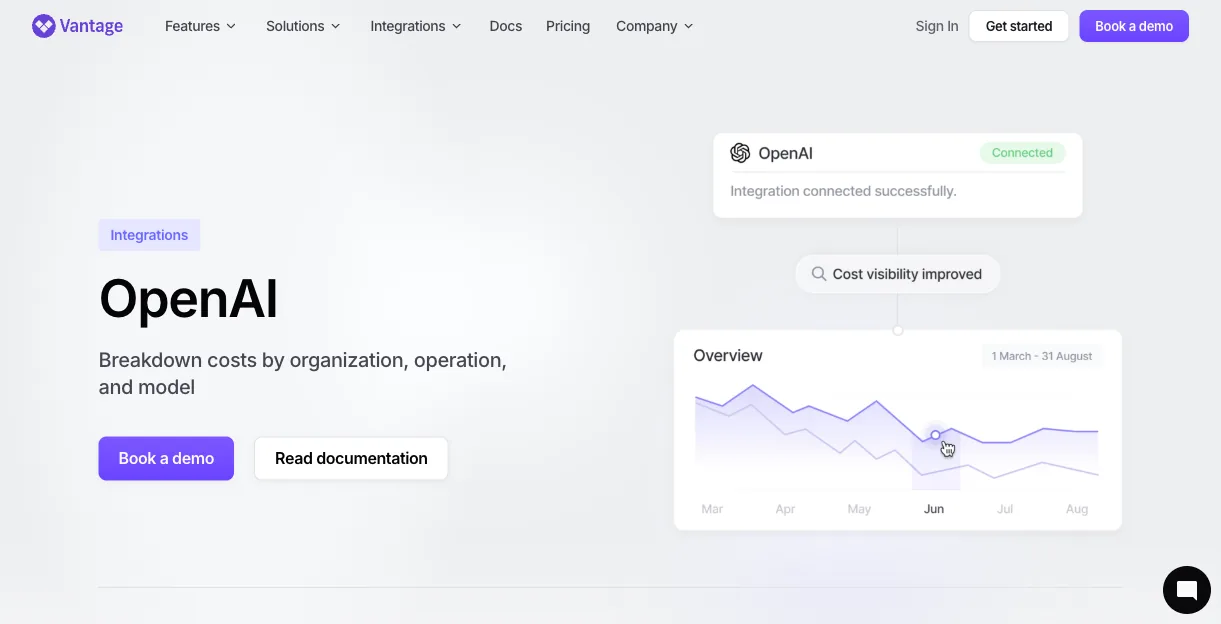
Vantage approaches Claude cost from the FinOps side rather than the engineering side. The platform consolidates Anthropic spend with AWS, Azure, GCP, Snowflake, OpenAI, and Datadog inside one normalized cost explorer for chargeback, showback, and cross-provider comparison. An Anthropic Admin key connects in read-only mode, then daily token consumption flows in broken down by model, workspace ID, API key, and service tier.
Anthropic workspace IDs map directly to team cost attribution without manual tagging, and prompt-caching impact reports at the token level so finance can measure actual cache savings against uncached input spend. Anomaly detection fires when Claude costs deviate from normal patterns, and budget alerts catch spikes well before the monthly Anthropic invoice arrives. Bedrock-hosted Claude usage appears under the AWS integration in Vantage rather than the Anthropic feed. The Vantage Anthropic integration page describes the data model.
What Vantage adds that engineering-focused tools tend to leave out:
- Anthropic spend sitting next to AWS, Azure, GCP, and Snowflake in one view
- Workspace-level chargeback with no manual tagging
- Prompt-caching savings reported as a normalized cost line
- Anomaly alerts tied to historic Anthropic spend patterns
Pros:
- True cross-cloud FinOps lens on Claude spend
- Workspace-level attribution out of the box
- Anomaly detection catches spikes before the invoice
Cons:
- Bedrock Claude usage rolls up under AWS, not Anthropic
- Daily granularity only on the Anthropic Cost API side
How to Choose a Claude Token Tracking Tool
Different Claude tracking gaps need different tools, so match the tool to where your Anthropic spend is actually leaking. Helicone and Langfuse handle per-request token detail through the proxy or the SDK, Portkey enforces budgets before spend hits the Anthropic invoice, Credal governs what Claude does with sensitive data, and Vantage rolls Anthropic into the broader FinOps picture next to AWS and GCP. If OpenAI usage sits alongside Claude in your stack, the companion roundup of tools to manage OpenAI and ChatGPT spend covers that side of the bill. Teams formalizing AI usage policies can pair these tools with one of the AI governance and policy enforcement platforms.
Torii fills the layer the gateway, proxy, and FinOps tools all leave out. It surfaces the Claude.ai seats, Anthropic console signups, and Bedrock subscriptions sitting across the company, then ties seat and token spend back to specific employees and renewal dates. Pair it with one of the observability or gateway tools above, or with a dedicated AI spend management tool, for full coverage from SaaS seat down to API call.
Anthropic's own usage reports group spend by API key, workspace, and model. Torii maps that spend to named employees and departments, and flags Claude.ai seats that never appear in the API console at all. See the Torii AI Management Platform.
Frequently Asked Questions
A: "Opus 4.7 inflated token counts by up to 35% for the same input, agents use about 4x more tokens than chat and multi-agent systems about 15x more per Anthropic's own engineering data, cache writes and reads price differently, and Anthropic groups spend by API key, workspace, and model rather than by individual developers."
A: "Opus 4.7 can count up to 35% more tokens for the same input, inflating reported usage and invoices. Teams must update cost estimates, alert thresholds, and cache/batching strategies to avoid surprise overages caused by the higher token counts."
A: "Agentic Claude Code runs spawn sub-agents and extra tool calls. Anthropic reports that agents use about 4x more tokens than chat interactions and multi-agent systems about 15x more. Multi-step workflows, repeated context and tool invocations multiply token usage and can produce rapid, unexpected cost spikes."
A: "Anthropic groups usage by api_key_id, workspace_id, and model instead of by individual users. Teams that use shared or pooled keys therefore lack per-developer attribution by default, necessitating proxies, virtual keys, SDK tracing, or SaaS seat mapping to identify who spent what."
A: "Match the gap to the layer: Torii for SaaS seat discovery and employee-level spend; Helicone or Langfuse for per-request token logging and cache visibility; Portkey for pre-spend virtual-key budgets; Credal for governance/DLP; Vantage for cross-cloud FinOps."
A: "Combine approaches: issue scoped virtual keys and hard budgets with Portkey, route traffic through Helicone or instrument with Langfuse for per-request traces, use Torii to discover shadow Claude.ai seats, and add Credal for per-prompt audit trails and DLP controls."