

8 Tools to Manage OpenAI and ChatGPT Spend in 2026
 Chris Shuptrine
•
Jun 9, 2026
•
16 min read
Chris Shuptrine
•
Jun 9, 2026
•
16 min read

Compare 8 tools to manage OpenAI and ChatGPT spend in 2026 across seats, API tokens, and team workspaces for IT and finance.
Ask about this article
Opens Claude in a new tab to answer, using this article as the source.
OpenAI spend turned into the line item nobody could quite explain in 2026. Vendr’s benchmark data puts the median OpenAI buyer at $108,000 per year across 176 purchases, GPT-4.1 tokens run $2 input and $8 output per million, ChatGPT Business lists at $20 per user per month billed annually while Enterprise stays quote-only, and OpenAI put a cheaper tier in the mix in January: “Starting today, ChatGPT Go is rolling out everywhere ChatGPT is available. In the US, Go is available for $8 per month” (OpenAI). Finance teams now field three OpenAI invoices in a single month.
The real pain rarely starts with the headline subscription price. A large share of ChatGPT usage never reaches procurement at all: Torii’s 2026 SaaS Benchmark Report, covering January to December 2025, found 26 of the top 50 unsanctioned tools were pure-play AI products. Agentic workloads then multiply the token side. Anthropic’s engineering team measured the gap directly: “In our data, agents typically use about 4x more tokens than chat interactions, and multi-agent systems use about 15x more tokens than chats” (Anthropic Engineering). Finance has noticed. The FinOps Foundation’s State of FinOps survey reports that “98% of respondents now manage AI spend (up from 63% in 2025 and 31% in 2024)” (FinOps Foundation), and executive director J.R. Storment framed the stakes this way: “As companies pursue transformation via AI, with the resulting increases in AI costs, FinOps practices will be critical to enable c-level decisions about multi-year strategic technology investments across infrastructure types.”
The eight tools below tackle different slices of OpenAI and ChatGPT spend, from FinOps-grade token attribution to seat discovery to contract negotiation; teams running multiple model providers should also look at cross-vendor AI token tracking alongside OpenAI-specific dashboards. Most IT and finance teams in 2026 layer two or three to cover both per-seat and per-token bills.
$108K median annual OpenAI contract across 176 purchases (Vendr) · ChatGPT Business lists at $20 per user per month billed annually, $25 monthly, Enterprise on quote (OpenAI) · GPT-4.1 API runs $2 input and $8 output per million tokens (OpenAI) · 26 of the top 50 unsanctioned tools are pure-play AI products (Torii 2026 SaaS Benchmark Report) · 98 percent of FinOps practitioners now manage AI spend, up from 63 percent in 2025 (FinOps Foundation).
★ = low · ★★ = medium · ★★★ = high
| Tool | ChatGPT Seat Discovery | API Token Attribution | Contract Negotiation | Reviews |
|---|---|---|---|---|
| Torii | ★★★ | ★★★ | ★★ | ★★★ |
| CloudZero | ★ | ★★★ | ★ | ★★★ |
| Helicone | ★ | ★★★ | ★ | ★★ |
| Portkey | ★ | ★★★ | ★ | ★★ |
| Spendflo | ★★ | ★ | ★★★ | ★★★ |
| Vantage | ★ | ★★★ | ★ | ★★★ |
| Vendr | ★ | ★ | ★★★ | ★★★ |
| Zylo | ★★★ | ★ | ★★ | ★★ |
Table of Contents
Torii
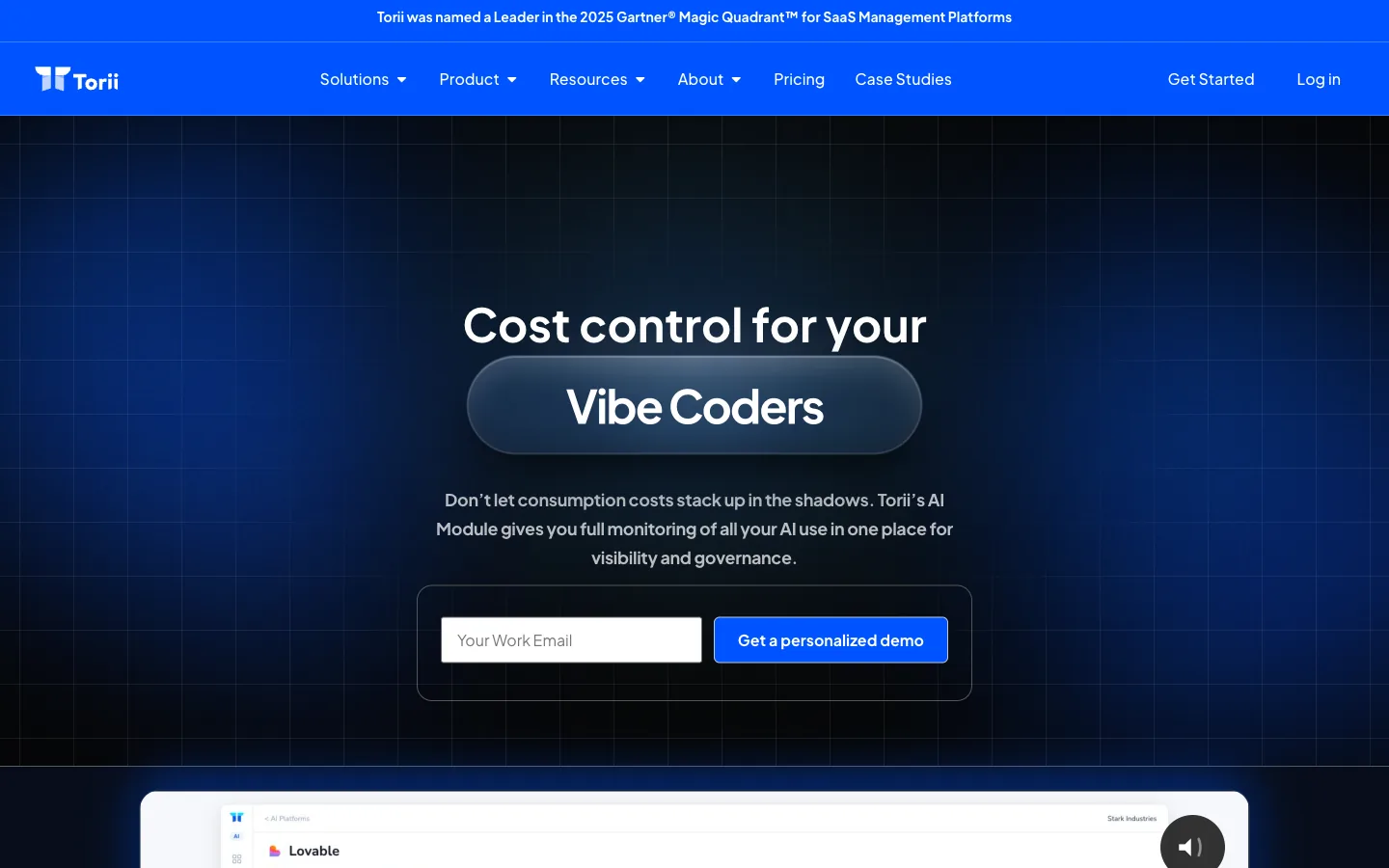
Torii sits at the SaaS management layer and treats OpenAI and ChatGPT like any other governed app inside its AI management view. The platform fuses IdP logs, OAuth grants, browser-extension signals, HRIS data, and finance feeds to tie every ChatGPT seat and API key back to a specific person, team, or project. Shadow ChatGPT accounts opened outside procurement land in the same view, alongside overlapping AI subscriptions where one team is paying for both ChatGPT Enterprise and Gemini for Workspace. The same signals feed Torii’s broader shadow AI detection workflows.
The spend side runs on real-time burn tracking tied to specific users and models. Torii forecasts monthly token spend, flags which vibe-coded internal projects are eating the most credits, and routes idle ChatGPT Enterprise seats into a renewal-reclaim workflow ahead of the 60-day clock. The Torii AI management platform page walks through the full cost loop.
Coverage stretches into the messy edges that pure FinOps tools miss:
- Personal-email ChatGPT signups discovered through browser and finance signals
- Overlapping AI app detection across the broader SaaS portfolio
- Seat-level chargeback by department for ChatGPT Team and Enterprise
- Renewal alerts 60+ days before auto-renewal on idle Enterprise seat blocks
Pros:
- Multi-source discovery catches shadow ChatGPT accounts SSO never sees
- Real-time token-burn forecasts tie OpenAI spend to specific users and projects
- License-overlap scanner flags duplicate AI subscriptions across teams
- HRIS-triggered seat reclaim runs ahead of every ChatGPT Enterprise renewal
Cons:
- Pricing reflects enterprise-grade coverage, not entry-level point pricing
- Built for SaaS and Shadow-IT environments; no on-premise deployment
| G2: 4.5/5 (302 reviews) | Capterra: 4.9/5 (26 reviews) |
CloudZero
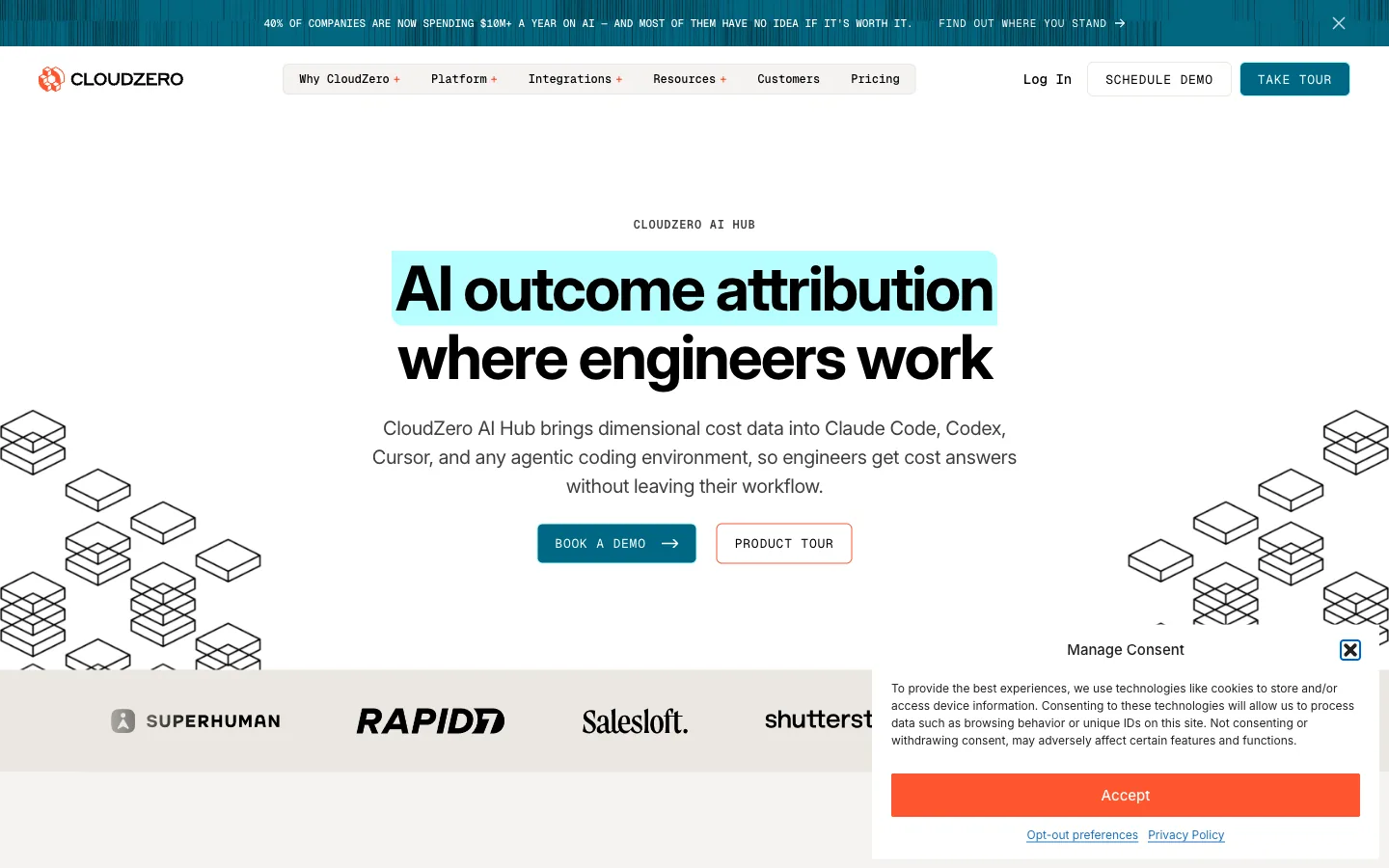
CloudZero approaches OpenAI from the FinOps and engineering angle, attributing every API dollar to the business outcome that drove it. The OpenAI integration ingests up to 12 months of historical billing data and exposes cost per user, cost per model, cost per token, and combinations of all three in the same view. Anomaly detection then flags spikes in near real time, so an agent loop running away on GPT-4.1 turns into a Slack alert before it lands on the next invoice.
The CloudZero pitch centers on unit cost tied to business outcomes, not just total spend. Engineering teams can pin OpenAI spend to a specific customer, feature, or product line, then forecast token burn against a budget that lives next to AWS and Azure in the same workspace. The CloudZero OpenAI integration page walks through the available dimensions.
Four dimensions engineering teams typically configure first inside a CloudZero workspace:
- Cost per customer for OpenAI-powered features
- Budget alerts on GPT-4.1 and GPT-4o by environment
- Anomaly detection across embeddings and fine-tuning lines
- Forecasting that rolls API spend into the broader cloud bill
Pros:
- Cost per customer attribution turns OpenAI tokens into unit economics
- Up to 12 months of historical OpenAI billing data on first ingest
- Real-time anomaly detection catches runaway agent loops before invoicing
Cons:
- Heavier lift for teams that don’t already run FinOps tagging discipline
- ChatGPT seat management sits outside the FinOps-first focus
| G2: 4.6/5 (96 reviews) | Capterra: 4.8/5 (15 reviews) |
Helicone
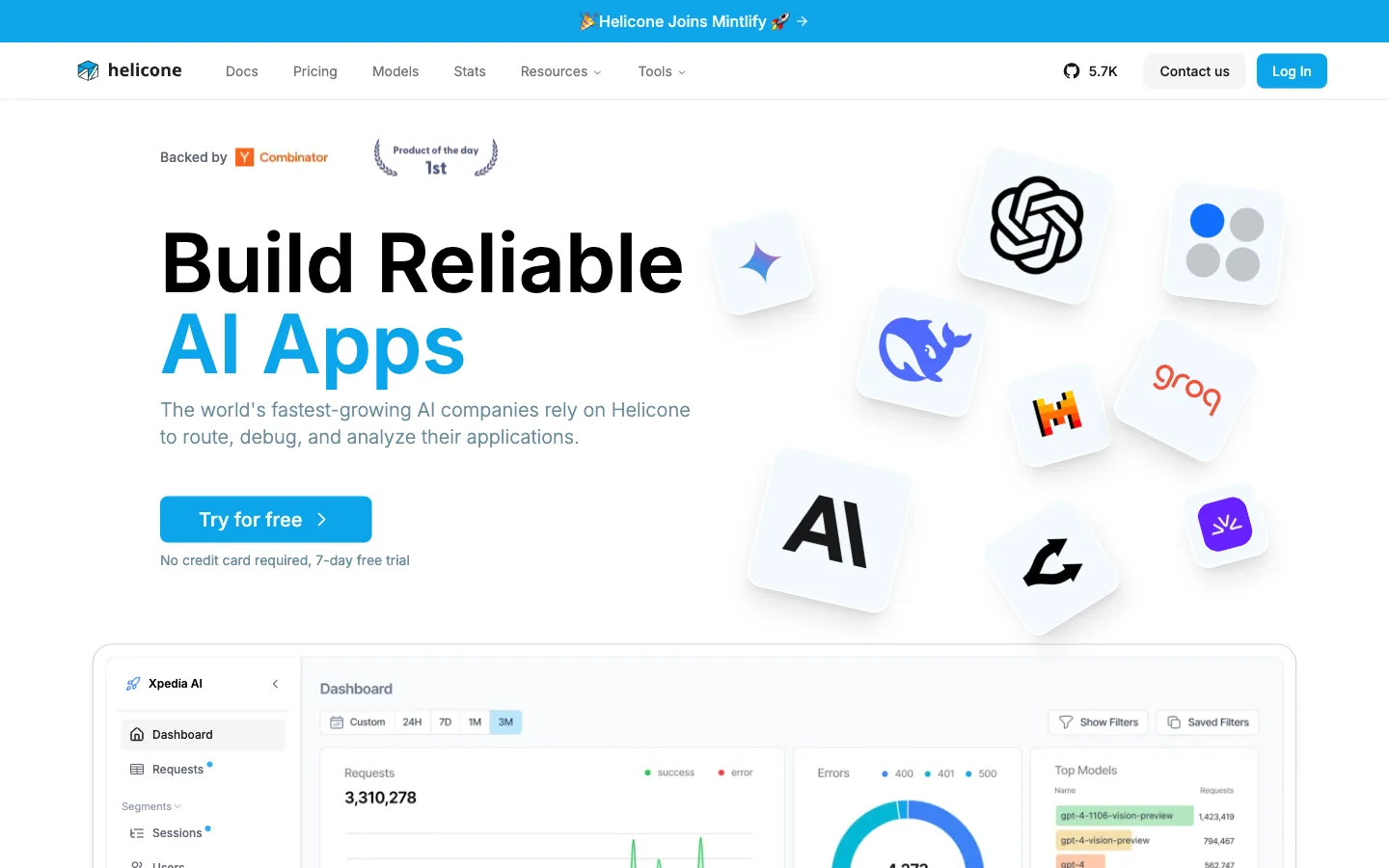
Helicone is an LLM observability proxy that drops in front of OpenAI calls with a single line of code and gives engineering per-request cost data. It tracks spend by model, user ID, and custom properties like team or feature, then exposes cost-based rate limiting in cents so a per-user or per-org cap can be enforced directly in request headers. Helicone reports that its caching “can be implemented without code changes and typically reduces costs by 15-30% for most applications” (Helicone), with the cache “Distributed across 300+ global edge locations” (Helicone caching docs), which pays off most on duplicate calls in test runs and repeat prompts.
Per-request transparency is where Helicone earns its place in an OpenAI stack. Dashboards expose cache hit rates and cost per query, so the prompts burning excess tokens become obvious before the monthly bill closes. Cache durations are configurable from one hour up to a documented ceiling of “365 days (max-age=31536000)” against a 7-day default (Helicone caching docs), which lets evaluation runs reuse responses across days of testing. Read the Helicone cost optimization writeup for the integration walkthrough.
Four situations where Helicone fits cleanly into a production OpenAI stack:
- Engineering teams shipping OpenAI-powered features at scale
- Eval pipelines that rerun identical prompts across model versions
- Per-user spending caps for B2C apps built on GPT-4o
- Cost attribution by custom feature flag or environment
Pros:
- One-line proxy integration goes live in under an hour
- Helicone reports edge caching typically trims costs 15 to 30 percent
- Per-user cost caps enforced in request headers, not application code
Cons:
- Proxy model assumes engineering owns the OpenAI keys
- Lighter on ChatGPT seat tracking; coverage is API-first
G2: 4.7/5 (24 reviews)
Portkey
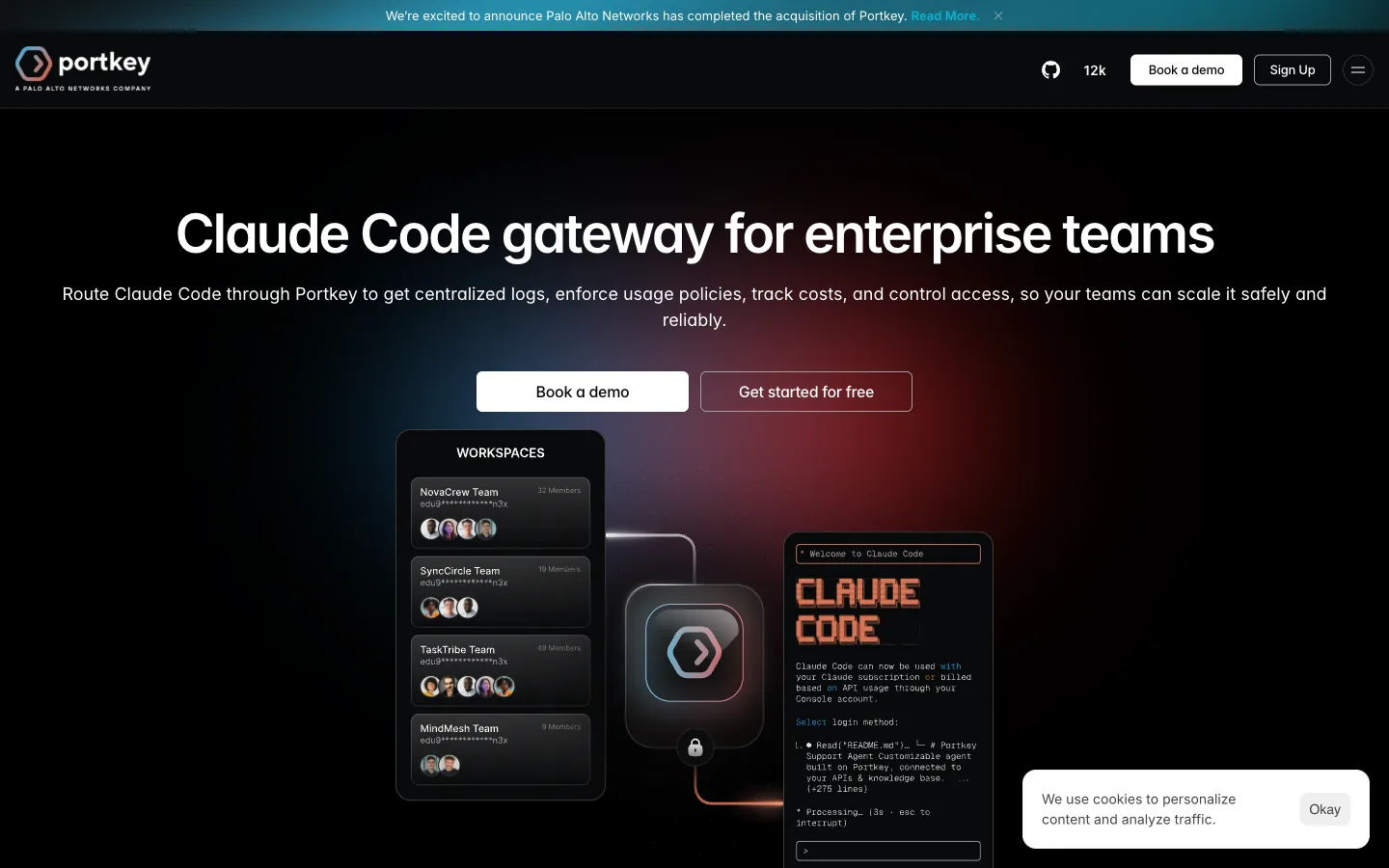
Portkey is an AI gateway built around budget guardrails and intelligent model routing for OpenAI traffic. Virtual keys carry per-team or per-use-case budget limits that the gateway enforces at request time, so a marketing team’s GPT-4.1 spend physically cannot exceed its monthly allocation. Semantic caching catches near-duplicate prompts (not just exact matches), and automatic fallback can route non-critical traffic to a cheaper model when budgets tighten or GPT-4 quality is overkill.
Real-time logs and per-use-case cost attribution give finance the dimensions it needs to govern OpenAI alongside more than 1,600 other LLMs in the same gateway. Conditional routing rules let a single application key send sensitive prompts to ChatGPT Enterprise and bulk classification calls to GPT-4o mini, all under one budget envelope. Tour the Portkey AI gateway features for the full control set.
Four spend controls Portkey teams typically activate in the first week:
- Virtual-key budgets capped by team and use case
- Semantic caching for support, classification, and embedding workloads
- Automatic fallback from GPT-4.1 to GPT-4o mini when over budget
- Per-request logs exported to data warehouses for chargeback
Pros:
- Gateway-enforced budgets stop overruns at request time, not after invoicing
- Semantic cache catches near-duplicate prompts that exact-match cache misses
- 1,600+ LLM support keeps OpenAI accountable against cheaper alternatives
Cons:
- Adds a gateway hop that teams need to monitor for latency
- Best fit when engineering is willing to route through a vendor proxy
G2: 4.8/5 (40 reviews)
Torii fuses IdP, OAuth, browser, finance, and HRIS signals to catch shadow ChatGPT, attribute API spend by user and project, and reclaim idle ChatGPT Enterprise seats before renewal. The same view rolls OpenAI cost up next to every other AI subscription in the portfolio. Tour the Torii AI management platform.
Spendflo
Spendflo blends SaaS-management software with a procurement team that negotiates ChatGPT Enterprise contracts on the buyer’s side of the table. The platform centralizes ChatGPT Team, Enterprise, and API subscriptions inside one inventory, benchmarks pricing against thousands of peer contracts, and surfaces over-provisioned seats 60+ days before renewal. A Contract Analyst AI agent then parses each OpenAI agreement and extracts renewal dates, auto-renewal triggers, and non-standard clauses for review.
The Spendflo differentiator is the human layer behind the software. Its procurement team takes the platform-surfaced insights into the OpenAI negotiation directly, using collective buying leverage from a broader customer base to push for bulk discounts and softer auto-renewal terms. Most buyers without a dedicated sourcing function lean on that hands-on assist. The Spendflo ChatGPT pricing guide covers the negotiation playbook in detail.
Four contract scenarios where Spendflo earns its keep on OpenAI deals:
- ChatGPT Enterprise renewals over $100K annually
- Multi-product OpenAI contracts that bundle API and seats
- Teams without an in-house procurement specialist
- Buyers facing 30-day auto-renewal clauses
Pros:
- Managed procurement team negotiates ChatGPT Enterprise on the buyer’s behalf
- Contract Analyst AI extracts renewal dates, auto-renewal triggers, and clauses
- Renewal alerts 60+ days out surface idle seats before they auto-renew
- Peer benchmarking draws from thousands of SaaS contracts in the dataset
Cons:
- Managed service pricing is steeper than self-serve SaaS-management tools
- Best fit for mid-market and enterprise budgets, not small teams
| G2: 4.7/5 (165 reviews) | Capterra: 4.8/5 (20 reviews) |
Vantage
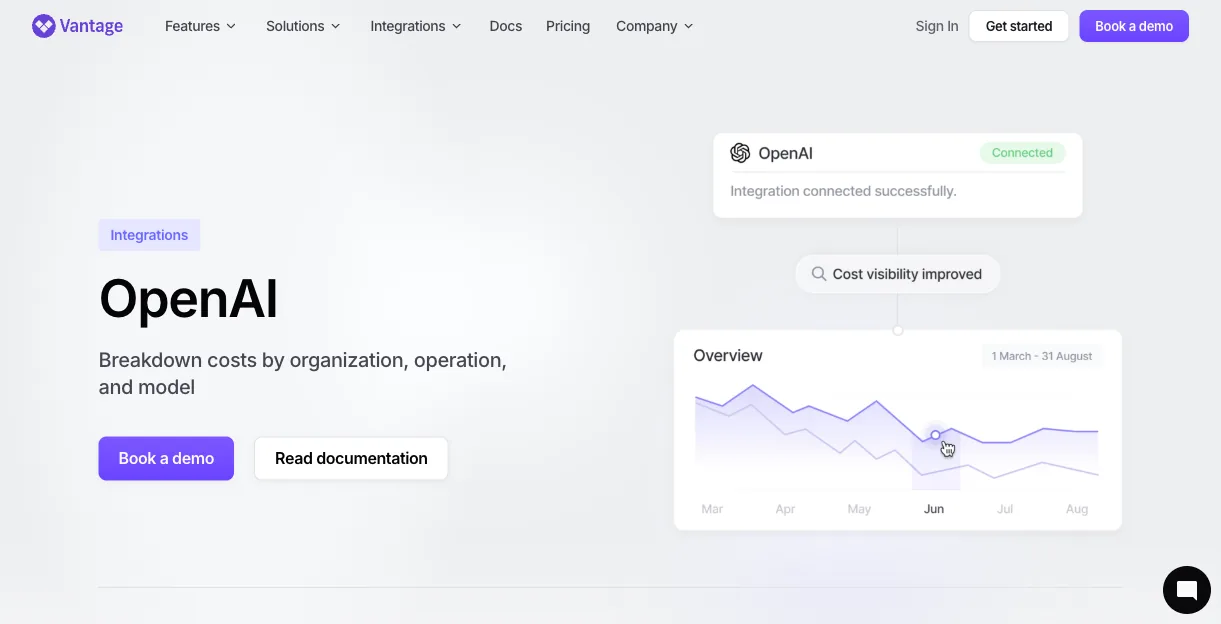
Vantage is FinOps-native and wires directly into OpenAI’s Usage API through a read-only Admin key. The integration pulls daily cost data broken down by service (Completions, Images, Embeddings), model, and subcategory like input, output, and cached input tokens. Cost grouping by billing account, OpenAI organization, or project gives team-level allocation without the manual tagging most engineering teams skip on day one. The granularity ceiling comes from OpenAI’s side, not Vantage’s: the Costs endpoint groups by “project_id, line_item, api_key_id and any combination of them” and its docs note that for time buckets, “Currently only 1d is supported” (OpenAI Admin API docs).
Virtual Tagging then layers custom chargeback logic on top of OpenAI usage, so finance can tag tokens against business units the platform doesn’t natively understand. ML-based forecasts project where token spend lands by month-end, and budget guardrails fire alerts when thresholds break. OpenAI sits inside the same dashboards as AWS, Azure, GCP, and Snowflake, so the AI bill stops living in a separate spreadsheet. Read the Vantage OpenAI integration page for the field-level breakdown.
Four common Vantage configurations teams run for OpenAI cost visibility:
- Cost grouping by OpenAI project for engineering-led teams
- Virtual Tagging chargeback by business unit
- ML forecasts on GPT-4.1 and embeddings burn
- Cross-cloud dashboards that combine AI and infrastructure spend
Pros:
- Native OpenAI Usage API integration with input, output, and cached token detail
- Virtual Tagging adds chargeback logic without changing OpenAI project structure
- ML forecasting projects monthly token burn before the bill arrives
Cons:
- FinOps-shaped UI carries a learning curve for non-engineering buyers
- No managed-procurement or seat-discovery layer for ChatGPT subscriptions
| G2: 4.7/5 (62 reviews) | Capterra: 4.6/5 (10 reviews) |
Vendr
Vendr’s angle on OpenAI cost is data, not software, drawn from anonymized closed OpenAI contracts in its benchmark dataset. Vendr reports that the “Median buyer pays $108,000 per year,” based on 176 purchases, alongside published discount tiers of “10-15% off list” at a $50K to $100K annual commitment, “15-25% off list” from $100K to $500K, and “20-35% off list, plus enterprise support and dedicated capacity options” above $500K (Vendr OpenAI benchmarks). Vendr is explicit that these “insights are based on anonymized OpenAI deals in Vendr’s dataset,” not OpenAI list pricing, so buyers see peer outcomes rather than a rate card.
Timing intelligence flags fiscal year-end as the stronger negotiation window, on the logic that quota pressure near a vendor’s close gives buyers more leverage. Vendr’s contract risk analysis also catches auto-renewal clauses and overage pricing structures before signature, which closes the gap most buyers miss until the next term begins. The platform quantifies hidden cost categories too, so finance can model the full envelope. Vendr refreshes these benchmarks as new deals close, so check the figures against the current page before a renewal call.
Four cost categories Vendr flags that inflate the real OpenAI price beyond the headline commitment:
- Fine-tuning spend layered on top of base API usage
- Embeddings spend on retrieval-heavy applications
- Enterprise support attached as a percentage of committed value
- Volume tiers that reset annually with no quarterly leverage
Pros:
- Peer benchmarks from 176 real OpenAI purchases with discount bands by spend tier
- Fiscal-timing intelligence flags the strongest renewal windows
- Contract risk analysis surfaces auto-renewal and overage clauses pre-signature
Cons:
- Benchmark data is most useful at the negotiation point, not for daily monitoring
- No real-time token-burn tracking for in-flight API spend
| G2: 4.6/5 (345 reviews) | Capterra: 4.7/5 (25 reviews) |
Zylo
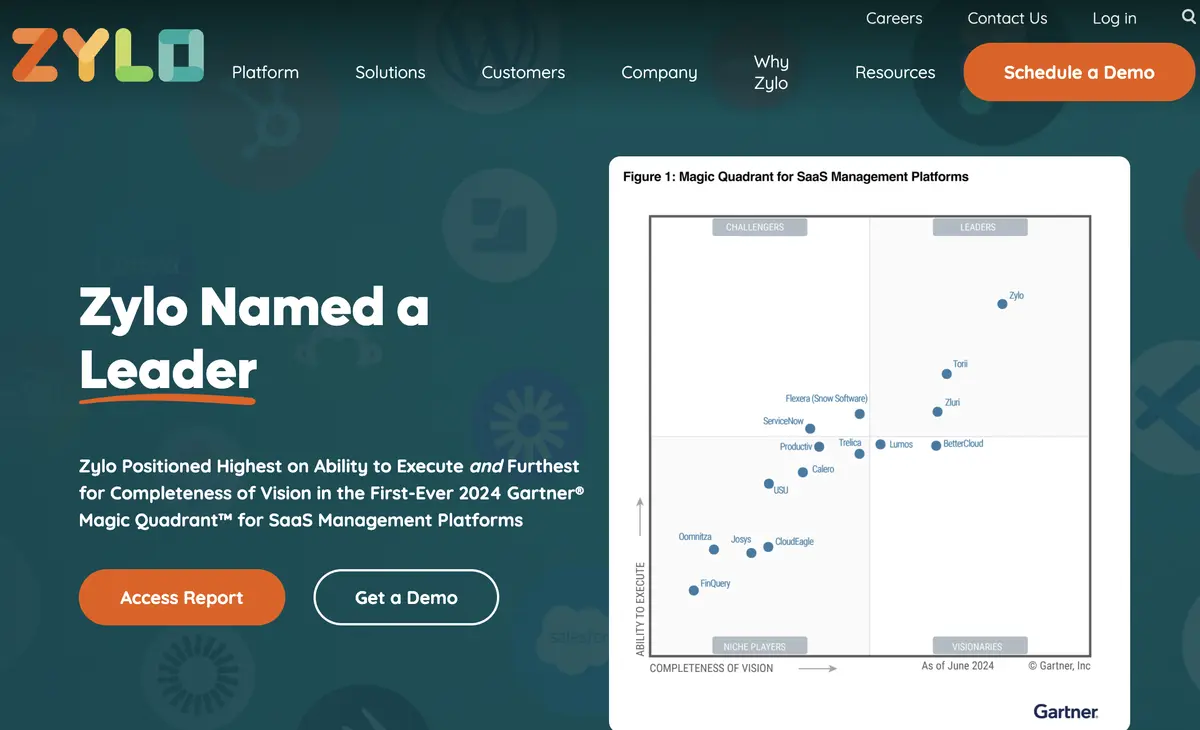
Zylo specializes in catching the OpenAI spend that lands on expense reports rather than passing through procurement, which is where a lot of ChatGPT Team and Plus activity begins inside large companies. The platform rolls AI app inventory across business units into a single discoverable inventory, on the premise that departments buy far more software than central IT does.
License utilization gets benchmarked against the unused-license rates Zylo tracks across its managed portfolio. Renewal discipline workflows then prevent auto-renewals on underused ChatGPT seat blocks, and trend reporting puts OpenAI cost in context against the rest of a company’s AI-native spend. Zylo publishes an annual SaaS Management Index that its customers use for category context.
Four areas where Zylo lands cleanly on OpenAI spend control:
- Expense-based discovery for ChatGPT subscriptions billed through corporate cards
- Renewal coordination across ChatGPT Team blocks expensed by individual departments
- License utilization benchmarking for ChatGPT Enterprise seat counts
- Trend reporting that places OpenAI spend in the broader AI-native cost picture
Pros:
- Expense-report-based discovery reaches ChatGPT subscriptions outside procurement
- Portfolio-wide unused-license benchmarks ground rightsizing conversations
- Renewal workflows prevent auto-renewal on underused ChatGPT seat blocks
Cons:
- Lighter on API token-level cost analysis than FinOps-first tools
- Discovery depth depends on finance system integration coverage
| G2: 4.5/5 (125 reviews) | Capterra: 4.5/5 (15 reviews) |
How to Choose an OpenAI Spend Management Tool
Pick the tool that matches where OpenAI cost actually escapes today. CloudZero, Helicone, Portkey, and Vantage handle the API token side; Spendflo and Vendr cover contract negotiation; Zylo catches the expense-report ChatGPT signups that never pass through procurement.
Most IT and finance teams in 2026 layer a token-level tool with a SaaS-management layer that ties spend back to people. Torii surfaces personal-email ChatGPT signups, rightsizes ChatGPT Enterprise seat counts ahead of renewal, and forecasts API burn by user and team in the same view.
Pair a token-level proxy (Helicone, Portkey, or Vantage) with a SaaS-management platform like Torii that owns shadow ChatGPT discovery, seat-level chargeback, and renewal coordination. Add Vendr or Spendflo at contract time for negotiation leverage. The token side controls daily burn; the SaaS layer keeps the per-seat bill honest at renewal.
Frequently Asked Questions
Enterprise OpenAI spend rises from per-seat ChatGPT Enterprise floors, token pricing (GPT-4.1: $2 input, $8 output per million), shadow ChatGPT use (~unsanctioned AI signups), agentic token overruns, plus added fine-tuning and embeddings that inflate total contract value.
Token-level tools like Helicone, Portkey, CloudZero, and Vantage focus on per-request cost, caching, rate limits, anomaly detection, and model routing. SaaS-management platforms such as Torii and Zylo track seats, shadow accounts, expense discovery, renewals, and license rightsizing.
Build a stack by pairing a token proxy for real-time caps and caching (Helicone or Portkey) with a SaaS-management layer for seat discovery and renewal workflows (Torii or Zylo). Add Vendr or Spendflo for negotiation leverage at contract time.
Immediate controls include gateway-enforced virtual-key budgets, per-request cost caps, semantic and edge caching, automatic model fallback, and real-time anomaly alerts. These stop overruns before invoicing and reduce token burn through routing and duplicate-response reuse.
Detect shadow ChatGPT by combining IdP logs, OAuth grants, browser-extension signals, HRIS and finance feeds, plus expense-report ingestion. Platforms like Torii and Zylo consolidate these signals to find personal accounts and corporate-card subscriptions outside procurement.
Negotiate OpenAI deals in Q4 when Vendr data shows stronger leverage. Use spend-tier benchmarks to target discounts, insist on softer auto-renewal terms, and review fine-tuning, embeddings, support, and volume-tier reset clauses to avoid hidden cost surprises.