

7 Tools for AI Token Usage Tracking Across Vendors (2026)
 Chris Shuptrine
•
Jun 11, 2026
•
14 min read
Chris Shuptrine
•
Jun 11, 2026
•
14 min read
Compare 7 tools for AI token usage tracking across vendors in 2026 to unify ChatGPT, Claude, Gemini, and Copilot usage in one view.
Ask about this article
Opens Claude in a new tab to answer, using this article as the source.
Enterprise AI spend more than tripled in a year. Menlo Ventures found that “companies spent $37 billion on generative AI in 2025,” up from $11.5 billion in 2024, and most of that bill arrives spread across four or five different vendor dashboards. OpenAI shows one number, Anthropic shows another, Gemini sits in Google AI Studio, Copilot lives inside the Microsoft 365 admin center, and Bedrock and Vertex usage rolls up under cloud invoices. Finance teams stitch LLM token monitoring together by hand each month.
The problem only gets worse as agentic workloads land in production. Anthropic’s engineering team put numbers on the jump: “In our data, agents typically use about 4x more tokens than chat interactions, and multi-agent systems use about 15x more tokens than chats” (Anthropic Engineering). Faros AI showed what that does to a single invoice, reporting that “one engineer, his most productive, shipping more customer-facing features than anyone else on the team, was running up $47,000 a month in AI token costs.”
This roundup compares seven tools that pull cross-vendor AI token usage into a single view, each from a different angle: SaaS discovery, gateway proxy, observability, governance, metering, and FinOps. AI token management in 2026 is no longer a single dashboard problem. Pick the layer that matches where your token spend is actually leaking. For teams whose spend is concentrated in ChatGPT specifically, see our roundup of tools to track ChatGPT and OpenAI token usage.
a16z's enterprise CIO survey found that "37% of respondents are now using 5 or more models as opposed to 29% last year" (a16z), while Menlo Ventures reports the top three providers "account for 88% of enterprise LLM API usage" (Menlo Ventures). EU AI Act Article 12 requires high-risk systems to keep automatic logs, and Article 99(4) sets fines up to €15 million or 3 percent of total worldwide annual turnover (Regulation (EU) 2024/1689).
★ = low · ★★ = medium · ★★★ = high
| Tool | Multi-Vendor Coverage | Real-Time Token Analytics | Cost Allocation | Ease of Setup |
|---|---|---|---|---|
| Torii | ★★★ | ★★★ | ★★ | ★★★ |
| Portkey | ★★★ | ★★ | ★★ | ★ |
| Helicone | ★★★ | ★★ | ★ | ★★ |
| Langfuse | ★★★ | ★★ | ★★ | ★ |
| Credal | ★★ | ★★ | ★ | ★ |
| OpenMeter | ★★ | ★★★ | ★★ | ★ |
| Vantage | ★★★ | ★ | ★★ | ★★ |
Table of Contents
Torii
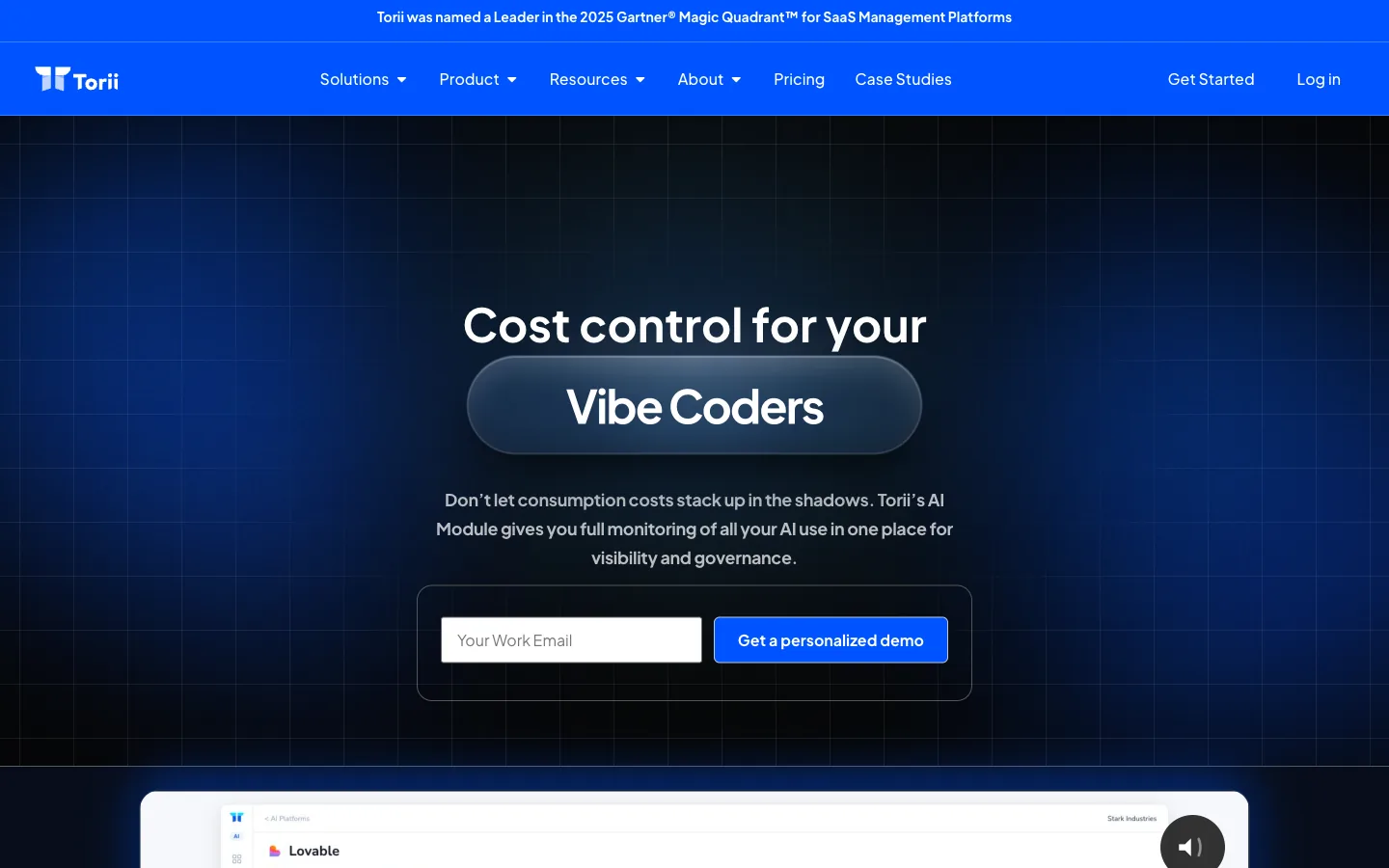
Torii treats cross-vendor AI token usage as a governance problem before it becomes an engineering one. The platform discovers every AI tool running inside the company, including ChatGPT, Claude, Cursor, Copilot, Gemini, and Midjourney, plus the OpenAI and Anthropic API accounts that sit behind them. SSO logs, browser signals, finance feeds, and SaaS integrations all feed the same dashboard, so personal-card signups surface alongside the corporate seats. For the Anthropic slice specifically, that view sits above the Claude Code usage dashboards developers run locally.
The Torii AI Management Platform breaks token spend down by user, team, and project for chargeback against internal AI projects, then forecasts run-rate before invoices land. Torii’s own 2025 dataset found that 26 of the top 50 unsanctioned tools inside customer environments were pure-play AI products. Gateway and SDK tools cannot see that shadow surface. Real-time alerts fire when spend on any one AI vendor deviates from baseline.
What Torii covers that observability and gateway tools miss:
- Discovery of AI accounts purchased on personal cards
- Per-employee token and seat attribution across providers
- Overlap detection across ChatGPT, Claude, Copilot, and Gemini
- Renewal exposure on enterprise AI contracts before true-up
Pros:
- Catches shadow AI signups gateway and SDK tools cannot see
- Ties token spend back to specific employees and departments
- Detects redundant AI subscriptions across the same team
- Forecasts enterprise renewal exposure ahead of true-up
Cons:
- Pricing reflects enterprise-grade coverage, not entry-level point pricing
- Built for SaaS and shadow-IT environments; no on-premise deployment
| G2: 4.5/5 (303 reviews) | Capterra: 4.9/5 (26 reviews) |
Portkey
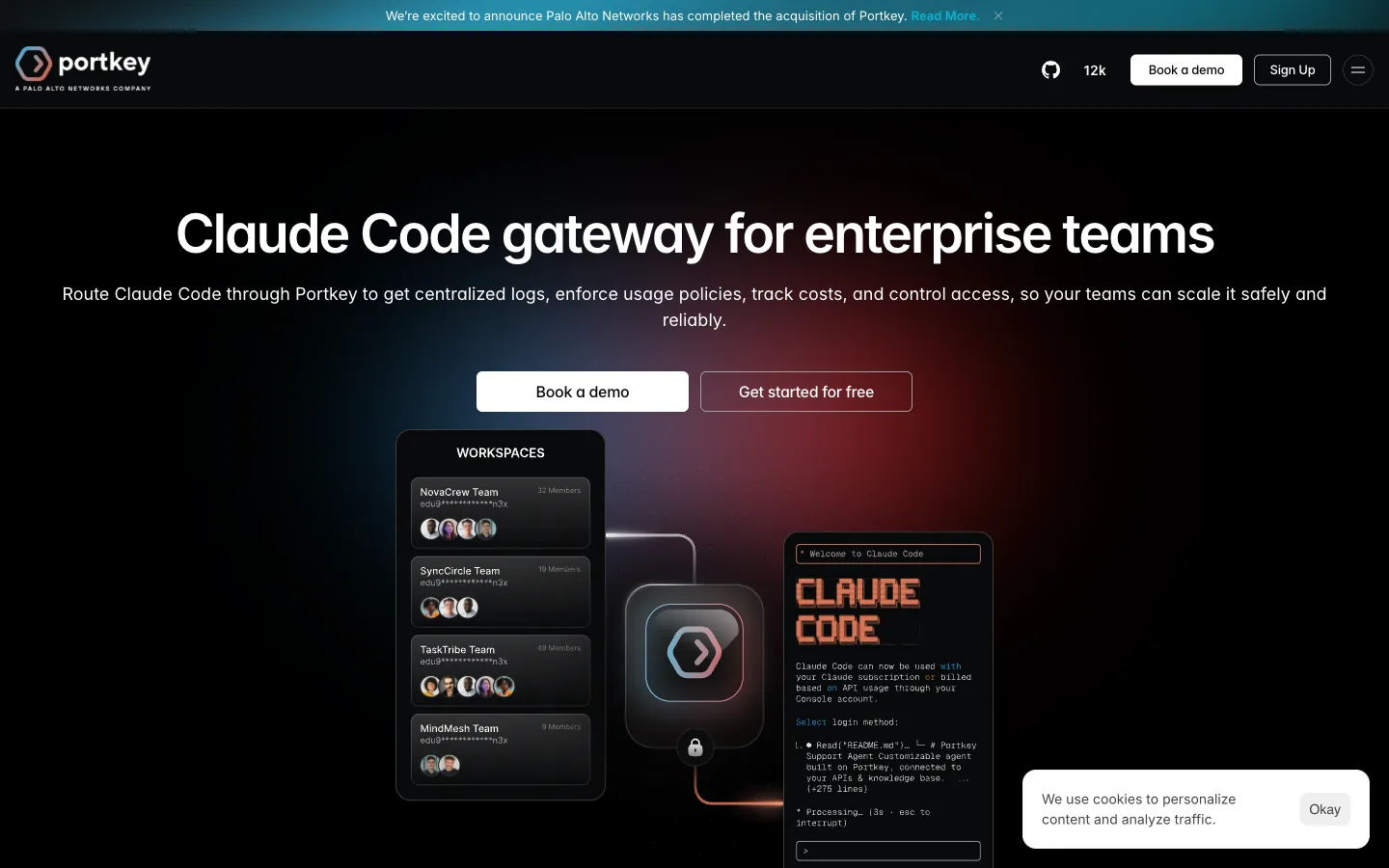
Portkey sits in the request path between applications and 1,600+ model providers, logging every call with 40+ metadata fields. Its own description is “Portkey lets you access 1,600+ LLMs via a unified API, so you can focus on building, not managing” (Portkey), and the observability layer promises to “Monitor 40+ metrics with a real-time observability dashboard to measure performance & efficiency” (Portkey observability). Each Claude, GPT, Gemini, Bedrock, Mistral, Cohere, DeepSeek, Groq, or Together request flows through the same gateway, which is a different lens than dashboards that manage OpenAI and ChatGPT spend at the seat level, so token and cost data lands in one observability dashboard grouped by provider, model, user, custom metadata, or trace.
Per-key budget limits and OpenTelemetry-compatible auto-instrumentation make Portkey the developer-side counterpart to an IT-layer SaaS view. Engineering teams get per-request attribution without writing custom telemetry, cache hit rates show up next to raw spend, and full agent trace data ties multi-step runs back to the cost they generated. Palo Alto Networks announced its acquisition of Portkey in April 2026, so the observability layer now sits behind a security-first lineage, which matters for teams routing regulated workloads through a single gateway. Lee Klarich, Palo Alto Networks’ Chief Product and Technology Officer, framed the rationale as follows: “As autonomous agents join the enterprise workforce, they also become a new, unmanaged attack surface” (Palo Alto Networks). Prompt management, guardrails, and a virtual-key vault round out the policy plane around the cost telemetry.
Where Portkey carries the most weight inside a multi-vendor stack:
- Hard cost and token caps on every virtual key
- Per-request attribution across 1,600+ providers
- Load balancing across multiple keys per provider
- OpenTelemetry export into existing APM tools
Pros:
- Pre-spend budget enforcement at the gateway layer
- Wide provider coverage in a single dashboard
- Failover routing absorbs rate-limit pressure
Cons:
- Introduces a network hop in front of every model call
- Only sees traffic developers route through it
Helicone
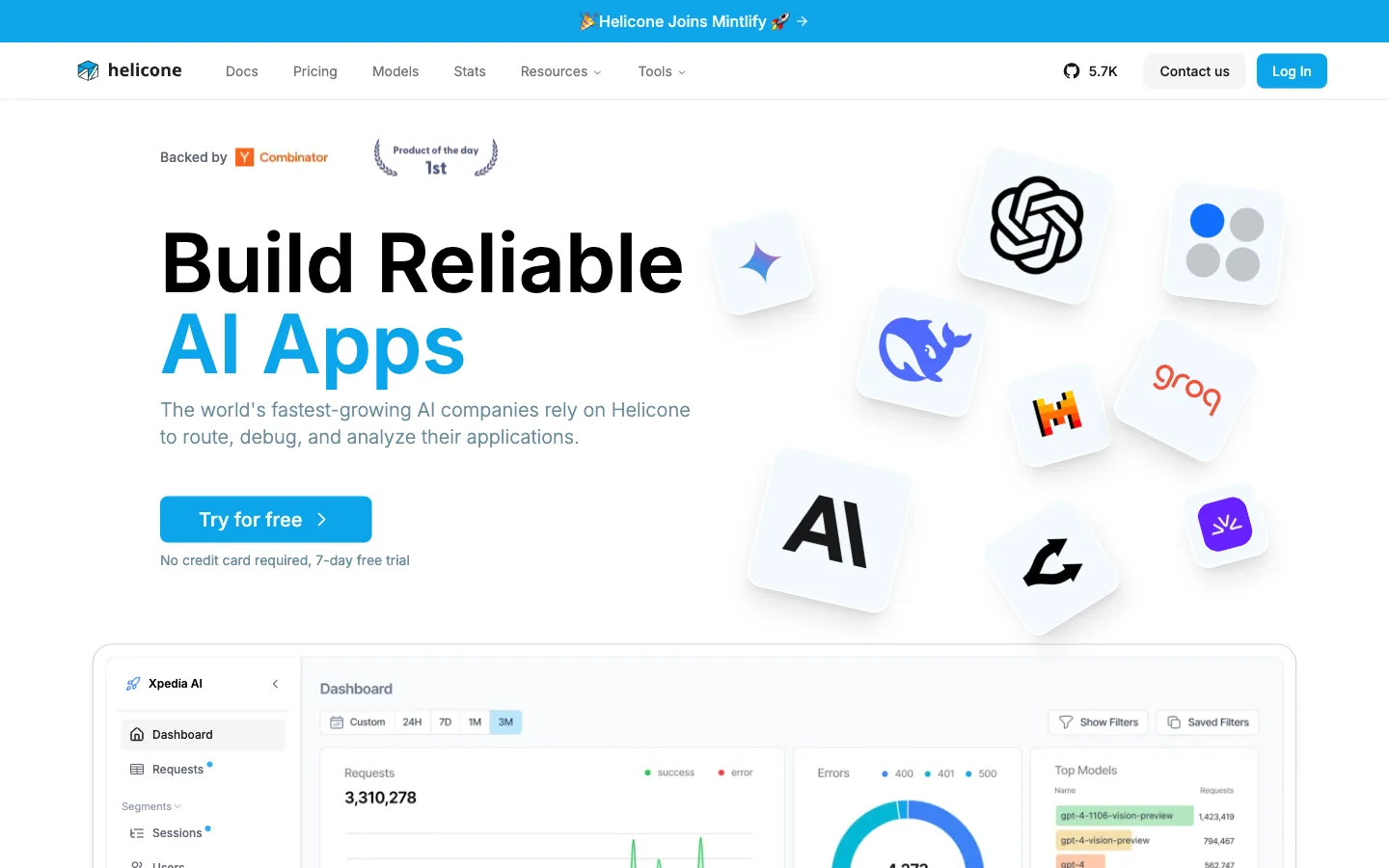
Helicone runs as an open-source proxy in front of 300+ models from OpenAI, Anthropic, Azure, Vertex, Groq, LiteLLM, Together, Anyscale, and OpenRouter. Swap the base URL on any SDK call and every request logs input tokens, output tokens, exact per-request cost, and latency with no extra instrumentation. The proxy adds no markup over provider rates, promising “0% markup - Pay exactly what providers charge, no hidden fees” (Helicone docs), which makes the cost line a reflection of the invoice instead of a vendor-padded estimate.
Dashboards segment by user via a Helicone-User-Id header and by feature, customer, or environment through Helicone-Property-* headers, so a single proxy covers chargeback for many providers. The public Helicone LLM cost calculator doubles as a cross-vendor pricing benchmark engineers reach for during model selection. Mintlify announced in March 2026 that “Mintlify is acquiring Helicone, the open source LLM observability platform and AI gateway” (Mintlify), but the proxy stays open source and self-hostable for teams that cannot send prompts to a vendor.
Where Helicone fits inside a multi-provider stack:
- Drop-in proxy for 300+ models with no SDK rewrites
- Per-request cost at zero markup over provider rates
- Custom property breakdowns for feature- or customer-level chargeback
- Public cost calculator used as a benchmark during model selection
Pros:
- Drop-in proxy with no SDK changes required
- Zero-markup per-request cost across 300+ models
- Self-host option for strict data residency
Cons:
- Requires routing all model traffic through the proxy
- Lighter on evaluation and scoring than dedicated platforms
Proxy and SDK tools see what your code routes through them. They do not see the ChatGPT Team seats, Claude.ai signups, Copilot licenses, and Gemini Workspace add-ons employees buy outside engineering. Torii surfaces every AI account inside the company, ties seat and token spend back to people, and forecasts renewal exposure across vendors. See the Torii AI Management Platform.
Langfuse
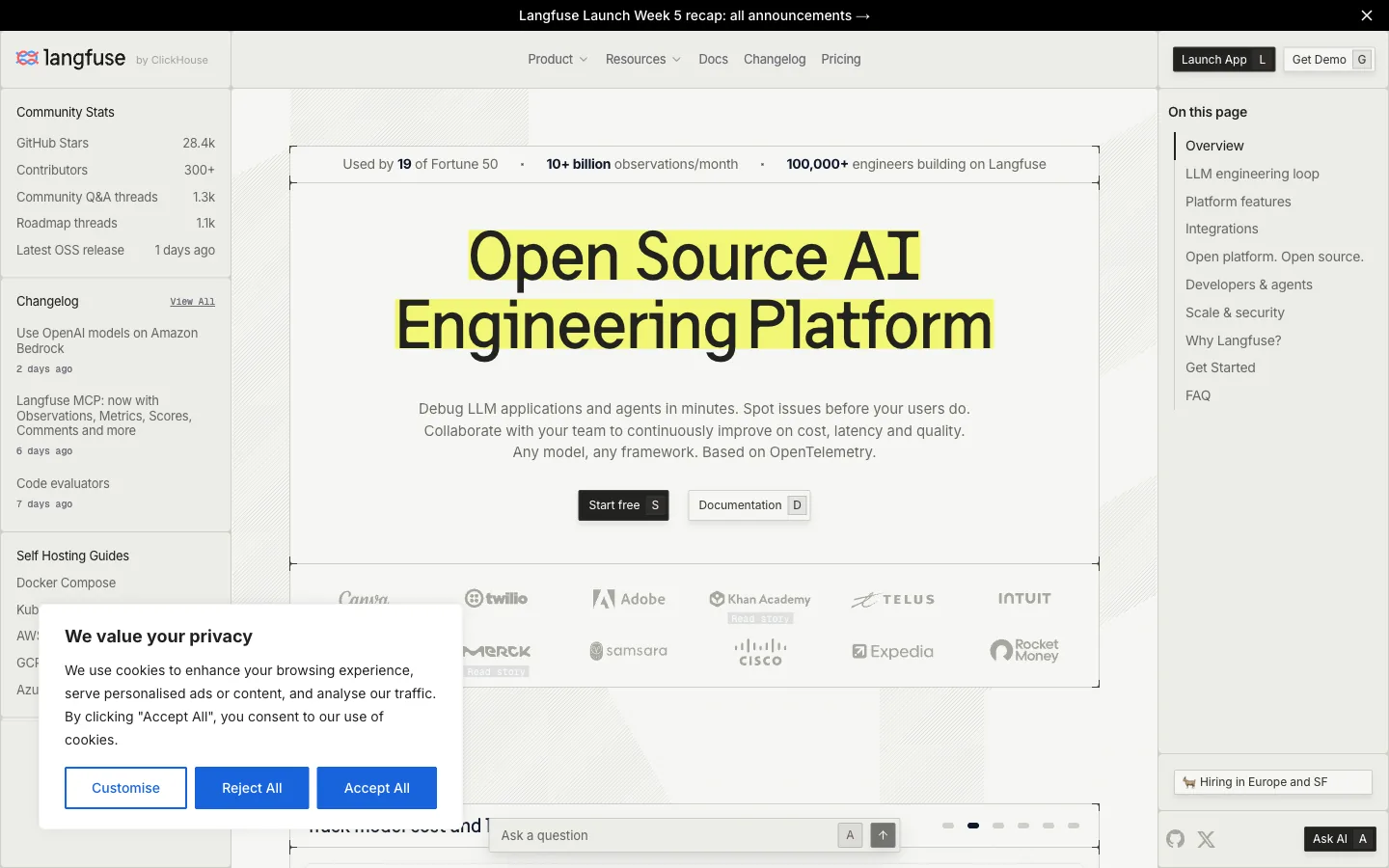
Langfuse traces every model call at the span level and captures both token counts and USD cost on each generation. Pre-built tokenizers and pricing tables ship for OpenAI, Anthropic, and Gemini, and custom model definitions cover everything else through regex-based pricing matchers. The big win for multi-vendor stacks is sub-token-type granularity, input vs. output vs. cached vs. reasoning vs. audio vs. image tokens, which is what it takes to model Anthropic’s tiered context window or Gemini’s long-context surcharge accurately. Google charges $1.25 per million input tokens for Gemini 2.5 Pro prompts at or under 200k tokens and $2.50 above it, with output moving from $10.00 to $15.00 at the same line.
Cost data segments by user, session, geography, feature, model, and prompt version, and a metrics API exports straight into PostHog, Mixpanel, or any custom analytics pipeline. The platform is MIT-licensed and self-hostable via Docker, with a managed cloud tier for teams that want hosted ingestion. Dedicated integrations for the Claude Agent SDK (handy for teams already tracking Claude token usage closely) and the OpenAI Assistants API trace every tool call inside multi-step runs, which is where most of the 2026 token blowups live. See the Langfuse token and cost tracking docs for the trace structure.
Where Langfuse pulls double duty for teams tracking spend and quality:
- Span-level Claude, GPT, and Gemini trace data with USD cost
- Sub-token-type detail for tiered provider pricing
- Dataset-driven evaluation and LLM-as-a-judge scoring
- Open source with self-host and managed cloud options
Pros:
- Token tracking and evaluation under one roof
- Tiered pricing modeled correctly per provider
- MIT-licensed with Docker self-host
Cons:
- SDK instrumentation required for full trace coverage
- Less focused on gateway-level budget enforcement
Credal
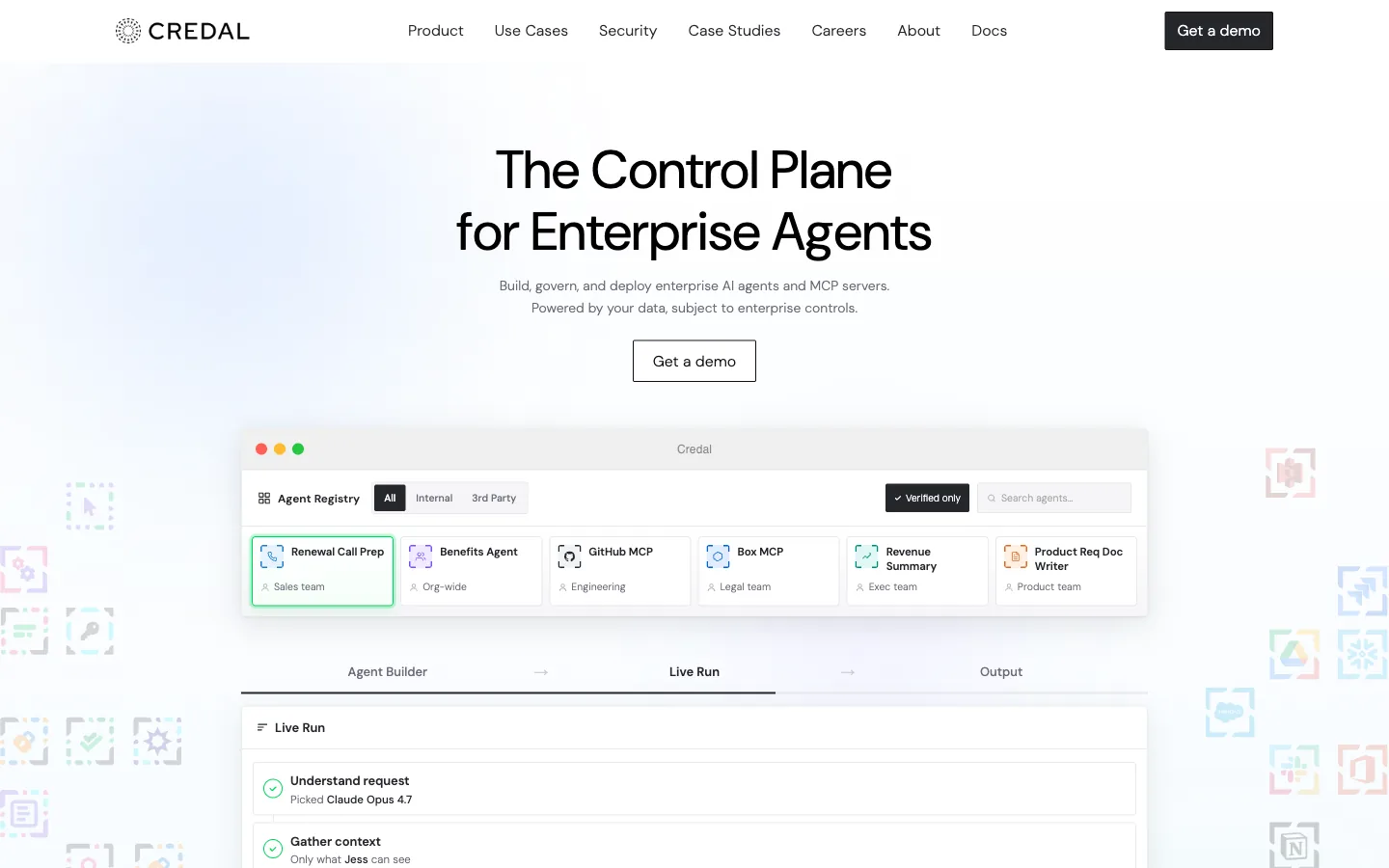
Credal intercepts LLM traffic at the policy layer rather than relying on developer instrumentation. Every prompt, response, and tool invocation across OpenAI, Anthropic, and Gemini logs with user, agent, model, timestamp, and approver attribution, then exports to Splunk or Datadog for SIEM consolidation. The framing is governance and audit trail first, with token cost showing up as a byproduct of full request logging.
Backwards-compatible OpenAI and Anthropic APIs let existing apps route through Credal without code changes, which centralizes audit trails for third-party SaaS agents and homegrown apps alike. The Credal agent registry surfaces which models are deployed where, and evaluation dashboards score agent runs on accuracy, latency, and cost so admins can compare spend efficiency across model choices. Regulated industries lean on this control plane for EU AI Act Article 12 readiness, since every prompt and approval already lands in a tamper-evident log. Article 12 requires that high-risk AI systems “shall technically allow for the automatic recording of events (‘logs’) over the lifetime of the system” (Regulation (EU) 2024/1689). The compliance clock has since moved: the EU’s Digital Omnibus amendment pushed standalone high-risk obligations from August 2, 2026 to December 2, 2027, and product-embedded systems to August 2, 2028 (Gibson Dunn), so teams have more runway than the original text implied.
What Credal contributes to a multi-vendor audit posture:
- Per-prompt audit trails tied to specific employees and agents
- Drop-in API compatibility with OpenAI and Anthropic
- Splunk and Datadog export for SIEM consolidation
- Approval workflows for high-risk agent actions
Pros:
- Per-user audit trails across every model call
- Strong fit for regulated industries preparing for Article 12 logging duties
- Centralized agent registry across SaaS and homegrown apps
Cons:
- Governance-first lens, not a pure cost dashboard
- Heavier setup than SDK-only or gateway-only options
OpenMeter
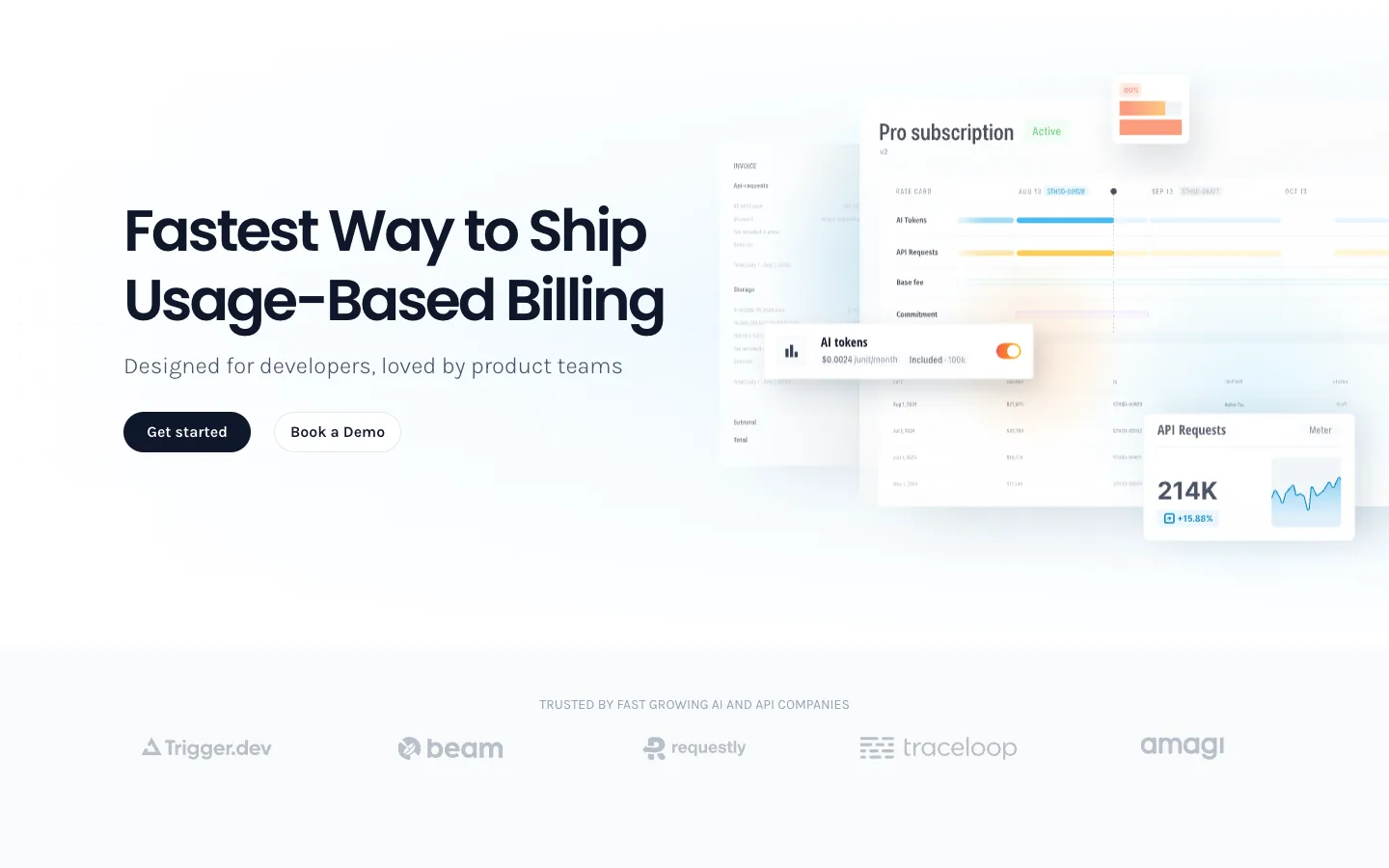
OpenMeter is an open-source, event-driven metering engine that ingests raw token events and aggregates them in real time on ClickHouse. Instead of vendor connectors, it captures application-layer events tagged with provider, model, and prompt type, then normalizes them into per-customer or per-team meters. The LangChain Usage Collector auto-extracts ls_provider and ls_model_name for passive multi-vendor coverage across any LangChain-compatible model, so adding a new provider does not require new wiring.
Meter definitions support grouping by provider (openai, anthropic) and model (gpt-4o, claude-3-5-sonnet) for granular chargeback, and a native Stripe connector turns those meters into customer-facing invoices for AI products being resold. That positions OpenMeter slightly differently from the gateway and observability options, useful both for internal cost allocation and for billable usage on top of resold AI features. The OpenMeter metering guides include common patterns for token-based pricing.
Where OpenMeter slots into a cross-vendor stack:
- Application-layer event capture, no proxy required
- ClickHouse-backed real-time aggregation
- Native Stripe billing for AI-product resellers
- LangChain Usage Collector for passive provider coverage
Pros:
- Open source with self-host on existing infrastructure
- Built for billable usage on top of internal tracking
- Provider-agnostic event model
Cons:
- Requires application-layer instrumentation
- Less out-of-the-box reporting than commercial dashboards
Vantage
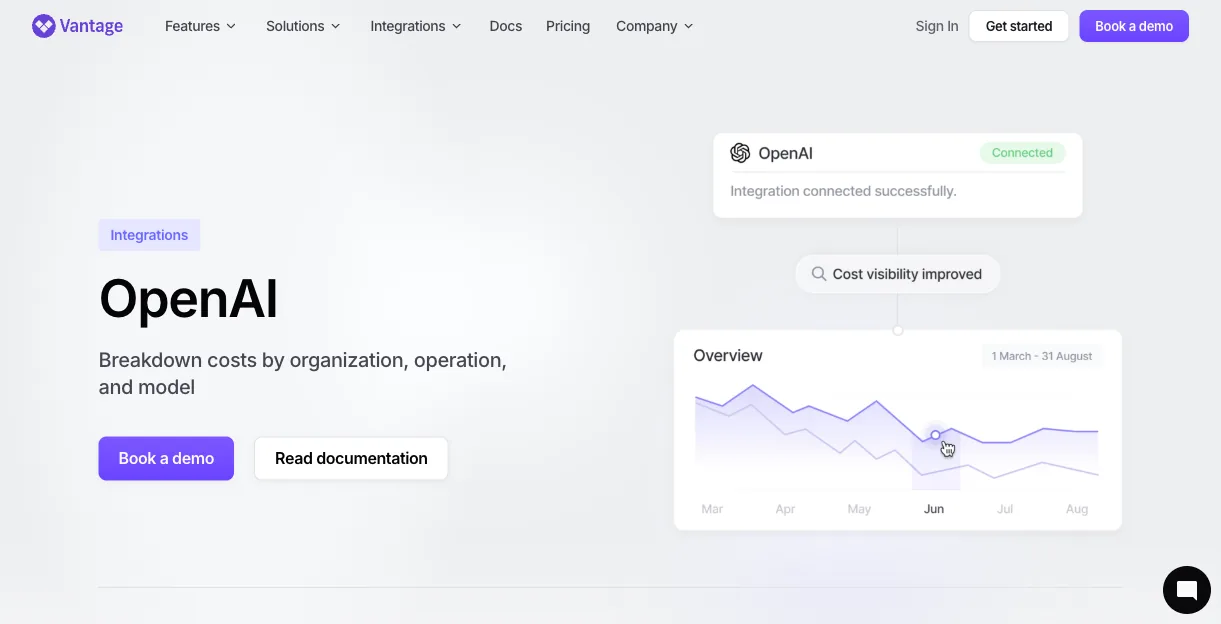
Vantage approaches cross-vendor AI spend from the FinOps side, pulling read-only billing data from OpenAI Admin, Anthropic Admin, Google Cloud (Vertex and Gemini), and AWS Bedrock into a single Cost Report. It is one of the few options here that unifies direct API spend with managed cloud AI services, which matters because most enterprises run a mix and the Bedrock or Vertex line never lands in the OpenAI dashboard.
Spend breaks down by model, operation type (input, output, image generation, embeddings), and organizational unit (project, API key, team tag), with enrichment from OpenRouter and Cloudflare AI Gateway to normalize developer-level allocation. The standard FinOps stack of anomaly detection, ML spend forecasting, budget alerts, and an MCP server for in-IDE cost queries applies to AI tokens alongside existing cloud spend. Vantage publishes a field guide on stitching Bedrock, Vertex, OpenAI, and Anthropic costs into a single view.
Where Vantage fills a gap dev-tool vendors leave open:
- Managed cloud AI (Bedrock, Vertex) sits next to direct API spend
- Anomaly detection trained on historic vendor patterns
- ML-driven spend forecasting per provider
- MCP server for in-IDE cost queries
Pros:
- True cross-cloud FinOps lens on AI spend
- Workspace-level attribution without manual tagging
- Forecasts and anomaly alerts on every provider
Cons:
- Daily granularity only on Anthropic and OpenAI feeds
- Built for finance more than engineering workflows
How to Choose a Cross-Vendor AI Token Tracking Tool
Match the tool to where the spend is leaking. Portkey, Helicone, and Langfuse handle per-request detail at the gateway or SDK; OpenMeter turns those events into billable meters; Credal adds policy and audit on top; Vantage rolls the lot into the broader FinOps picture next to AWS and GCP.
Torii fills the gap the other six leave open, the seats, signups, and personal-card AI accounts sitting outside engineering, and ties them back to specific employees alongside the token spend. Pair it with one of the observability or gateway tools above for full coverage from SaaS seat down to API call.
Torii ingests SSO, finance, browser, and contract signals to surface every AI account inside your company, then correlates seat spend with token spend across the providers it discovers. Pair it with the observability or gateway tool that matches your engineering stack. See the Torii AI Management Platform.
Frequently Asked Questions
Common approaches include SaaS discovery, gateway proxies, observability/SDK instrumentation, governance/control planes, event-driven metering, and FinOps cost reporting. Each layer captures different leak sources, so teams choose based on where tokens are consumed or purchased across their environment.
Enterprise AI spend surged and agentic workloads multiply token usage; many companies run five+ LLMs and top providers dominate API calls. Regulators enforce audit trails (EU AI Act Article 12), so missing cross-vendor logs can mean large fines and compliance gaps.
Gateway proxies route model requests through a single control plane, logging tokens and costs per call, enforcing per-key budget caps, enabling failover, and exporting telemetry. They provide developer-side attribution and pre-spend enforcement but only see traffic routed through them.
Torii discovers AI tools outside engineering—personal-card signups, ChatGPT Team seats, Copilot licenses—and correlates seats with token spend. It attributes spend to employees, detects redundant subscriptions, forecasts renewal exposure, and surfaces unsanctioned AI tools that proxy or SDK tools miss.
Use FinOps tools when you need unified billing across cloud-managed AI (Bedrock, Vertex) and direct API spend, anomaly detection, ML-driven forecasting, and workspace-level cost reports. Observability is better for per-request traces and engineering attribution, while Vantage ties AI into cloud cost governance.
Pair a SaaS discovery platform like Torii (for seats, signups, and personal-card accounts) with a gateway or observability tool (Portkey, Helicone, Langfuse) plus metering (OpenMeter) and governance (Credal) to cover seat-level, request-level, billing, and audit trail needs across vendors.