

Five Tools for Managing Claude Enterprise and Team Plans in 2026
 Chris Shuptrine
•
Jun 16, 2026
•
11 min read
Chris Shuptrine
•
Jun 16, 2026
•
11 min read

Compare five tools for managing Claude Enterprise and Team plans in 2026, from seat provisioning to license reclamation.
Ask about this article
Opens Claude in a new tab to answer, using this article as the source.
Anthropic split Claude into Team and Enterprise plans, and the gap between them is wider than most IT teams expect in 2026. Team runs $20 or $100 per seat on annual billing with a five-seat minimum, plus SSO and just-in-time provisioning. Enterprise adds SCIM, 180-day audit logs, and a Compliance API that, in Anthropic’s words, gives customers “programmatic access to their organization’s Activity Feed, the directory of users, roles, and groups across every linked organization” (source). It now bills token use at API rates after Anthropic eliminated the volume discounts of 10 to 15 percent that larger accounts used to get.
The admin console handles the basics and stops short of the rest. It won’t reclaim an unused seat before it auto-renews, suggest Standard over Premium, or split spend across departments. Analytics data only reaches back to January 2026 and refreshes every four hours, so over-consumption tends to show up after the money is already gone.
That gap is where third-party tools come in, and the five below each cover a different piece of it. Some track token spend, some govern identity and provisioning, and others reclaim idle licenses before renewal. The same seat-reclamation gap drives the tools for managing Cursor Business and Enterprise plans if your engineers run both assistants. Here is how Torii, Lumos, BetterCloud, Zylo, and Productiv compare for managing Claude in 2026.
Team runs $20–$100 per seat with a five-seat minimum; Enterprise adds SCIM and 180-day audit logs but bills tokens at API rates after the 2026 discount drop. The console still won't reclaim an idle seat before renewal, recommend Standard over Premium, or split spend by department, and its analytics only reach back to January 2026 on a four-hour refresh.
★ = low · ★★ = medium · ★★★ = high
| Tool | Seat Provisioning | License Reclamation | Usage Visibility | Plan/Tier Right-Sizing | Ease of Setup |
|---|---|---|---|---|---|
| Torii | ★★ | ★★★ | ★★★ | ★★ | ★ |
| Lumos | ★★★ | ★★ | ★ | ★ | ★ |
| BetterCloud | ★★★ | ★ | ★ | ★★ | ★ |
| Zylo | ★ | ★ | ★★★ | ★★ | ★ |
| Productiv | ★ | ★ | ★★ | ★★★ | ★ |
Table of Contents
Torii
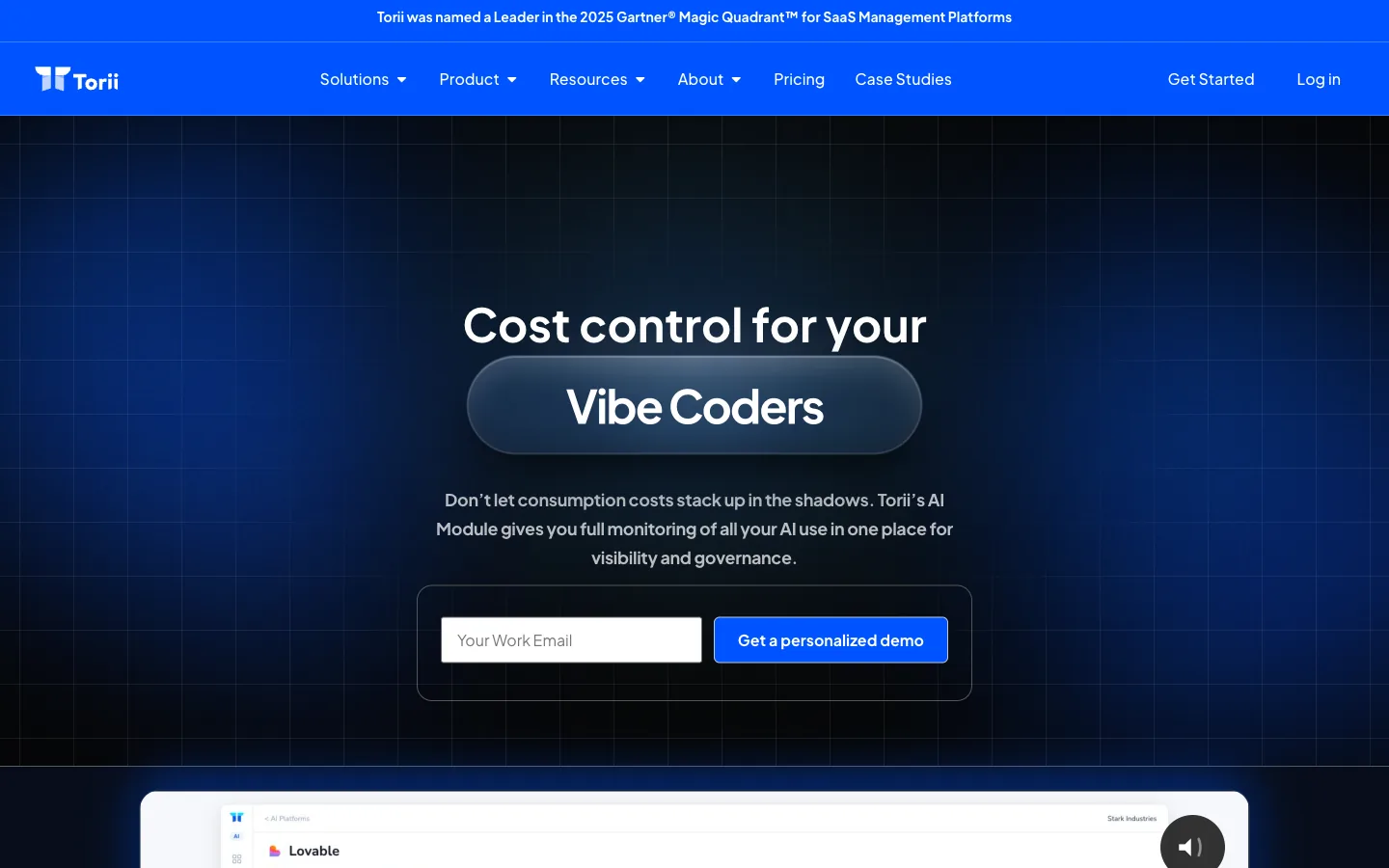
Torii is the only tool here that names Claude directly on its product pages, and AI cost control is the reason. It tracks token usage across Claude Code, ChatGPT, Gemini, and the OpenAI API in real time, then forecasts spend by user and model. IT can spot a team burning through Enterprise token budgets weeks before the renewal invoice arrives.
Discovery is where Torii separates the Claude seats you approved from the ones you never saw. It correlates browser activity, your identity provider, HRIS, SSO, and finance data into one live inventory of every sanctioned and shadow AI tool. That surfaces a Claude Team account expensed on a personal card, which never touches your IdP and stays hidden from the admin console.
The License Optimization engine reads real usage instead of last-login dates to catch seats idling on a $100 Premium plan. From there, reclaim, reassign, and downgrade decisions all route through approval workflows. Joiner-mover-leaver automation provisions access on hire and revokes Claude on departure across SaaS, IdP, and browser, so seats stop auto-renewing unused. You can see the model on the Torii AI management platform page. Torii earned a 2025 Gartner Magic Quadrant Leader spot for SaaS Management on the back of that approach.
Where Torii fits Claude plan management:
- Tracks Claude token spend by user and model ahead of renewal
- Finds shadow Claude Team accounts through finance and browser signals
- Flags idle Premium seats from real usage, not login dates
- Revokes Claude access automatically the day someone leaves
Pros:
- Real-time token tracking with spend forecasts per user and model
- Multi-source discovery that catches Claude accounts off the IdP
- Usage-based reclamation that downgrades or removes idle seats
- Automated offboarding that frees Claude licenses on exit
Cons:
- Built for enterprise breadth, so it is not the cheapest option here
- Centered on SaaS and shadow IT, with no on-premise deployment
| G2: 4.5/5 (303 reviews) | Capterra: 4.9/5 (26 reviews) |
Lumos

Lumos comes at Claude management from identity first, calling itself an autonomous identity platform built for the agentic era. It claims 99% SaaS visibility across more than 25,000 apps by scanning identity providers, browser sessions, auth logs, and expense reports. For a tool like Claude, the license and the account behind it land in the same system your team already runs.
Its lifecycle module auto-provisions birthright access across 300-plus integrations the moment an HRIS event fires. When an employee leaves, Lumos reclaims their licenses and cuts access in an offboarding that finishes in about three minutes. The AppStore self-service portal then gives staff a sanctioned way to request AI seats, which pulls that demand out of the shadows. The Lumos discovery page walks through the approach.
What sets Lumos apart is how it frames its AI governance story. The Albus agent mines role patterns and runs access reviews in plain language, while the platform centers on non-human-identity security. Its priority is stopping AI agents from inheriting more access than a role needs, rather than tracking what those agents cost.
Where Lumos helps manage AI seats:
- Self-service requests that route AI access through IT approval
- Birthright provisioning across 300+ integrations on hire
- Offboarding that reclaims licenses in about three minutes
- Identity controls aimed at AI agents, not just people
Pros:
- Self-service AppStore cuts shadow requests for AI tools
- Fast offboarding that reclaims licenses quickly
- Albus agent runs access reviews in natural language
Cons:
- AI governance leans toward identity security over spend
- Less suited to consumption-based Claude billing
G2: 4.7/5 (69 reviews)
BetterCloud
BetterCloud built its name on SaaS lifecycle automation, and that engine is the draw for Claude management. Its no-code workflows span 100-plus integrations and over 1,000 actions, so a Claude seat gets provisioned at onboarding and revoked the moment someone exits. No manual ticket sits in a queue waiting for an admin to act.
Shadow-AI detection runs through SSO, a browser extension, and ERP data, sorted against a SaaS taxonomy. When a rogue AI app appears, a workflow can auto-trigger a security review before the tool spreads further. Its Spend Optimization module benchmarks contracts against a $35B-plus database and fires 30, 60, and 90-day renewal alerts, so you can right-size seat counts before auto-renewal locks in a tier you overbought. Details live on the BetterCloud platform page.
As of March 2026, BetterCloud is part of CoreStack’s agentic governance platform spanning cloud, SaaS, and AI. That acquisition widened its AI framing, though the workflow engine remains the core reason teams pick it for license cleanup.
Where BetterCloud fits seat management:
- No-code provisioning and deprovisioning of AI seats
- Auto-triggered security reviews when shadow AI appears
- Renewal alerts at 30, 60, and 90 days before lock-in
- Contract benchmarking against a large spend database
Pros:
- Deep no-code automation for provisioning and offboarding
- Renewal alerts that head off over-purchased tiers
- Large integration library across SaaS apps
Cons:
- Workflow depth carries a learning curve for small teams
- AI roadmap still settling after the CoreStack deal
| G2: 4.4/5 (483 reviews) | Capterra: 4.0/5 (27 reviews) |
Most tools here act only once a seat already exists. Torii reads real usage across Claude and your other AI tools, flags the seats nobody touched, and routes a downgrade or reclaim through an approval workflow before the invoice lands. See how Torii manages AI spend.
Zylo
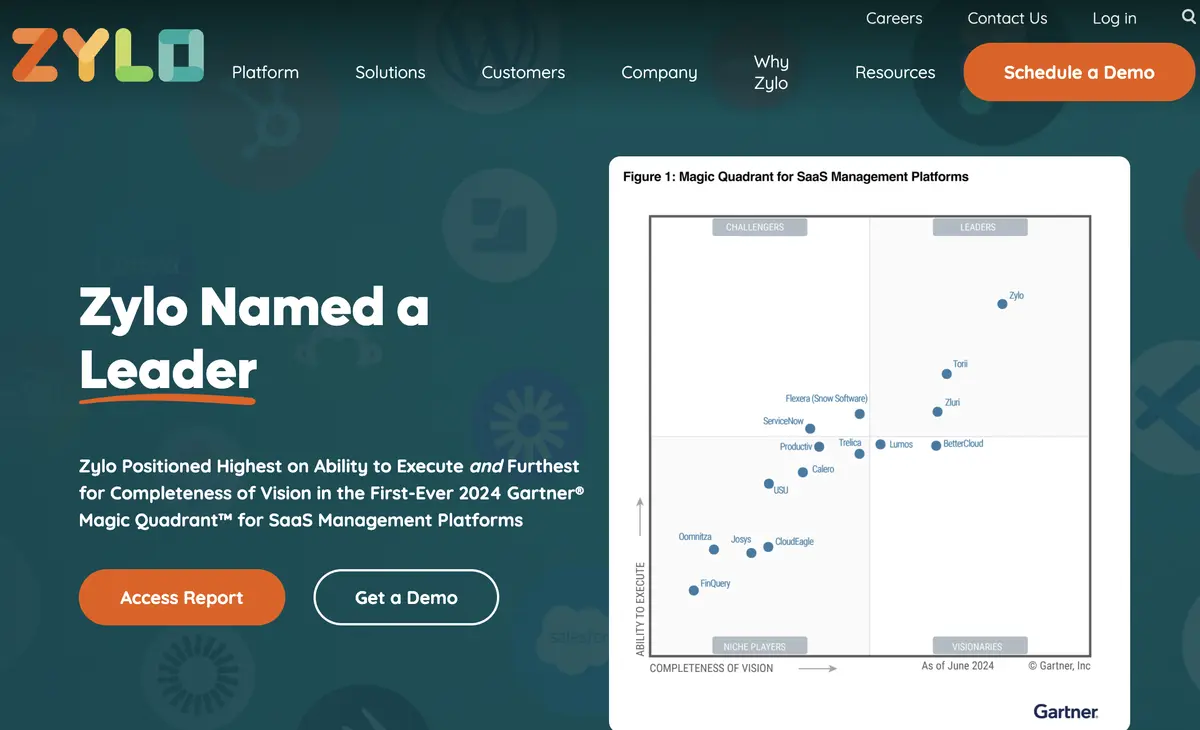
Zylo is the spend specialist of this group, and its strongest fit for Claude is consumption-based pricing. Enterprise bills token use at API rates, and most tools assume a flat per-seat plan they can simply count. Zylo’s AI Cost Management module instead tracks token burn in real time, splits spend by team, project, and model, and alerts before usage crosses a committed threshold.
Discovery leans on financial signals, scanning accounts payable, expenses, resellers, and marketplaces. Zylo finds that “a significant portion of these (about 51%) is often miscategorized in expense reports, so they can easily evade detection during manual reviews” (source), which is exactly how a stray Claude charge hides. License reclamation then runs through automated user surveys that confirm whether a seat is still needed before removal. At ModMed, “the IT team reclaimed 2,800 licenses for $1.4M in cost avoidance” using Zylo’s deprovision workflows.
Its $75B-plus spend dataset gives procurement real benchmarks for negotiating Enterprise terms. When Anthropic dropped the bundled token discount, that kind of comparison data is what lets a buyer push back on rates. You can review the module on the Zylo AI cost management page.
Where Zylo fits consumption pricing:
- Real-time token tracking split by team, project, and model
- Threshold alerts before committed usage runs over
- Survey-based reclamation that confirms a seat before cutting it
- Benchmark data for negotiating Enterprise rates
Pros:
- Purpose-built for consumption-based AI billing
- Finance-led discovery that catches miscategorized charges
- Large spend dataset for renewal negotiation
Cons:
- Lighter on real-time identity and provisioning
- Survey-based reclamation adds a manual step
G2: 4.7/5 (52 reviews)
Productiv
Productiv is the most AI-native pick here, having reframed its 2026 positioning around AI portfolio governance. Its AI Visibility layer goes past simple discovery and flags when a vendor like Anthropic adds new AI capability to an app you already own. It then auto-extracts contract clauses on training rights, data retention, and ownership, and scores each tool by risk and business value.
Those clauses are the questions an enterprise has to answer before approving Claude for sensitive work. Productiv’s AI Compliance Agent logs into apps, reads live privacy settings, checks vendor docs against policy, and flags or auto-fixes gaps. A setting that quietly permits training on company data is the kind of thing it catches. The Productiv AI visibility page shows the workflow.
Its usage-intelligence heritage still surfaces real engagement data to right-size Claude seats before a renewal. Teams that care more about compliance posture than raw spend tend to land here, since policy enforcement is the headline feature.
Where Productiv fits AI governance:
- Alerts when a vendor adds AI to an existing app
- Contract-clause extraction for training and data rights
- Live privacy-setting checks against company policy
- Usage data to right-size seats before renewal
Pros:
- Strong AI compliance and policy enforcement
- Contract-clause governance built into the platform
- Usage intelligence for right-sizing seats
Cons:
- Compliance focus over spend and token tracking
- Heavier fit for larger AI portfolios
G2: 4.6/5 (75 reviews)
How to Choose a Claude Management Tool
The right tool depends on where your Claude risk sits in 2026. Teams worried about Enterprise token bills lean toward Zylo, while those governing identity and provisioning look at Lumos or BetterCloud. Productiv fits compliance-heavy portfolios, and Torii ties spend, discovery, and reclamation into one view of your AI management stack.
If unused seats and surprise token charges are the problem, start with what you can actually see. Torii surfaces every Claude account through SSO, browser, and finance data, then reclaims idle seats and revokes access automatically when people leave.
You can only govern the Claude seats you can see. Torii discovers every AI tool in use through SSO, HRIS, browser, and expense data, forecasts token spend by user, and revokes access the moment someone leaves. Explore the Torii platform.
Frequently Asked Questions
Team is per-seat ($20 or $100) with a five-seat minimum, SSO, and just-in-time provisioning. Enterprise adds SCIM, 180-day audit logs, and a Compliance API, but now bills token consumption at API rates after the bundled discount was dropped.
Anthropic's admin console covers basics but lacks seat reclamation, spend splitting, and proactive recommendations. Analytics only reach back to January 2026 and refresh every four hours, so over-consumption and surprise token charges often appear after budgets are already spent.
To reclaim idle Claude seats, first discover all accounts across SSO, browser, IdP, HRIS, and finance. Monitor real usage and token burn, flag idle Premium seats, then route downgrade or removal through approval workflows before auto-renewal.
Torii and Zylo focus on real-time token tracking and spend forecasting; Zylo excels at consumption-based billing and procurement benchmarks. Lumos and BetterCloud concentrate on identity, provisioning, and fast offboarding. Productiv prioritizes compliance, contract clauses, and policy enforcement.
Tools detect shadow Claude accounts by correlating browser activity, expense and accounts payable data, IdP and SSO logs, HRIS records, and finance signals. That multi-source discovery reveals personal-card purchases and accounts that never touched the corporate IdP.
Choose based on your primary risk: if token bills and consumption are the issue, prioritize Zylo or Torii; for identity and provisioning, pick Lumos or BetterCloud; for compliance and contract controls, choose Productiv. Evaluate discovery, reclamation, and spend visibility.