

8 Tools for Claude Access Reviews in 2026
 Chris Shuptrine
•
Jun 23, 2026
•
13 min read
Chris Shuptrine
•
Jun 23, 2026
•
13 min read

Compare 8 tools for Claude access reviews in 2026, from shadow AI discovery to automated deprovisioning and compliance audits.
Ask about this article
Opens Claude in a new tab to answer, using this article as the source.
Claude landed inside thousands of enterprises through 2026, and most of those seats arrived faster than anyone could track them. Workers signed up with a corporate email, a personal card, or a free account that never touched SSO. In a 2026 PagerDuty survey, two-thirds of office professionals admitted they had “used AI tools at work despite believing they were not permitted under company policy.” The review problem tends to show up later, during an audit or an offboarding that quietly misses someone.
Anthropic ships solid building blocks for Claude Enterprise, including what its enterprise page lists as “Single sign-on (SSO/SAML) and domain capture,” “SCIM provisioning,” and “Audit logs and OpenTelemetry monitoring.” What it leaves out is a native access-certification workflow, so confirming who still needs a Claude seat falls to outside tools. That gap matters more as the EU AI Act takes broad effect: under Article 113, the regulation “shall apply from 2 August 2026.” The high-risk deadline has since moved, though, because the AI Omnibus, in force since July 27, 2026, moved the Annex III high-risk obligations to December 2, 2027 and high-risk AI embedded in regulated products to August 2, 2028 (European Commission). The access-governance work the rules require did not shrink, it just got more runway.
Each of these eight tools covers a different piece of Claude access governance in 2026. Some surface shadow accounts; others run formal certifications, automate approvals, or revoke seats the moment someone walks out the door.
A Claude access review is only as complete as the account list it runs against. Before committing to a certification tool, confirm it can surface the personal and free Claude seats that never touched SSO, otherwise you are certifying half the picture.
Table of Contents
★ = low · ★★ = medium · ★★★ = high
| Tool | Shadow AI Discovery | Access Certification | Auto-Deprovisioning | Reviews |
|---|---|---|---|---|
| Torii | ★★★ | ★★★ | ★★★ | ★★ |
| SailPoint | ★ | ★★★ | ★★★ | ★ |
| Okta | ★ | ★★ | ★★★ | ★★ |
| Veza | ★★ | ★★ | ★★ | ★ |
| ConductorOne | ★★ | ★★ | ★★★ | ★ |
| Lumos | ★ | ★★★ | ★★★ | ★ |
| Nudge Security | ★★★ | ★ | ★★ | ★ |
| Zluri | ★★ | ★★★ | ★★ | ★ |
Torii
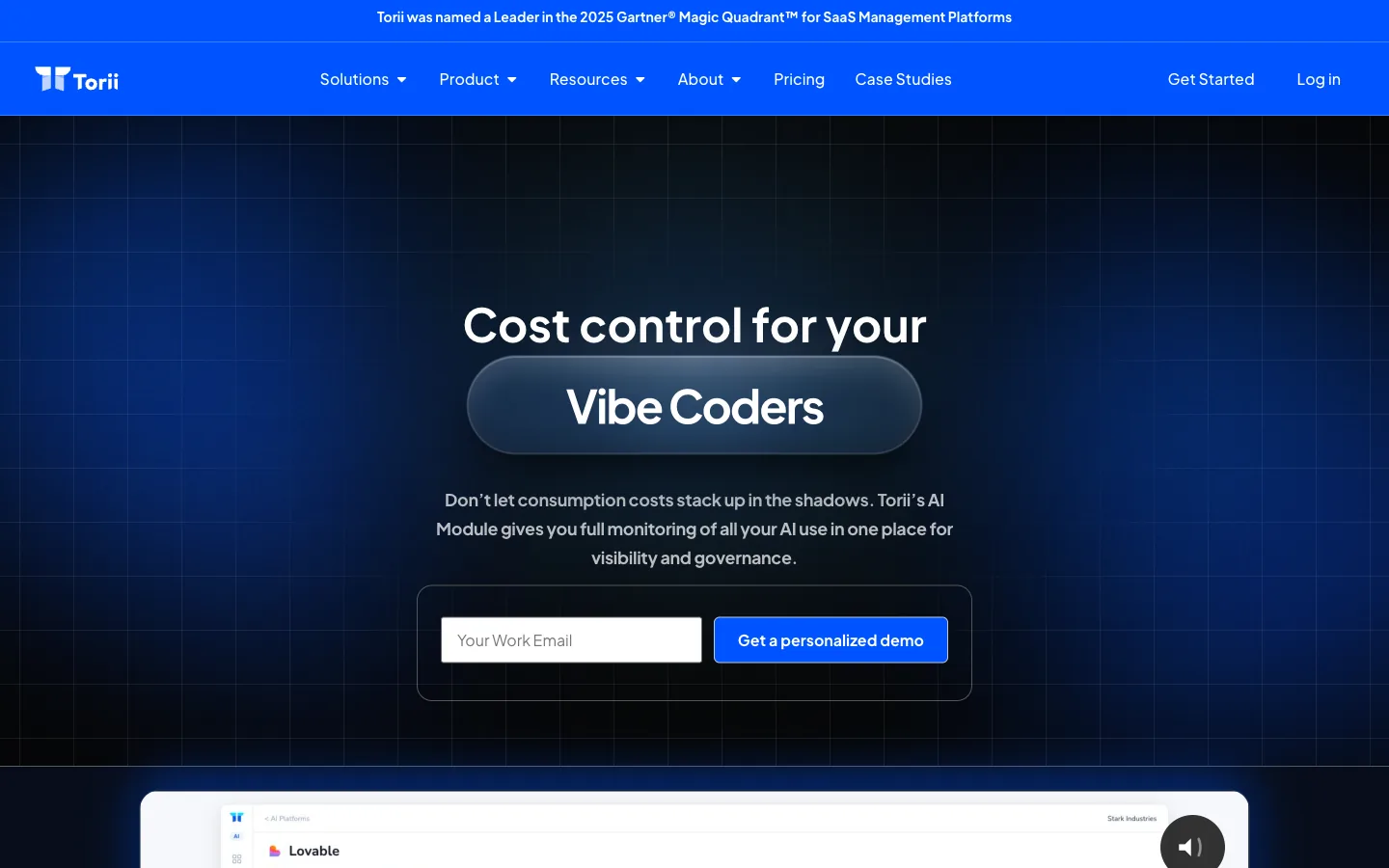
Torii is an AI management platform that finds and governs every app a company runs, Claude included. Discovery pulls from SSO logs, OAuth grants, a browser extension, and finance and HRIS feeds, so the Claude Pro and Max seats bought on personal cards show up beside the sanctioned Enterprise ones. That coverage is the part SSO alone never catches.
Once those accounts surface, the AI Management Dashboard ties each seat and its token spend back to a named employee. Certification campaigns then run against an inventory that refreshes on its own, so reviewers approve or revoke based on what is true today, not a stale export from last quarter. You can see the certification side on the Torii access reviews page.
Joiner-mover-leaver workflows close the loop when someone changes role or exits the company. Torii revokes the Claude seat on its own, routes the approval through Slack, and writes an audit record the next review can lean on.
Where Torii fits Claude access review:
- Surfaces shadow Claude accounts across SSO, OAuth, browser, and finance signals
- Ties each seat and its token spend to a named owner
- Runs certification campaigns on a live, self-updating inventory
- Auto-revokes Claude access on role change or offboarding
Pros:
- Catches personal Claude seats that never reached SSO
- Connects seat cost and token usage to real people
- Certifications reflect current access, not a stale spreadsheet
- Covers the whole SaaS estate, not just Claude
Cons:
- Built for enterprise breadth, so it isn’t the cheapest option
- Focused on SaaS and shadow IT, without on-premise deployment
| G2: 4.5/5 (302 reviews) | Capterra: 4.9/5 (26 reviews) |
SailPoint
SailPoint took an early formal step on Claude in May 2026 with a connector built on the Claude Compliance API. SailPoint said the integration “provides Claude Enterprise organizations with the essential visibility and governance needed to secure access to and usage of AI platforms across the enterprise.” It pulls Claude users, groups, memberships, and roles straight into Identity Security Cloud, where Claude gets governed like any other critical system.
Inside that platform, Claude seats flow through the same certification and policy engine SailPoint built for regulated apps. Reviewers get AI peer-group suggestions that flag the marketing hire holding admin rights nobody else on the team has. Campaigns, escalations, and sign-offs all carry the audit trail compliance teams expect.
SailPoint also reads Claude AI agents into a single registry and assigns each one a human owner. That keeps autonomous agents from drifting into the orphaned non-human identities that slip past most reviews. The framework sits on the SailPoint access certification page.
What stands out for Claude governance:
- A connector built on Anthropic’s Claude Compliance API
- Peer-group analytics that surface odd access patterns
- A registry that gives every Claude agent a human owner
Pros:
- Among the first major IGA vendors with a Claude Compliance API connector
- Peer-group analytics expose unusual access fast
- Governs Claude agents alongside human users
Cons:
- Enterprise IGA carries a heavier rollout
- Pricing and setup aim at large organizations
| G2: 4.5/5 (166 reviews) | Capterra: 4.2/5 (13 reviews) |
Okta
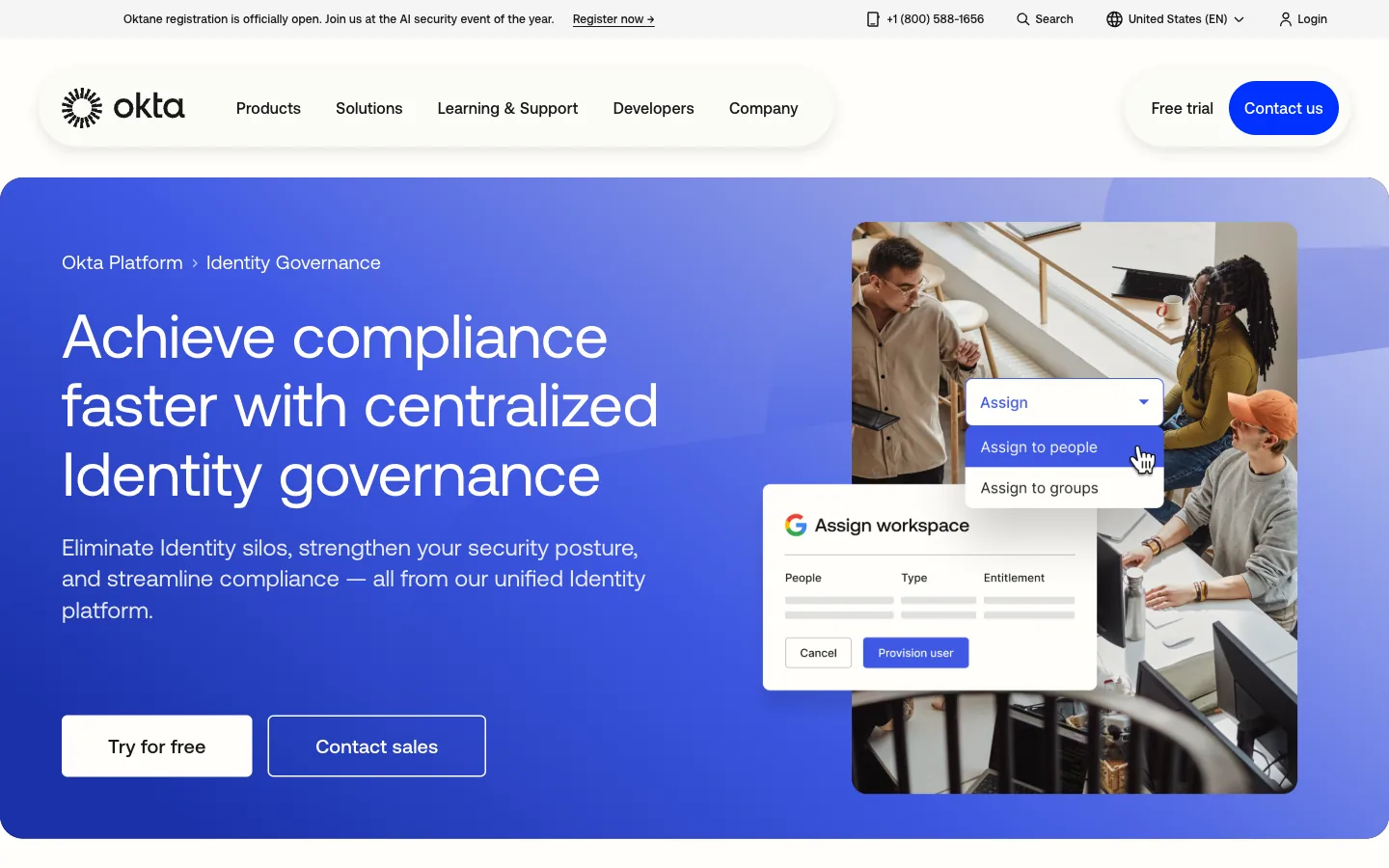
Okta sits at the front door as a featured identity provider for Claude Enterprise. Its SCIM connector provisions and deprovisions Claude seats straight from Okta groups, so adding someone to the right group grants Claude and removing them pulls it back.
That provisioning reaches well past the login screen and into connected tools. Through Extended App Authorization, inherited access to Claude’s MCP connectors moves with the group too, which stops a departing employee from leaving live tool connections behind. Identity Threat Protection then watches for the dormant accounts and unrotated keys auditors tend to flag.
Okta Identity Governance layers certification campaigns and access reviews on top of all that. Its posture monitoring ties into Anthropic’s Compliance API to track over-permissioned admins and offboarded users on a continuous basis. The governance suite lives on the Okta Identity Governance page.
Where Okta earns its place:
- SCIM provisioning and deprovisioning from Okta groups
- MCP connector access that follows group membership
- Continuous posture monitoring for stale accounts and keys
Pros:
- The provisioning layer most Claude tenants already trust
- MCP access tied to group membership cuts orphaned grants
- Posture monitoring runs continuously, not just at review time
Cons:
- Full governance needs the higher Identity Governance tier
- Certification depth trails dedicated IGA platforms
| G2: 4.4/5 | Capterra: 4.7/5 (943 reviews) |
Veza
Veza answers a sharper question than who logged in, namely who can take what action on what data. Its Authorization Graph maps the full access path behind every identity, and the AI Agent Security product names a direct Claude Code integration.
For Claude, that means tracing exactly what an agent or a connected account can reach across clouds and APIs. Veza raises an alert when an agent’s human owner leaves or when its permissions drift past what the role actually needs. Reviews translate raw entitlements into plain create, read, update, and delete actions, so a reviewer sees real capability instead of cryptic scopes.
The same graph covers service accounts and machine identities, which matters as Claude agents start acting on their own. You can dig into the agent angle on the Veza AI Agent Security page.
Where Veza goes deep:
- An access graph that maps every Claude agent’s reach
- Owner-departure alerts on connected agent identities
- CRUD-readable reviews instead of raw permission scopes
Pros:
- Shows the blast radius behind each Claude grant
- Strong on non-human and agent identities
- Plain-language reviews speed up sign-off
Cons:
- Graph setup expects mature cloud and identity data
- Less focused on day-to-day seat provisioning
Most tools here review access you already know about. Torii works the other end, discovering Claude accounts through SSO, OAuth, and finance signals, including free seats on personal logins, then handing reviewers a live inventory to certify against. See how Torii governs AI access.
ConductorOne
ConductorOne, now rebranded C1, built AI Access Management as a control plane for AI tools, agents, and the MCP connections between them. A user can request Claude access from inside Claude itself and get a policy-based approval in under a minute.
The part worth a closer look runs underneath every request a user makes. Grants pass through an identity-aware proxy fronting thousands of hosted MCP servers, where every tool call gets authenticated, permission-checked, and logged. That turns a Claude agent’s actions into reviewable events rather than a black box nobody can audit later.
ConductorOne also treats AI agents as first-class identities with auto-rotated credentials and instant revocation. Pull the grant and the agent loses its reach right away, with no stale token left waiting. The product launch detail sits on the ConductorOne AI Access Management page.
Where ConductorOne stands out:
- Self-service Claude requests approved in under a minute
- An identity-aware proxy logging every MCP tool call
- Agents as first-class identities with instant revocation
Pros:
- Fast, governed self-service inside Claude
- Every agent action becomes an auditable event
- Credential rotation built into agent access
Cons:
- Newer product with a smaller review base
- Best value needs broad MCP adoption to draw on
G2: 4.8/5 (13 reviews)
Lumos
Lumos puts an employee-facing AppStore in front of access, so workers request Claude from Slack or Teams. Requests that already meet policy auto-fulfill through SCIM without a ticket, and a rejection or an exit revokes access across more than 100 integrations.
Its Albus agent, launched in December 2025, runs Agentic User Access Reviews. The agent weighs role, recent activity, peer norms, and separation-of-duties conflicts, then recommends approve or revoke and finishes campaigns up to six times faster than a manual pass.
That automation connects to a full employment lifecycle, so a new hire gets the right Claude tier by role and loses it when they leave. The self-service and review pieces sit together on the Lumos agentic IGA page.
Where Lumos helps most:
- Self-service Claude requests from Slack or Teams
- Auto-fulfillment through SCIM for policy-clean asks
- Albus recommendations that speed certification campaigns
Pros:
- Removes the ticket from routine Claude requests
- Agentic reviews cut certification time sharply
- Deprovisioning reaches across the whole app catalog
Cons:
- Review quality leans on clean activity data
- Heavier than a standalone discovery tool
G2: 4.7/5 (69 reviews)
Nudge Security
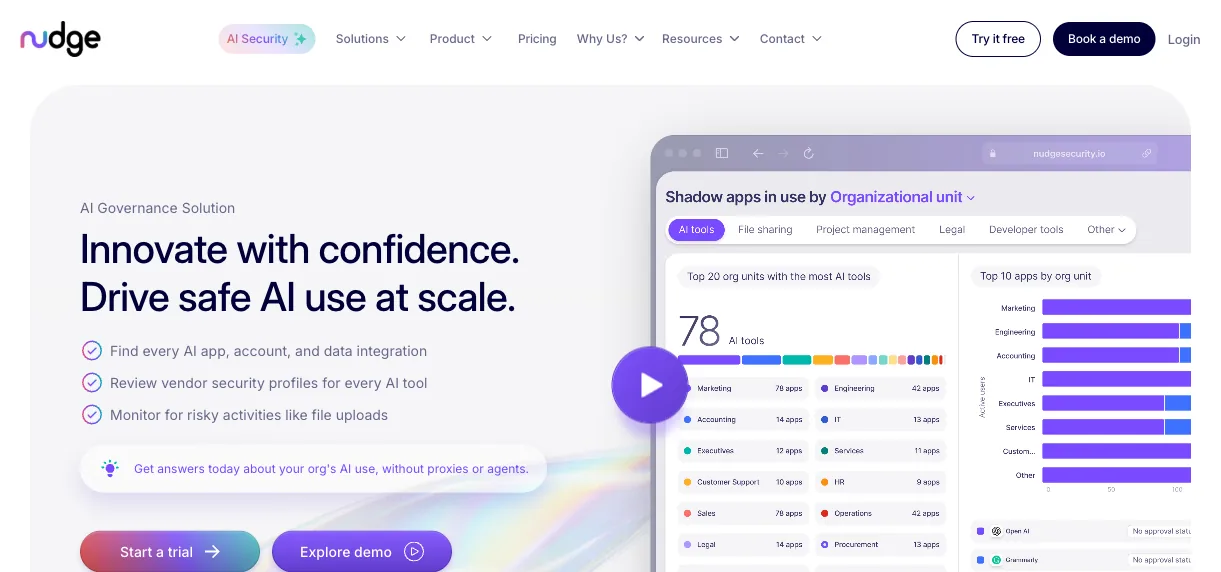
Nudge Security finds AI tools through agentless, OAuth-based detection that needs no proxy or endpoint agent. Personal Claude accounts surface from the first day, including the ones created with a quick Google sign-in.
From there it maps which OAuth grants give Claude access to corporate data, scores the risk, and lets admins revoke risky OAuth and MCP connections from one screen. Self-review nudges go further by prompting employees to confirm their own access, which spreads the work past the security team.
When someone leaves, Nudge removes access across every discovered app and keeps an audit-ready record of each step. That breadth catches the long tail of AI signups most tools never see. The use case lives on the Nudge Security AI security page.
Where Nudge Security shines:
- Agentless discovery of personal and shadow Claude accounts
- OAuth-grant risk scoring with one-click revocation
- Employee self-review nudges that share the load
Pros:
- Stands up fast with no agent or proxy to deploy
- Surfaces the personal AI accounts SSO misses
- Offboarding sweeps every discovered tool at once
Cons:
- Lighter on formal recurring certifications
- Discovery leans on email and OAuth signals
G2: 4.7/5 (8 reviews)
Zluri
Zluri pairs patented discovery with deep access-review machinery built for audits. Its detection auto-classifies shadow AI like Claude, ChatGPT, and Gemini across dozens of app categories.
The real depth shows up once you reach the certification engine itself. Recurring reviews support multi-level and delegated reviewers, automated reminders, and bulk approvals, and the moment a review concludes Zluri deprovisions through the app’s own API. Each cycle produces timestamped reports mapped to SOX, SOC 2, and ISO frameworks.
A full joiner-mover-leaver lifecycle provisions new hires to the AI tools their role allows. That keeps Claude access tied to a clear policy rather than a one-off grant. The certification workflow sits on the Zluri access reviews page.
Where Zluri leads:
- Patented discovery that classifies shadow AI tools
- Recurring certifications with multi-level reviewers
- Closed-loop deprovisioning the instant a review ends
Pros:
- Compliance-grade reports ready for auditors
- Closed-loop revocation removes the manual handoff
- Strong lifecycle coverage from hire to exit
Cons:
- Depth can feel heavy for a single-app review
- Full value needs broad SaaS data to draw on
| G2: 4.6/5 (177 reviews) | Capterra: 4.9/5 (27 reviews) |
How to Choose a Claude Access Review Tool
The right Claude tool depends on where your risk actually sits. SailPoint and Zluri bring compliance-grade certifications, Veza and ConductorOne govern agents and MCP calls, while Okta and Lumos handle provisioning and self-service, and Nudge surfaces the personal accounts hiding in OAuth grants.
All of it depends on seeing every Claude seat first, including the ones SSO never logged. Torii starts there, then certifies access and deprovisions stale Claude seats automatically as people change roles and leave.
Confirm the tool can (1) discover shadow and personal Claude accounts, (2) tie each seat to a named owner, (3) run recurring certifications against a live inventory, and (4) auto-revoke access at offboarding with an audit trail.
Frequently Asked Questions
Combine discovery signals — SSO logs, OAuth grants, browser telemetry, finance and HR feeds — to surface sanctioned and personal Claude seats. Tools like Torii, Nudge, and Zluri automate discovery and feed a live inventory for certification and remediation.
Anthropic provides SAML, SCIM, audit logs, and admin roles but omits a native access-certification workflow. Teams must rely on external tools for recurring reviews, approvals, and revocations, creating a compliance gap as regulatory scrutiny grows.
Torii excels at wide SaaS discovery and live certifications: it finds Claude seats via SSO, OAuth, browser and finance signals, ties token spend to owners, runs self-updating certification campaigns, and automates revocation on role changes or offboarding.
Govern agents and non-human identities with tools that map entitlements, assign human owners, rotate credentials, and enforce instant revocation. Veza, ConductorOne, and SailPoint provide agent-aware graphs, proxies, or registries to translate scopes into auditable actions.
Apply joiner-mover-leaver workflows, SCIM provisioning and deprovisioning, continuous posture monitoring, and closed-loop deprovisioning tied to certification outcomes. Automate approvals, rotate agent credentials, and log each step to ensure departing employees can’t retain Claude access.
SailPoint and Zluri deliver compliance-grade certifications and audit trails: certified connectors, peer-group analytics, multi-level reviewers, timestamped reports mapped to SOX, SOC 2, and ISO, plus closed-loop deprovisioning that produces auditor-ready evidence.
The EU AI Act applies from August 2, 2026, but the July 2026 AI Omnibus moved full Annex III high-risk enforcement to December 2, 2027. By then organizations must demonstrate governed AI access, recurring certifications, and controls for agents and data access, raising the stakes for discovering and auditing every Claude seat.