

Seven Tools to Manage Anthropic API Spend and Token Costs (2026)
 Chris Shuptrine
•
Jun 15, 2026
•
13 min read
•
Updated August 19, 2026
Chris Shuptrine
•
Jun 15, 2026
•
13 min read
•
Updated August 19, 2026

Compare seven tools to manage Anthropic API spend and track Claude input and output token costs and pricing in 2026, from discovery to budgets.
Ask about this article
Opens Claude in a new tab to answer, using this article as the source.
Anthropic’s API pricing rewards teams that pay attention and quietly punishes the ones that don’t. In 2026 the spread between models is wide enough to count as a budget decision on its own. Claude Haiku 4.5 lists at $1 per million input tokens and $5 per million output tokens, while Claude Fable 5 lists at $10 and $50 (Anthropic pricing, checked August 19, 2026). That is a 10x spread across the lineup, and one misrouted feature can turn it into a five-figure surprise.
Then come the levers that cut the bill without cutting usage. Prompt caching bills cache reads at 0.1x the base input rate, and Anthropic’s pricing page puts it plainly: “A cache hit costs 10% of the standard input price” (Anthropic pricing). The Batch API is a second lever, documented as “asynchronous processing of large volumes of requests with a 50% discount on both input and output tokens.” Per-team attribution shows where the money actually goes. A lot of teams leave that savings sitting there because nobody owns the token numbers.
The seven tools below each tackle Anthropic API spend from a different angle, from org-wide discovery to hard budget caps to per-request observability. Pick the one that matches where your Claude costs are hiding.
Cache hits bill at 10% of the standard input price, the Batch API is a flat 50% off both input and output, and moving a task from Claude Opus 5 ($5 / $25 per million tokens) to Claude Haiku 4.5 ($1 / $5) closes a 5x gap. Anthropic's own guidance is to "Choose Haiku for simple tasks, Sonnet for most production workloads, and Opus for the most complex reasoning." None of it shows up on the bill unless someone tracks tokens by model, team, and feature.
Source: Anthropic API pricing, checked August 19, 2026.
★ = low · ★★ = medium · ★★★ = high
| Tool | Token Cost Visibility | Cost Attribution | Budget Alerts | Multi-Provider | Ease of Setup |
|---|---|---|---|---|---|
| Torii | ★★ | ★★★ | ★★ | ★★★ | ★ |
| Vantage | ★★ | ★★ | ★★ | ★ | ★ |
| Helicone | ★★★ | ★★ | ★ | ★ | ★ |
| Langfuse | ★★★ | ★★ | ★ | ★ | ★ |
| Portkey | ★★ | ★ | ★★★ | ★ | ★ |
| Amberflo | ★ | ★★★ | ★★ | ★ | ★ |
| Credal | ★ | ★★ | ★★ | ★ | ★★ |
Table of Contents
Torii
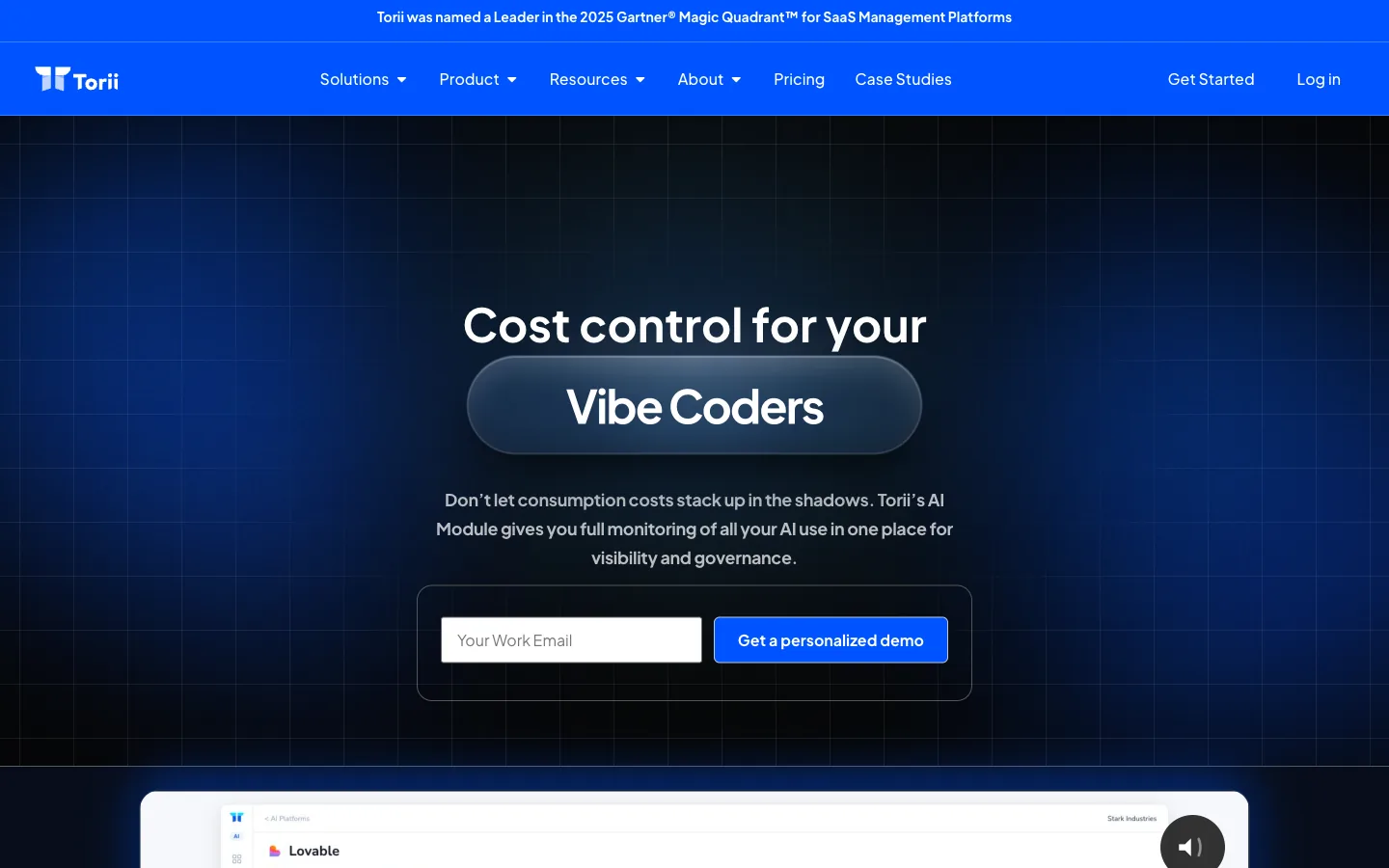
Torii works on Anthropic spend at the company level, before a single token charge lands on a finance report. It pulls signals from identity providers, SSO logs, HRIS, and expense feeds to surface every place Claude shows up, including raw Anthropic API keys, Claude.ai seats, and Claude-powered tools like Cursor that bill to personal cards.
The Torii AI Dashboard breaks Claude consumption down by user, team, and model. It pairs real-time usage with forward-looking spend forecasts so finance moves before a budget blows out. It also flags when one team pays for Anthropic API access and a competing assistant doing the same job, puts a dollar figure on that overlap, and marks dormant subscriptions for reclamation.
What Torii catches that per-request trackers miss:
- Anthropic API keys and Claude seats set up outside IT
- Per-user and per-team Claude spend across the whole stack
- Overlap when teams run Claude next to another AI assistant
- Renewal and budget exposure before an enterprise true-up
On top of that visibility, Torii governs access with SOC 2 Type II backing. Audit trails and quick deprovisioning cover the access side when someone leaves.
Pros:
- Finds Anthropic spend other tools never see
- Ties Claude cost to specific people and teams
- Flags duplicate AI subscriptions inside one team
- Reclaims idle AI seats before renewal
Cons:
- Pricing reflects enterprise coverage, not entry-level point pricing
- Built for SaaS and shadow-IT discovery, with no on-premise option
Vantage
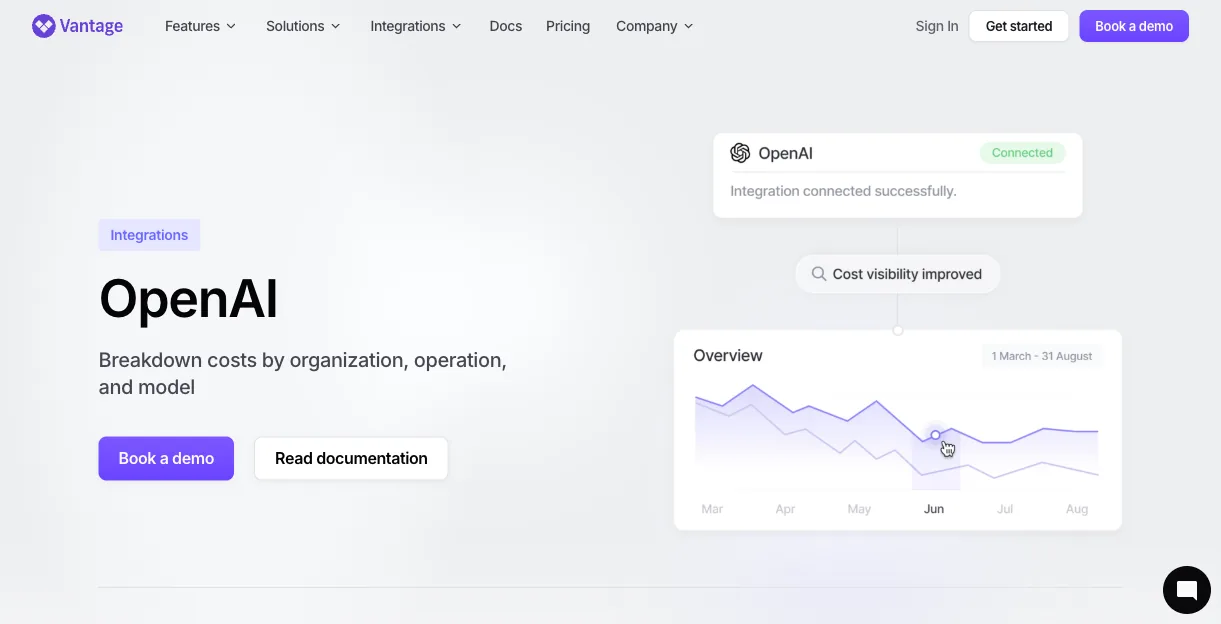
Vantage treats Anthropic as a first-class spend source, sitting right alongside your AWS, Azure, and GCP bills. It connects through Anthropic’s Admin API in read-only mode and pulls usage and cost data on a daily refresh, with no code to instrument.
Finance teams can slice Claude spend by model, workspace, API key, and service tier, which are the exact dimensions a chargeback needs. Vantage also breaks out cached-token reads as their own line, so you can tell whether prompt caching is actually earning its keep against the 90% cache-hit discount. Standard budget alerts and anomaly detection catch a runaway agent loop well before month-end.
Where Vantage goes deep on Claude cost:
- Per-model spend across Opus, Sonnet, and Haiku
- Cached-token reads shown as a separate cost line
- Budget alerts and anomaly detection for stray agents
- Claude spend lined up next to cloud and other AI bills
The platform already covers AWS and 20-plus other providers. A finance lead reviewing Anthropic costs in Vantage sees them in full company context, not on a standalone invoice.
Pros:
- Native Admin API connection with no proxy in the request path
- Finance-grade slicing by model, key, and service tier
- Shows Claude cost inside full cloud spend context
Cons:
- Refreshes daily rather than in real time
- Built for cost reporting, not per-request debugging
Helicone
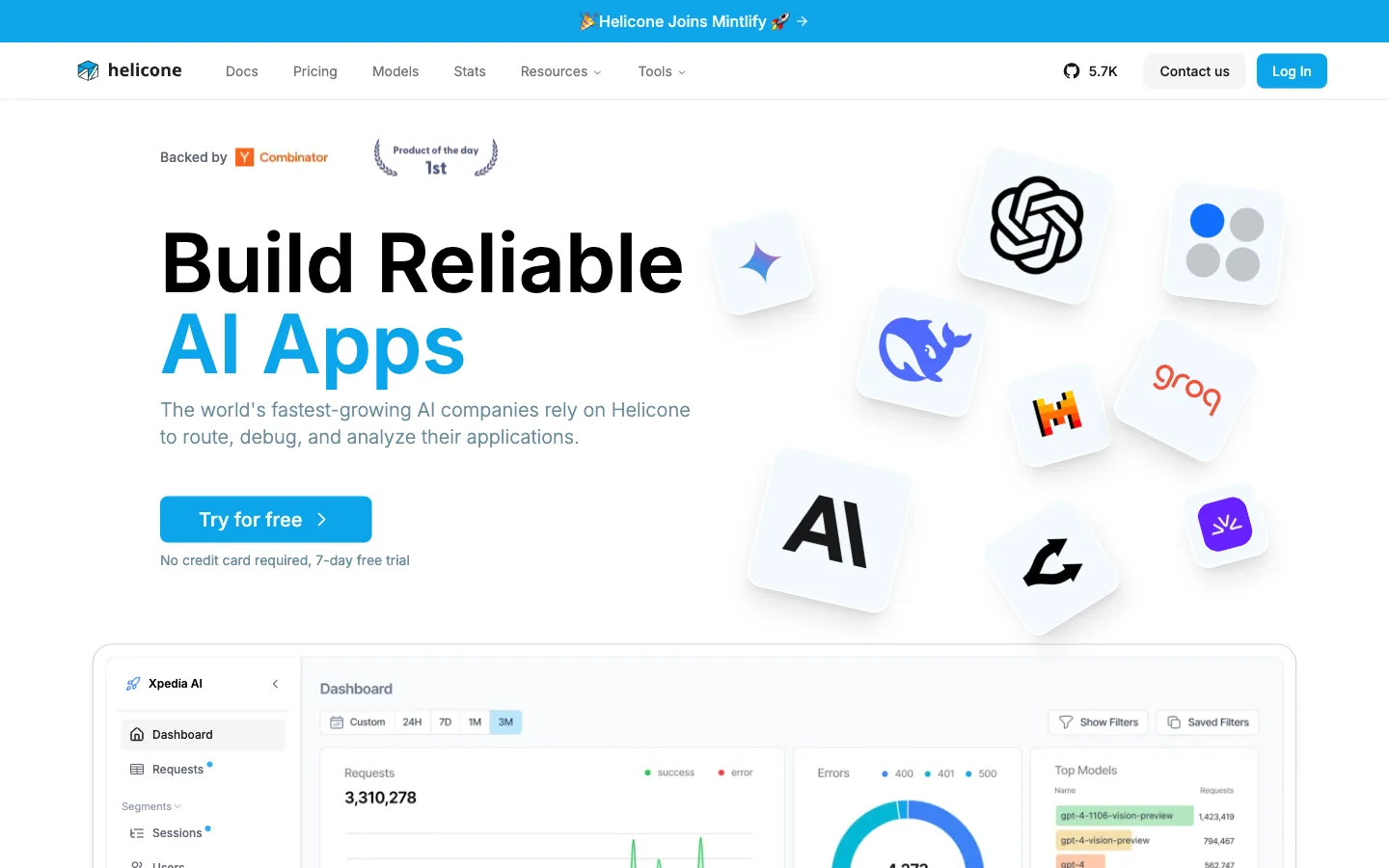
Helicone captures cost at the level of a single Claude request, which is where real unit economics live. Routing Anthropic calls through its proxy takes a small SDK change, and from then on every call logs token counts, latency, and exact dollar cost.
Custom Properties let teams tag each request by user, feature, or project. That tagging lets you answer cost-per-conversation or spot which feature burns the most Claude tokens. Its edge response caching returns repeat answers without hitting Anthropic at all, stacking on top of Claude’s own server-side prompt caching and showing up as dollars saved right on the dashboard.
What Helicone exposes for each request:
- Token count and exact cost on every Claude call
- Spend tagged by user, feature, or project
- Cache hits and the money they save
- Alerts when request cost drifts above normal
Teams that want this depth without standing up infrastructure can start on the hosted tier. The Helicone free plan covers a generous monthly log volume before paid usage kicks in.
Pros:
- Per-request token and cost data with little setup
- Tagging that supports true unit economics
- Response caching that cuts redundant Claude calls
Cons:
- Proxy sits in the request path by default
- Less suited to company-wide finance reporting
Langfuse
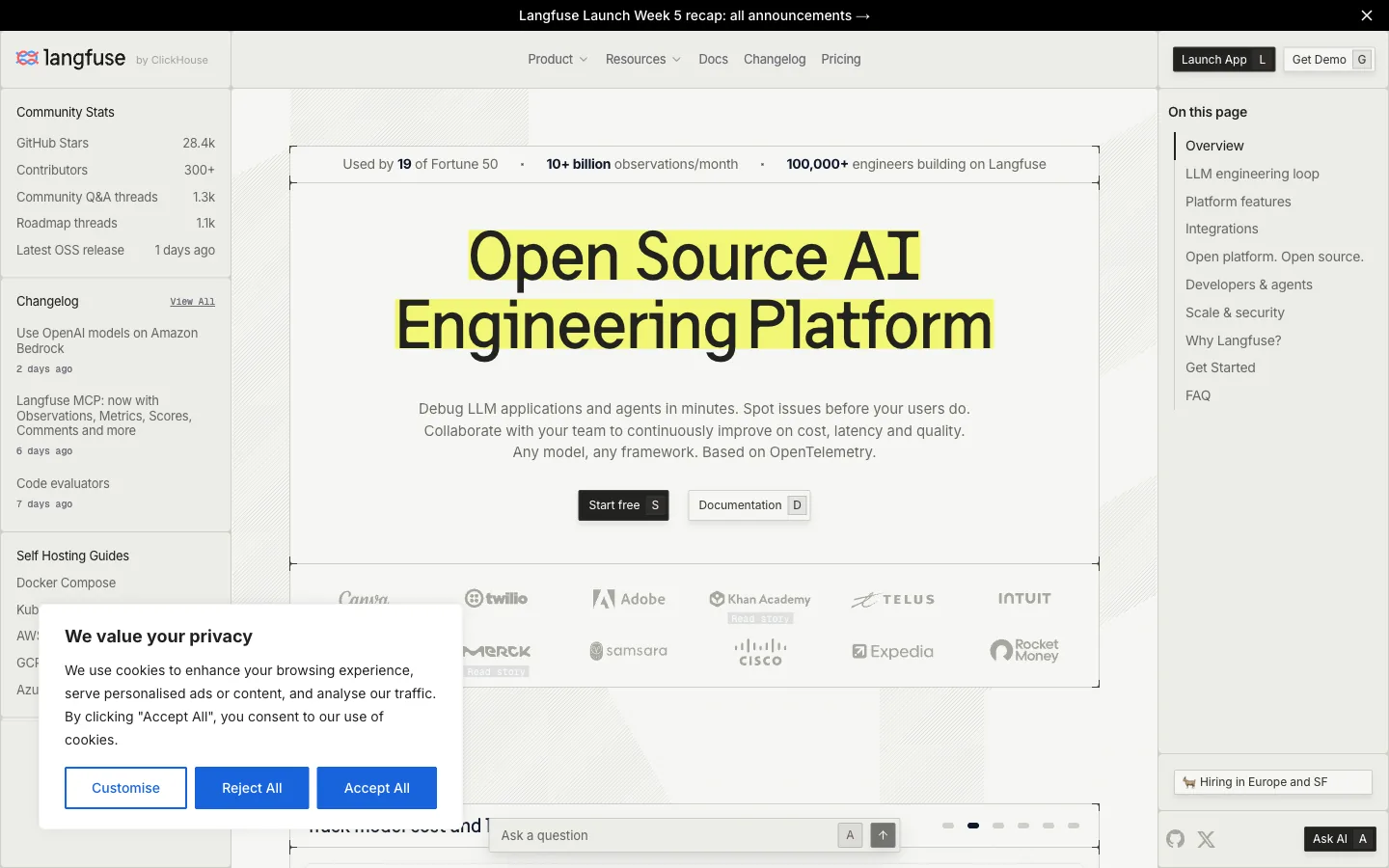
Langfuse is an open-source LLM engineering platform built for teams instrumenting Claude inside their own code. Its SDKs pull input tokens, output tokens, and cache-read tokens straight from Anthropic responses and attach a USD cost to every generation.
Developers tag traces with a user ID or feature name, then query the Metrics API. That query shows which feature cost the most last week or who ran up the biggest Claude bill. The project added support for Anthropic’s tiered prompt pricing in December 2025, so cached and fresh tokens get costed correctly instead of lumped together. Carrying an MIT license, it runs fully self-hosted for orgs with data-residency or high-volume needs.
Where Langfuse fits best:
- Cost attached to every trace, not just a monthly total
- Per-user and per-feature attribution through the Metrics API
- Correct costing for Anthropic’s tiered cache pricing
- Self-hosting for teams that can’t ship data to a vendor
You can run the whole stack yourself or let the team behind Langfuse host it. Either way suits engineering groups that want trace-level cost without a finance-first interface.
Pros:
- Open-source and self-hostable for data control
- Trace-level cost tied to users and features
- Handles tiered prompt-cache pricing correctly
Cons:
- Requires code instrumentation to capture cost
- Engineering-oriented, not a finance reporting tool
Per-request tools only track the Anthropic keys your engineers wired in on purpose. Torii discovers every Claude API key, Claude.ai seat, and Claude-powered app across the company, including the ones bought on personal cards, then ties usage and spend back to the people and teams behind them. See Torii AI Management.
Portkey
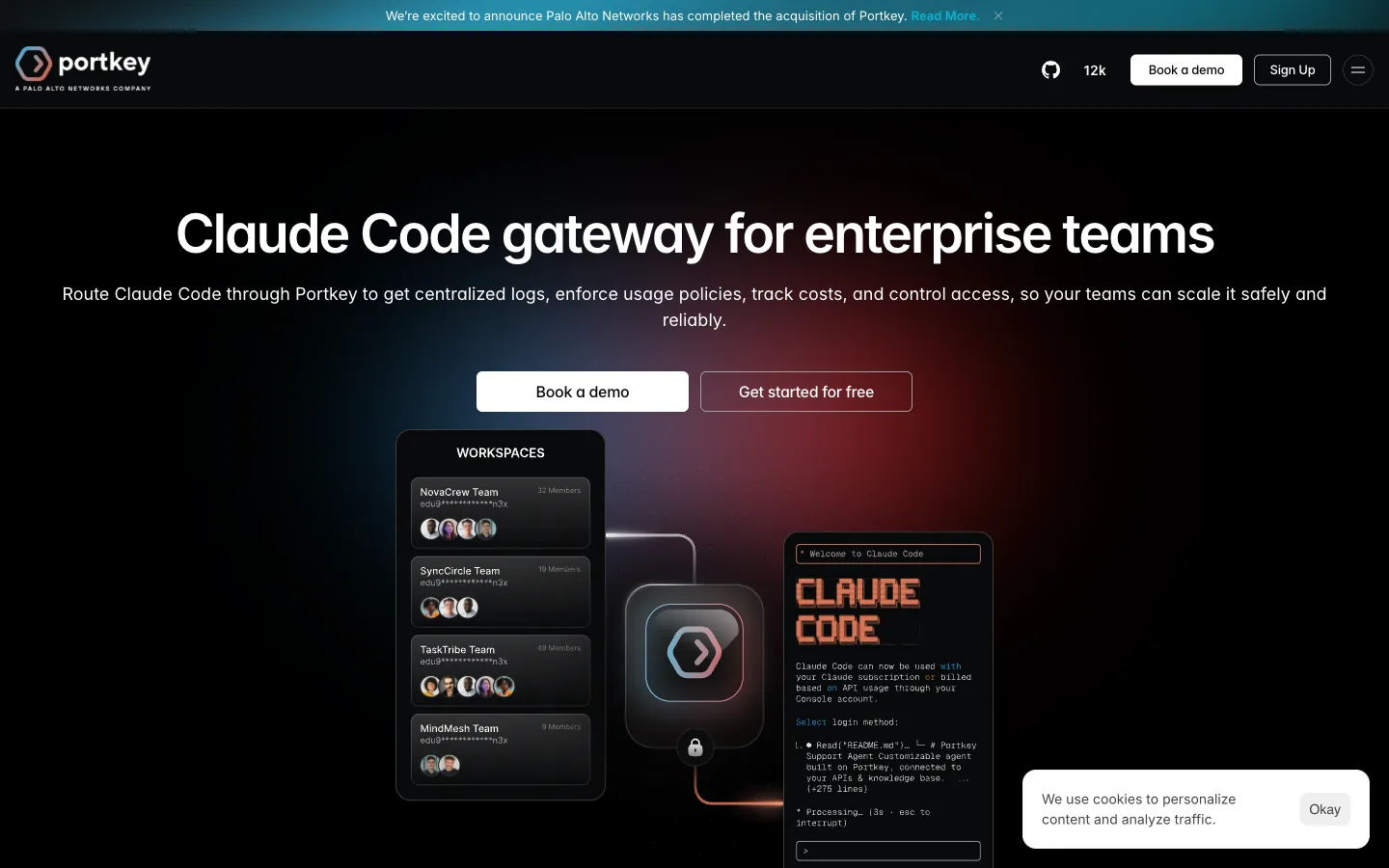
Portkey enforces spend limits on Claude traffic before the cost is ever incurred. That separates it from tools that only report after the fact. Its Model Catalog lets teams set hard USD caps and token quotas right on an Anthropic integration, with automatic weekly or monthly resets that cascade to everyone using that credential.
Virtual keys vault one real Anthropic key and hand out scoped versions. A dev environment runs on tight limits, production gets a bigger budget, and nobody touches the raw credential. Per-workspace rate limiting adds burst protection, and admins can block an expensive model like Opus for teams that don’t need it.
Where Portkey earns its place:
- Hard USD caps and token quotas on Anthropic integrations
- Scoped virtual keys per team or environment
- Rate limiting and burst protection per workspace
- Pass-through support for Anthropic prompt caching
For teams that want a gate instead of a bill, the Portkey gateway handles enforcement and observability in one layer.
Pros:
- Stops overspend before the tokens are billed
- Scoped keys keep raw credentials out of reach
- Per-model controls tier access by cost
Cons:
- Gateway sits between your app and Anthropic
- Heavier setup than a read-only cost report
Amberflo
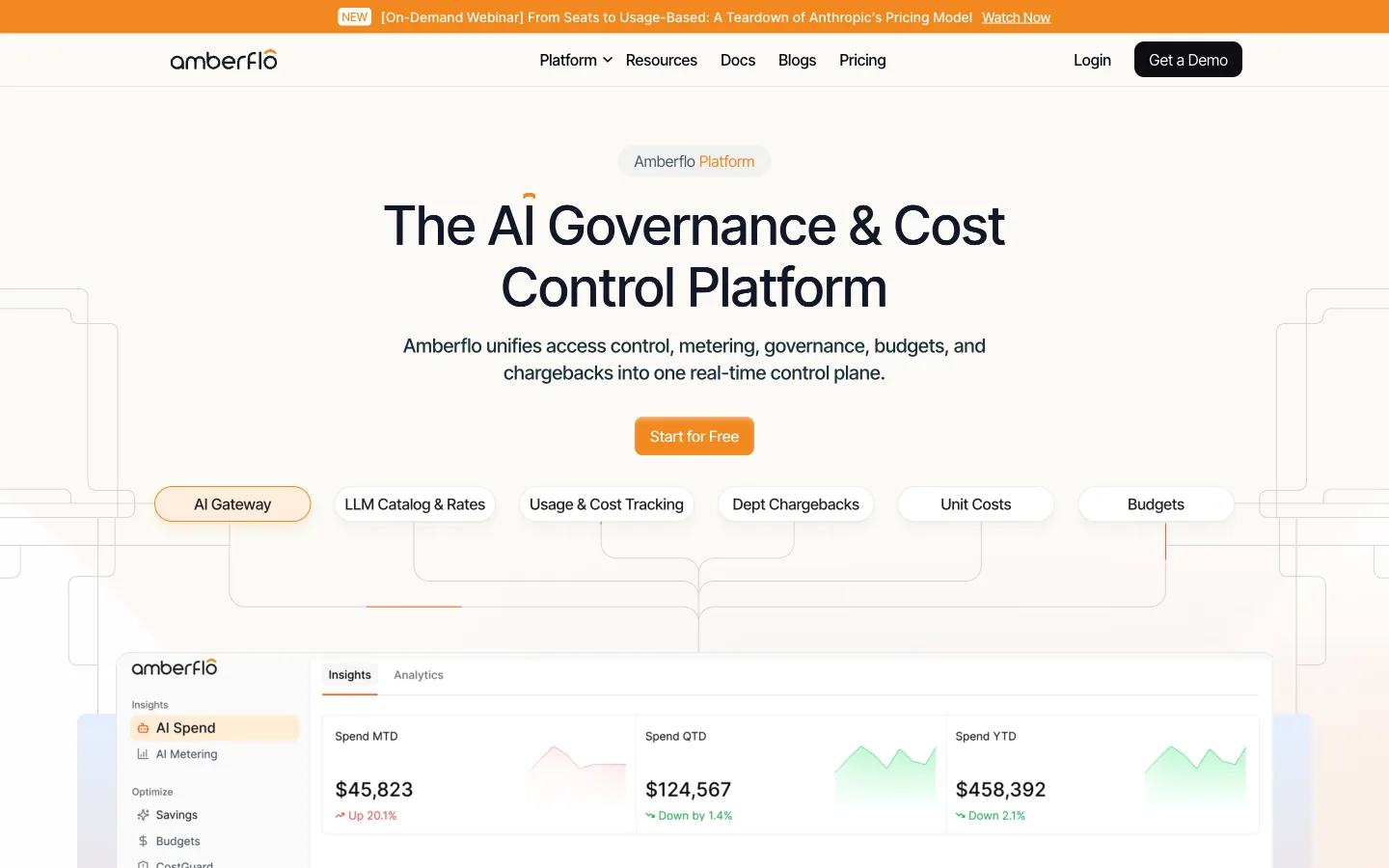
Amberflo meters Claude usage for companies that turn around and bill their own customers for it. It taps into AI gateways with no code instrumentation, capturing tokens, model, customer ID, and feature in a real-time cost ledger.
Its LLM Catalog maps model-specific input and output rates to Anthropic’s pricing tiers, so a price change updates every calculation without re-instrumenting anything. From there, Amberflo attributes each token to a customer, team, or workflow for department chargebacks and margin analysis. The same ledger then converts raw Claude costs into usage-based invoices with credit wallets and tiered pricing.
Where Amberflo stands out:
- Real-time token metering through gateway connectors
- Model rates mapped to Anthropic’s pricing tiers
- Chargebacks and margin analysis by customer or team
- Raw Claude cost turned into customer-facing invoices
Companies building products on Claude use Amberflo to keep their own pricing in step with what each customer’s tokens actually cost.
Pros:
- Connects metering directly to customer billing
- Tracks margin per customer and feature
- Updates pricing tiers without code changes
Cons:
- Built for monetization, not internal cost cleanup
- Overkill for teams that don’t resell Claude usage
Credal
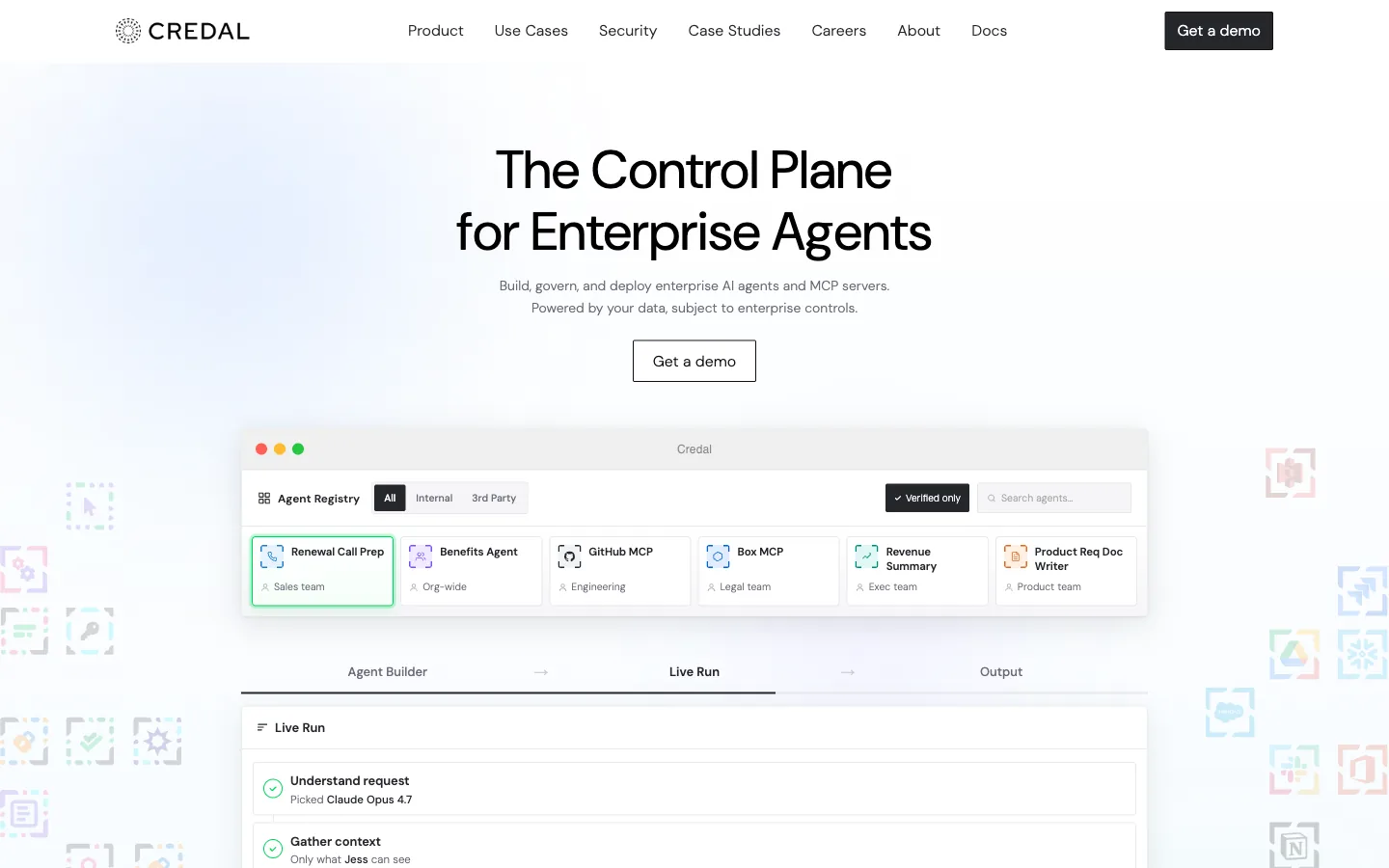
Credal comes at Claude spend from the control side, deciding who can use which model rather than tracking dollars after the fact. It holds a zero-data-retention agreement with Anthropic and supports bring-your-own-key, including in-VPC deployment through AWS Bedrock.
Because Claude runs on your own Anthropic account, spend stays put with no markup. Admins set per-user and per-agent access policies that effectively create cost tiers by rule. Restricting Opus to a few senior teams keeps cheaper models like Haiku and Sonnet as the default for everyone else, which quietly holds the bill down.
Where Credal helps most:
- Per-user and per-agent access to specific Claude models
- Bring-your-own-key with no spend markup
- Full audit logging of every Claude interaction
- Risk Monitor alerts on agents running up tokens
Governance teams adopt Credal when model access is really a policy question, with chargeback analysis falling out of the audit log as a bonus.
Pros:
- Controls cost through model-access policy
- Keeps Claude data and spend on your own account
- Audit trail covers every interaction
Cons:
- Manages access more than it measures dollars
- Enterprise governance focus, not a quick cost tracker
How to Choose an Anthropic Spend Tool
The right tool depends on who’s asking and what they need to control. Engineers instrumenting their own code lean on Langfuse and Helicone for trace and per-request detail, finance leans on Vantage and Amberflo for cost reporting and chargebacks, and platform teams use Portkey to cap spend before it happens. Credal fits orgs where model access is really a governance call. If your spend reaches past Claude, the same playbook covers OpenAI and ChatGPT spend and token usage across every vendor.
All seven share a blind spot: they measure the Anthropic keys and workspaces someone already connected. Whatever was signed up for on a personal card, or spun up in a team nobody told finance about, stays invisible to per-request tooling. Closing that gap is a discovery problem rather than an observability one, and it is the layer Torii and other AI management platforms work at. Most organizations end up pairing the two.
Torii answers "what Claude access exists and who owns it," not "what did this request cost." If your problem is an unknown Anthropic footprint, start there. If it is unit economics on traffic you already control, one of the per-request tools above is the better first buy. See Torii AI Management.
Frequently Asked Questions
Use prompt caching to cut repeated context costs up to 90%, move non-urgent work to the Batch API to save around 50%, route expensive features to cheaper models, and implement per-team token attribution so owners act on overspend. Combine these levers for big savings.
Per-request tools like Helicone and Langfuse log token counts, latency, and costs per Claude call, enabling feature-level chargebacks and cache-hit savings. Organization-level tools such as Torii and Vantage discover API keys, seats, and cross-team usage for finance reporting and subscription reclamation.
Use Portkey when you need hard limits: set USD caps, token quotas, virtual scoped keys, and per-workspace rate limits to stop overspend before it happens. Choose Credal when model access is a governance decision and you need BYO-key policies and detailed audit trails.
Finance teams use Vantage to bring Anthropic costs into cloud billing context, slicing spend by model, API key, and workspace with daily refreshes and anomaly alerts. Amberflo meters tokens in real time for customer chargebacks, margin analysis, and generating usage-based invoices.
Proxies like Helicone provide precise per-request token and cost metrics, tagging, and response caching that reduce Anthropic charges. Trade-offs include adding a proxy in the request path, potential latency, and being less suited for company-wide subscription discovery and finance reports.
Engineers wanting trace-level cost should pick Langfuse for self-hosted, MIT-licensed observability and correct tiered cache pricing, or Helicone for hosted per-request logs and easy tagging. Both attach cost to traces, but Langfuse requires more instrumentation and ops.