

7 Tools to Track GitHub Copilot Premium Request Usage in 2026
 Chris Shuptrine
•
Jun 21, 2026
•
12 min read
Chris Shuptrine
•
Jun 21, 2026
•
12 min read

Compare 7 tools to track GitHub Copilot premium request usage in 2026, from model multipliers to per-developer spend attribution.
Ask about this article
Opens Claude in a new tab to answer, using this article as the source.
GitHub Copilot premium requests became the line item finance teams started watching closely in 2026. On June 1, GitHub moved most plans to usage-based AI Credits; GitHub’s docs note that “1 AI credit = $0.01 USD, so a $10 budget covers 1,000 AI credits,” and the bill rises with every token a frontier model burns. Cheap models like GPT-5 mini sip credits, while Claude Opus and GPT-5.5 drain them fast.
The catch is attribution, since Business and Enterprise plans pool credits at the billing entity instead of giving each developer a fixed share. Native budgets exist, but the hard stop that caps overage stays off by default everywhere except the user level. So a handful of heavy agent users can quietly run the whole org past its allowance.
That gap between what Copilot reports and what you can act on is why third-party tools matter. Here is how Torii, GitHub Copilot, CloudEagle, Datadog, Productiv, Vantage, and Zylo compare for tracking premium request usage in 2026.
One AI Credit costs a penny, Business and Enterprise plans pool credits instead of allocating them per developer, and the overage hard stop ships off by default outside the user tier. Zylo data show 32.3% of GitHub licenses sit unused, so the waste compounds before anyone sees a bill.
★ = low · ★★ = medium · ★★★ = high
| Tool | Per-Dev Attribution | Overage Alerts | Multi-Tool Coverage | Forecasting |
|---|---|---|---|---|
| Torii | ★★★ | ★★★ | ★★★ | ★★ |
| GitHub Copilot | ★★ | ★★ | ★ | ★★ |
| CloudEagle | ★★★ | ★★★ | ★ | ★ |
| Datadog | ★ | ★★ | ★ | ★ |
| Productiv | ★ | ★ | ★★★ | ★★ |
| Vantage | ★★ | ★ | ★ | ★★★ |
| Zylo | ★ | ★ | ★★ | ★★★ |
Table of Contents
Torii
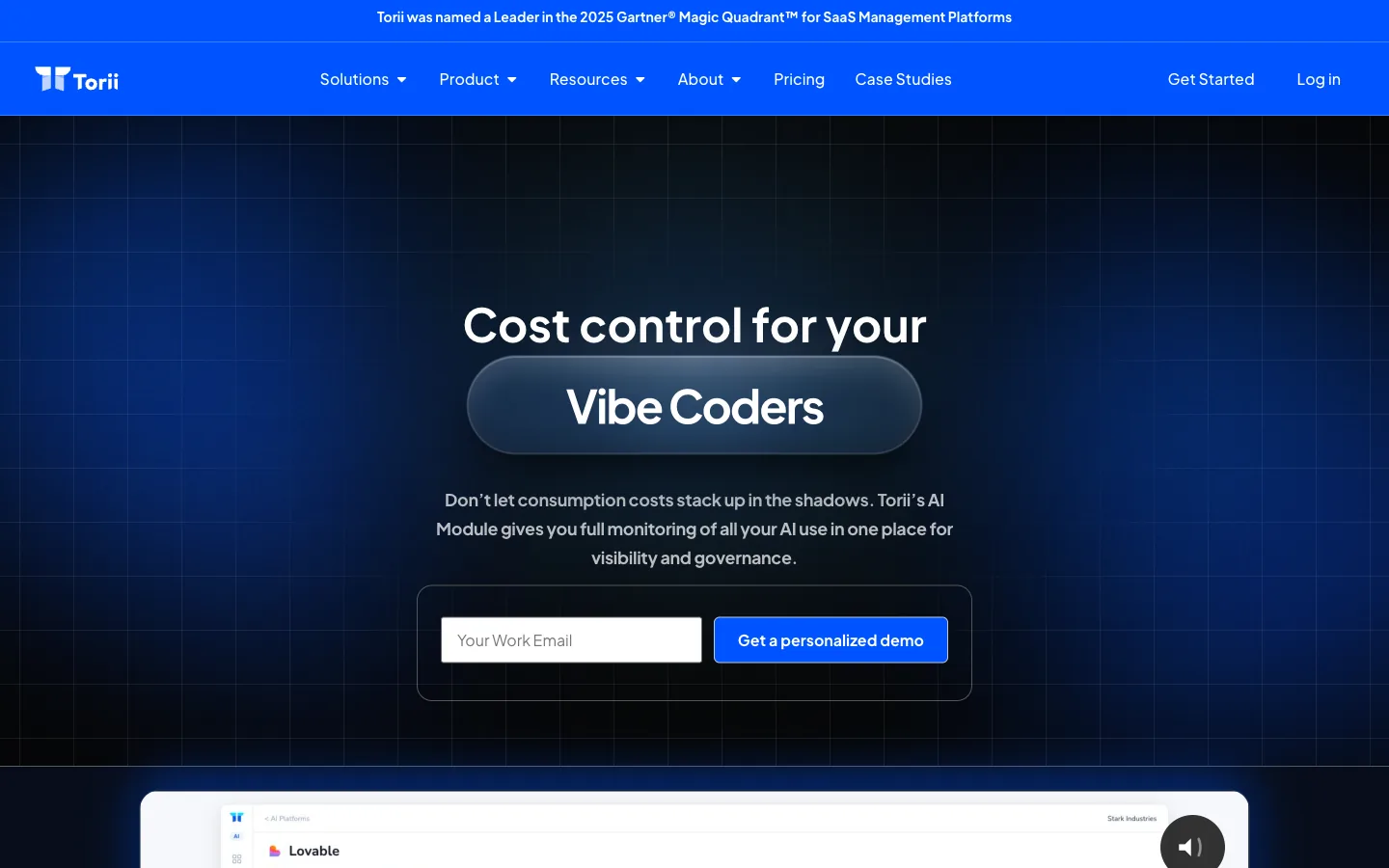
Torii is an AI Management Platform that treats Copilot as one app inside a much larger AI portfolio. It discovers every Copilot seat in use, including ones bought on personal cards, by reading SSO, HRIS, browser, and expense signals. That inventory becomes the base for tying premium request spend back to the people actually generating it.
Once seats are mapped, Torii folds Copilot credit spend into a single cross-tool AI cost view alongside Cursor, ChatGPT, and Claude. Finance gets the chargeback picture that pooled credits normally hide, broken out by team and department. Workflow automation then handles reclamation, renewal reminders, and access requests without anyone chasing tickets.
Its real edge is breadth, since shadow-AI discovery surfaces unmanaged tools the Copilot dashboard will never report. You can see the model on the Torii AI management platform page.
Where Torii fits premium request tracking:
- Discovers shadow Copilot seats through SSO, browser, and expense data
- Attributes pooled credit spend to teams and departments for chargeback
- Folds Copilot into one cross-tool AI cost view with Cursor and Claude
- Automates reclamation and access requests across the AI portfolio
Pros:
- Multi-source discovery that catches seats off the IdP
- Credit spend attributed for real chargeback
- Cross-tool view of every AI coding tool at once
- Automated reclamation and offboarding workflows
Cons:
- Built for enterprise breadth, so it is not the cheapest option here
- Centered on SaaS and shadow IT, with no on-premise deployment
| G2: 4.5/5 (303 reviews) | Capterra: 4.9/5 (26 reviews) |
GitHub Copilot
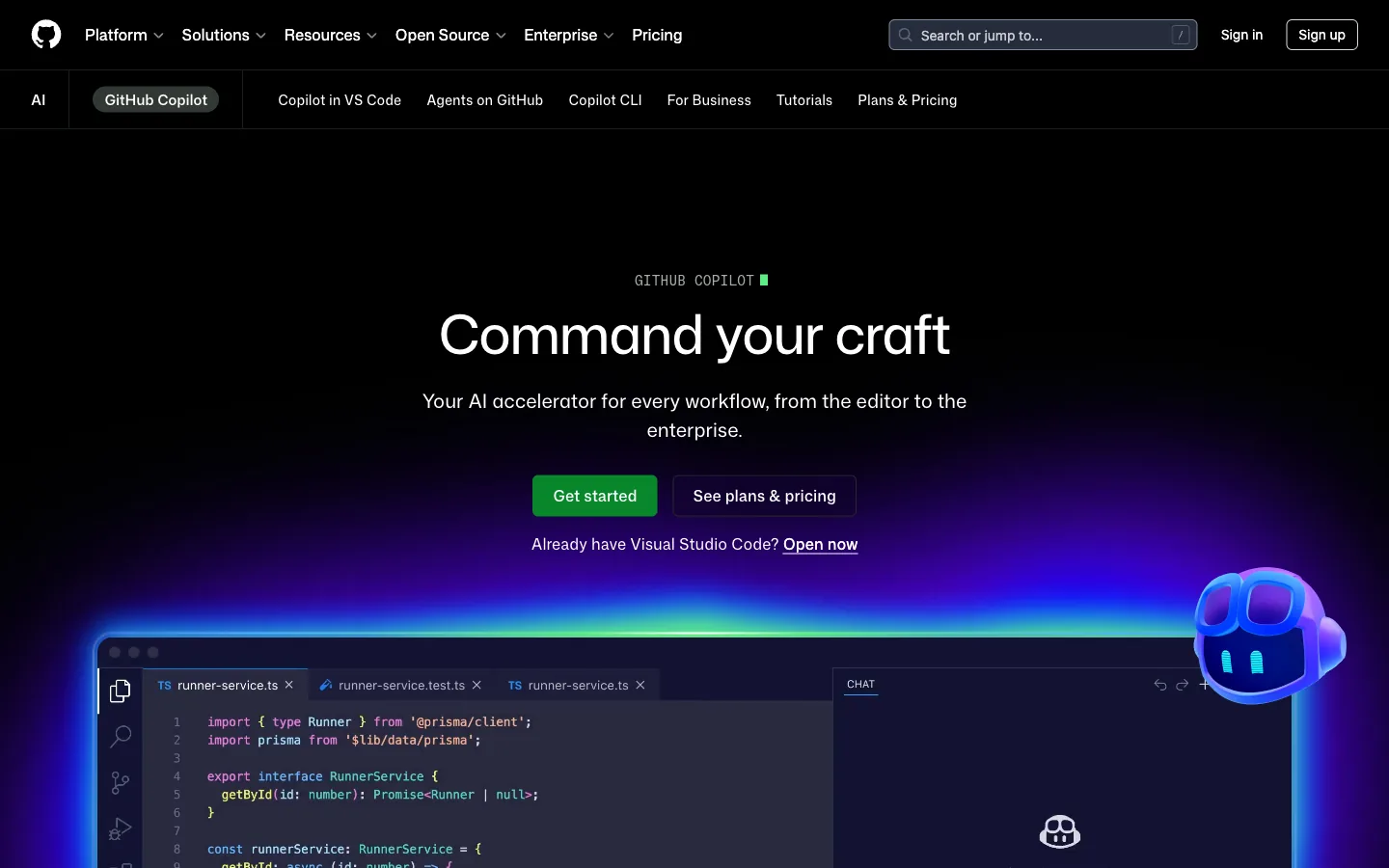
GitHub Copilot is the system of record every other tool on this list pulls from. Admins get a usage dashboard, the Copilot Metrics API, and the Billing Usage API covering premium request and AI Credit consumption. Since June 19, 2026, the Metrics API reports an ai_credits_used field that “indicates the total AI credits a user consumed,” though it is not yet broken down by model, feature, or surface.
The Billing Usage API returns ai_credit and premium_request numbers with up to 24 months of history for custom reports. Four budget tiers let you cap spend at the user, cost-center, org, or enterprise level. That native data is plenty for a team comfortable building its own reporting on top of it.
There are limits worth knowing before you rely on this alone. Pooled credits are not pre-allocated per developer, and enterprise-owned orgs still have per-user attribution gaps. The overage hard stop also stays off by default outside the user tier. The GitHub models and pricing docs explain how each model’s token pricing maps to credits.
What native reporting covers:
- Usage dashboard plus Metrics and Billing Usage APIs
- ai_credits_used per developer since June 2026
- 24 months of credit and premium request history
- Four budget tiers for capping spend
Pros:
- Free and already inside your GitHub admin console
- Direct source data with no third-party connector
- API access for building custom credit reports
Cons:
- Pooled credits with no per-developer allocation
- Overage hard stop off by default outside the user tier
- Attribution gaps for enterprise-owned orgs
| G2: 4.5/5 | Capterra: 4.6/5 |
CloudEagle

CloudEagle makes the most granular premium request claim of any third party here. Its AI governance module tracks per-user and per-team token consumption across Copilot, Cursor, ChatGPT, Claude, and Gemini in one dashboard. That maps credit burn to individual developers instead of a single pooled number.
The platform rolls that usage up to teams and departments so finance can run real chargeback against premium request spend. Threshold alerts fire as a developer nears a limit, say at 75% of an allowance, before overage ever hits the bill. Dormancy detection flags seats with zero activity over 30, 60, or 90 days and harvests them automatically.
It connects to Copilot through a direct API and benchmarks pricing against a large transaction dataset at renewal. The CloudEagle AI consumption guide walks through the per-user visibility approach.
Where CloudEagle fits premium request tracking:
- Per-user and per-team token consumption across five AI tools
- Department rollups for credit chargeback
- Threshold alerts before overage lands
- Automated harvesting of dormant seats
Pros:
- Genuine per-developer credit attribution
- Threshold alerts that head off overage
- Pricing benchmarks for renewal leverage
Cons:
- Procurement focus may exceed a usage-only need
- Five-tool breadth adds some setup overhead
| G2: 4.6/5 | Capterra: 4.7/5 |
Datadog
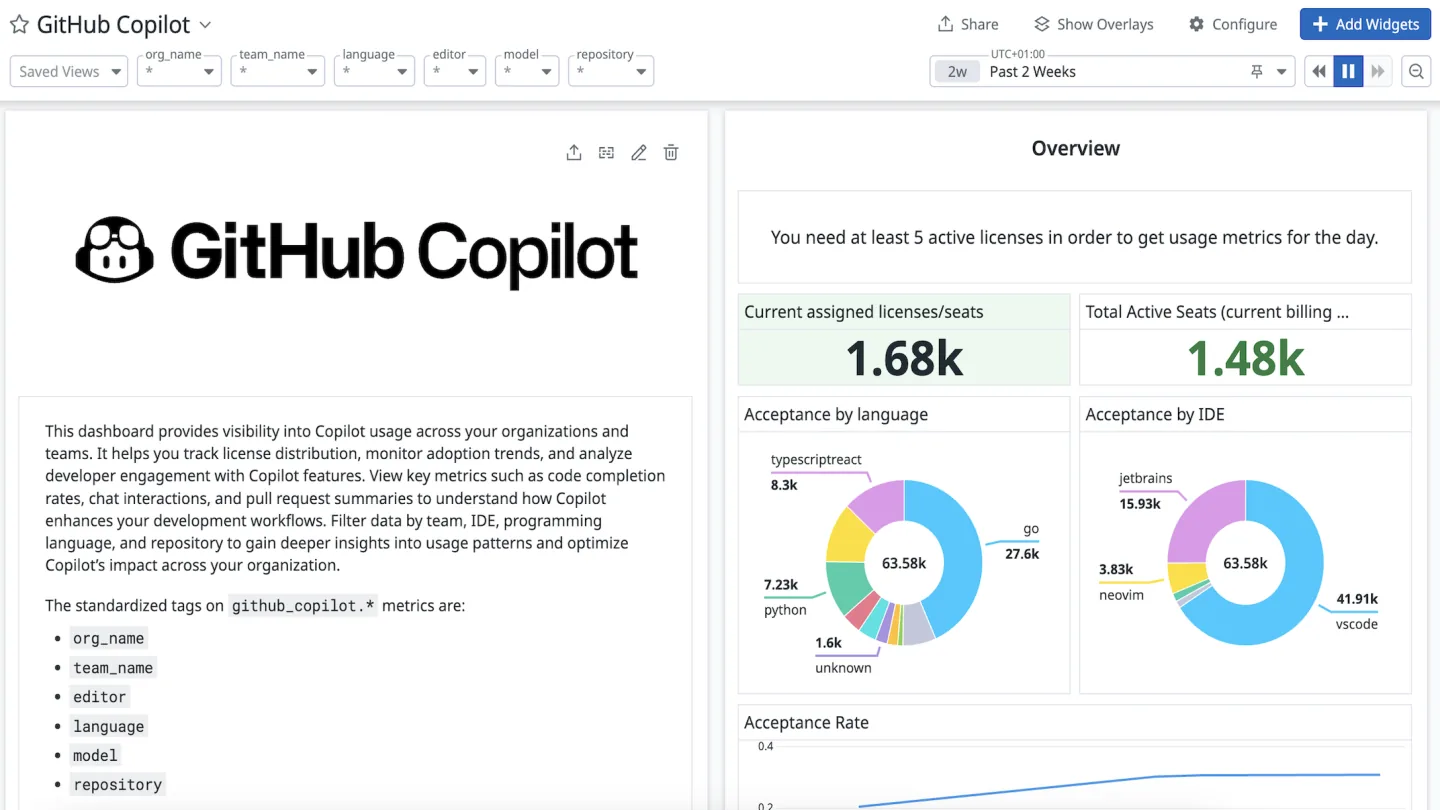
Datadog answers a different premium request question, which is whether the seats get used at all. Its first-party GitHub Copilot integration pulls the Metrics API into the same observability platform engineering teams already watch. Adoption, not credit cost, is what it does best.
The dashboards show daily, weekly, and monthly active users across completions, chat, agent mode, and CLI. Suggestion acceptance rates and agent contribution percentage round out the picture. Seat data separates billed from active and pending-cancellation licenses. You can alert when utilization drops below a threshold and correlate Copilot use with the rest of your engineering signals.
Credit cost and billing detail are outside its scope, so the question it answers is utilization, not per-request spend. The Datadog GitHub Copilot integration page covers setup.
Where Datadog fits premium request tracking:
- Active users across completions, chat, agent, and CLI
- Acceptance rate and agent contribution percentage
- Billed versus active versus pending-cancellation seats
- Threshold alerts on falling utilization
Pros:
- Deep adoption analytics in a familiar platform
- Alerting and correlation with engineering metrics
- Filters by developer, IDE, model, and team
Cons:
- No credit cost or billing visibility
- Real value assumes you already pay for Datadog
| G2: 4.3/5 | Capterra: 4.6/5 |
Pooled premium request credits hide which developers drive the bill, and a few heavy agent users can blow past the allowance unnoticed. Torii discovers every Copilot seat, attributes credit spend to real people for chargeback, and routes a downgrade through approval before overage lands. See how Torii manages AI spend.
Productiv

Productiv looks at Copilot from the portfolio level rather than the request level. The SaaS intelligence platform unifies SSO, expense, and contract signals into one view built around AI portfolio governance. For Copilot, that confirms licenses exist and surfaces aggregate spend instead of reading credit consumption directly.
Its strength is cross-stack context: which tools are in use, what they cost together, and where shadow developer tools keep spreading. Premium request depth is not the point here. The platform flags redundant or risky AI apps so IT can size the portfolio before negotiating renewals.
That makes Productiv a fit for buyers who want AI governance breadth over Copilot credit-level precision. The Productiv platform page shows the portfolio view.
Where Productiv fits premium request tracking:
- Portfolio view of every AI tool and its aggregate cost
- License confirmation through SSO and expense signals
- Shadow developer-tool discovery across the stack
- Redundancy flags ahead of renewals
Pros:
- Broad AI portfolio context in one view
- Strong shadow-AI discovery for finance and IT
Cons:
- No per-request or credit-level Copilot data
- Indirect spend read from expense, not the API
- Heavier fit for larger AI portfolios
G2: 4.6/5 (75 reviews)
Vantage
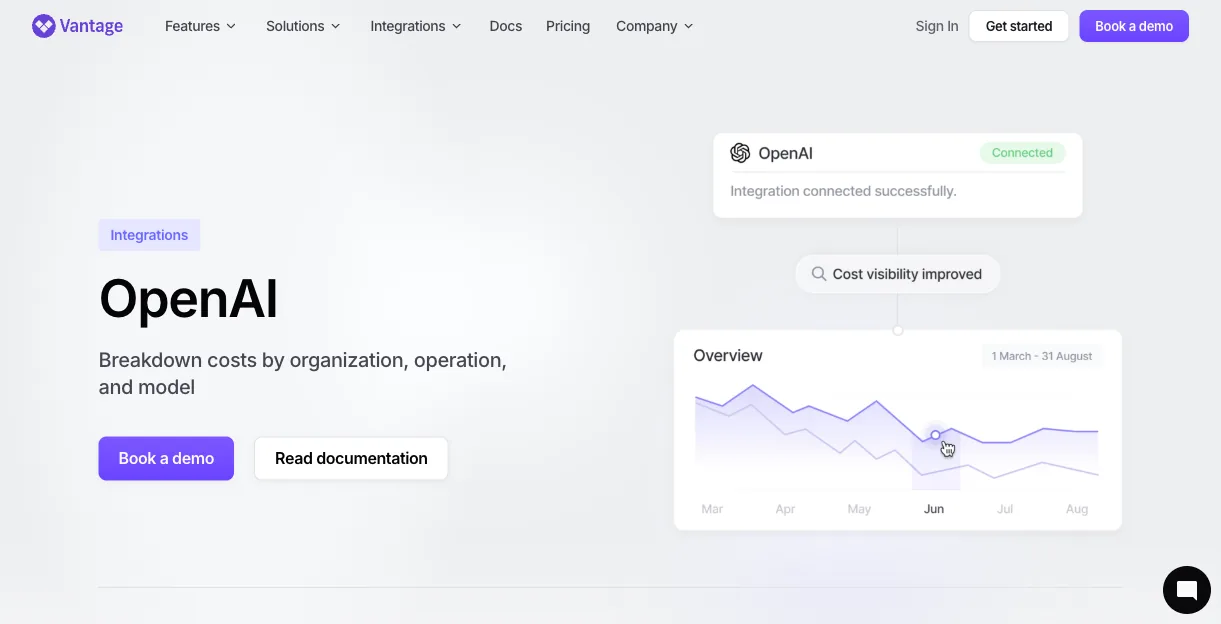
Vantage is the cleanest pure-cost fit when premium requests are really a dollars question. The FinOps platform treats GitHub as a cost provider alongside AWS, Azure, and GCP, ingesting spend through the GitHub Enhanced Billing API. Copilot lands in the same Cost Reports as the rest of your cloud bill.
As of June 1, 2026 it tracks Copilot AI Credits through a dedicated AICredits usage unit and seat costs as Copilot UserMonths. Those reports filter by org, repository, service, and custom virtual tags, so premium request consumption maps straight to dollars. Finance can slice Copilot spend the same way it slices infrastructure.
What it does not do is developer adoption or license hygiene, since its lens is financial allocation. The Vantage GitHub integration page details the supported units.
Where Vantage fits premium request tracking:
- AICredits usage unit for credit-level cost
- Copilot UserMonths for seat cost
- Cost Reports filtered by org, repo, and tags
- Copilot spend beside AWS, Azure, and GCP
Pros:
- Direct credit-to-dollar mapping in cost reports
- Copilot spend unified with cloud cost
- Virtual tags for flexible allocation
Cons:
- No adoption or acceptance metrics
- Built for FinOps, not seat reclamation
G2: 4.7/5
Zylo
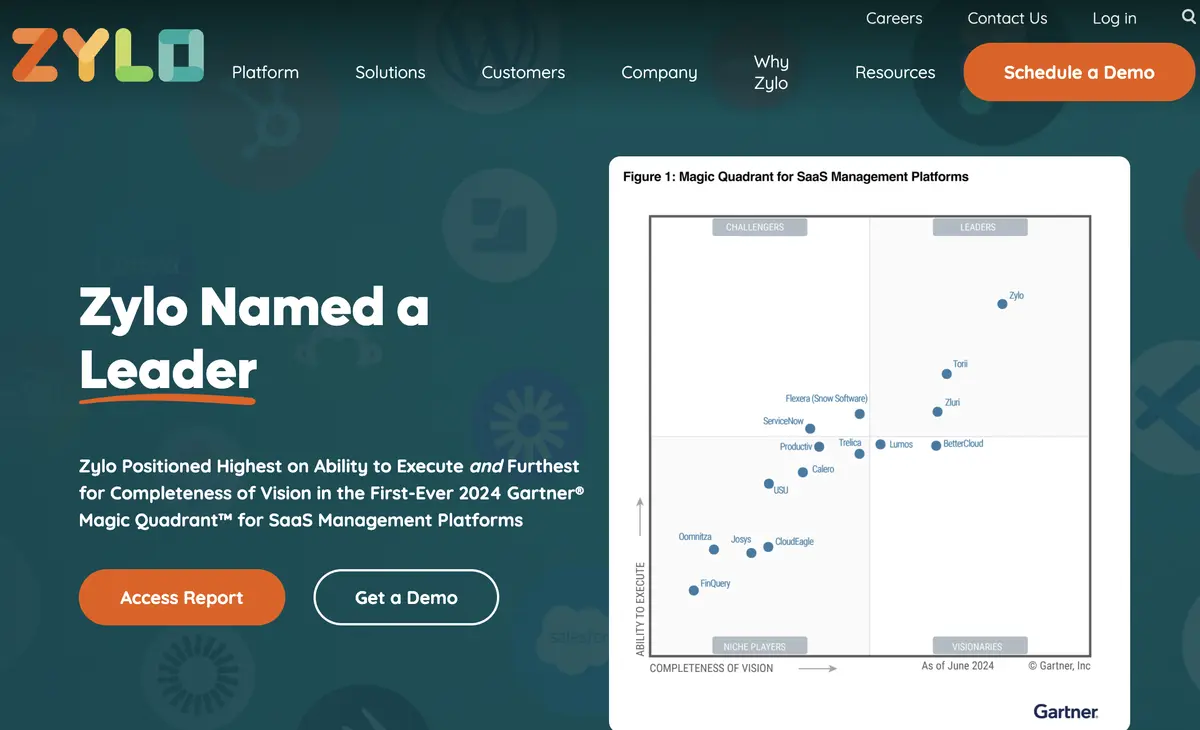
Zylo comes at Copilot through the contract and renewal angle the others mostly skip. The SaaS management platform uses a direct GitHub integration to capture real seat activity and split active licenses from dormant ones. Zylo’s own data show that “32.3% of GitHub licenses sit unused, and the average enterprise spends $240,000 annually on GitHub,” which is the waste it targets.
Renewal benchmarking and contract-deadline tracking sit at the center of the product, backed by a large dataset of SaaS pricing. Automated reclamation workflows pull idle seats back before a renewal locks in another year of spend. All of it wraps into a broader AI cost management view that tracks variable-billed models.
For premium requests, Zylo answers the seat-waste and contract-timing question rather than per-credit burn. The Zylo product page lays out the renewal tooling.
Where Zylo fits premium request tracking:
- Seat activity that flags dormant Copilot licenses
- Renewal benchmarking against real SaaS pricing data
- Contract-deadline tracking before auto-renewal
- Reclamation workflows for idle seats
Pros:
- Strong contract and renewal intelligence
- Benchmarking data for negotiation leverage
- Reclamation tied to renewal timing
Cons:
- Seat-level, not credit-level visibility
- Less granular on per-request consumption
| G2: 4.6/5 | Capterra: 4.5/5 |
How to Choose a Copilot Premium Request Tool
The right tool tracks whichever premium request question costs you most in 2026. GitHub’s native APIs and CloudEagle give you raw credit and per-developer consumption, Vantage maps that spend to dollars, and Datadog proves the seats get used. Productiv and Zylo handle portfolio governance and license and spend management across a wider AI stack.
If pooled credits and shadow seats hide who is really spending, start with what you can see. Torii discovers every Copilot seat, attributes credit spend to the developers behind it, and routes a reclaim or downgrade before overage alerts turn into a bigger bill.
You can only govern the Copilot credits you can see. Torii discovers every AI coding tool in use through SSO, HRIS, browser, and expense data, ties premium request spend back to each developer for chargeback, and frees idle seats before the next renewal. Explore the Torii platform.
Frequently Asked Questions
Pooled AI credits combine all Copilot usage under a single billing entity instead of allocating credits per developer. One AI Credit equals $0.01; model choice affects burn rate, so pooled credits can obscure which users actually generate costs.
Attribution shows which developers consume credits so finance can charge back, reclaim seats, or set limits. Without per-user allocation and with the overage hard stop off by default outside user tier, a few heavy agent users can drive large unexpected bills.
CloudEagle and Torii offer genuine per-developer tracking by linking seats and token burn to individual users. GitHub’s Metrics API now reports ai_credits_used per developer, while third parties add discovery, chargeback workflows, and automated reclamation.
Discover every Copilot seat, map credit burn to developers and teams, enable threshold alerts, and automate harvesting of dormant licenses. Combine GitHub budgets with third-party forecasting and chargeback to catch heavy usage before it becomes a surprise bill.
Vantage maps AICredits to dollars in FinOps cost reports, treating Copilot like other cloud spend. Datadog focuses on adoption and usage signals, while Productiv provides portfolio governance and contract context rather than per-request credit detail.
Choose by priority: use Torii or CloudEagle for discovery and per-developer attribution, Vantage for cost allocation and tagging, Datadog for adoption analytics, and Zylo or Productiv for renewal intelligence and portfolio governance.