

8 Tools to Manage GitHub Copilot Licenses and Spend in 2026
 Chris Shuptrine
•
Jun 17, 2026
•
14 min read
Chris Shuptrine
•
Jun 17, 2026
•
14 min read

Compare 8 tools to manage GitHub Copilot licenses and spend in 2026, from idle-seat reclamation to AI-credit cost control.
Ask about this article
Opens Claude in a new tab to answer, using this article as the source.
GitHub Copilot crossed 4.7 million paid subscribers by early 2026, and most companies buy seats faster than they track them. The trouble shows up on the invoice. Zylo found that 32.3% of GitHub licenses sit unused, with the average enterprise spending around $240,000 a year on GitHub. Seats get assigned on day one and then quietly forgotten.
The math got harder in June 2026 when GitHub switched to usage-based AI Credits billing. Credits now pool at the billing-entity level instead of per seat, which breaks the old way teams charged costs back to departments. GitHub’s billing docs note that “a user’s included AI credits are pooled at the billing entity level,” so “an enterprise with 100 Copilot Business users gets a shared pool of 190,000 AI credits rather than 100 individual buckets” (source). Native reporting only looks back 28 days, and it never reclaims an idle seat on its own, the same gap that pushes teams toward dedicated tools for managing Copilot Business and Enterprise plans.
These eight tools each close part of that gap, from finding dormant seats to capping credit spend before it runs over, and they pair naturally with GitHub Copilot contract management at renewal time. Several reach beyond Copilot into broader AI spend management across the whole stack.
Zylo pegs unused GitHub licenses at 32.3%, against roughly $240,000 in average annual GitHub spend. With June 2026's shift to pooled AI Credits and only 28 days of native lookback, idle seats are easy to miss and easy to keep paying for.
★ = low · ★★ = medium · ★★★ = high
| Tool | Seat Visibility | Idle-Seat Reclamation | Spend Tracking | Automation |
|---|---|---|---|---|
| Torii | ★★★ | ★★★ | ★★ | ★★★ |
| GitHub Copilot | ★★ | ★ | ★★ | ★ |
| Productiv | ★★ | ★★ | ★★ | ★★ |
| Zylo | ★★ | ★★ | ★★★ | ★ |
| CloudEagle | ★★ | ★★★ | ★★ | ★ |
| Josys | ★★ | ★★ | ★ | ★★★ |
| Vendr | ★ | ★ | ★★★ | ★★ |
| Sastrify | ★★ | ★★ | ★★ | ★ |
Table of Contents
Torii
Torii works a layer below Copilot itself, at the accounts and dollars that feed every seat. It discovers every app a company runs, AI coding tools included, then tracks utilization at the seat level instead of trusting login data alone. For Copilot, it builds spend dashboards split by employee, model, and time window, so finance can see exactly who is burning budget.
The part competitors rarely match is cross-tool overlap. Torii flags when a team pays for Copilot alongside Cursor, Claude Code, ChatGPT, or Gemini and attaches the dollar cost of each duplicate. Its Employee Lifecycle Automation pulls a seat the moment someone leaves or changes roles, closing the gap where a departed developer keeps a paid license. You can also ask Eko, Torii’s AI assistant, to surface waste and draft right-sizing rules straight from real usage. See how the Torii platform handles AI spend.
Where Torii fits Copilot cost control:
- Discovers Copilot seats and accounts through SSO, browser, and expense signals
- Splits spend dashboards by employee, model, and date range
- Detects duplicate AI tools and prices each overlap
- Reclaims or downgrades seats based on actual usage
Pros:
- Ties every Copilot seat and login back to a named employee
- Surfaces overlapping AI subscriptions with the cost attached
- Reclaims idle and orphaned seats automatically through lifecycle rules
- Covers the full SaaS estate, not just developer tools
Cons:
- Built for enterprise breadth, so it isn’t the cheapest option
- Focused on SaaS and shadow IT, without on-premise deployment
| G2: 4.5/5 (303 reviews) | Capterra: 4.9/5 (26 reviews) |
GitHub Copilot
GitHub’s own admin tools are the baseline every other product here builds on. The Copilot usage-metrics dashboard, generally available since February 2026, reports daily active users, acceptance rates, lines generated, and chat requests, with REST API and NDJSON export for teams that want the raw feed. GitHub’s docs describe a dashboard that “visualizes 28-day usage trends across your enterprise and organizations,” enough for a pulse check though the window only stretches back 28 days.
Seat management runs through the Copilot User Management API, which exposes each user’s last_activity_at field so admins can spot holders who never log in. GitHub won’t reclaim those seats for you, so teams script their own GitHub Actions or lean on community projects like copilot-license-cleanup. Under the June 2026 usage-based model, admins set budget controls at the user, cost-center, or enterprise level to cap premium request overages before they bill. The GitHub Copilot metrics docs cover the full API surface.
What you get natively:
- A 28-day dashboard for active users and acceptance rates
- A last_activity_at field exposed through the seat management API
- Budget caps at the user, cost-center, or enterprise level
- NDJSON and REST export for custom reporting
Pros:
- First-party data with no extra integration to buy
- Budget controls cap AI-credit overage at the source
- Open API supports custom reclamation scripts
Cons:
- Only 28 days of lookback hides longer dormancy
- No automated seat reclamation out of the box
- Telemetry opt-outs never show up in the reports
G2: 4.5/5
Productiv

Productiv measures engagement depth rather than logins, so it can tell a Copilot seat used daily from one opened once a quarter. That distinction matters because a large share of assigned Copilot seats go unused once the early novelty fades. When a paid seat sits idle, Productiv flags it for reallocation or cancellation at renewal and can suggest a tier downgrade instead of full removal.
Its AI Compliance Agent enforces policy across the stack and scans existing contracts for a cost trap many teams miss. Vendors increasingly embed Copilot-style AI features into subscriptions a company already pays for, and Productiv surfaces that overlap so teams don’t buy the same capability twice. No-code renewal workflows then trigger user surveys or reclamation actions based on real adoption signals ahead of the renewal date. The Productiv platform centers on these engagement metrics.
Where Productiv digs in:
- Engagement-depth scoring beyond simple login counts
- Idle-seat flags tied to renewal-date workflows
- Contract scans for embedded AI features you already own
- Survey-driven reclamation before a contract renews
Pros:
- Engagement data separates active seats from dormant ones
- Catches duplicate AI capability hidden inside other contracts
- Renewal workflows automate the right-sizing decision
Cons:
- The depth of analytics suits larger, data-rich orgs
- Less focused on direct contract negotiation
G2: 4.6/5
Zylo
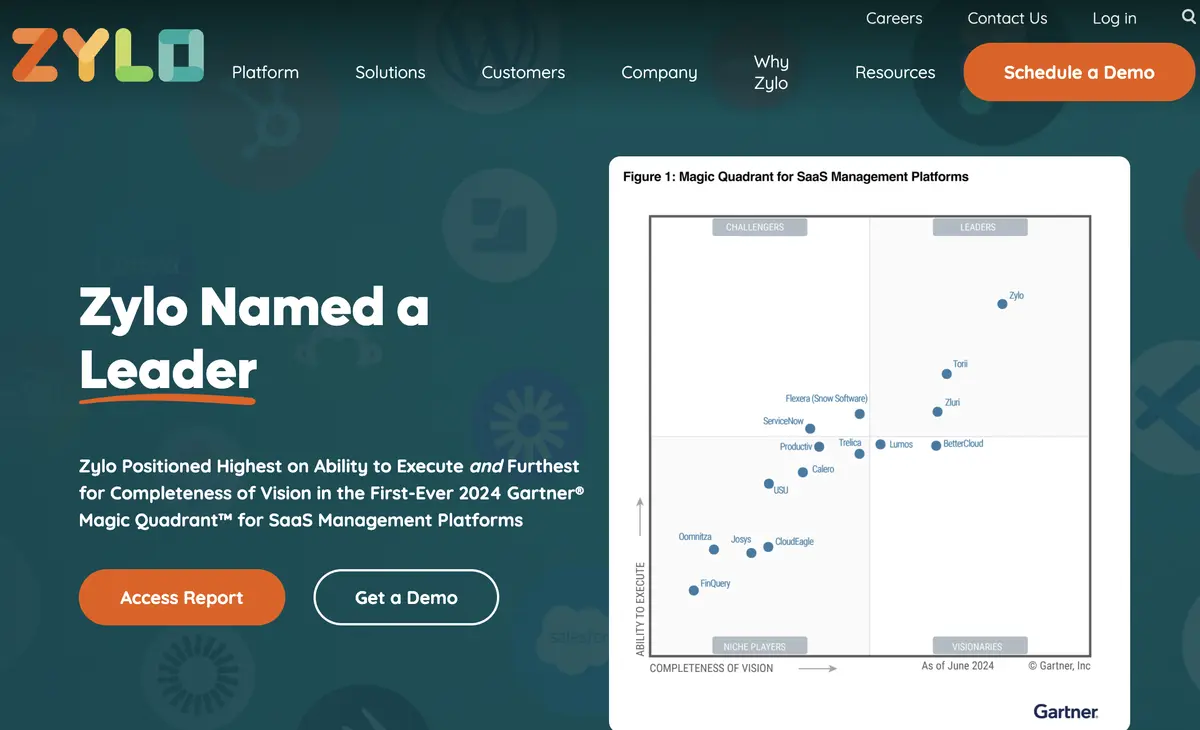
Zylo connects directly to GitHub to pull license and repository usage, then sets active-versus-dormant Copilot seats against the full SaaS portfolio. It’s the source of that headline number: as Zylo’s team puts it, “32.3% of GitHub licenses sit unused, and the average enterprise spends $240,000 annually on GitHub. That’s money that could be reallocated to tools and teams that actually drive value” (source). Seeing one tool’s waste next to everything else makes the priority hard to ignore.
What stands out for 2026 is how Zylo handles both pricing models at once. Its AI Cost Management module tracks seat-based pricing and the new AI-Credits consumption model in a single view, forecasting true-up exposure before a variable bill spikes. Idle-seat alerts fire automatically, and Zylo sends a confirmation survey before reclaiming a seat, so it never pulls one someone actually needs. The Renewal Calendar surfaces Copilot dates early, giving procurement time to negotiate against peer benchmarks. Details live on the Zylo platform.
Where Zylo leads:
- Direct GitHub sync for license and repository usage
- Forecasting across both seat and AI-Credit billing
- Idle-seat alerts paired with confirmation surveys
- A renewal calendar tied to benchmark pricing
Pros:
- Benchmark data grounds both audits and negotiations
- Forecasts variable AI-Credit spend before true-up
- Renewal calendar gives procurement real lead time
Cons:
- The enterprise focus can feel heavy for small teams
- Deeper value needs broad SaaS data to draw on
G2: 4.4/5
Most tools here report on seats you already know about. Torii works the other end, discovering Copilot accounts through SSO, browser, and expense data, tracking real per-seat usage, then reclaiming the dormant ones automatically. See how Torii cuts AI license waste.
CloudEagle

CloudEagle hooks into GitHub’s admin console to sync seat allocation, usage trends, and contract metadata in near real time for IT and procurement. Its main advantage is automation. It flags idle Copilot seats on configurable inactivity thresholds, usually 30 to 60 days, then runs reclamation through Okta or Microsoft AD on a set schedule with no manual admin step.
It also hunts down shadow Copilot subscriptions, the individual developer accounts that slip past procurement, and redirects those users to the sanctioned tier through policy. On the spend side, CloudEagle benchmarks contract pricing against more than $3 billion in analyzed SaaS transactions, flagging overpayment by SKU and volume tier. That gives finance a concrete number to bring to renewal negotiations. You can walk through the flow on the CloudEagle site.
What CloudEagle automates:
- Idle-seat detection on 30 to 60 day thresholds
- Scheduled reclamation through Okta or Microsoft AD
- Shadow-account redirection to the approved tier
- Price benchmarking across $3B+ in transactions
Pros:
- Hands-off reclamation runs on a scheduled cadence
- Redirects rogue developer accounts into governance
- Pricing benchmarks back up renewal negotiations
Cons:
- Heavy automation needs careful threshold tuning
- Best value assumes IDP integration is already in place
| G2: 4.7/5 | Capterra: 4.9/5 |
Josys
Josys pairs SaaS and identity management to cover a Copilot seat across its whole life, from assignment through deprovisioning. The moment an offboarding event fires, it revokes access automatically, so a departing developer never holds onto a live license. Its License Optimization Dashboard tracks active-versus-inactive Copilot use across connected apps and flags the seats worth a second look.
Low-activity users get an automatic survey before any seat gets pulled, which keeps reclamation from turning into a help-desk dispute. Josys also finds shadow Copilot accounts by scanning for apps tied to identities outside the corporate directory, then routes them through an Employee Request Portal for approval and central billing. From a single dashboard, admins can unassign, deprovision, or downgrade tiers without opening a separate GitHub session. The Josys platform ties that to AI spend recommendations.
How Josys handles the seat lifecycle:
- Automatic deprovisioning on any offboarding trigger
- Active-versus-inactive tracking across connected apps
- Shadow-account discovery against the corporate directory
- Tier changes from one admin dashboard
Pros:
- Lifecycle automation closes the offboarding gap fast
- One console replaces juggling separate GitHub admin sessions
- Request portal funnels shadow accounts into central billing
Cons:
- Identity-first design favors IT over procurement
- Negotiation and benchmarking aren’t the focus
G2: 4.6/5
Vendr
Vendr is the procurement and negotiation layer for Copilot spend, built on more than $15 billion in real software transactions including over 120 GitHub Copilot deals. For the contract side of the equation, nothing else here carries that depth of pricing data. Its GitHub buyer guide spells out median contract values and the discount ranges teams actually win.
The savings come from timing and benchmarks working together. Vendr documents 10 to 20% below-list pricing on 25-plus seats and 25 to 35% off large deployments, then points to GitHub’s quarter-end pressure dates and the value of engaging 90-plus days before renewal. Bundling Copilot into a GitHub Enterprise Cloud renewal can add another 10 to 20% in combined savings. Its procurement agents negotiate directly with GitHub using anonymized deal data and competitor postures like GitLab as pressure points. The Vendr buyer guide lays out the numbers.
What Vendr brings to the table:
- Pricing benchmarks drawn from 120+ Copilot deals
- Discount ranges by seat count and deployment size
- Renewal-timing guidance around quarter-end pressure
- Bundled savings with GitHub Enterprise Cloud
Pros:
- The deepest contract and pricing benchmark data here
- Renewal-timing intelligence sharpens every negotiation
- Agents can negotiate with GitHub on your behalf
Cons:
- Procurement focus, light on usage and seat telemetry
- Most of the value lands at renewal, not day to day
G2: 4.5/5
Sastrify
Sastrify, acquired by Deel in May 2026, blends automated discovery with hands-on procurement help. Its engine connects to IDPs, browsers, and ERPs to surface Copilot subscriptions that bypass procurement, then maps each one to its usage and spend. That handles the discovery work before any person needs to get involved.
The Contracts AI Extractor reads Copilot agreements and tags pricing tiers, auto-renewal clauses, and SLAs into a calendar with alerts so a costly auto-renewal never slips through. Usage analytics flag unused seats and overlapping developer-tool licenses for right-sizing ahead of each renewal. For teams that want additional support, Sastrify’s procurement specialists negotiate directly with GitHub’s sales team, pairing platform data with category expertise. The Sastrify platform combines the software and the service.
Where Sastrify helps most:
- Discovery across IDPs, browsers, and ERP data
- AI extraction of renewal clauses and SLAs from contracts
- Auto-renewal alerts on a managed calendar
- Specialists who negotiate with GitHub directly
Pros:
- Human experts handle the negotiation legwork
- Contract AI catches renewal traps automatically
- Discovery surfaces off-procurement Copilot use
Cons:
- The service layer adds cost over pure software
- Roadmap is less certain after the Deel acquisition
G2: 4.6/5
How to Choose a Copilot License and Spend Tool
The right tool tracks where your Copilot waste actually concentrates. Teams fighting idle seats lean toward CloudEagle or Josys for automated reclamation, while those wrestling the new AI-Credits model look to Zylo’s forecasting. Vendr and Sastrify own the negotiation side, and GitHub’s native dashboard covers the basics at no extra cost.
All of that assumes you can already see every Copilot seat and account in play. Torii starts there, discovering shadow AI across the company, tying each seat to an owner, and reclaiming the dormant licenses before they hit another renewal.
Seats are only as manageable as the visibility behind them. Torii surfaces every AI tool in use through SSO, browser, HRIS, and expense data, attributes each Copilot license to an employee, and revokes access automatically when people leave. See the Torii platform.
Frequently Asked Questions
Zylo estimates about 32.3% of GitHub Copilot licenses sit unused. The average enterprise Copilot bill is roughly $240,000 per year, so unused seats create large recurring waste that compounds under seat- or credits-based billing without active reclamation.
GitHub switched to usage-based AI Credits pooled at the billing-entity level in June 2026, which breaks per-seat cost allocation. Teams can no longer rely on per-seat invoices, and native lookback limits make it hard to forecast or charge departments accurately.
GitHub's native dashboard offers a 28-day lookback, daily activity metrics, and API exports, but it won't reclaim idle seats automatically and telemetry opt-outs hide some usage. Admins must script reclamation or use third-party tools for longer-term visibility.
CloudEagle and Josys provide scheduled or event-driven reclamation through identity providers, while Torii discovers shadow accounts and automates lifecycle rules. Zylo and Productiv focus on forecasting and renewal workflows to flag seats before renewals. Each tool covers different gaps.
Torii discovers Copilot accounts via SSO, browser, HRIS, and expense data, ties each seat to an employee, detects cross-tool overlaps, and can automatically reclaim idle licenses through Employee Lifecycle Automation and its AI assistant Eko.
Choose based on the problem: pick CloudEagle or Josys for automated reclamation, Zylo or Productiv for forecasting and renewal workflows, Vendr or Sastrify for negotiation and pricing benchmarks, and Torii if you need inventory discovery and seat-level attribution.