

6 AI Tool Onboarding and Provisioning Platforms for 2026
 Chris Shuptrine
•
Jun 8, 2026
•
12 min read
•
Updated June 8, 2026
Chris Shuptrine
•
Jun 8, 2026
•
12 min read
•
Updated June 8, 2026
Compare six AI tool onboarding and provisioning platforms that automate access, governance, and lifecycle for AI SaaS in 2026.
Ask about this article
Opens Claude in a new tab to answer, using this article as the source.
AI tool onboarding looks nothing like SaaS onboarding did five years ago. In 2026, the average enterprise portfolio reaches 2,191 apps, and only 15.5 percent of applications are formally sanctioned. Employees are not waiting for approval either: a Cybernews survey of 1,003 U.S. employees found that 59 percent admit to using unapproved AI tools at work (Cybernews survey of 1,003 U.S. employees, published September 30, 2025). That gap shows up on Day 1, when a new hire signs into ChatGPT with a personal email before HR finishes payroll setup.
The underlying provisioning infrastructure adds another layer of cost. SCIM is gated to premium tiers across most AI vendors, and the identity side carries its own line item. Microsoft’s licensing table lists “Automated user provisioning to SaaS apps” as available on Entra ID Free, but automated group provisioning to SaaS apps, which is how birthright bundles actually get built, starts at Entra ID P1 (Microsoft Entra licensing). P1 lists at “$7.00 user/month, paid yearly”, which is $42,000 a year across 500 people before you license a single AI seat. Regulators arrived on the same timeline. “From 2 August 2026, the European Commission’s AI Office, together with national authorities, will begin enforcing the Artificial Intelligence (AI) Act”, and on the same date new transparency rules started to apply, “requiring certain AI systems to tell users when they are interacting with AI and when content has been generated or altered by it” (European Commission). The heaviest obligations moved, though: the AI Omnibus that entered into force on July 27, 2026 pushed the Annex III high-risk rules to “2 December 2027” (European Commission). ISO/IEC 42001, which ISO calls “the world’s first AI management system standard” (ISO), adds documented management-system requirements on top.
Each of the six platforms below solves a different piece of the grant-access lifecycle, from shadow-AI discovery through SCIM-driven Day 1 bundles to agent identity. Most teams pair two of them.
2,191 apps per enterprise, with 15.5 percent formally sanctioned (Torii 2026 SaaS Benchmark Report) · 59 percent of U.S. employees admit using unapproved AI tools at work (Cybernews survey of 1,003 employees, September 2025) · Entra ID P1 at $7.00 per user per month, or $42,000 a year for 500 people (Microsoft Entra pricing) · EU AI Act enforcement and Article 50 transparency rules began August 2, 2026, with Annex III high-risk rules moved to December 2, 2027 (European Commission).
★ = low · ★★ = medium · ★★★ = high
| Tool | AI App Coverage | Automation Depth | Integration Breadth | Time-to-Deploy |
|---|---|---|---|---|
| Torii | ★★★ | ★★★ | ★★★ | ★★ |
| BetterCloud | ★★ | ★★★ | ★★ | ★ |
| Lumos | ★★ | ★★ | ★★ | ★★ |
| Nudge Security | ★★★ | ★ | ★★ | ★★ |
| Okta | ★★ | ★★ | ★★★ | ★ |
| Zluri | ★★ | ★★★ | ★★ | ★ |
Table of Contents
Torii
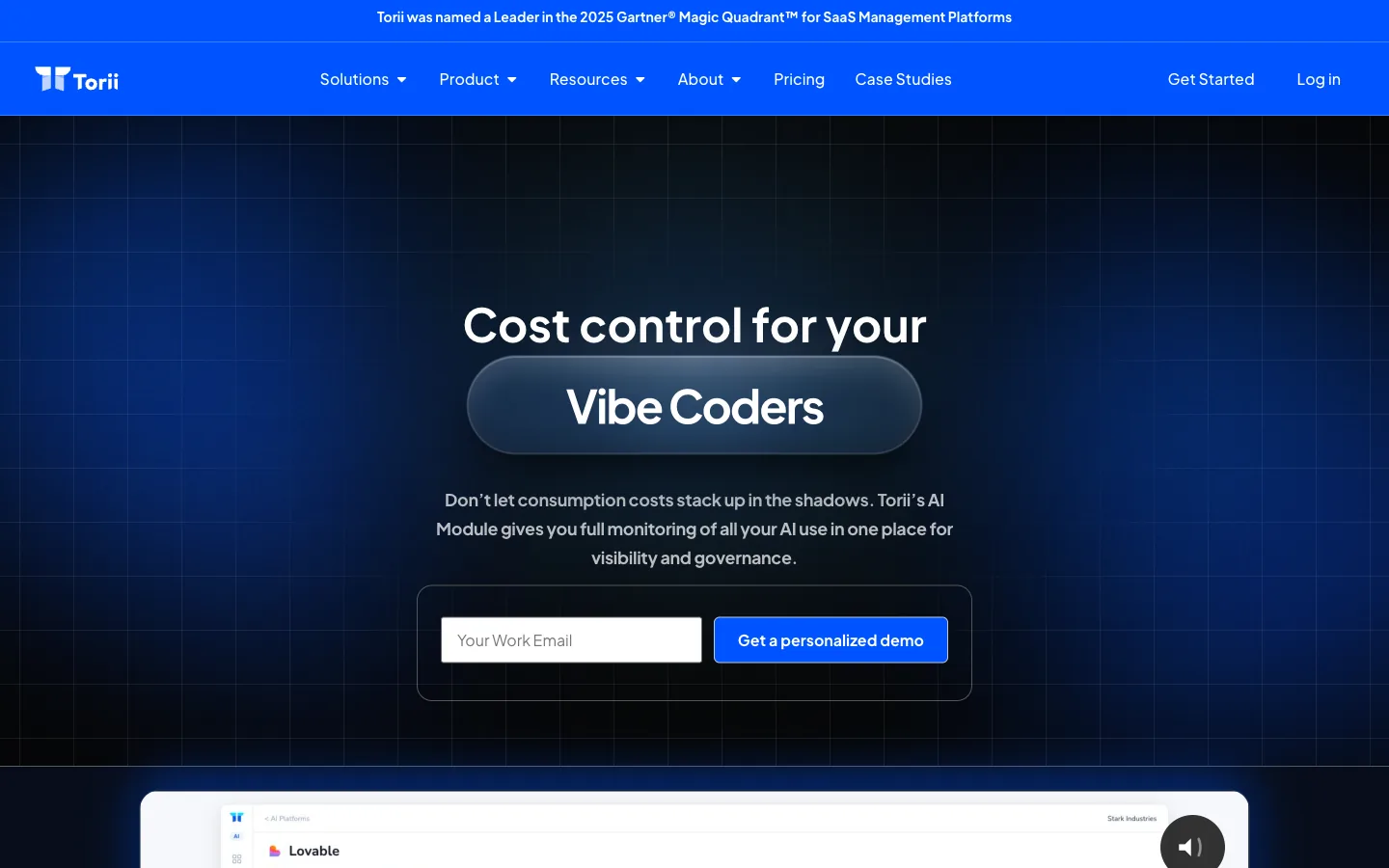
Torii treats AI onboarding as a discovery problem first and a provisioning problem second. The platform pulls signals from SSO logs, OAuth grants, browser extensions, finance feeds, and HRIS to surface every AI tool already in use, including the personal-account ChatGPT signups that bypass procurement. Once a tool surfaces, it can flow into a sanctioned AI management catalog that employees request from inside Slack or the browser, with approvals routed to the right owner automatically.
On the provisioning side, Torii’s workflow engine grants birthright AI access on Day 1 through SCIM and Okta group push, with role and department logic that fits joiner, mover, and reorg events. Post-provisioning, the AI Dashboard tracks per-user token spend, redundant subscriptions, and project-level ROI so finance sees what got handed out. Get a walkthrough on the Torii AI Dashboard.
Pros:
- Multi-source discovery catches AI tools that bypass SSO, including expensed or browser-only signups
- Self-service App Catalog turns shadow AI into governed access through Slack and browser requests
- SCIM and Okta group push automate birthright bundles for joiners and movers
- AI Dashboard ties provisioning back to token spend and license overlap per user
Cons:
- Pricing reflects enterprise-grade coverage, not entry-level point pricing
- Built for SaaS and Shadow-IT environments; no on-premise deployment
| G2: 4.5/5 (302 reviews) | Capterra: 4.9/5 (26 reviews) |
BetterCloud
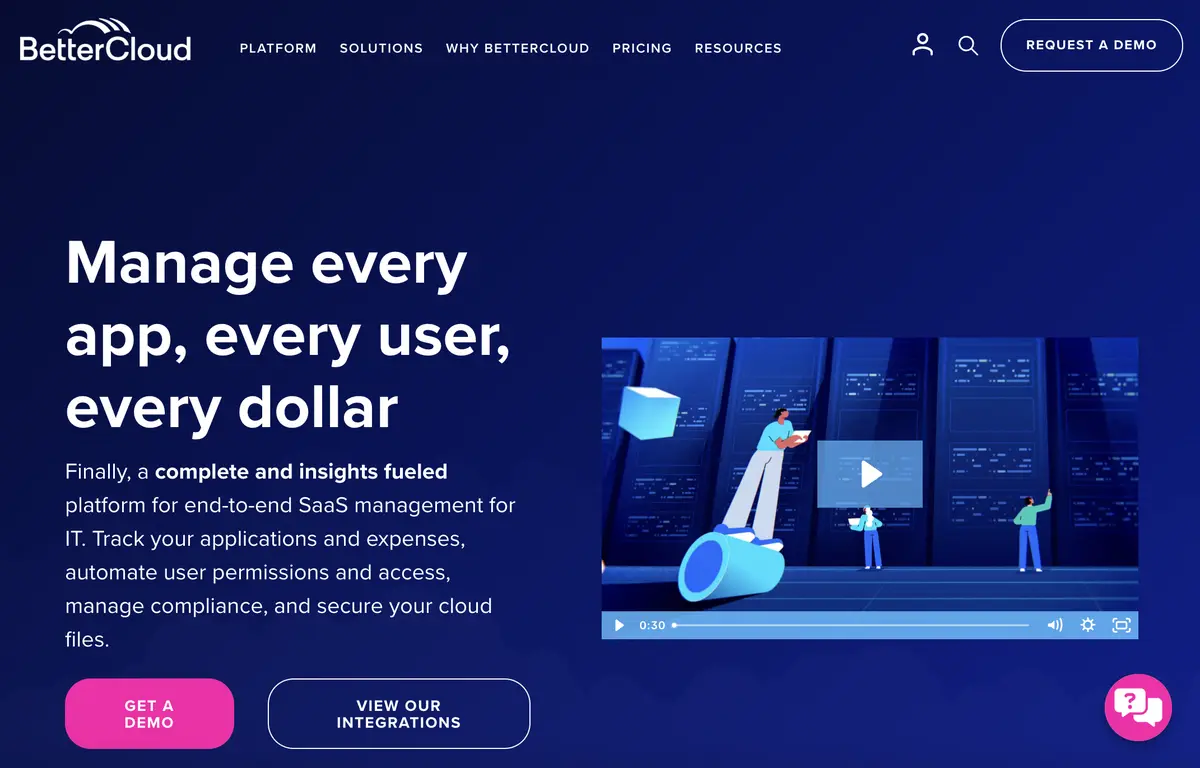
BetterCloud has spent a decade building a no-code SaaSOps workflow engine, and in 2026 it points that engine at AI tools as a distinct category. BetterCloud advertises “100+ integrations and 1,000+ actions provided out-of-the-box”, which means a joiner flow can assign an M365 Copilot license, push a ChatGPT Enterprise seat, and add the new hire to a Glean group inside one HRIS-triggered run. The Shadow AI module surfaces unsanctioned AI signups through OAuth and SSO logs, then routes each finding to auto-suspend or an intake form.
The March 2026 CoreStack acquisition pushed the company to reposition the platform as an Agentic Governance OS spanning cloud, SaaS, and AI. The AI-native control plane is still early relative to the legacy SaaSOps depth, but the action library covers most provisioning surfaces enterprises ask for. Read the product detail on the BetterCloud user automation page.
Pros:
- 1,000+ pre-built actions across 100+ integrations cover most AI SaaS provisioning paths
- HRIS-triggered joiner flows assign AI licenses on Day 1 without scripting
- Shadow AI module catches unsanctioned signups via OAuth and SSO logs
Cons:
- Agentic AI control plane added through CoreStack is still maturing
- Heavier admin lift than newer AppStore-style request layers
| G2: 4.4/5 (565 reviews) | Capterra: 4.5/5 (76 reviews) |
Lumos
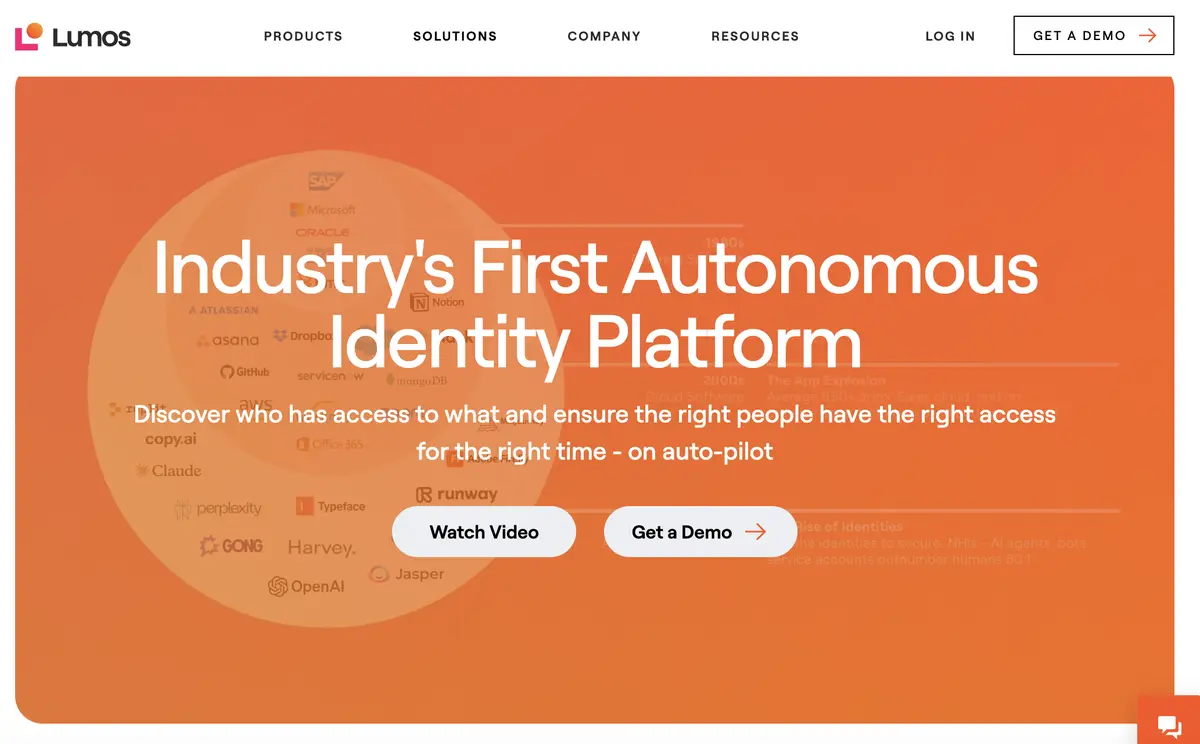
Lumos is built around the employee request layer rather than the admin console. Its AppStore lets employees ask for ChatGPT, Copilot, Cursor, or any other AI tool directly from Slack, Teams, or the browser, and policy-compliant requests auto-fulfill through SCIM without a ticket touching IT. Birthright AI bundles fire on hire through HRIS and IdP triggers, with role-based scoping that keeps engineers from inheriting a Sales AI license they will never open.
Supporting the request layer is Albus, an Autonomous Identity agent that recommends least-privilege bundles, flags anomalies in access patterns, and automates access reviews. Lumos does not publish list pricing, and aims the product at mid-market companies that cannot stomach a full SailPoint deployment. The platform is strongest when AI access flows through IdP groups rather than vendor-direct portals. See the Lumos AppStore page for the full request flow.
Pros:
- AppStore turns AI tool requests into self-service SCIM fulfillment
- Albus agent recommends least-privilege bundles and automates reviews
- Request-first design suits mid-market teams that do not want a full IGA rollout
- Strong fit for IdP-centric stacks built on Okta or Entra
Cons:
- Less depth on shadow-AI discovery than dedicated SaaS-management tools
- AI tools without SCIM still require manual provisioning steps
| G2: 4.8/5 (200 reviews) | Capterra: 4.6/5 (10 reviews) |
Torii pulls SSO, finance, OAuth, browser, and HRIS signals into one AI inventory, then routes every newly discovered tool into a self-service App Catalog with SCIM-backed onboarding workflows. The same engine handles role-based Day 1 bundles, mover events, and offboarding revocations. Tour the AI Dashboard.
Nudge Security
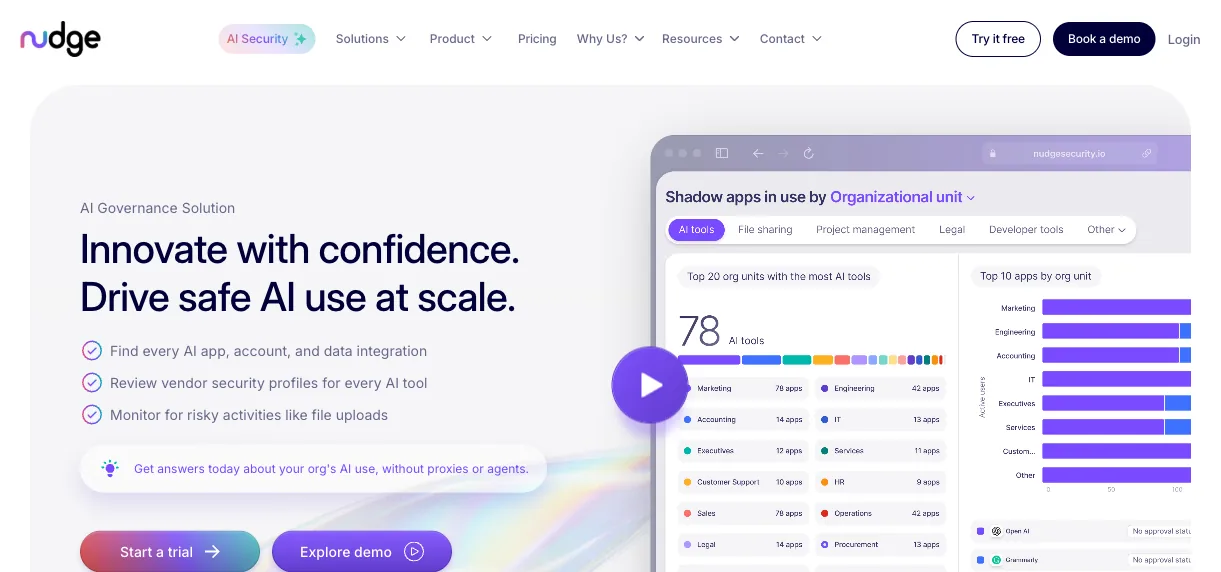
Nudge Security flips the usual block-or-allow model on its head. The platform watches email and browser signals for new AI account creations, then sends just-in-time nudges to the employee with acceptable-use guidance instead of cutting off access. Admins curate which AI apps trigger nudges, set app owners who get pulled in for review, and watch for sensitive file uploads to AI chatbots like ChatGPT and Claude.
Behind the behavioral layer is a catalog Nudge describes as “Over 1,500 unique AI tools discovered across a variety of organizations”, with “An average of 39 unique AI tools per organization” (Nudge Security, December 2025). Nudge maps SaaS-to-AI integrations over MCP, API, and webhook connections, which matters when a sanctioned tool like Slack quietly turns into an AI surface through an embedded assistant. The model fits cultures that prize developer and analyst productivity over hard gates. Nudge’s GenAI onboarding writeup walks through the playbook.
Pros:
- Just-in-time nudges preserve productivity instead of blocking AI access cold
- 1,500+ AI tool catalog with integration mapping over MCP, API, and webhooks
- App-owner routing keeps governance close to the teams actually using each tool
Cons:
- Behavior-led approach assumes employees will read and act on guidance
- Lighter on SCIM-style automated provisioning than IGA-grade tools
| G2: 4.8/5 (33 reviews) | Capterra: 4.7/5 (19 reviews) |
Okta
Okta already controls the identity layer at most enterprises, and that position translates directly into AI provisioning. Okta’s integration directory advertises “more than 8,000 ready-to-use, pre-built integrations”, a subset of which carry SCIM-based lifecycle support, including ChatGPT Enterprise (refreshed in 2025), Claude for Work, and Microsoft Copilot Studio. Standard joiner-mover-leaver flows grant or revoke AI tool access based on group membership, with no separate workflow license needed for the basic provisioning paths.
The April 2026 Okta for AI Agents release treats AI agents as first-class identities. Each agent gets a discovered identity, an assigned owner, short-lived credentials, and a kill switch that revokes access across connected apps. A Bedrock AgentCore integration extends governance across cross-app agent workflows. Okta is the heaviest dependency on this list, but it is also the layer every other tool here builds against. Browse the full feature set on the Okta Lifecycle Management page.
Pros:
- 8,000+ OIN integrations, with SCIM provisioning for the major AI vendors
- Joiner-mover-leaver flows tie AI access to group membership without custom code
- Okta for AI Agents treats agents as first-class identities with revocation paths
- Bedrock AgentCore integration covers cross-app agent governance
Cons:
- Workflows tier carries a real premium for advanced branching logic
- Coverage depends on each AI vendor exposing SCIM or SAML, which many free tiers do not
| G2: 4.5/5 (1,000+ reviews) | Capterra: 4.7/5 (110 reviews) |
Zluri
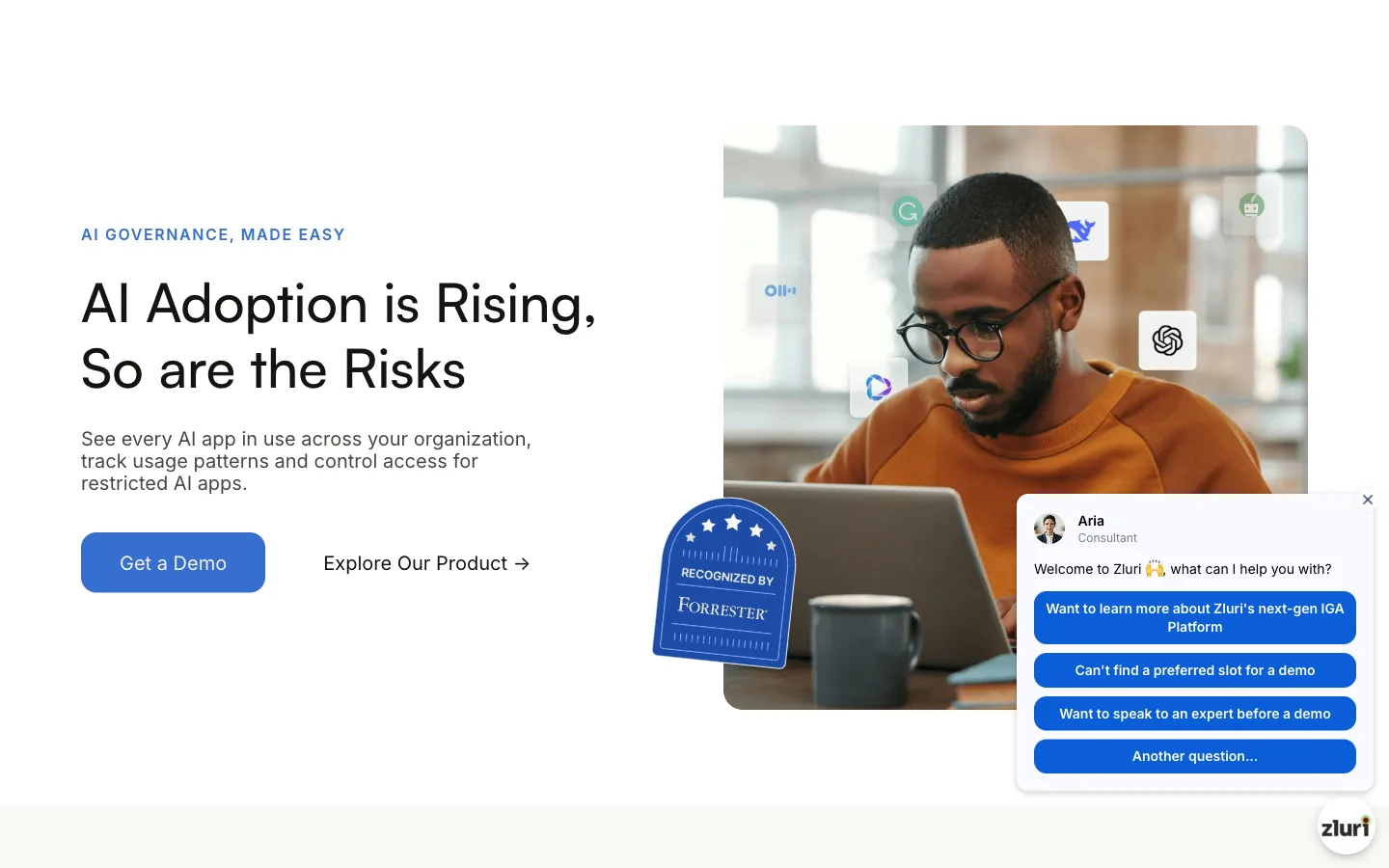
Zluri sits at the IGA end of this list with a dedicated AI app governance layer on top. Zluri’s own research states the visibility gap plainly: “IT teams have visibility into less than 20% of the AI applications employees actually use” (Zluri). It maps findings against a catalog Zluri says reached “239,000 apps” after adding roughly 79,000 new applications (Zluri), with a tagged GenAI category. Admins label each AI tool as Managed, Unmanaged, Restricted, or Needs Review, then attach auto-rejection policies for any access request that lands outside the Managed bucket.
Zluri pairs “300+ integrations with 1,500+ granular workflow actions” (Zluri) to push birthright apps on Day 1 through HRMS, SSO, and IdP triggers. The IRIS intelligence layer maps both human and non-human identities, with AI Security Posture Management catching over-privileged accounts and ungoverned agents before they accumulate access. Audit teams get a clear view of who, including which agent, has rights to each AI tool, which closes a gap most AI risk reviews never reach. Read the AI-specific feature set at the Zluri AI apps page.
Pros:
- AI app tagging across Managed, Unmanaged, Restricted, and Needs Review states
- 1,500+ granular workflow actions provision birthright AI access on Day 1
- IRIS layer covers both human and non-human identities, including AI agents
- ISPM flags over-privileged AI accounts before audit findings hit
Cons:
- IGA-first design carries deployment effort that lighter request tools avoid
- Discovery depth varies by integration coverage in specific stacks
| G2: 4.8/5 (570 reviews) | Capterra: 4.9/5 (12 reviews) |
How to Choose an AI Onboarding Tool
The right AI provisioning stack maps to where your access actually breaks. Okta is the identity backbone if you are already there, Lumos and Nudge Security target the request and behavior layers, BetterCloud and Zluri carry deep workflow libraries for HRIS-driven Day 1 bundles, and Torii anchors the discovery-to-provisioning loop for AI tools that arrive before procurement does.
Most enterprises in 2026 end up running an identity layer plus a SaaS-grounded discovery and lifecycle layer. Torii surfaces every AI tool already in use, routes new requests through a governed App Catalog, and automates Day 1 SCIM provisioning so the personal-account ChatGPT signups stop becoming an audit problem.
SCIM coverage for your top five AI vendors · HRIS-triggered Day 1 bundles with role scoping · shadow-AI discovery from at least three signal sources (SSO, OAuth, finance) · agent identity controls with revocation paths · per-user token spend visibility · approval routing inside Slack or browser.
Frequently Asked Questions
Start by aggregating signals from SSO logs, OAuth grants, browser extensions, finance feeds, and HRIS. Map findings to an inventory, flag personal-account signups, then route discovered tools into a governed App Catalog or intake workflow for approval and provisioning.
SCIM is a standard for automated user provisioning and lifecycle management. For AI onboarding it enables Day 1 license bundles, group push and deprovisioning, but many vendors gate SCIM to premium tiers, raising costs and compliance considerations for enterprises.
Pick tools by function: Torii and Zluri excel at discovery and cataloging shadow AI; BetterCloud and Zluri provide deep HRIS-triggered workflow automation; Okta is the identity backbone for SCIM and agent identities; Lumos and Nudge focus on request and behavior layers.
Document AI access controls, maintain audit trails, map human and non-human identities, and perform regular access reviews. Use SCIM-driven provisioning, agent identity with short-lived credentials and kill switches, and per-user token visibility to satisfy regulatory and audit needs.
Verify SCIM coverage for your top AI vendors, HRIS-triggered Day 1 bundles with role scoping, shadow AI discovery from multiple signals (SSO, OAuth, finance), agent identity controls with revocation, per-user token spend visibility, and approval routing inside Slack or the browser.
AI agents are managed as non-human identities with assigned owners, short-lived credentials, and kill switches that revoke access across apps. Treat agents like privileged accounts: map their integrations, run regular reviews, and enforce least-privilege to limit risk.