

5 Tools to Manage Autonomous AI Agents in 2026
 Chris Shuptrine
•
Jun 10, 2026
•
12 min read
Chris Shuptrine
•
Jun 10, 2026
•
12 min read

Compare five autonomous AI agent management platforms for governing agent identities, permissions, and audit trails in 2026.
Ask about this article
Opens Claude in a new tab to answer, using this article as the source.
Autonomous AI agents stopped being a pilot project in 2026 and started running real workflows, real tokens, and real money. Joint research from the Cloud Security Alliance and Astrix Security found that non-human identities “often outnumber human identities by a factor of 20 to 1,” and Entro Security’s 2025 research reports that “97% of NHIs have excessive privileges increasing unauthorized access and broadening the attack surface” (Entro Security). Sophos put a number on the consequences, finding that 71 percent of organizations suffered an identity-related breach in a survey of 5,000 IT and cybersecurity leaders across 17 countries.
Most security teams still cannot answer the three questions auditors actually ask. Who owns this agent. What is it allowed to touch. Can we replay every action it took last Tuesday. A CSA and Oasis Security survey found that “51% of organizations reported no clear ownership or accountability for AI identities” and that “Only 12% of organizations reported being highly confident in their ability to prevent attacks via NHIs.” Hillary Baron, CSA’s AVP of Research, tied the two together: “Organizations with limited visibility and unclear ownership are feeling the strain of AI-driven identities and securing identities in the AI era.”
Only 32 percent of enterprises give every AI agent its own scoped, managed identity, while 69 percent flagged credential or API-key sharing somewhere in their agent fleet, per a VentureBeat survey of 107 organizations. EU AI Act Article 14 requires high-risk systems to be designed so "that they can be effectively overseen by natural persons during the period in which they are in use" (Regulation (EU) 2024/1689), though the EU's Digital Omnibus amendment pushed the standalone high-risk compliance date from August 2, 2026 to December 2, 2027 (Gibson Dunn).
The five tools below approach autonomous AI agent management from different layers of the stack, from SaaS governance to MCP gateways to runtime defense. Most security and IT teams in 2026 pair two of them to cover discovery, identity, and runtime in one motion.
★ = low · ★★ = medium · ★★★ = high
| Tool | Agent Discovery | Permission Governance | Audit Trail | MCP / Tool-Use |
|---|---|---|---|---|
| Torii | ★★★ | ★★★ | ★★★ | ★★ |
| Astrix Security | ★★★ | ★★★ | ★ | ★ |
| Natoma | ★ | ★★ | ★★ | ★★★ |
| Oasis Security | ★★ | ★★★ | ★★★ | ★ |
| Zenity | ★★★ | ★★ | ★★ | ★ |
Table of Contents
Torii
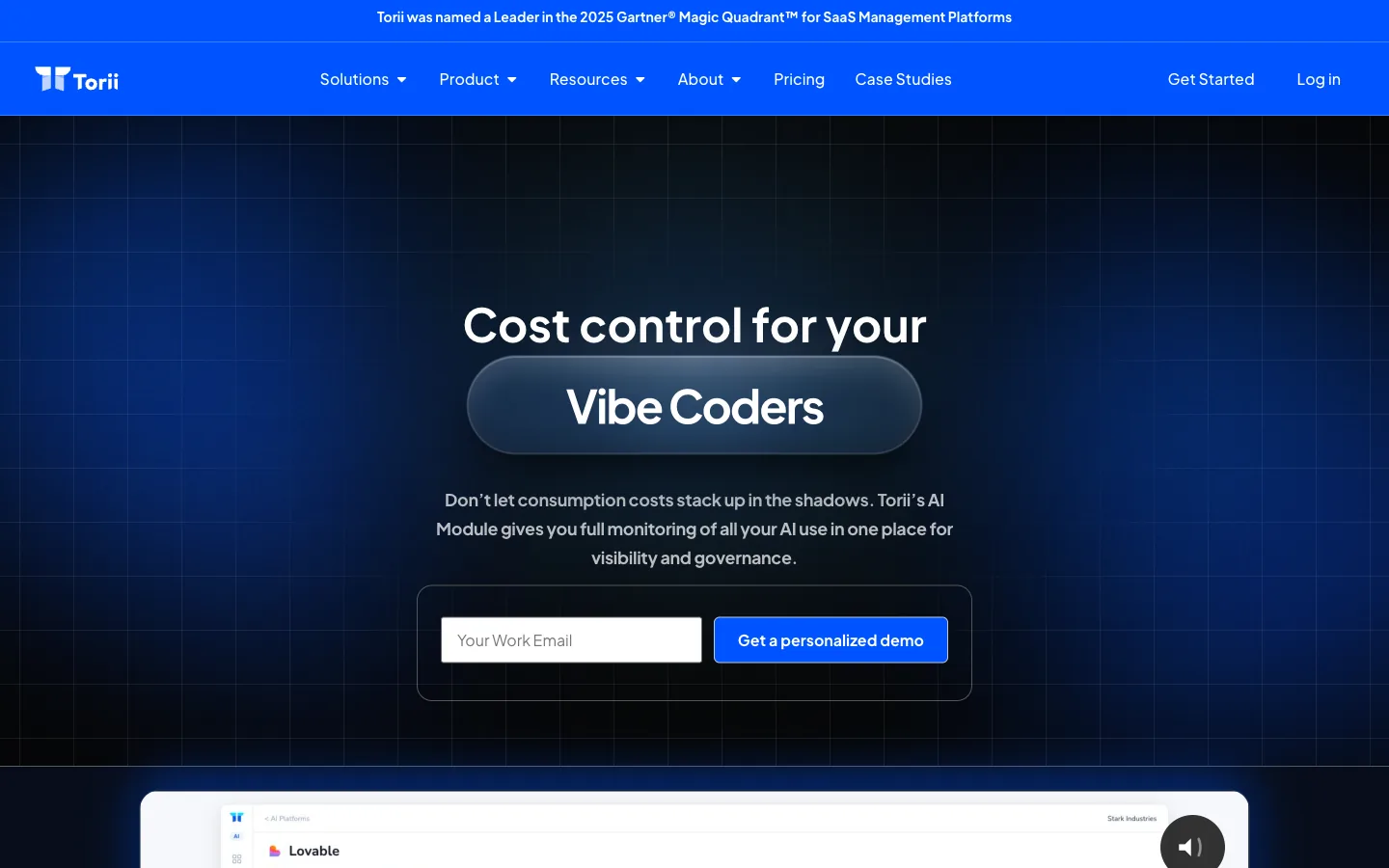
Torii governs autonomous AI agents from the SaaS management layer, where AI tools actually proliferate inside the company. Its AI management platform continuously inventories AI keys, tokens, agents, and integrations, tracks spend by user, model, and project, and surfaces shadow tools procurement never approved. The non-human side fuses browser, MDM, SSO, OAuth, and finance signals to find agents, bots, and integrations that an SSO export alone would miss, then auto-assigns each one to an application owner.
Eko, Torii’s governance copilot, flags risky NHI adoption patterns and recommends preventive policies with evidence-based reasoning. Full audit trails log every agent action for compliance, and lifecycle workflows revoke agent credentials the moment a project ends or an owner changes. The same view rolls agent identity context next to AI spend and access reviews in one console.
Coverage stretches into the discovery edges that pure NHI tools rarely catch:
- Personal-account AI agents created on the corporate network without IT
- Overlapping agent subscriptions across teams using the same SaaS app
- Owner-by-owner rollups for agent SaaS access reviews on a quarterly cycle
- Off-boarding workflows that revoke agent tokens tied to a departing employee
Pros:
- Multi-source discovery catches agents and integrations SSO logs never see
- Eko governance copilot surfaces risky NHI adoption before it scales
- Lifecycle workflows tie agent credentials to a human owner and end date
- Same console rolls agent identity context next to SaaS spend and access reviews
Cons:
- Pricing reflects enterprise-grade coverage, not entry-level point pricing
- Built for SaaS and Shadow-IT environments; no on-premise deployment
| G2: 4.5/5 (302 reviews) | Capterra: 4.9/5 (26 reviews) |
Astrix Security
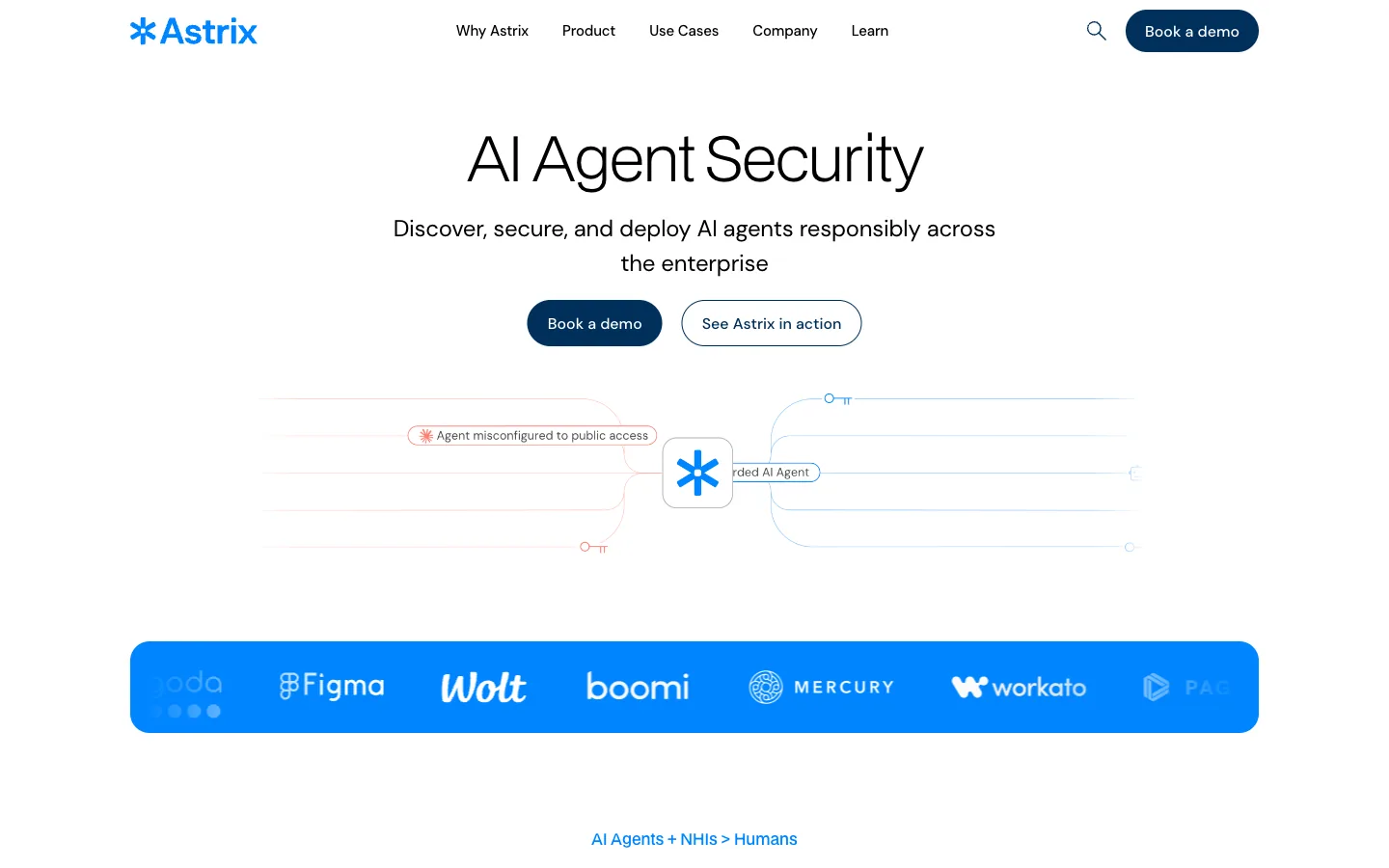
Astrix is purpose-built for non-human identity and AI agent security, with a workflow split into Discover, Secure, and Deploy motions. The Discover layer keeps a real-time unified inventory of agents, MCP servers, and NHIs across AWS, GCP, Azure, GitHub, Kubernetes, Salesforce, Okta, and Slack, including the shadow agents IT never sanctioned. The Secure layer then runs Agentic Detection and Response (ADR) against that inventory to catch excessive privileges and abnormal activity patterns.
Alon Jackson, Astrix’s CEO and co-founder, frames the problem the product is built around: “NHIs present unique challenges distinct from human identities, making their security complex and demanding” (CSA and Astrix research). What sets Astrix apart is the Agent Control Plane (ACP) at deploy time. ACP provisions new agents with short-lived, JIT-scoped credentials at creation, so an agent that needs five minutes of Salesforce access cannot wake up six weeks later with the same token still valid. Security gets baked in at provisioning instead of bolted on after an audit finding.
The deploy-time model fits a few common patterns teams configure first:
- Build-pipeline checks that block agents shipped with overly broad scopes
- Short-lived, JIT-scoped credentials for every new agent at creation time
- ADR alerts on agents whose behavior drifts from a baseline
- Inventory rollups across AWS, GCP, Azure, GitHub, Salesforce, Okta, and Slack
Pros:
- Deploy-time provisioning means agents launch with least-privilege from minute one
- Real-time inventory spans cloud, SaaS, code, and identity providers in one view
- ADR catches privilege abuse and abnormal agent behavior before lateral movement
Cons:
- Strongest fit when security owns the agent build pipeline, not after-the-fact
- Heavier to deploy than discovery-only NHI tools
G2: 4.8/5 (24 reviews)
Natoma
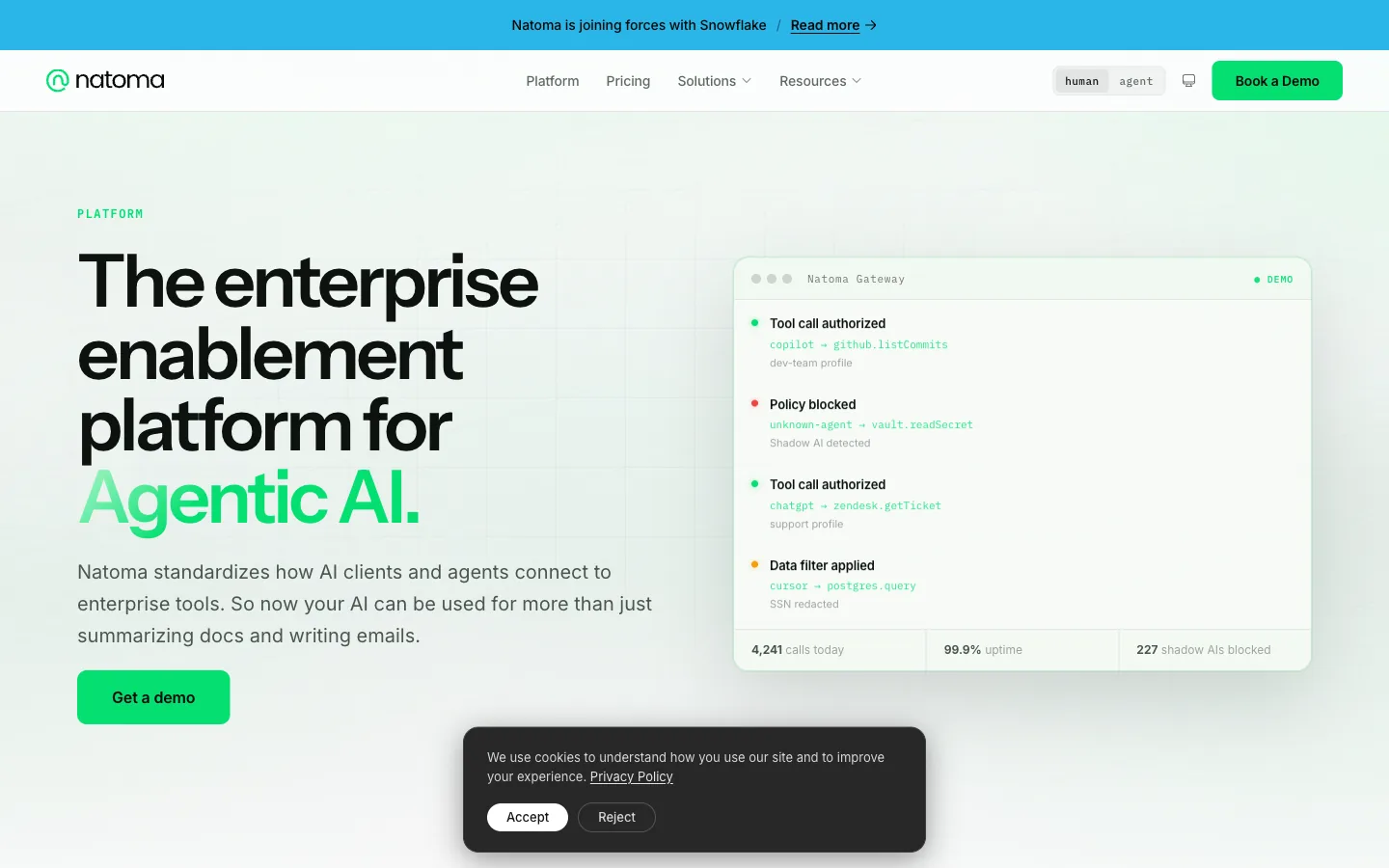
Natoma governs agents at the tool-call layer, sitting between AI clients and the 1,000+ Model Context Protocol servers those clients invoke. Every tool call gets authenticated against OAuth 2.1, authorized through attribute- and role-based conditional access policies, logged to SIEM, and run through DLP before it touches a downstream system. Risky calls (lateral movement, privilege escalation, unauthorized data writes) get blocked outright at the gateway.
Natoma reports that “On average, Natoma detects 225 unmanaged Shadow AI instances per enterprise, which represent both security risk and governance gaps” (Natoma), then pulls them under centralized control with SAML, SCIM, and role-based Profiles for one-click team rollouts. The Natoma platform page walks through the connector list and policy model in detail.
Four MCP gateway patterns Natoma teams typically light up first:
- Per-tool-call audit logs piped into Splunk or another SIEM
- Conditional access by user role, agent type, and target system
- DLP scanning on every payload that leaves the gateway
- Blocklists for risky tool combinations like file write plus external HTTP
Pros:
- MCP-native control plane catches tool calls that bypass traditional NHI tools
- 225 unmanaged shadow AI instances discovered per enterprise on average, per Natoma
- Per-call audit trails answer the “who did the agent do this for” question
Cons:
- Best fit when the org has already standardized on MCP for AI tooling
- Coverage thins outside the MCP ecosystem
Oasis Security
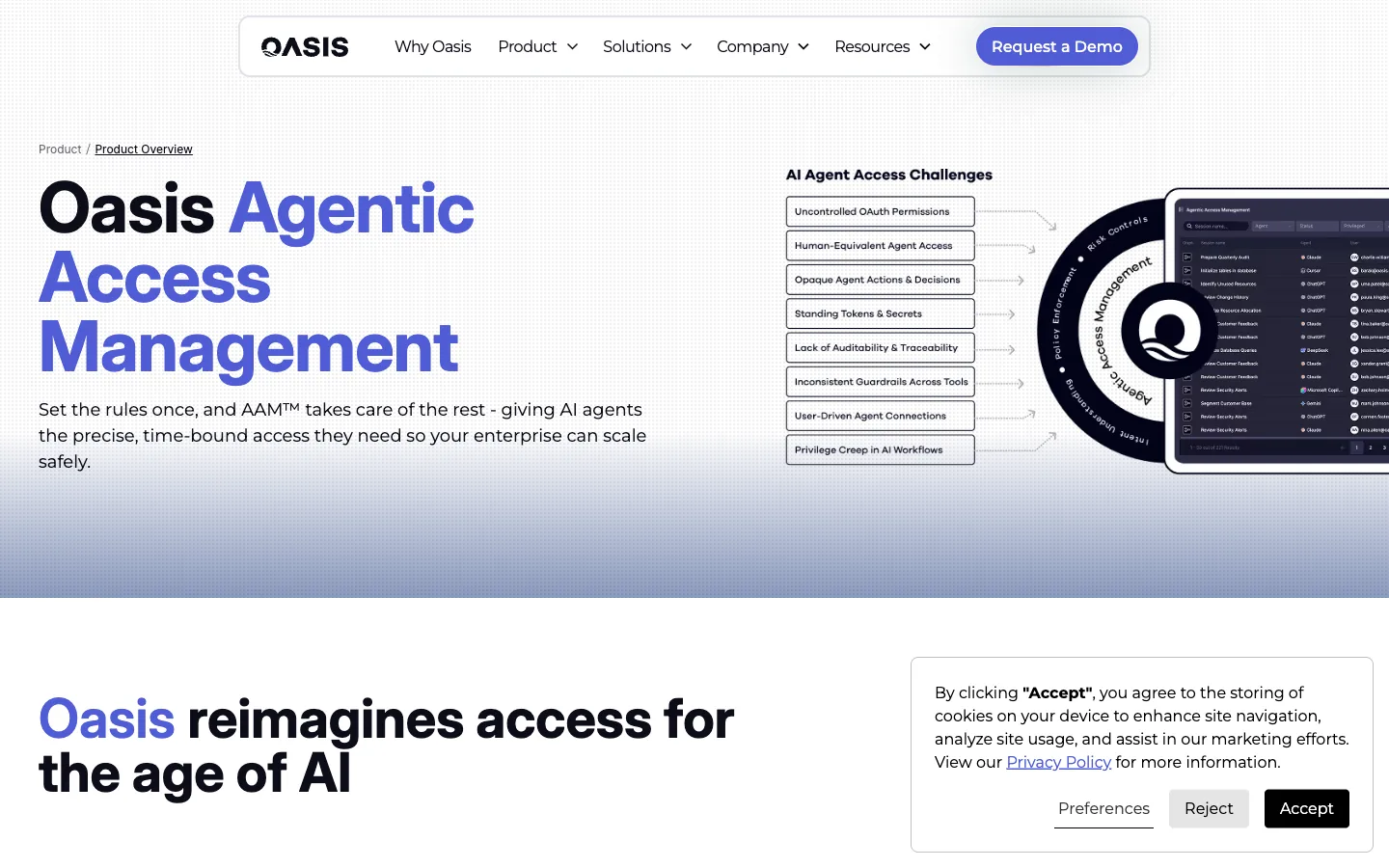
Oasis pioneered Agentic Access Management (AAM), an intent-aware model that hands each agent prompt a freshly minted session identity. The platform reads what the agent is trying to do in real time, mints a narrowly scoped identity bound to that single task, then retires it the moment the work finishes. Full prompt-to-identity traceability means an auditor can trace any production change back to the exact prompt that triggered it.
Danny Brickman, Oasis Security’s CEO and co-founder, describes the shift the model is built for: “AI turns identity into a high-velocity system. Every new agent, workflow, or integration can mint credentials and permissions in minutes” (CSA and Oasis survey). A broader NHI Security Cloud rounds out the discovery side with ML-driven ownership assignment, secret rotation, and the Oasis Scout anomaly detection module. Context-aware PAM elevation then governs sensitive system access through time-bound policies, so a developer prompt that needs production database access gets it for ten minutes, not forever. The Oasis AAM page covers the per-prompt identity model in depth.
Integrations span the AI stack teams actually use:
- OpenAI, Anthropic Claude, Cursor, and Microsoft Copilot on the agent side
- AWS, Azure, GCP, HashiCorp Vault, and CyberArk on the secret side
- Snowflake, Databricks, and PostgreSQL on the data side
Pros:
- Per-prompt ephemeral identity eliminates standing agent credentials entirely
- Prompt-to-identity traceability gives auditors a complete causal chain
- Oasis Scout ML anomaly detection flags credential misuse in real time
- Time-bound PAM elevation for sensitive systems reduces blast radius
Cons:
- Ephemeral-identity model requires changes to how agents authenticate
- Strongest value at orgs already running a vault and PAM tier
G2: 4.7/5 (38 reviews)
Torii fuses browser, MDM, SSO, OAuth, and finance signals to surface every AI agent, integration, and token inside the company, then ties each one to a human owner with off-boarding workflows that revoke access on day one. Pair Torii with a runtime tool to cover both sides of the audit question. Tour the Torii AI management platform.
Zenity
Zenity covers the full agent lifecycle through Observe, Govern, and Defend capabilities, with the heaviest emphasis on inline runtime defense. Observe handles automatic discovery and ownership mapping across SaaS-managed agents like Salesforce Agentforce and Microsoft Copilot Studio, cloud-built agents on AWS Bedrock and Google Vertex AI, and custom agents on Microsoft Foundry or OpenAI AgentKit. Govern then scans pre-deployment agent configurations against the OWASP LLM Top 10 and the MITRE ATLAS framework. OWASP’s agentic list names the exact failure mode these scans look for, noting that “leaked credentials let them operate far beyond their intended scope (ASI03 - Identity & Privilege Abuse)” (OWASP GenAI Security Project).
The real differentiator sits in Defend. Zenity intercepts at the step level during agent execution, watches each action against an intent baseline, and triggers automated playbooks that stop unsafe actions mid-flight before they touch production data. A copilot that tries to email customer data outside policy gets blocked at the action layer, not flagged in a quarterly review.
Four runtime patterns Zenity catches that pre-deploy scanners miss:
- Step-level privilege escalation inside an agent’s tool-call chain
- Prompt-injection attempts that arrive through indirect channels like email
- Data exfiltration mid-execution before the agent finishes the workflow
- Action drift where an agent starts behaving differently than its baseline
Visit the Zenity platform overview for the full set of runtime controls and supported agent frameworks.
Pros:
- Step-level runtime interception stops unsafe actions mid-execution
- Coverage spans SaaS-built, cloud-built, and custom agent frameworks
- Pre-deploy scans tie configurations to OWASP LLM and MITRE ATLAS gaps
Cons:
- Runtime defense layer adds complexity for smaller agent footprints
- Greatest value at orgs already running multiple agent frameworks side by side
G2: 4.6/5 (12 reviews)
How to Choose an Autonomous AI Agent Management Tool
Pick the tool that matches where agent risk actually lives in the org today. Astrix locks down deploy-time provisioning, Natoma controls the MCP tool-call layer, Oasis hands out per-prompt ephemeral identities, and Zenity intercepts unsafe actions at runtime. Each one owns a different slice of the agent lifecycle.
Most security and IT teams in 2026 layer a discovery and ownership tool over a runtime control. Torii pulls every AI agent, integration, and token into one inventory, ties each to a human owner, and revokes access the moment that owner offboards, so the runtime tier knows exactly which identities to govern.
Before signing a contract, confirm the tool can: (1) discover agents created outside SSO, (2) tie every agent identity to a named human owner, (3) produce a per-action audit trail an auditor can replay, (4) revoke credentials on offboarding without manual cleanup, and (5) cover the agent frameworks your engineering team has already standardized on.
Frequently Asked Questions
A non-human identity (NHI) is an autonomous AI agent, token, or service identity acting on behalf of workflows. They often outnumber humans, are frequently over‑privileged, and have caused breaches; lacking ownership and auditability raises major compliance and security risks.
Auditors want three answers: who owns each agent, what systems and data it is permitted to access, and whether you can replay every action an agent took. Security teams routinely lack clear ownership, scoped permissions, and per-action audit trails.
Torii focuses on SaaS discovery, inventory, owner mapping, and lifecycle workflows, while Astrix protects at deploy time with short‑lived, JIT-scoped credentials and Agent Control Plane. Torii finds agents and assigns owners; Astrix enforces least‑privilege at provisioning.
MCP gateways authenticate and authorize every model call, apply DLP, produce per-call audit logs, and block risky tool combinations. Natoma centralizes unmanaged MCP connections, enforces conditional access, and feeds activity into SIEM for replayable trails.
Runtime defense intercepts agent actions step‑by‑step, enforces intent baselines, and triggers automated playbooks to stop unsafe actions mid‑execution. Oasis mints per‑prompt ephemeral identities; Zenity blocks privilege escalation and data exfiltration before production impact.
Confirm the tool discovers agents outside SSO, ties each agent to a named human owner, produces per-action replayable audit trails, revokes credentials on offboarding, and supports the agent frameworks and MCPs your engineering team uses.