

7 Tools to Manage AI API Keys and Credentials in 2026
 Chris Shuptrine
•
Jun 17, 2026
•
13 min read
Chris Shuptrine
•
Jun 17, 2026
•
13 min read

Find, rotate, and govern the AI API keys scattered across your org with seven credential management tools for 2026
Ask about this article
Opens Claude in a new tab to answer, using this article as the source.
AI API keys turned into live billing credentials somewhere around 2024, and most companies still treat them like throwaway strings. GitGuardian’s State of Secrets Sprawl 2026 report counted “28.65 million new hardcoded secrets” added to public GitHub commits in 2025, “a 34% increase year over year and the largest single-year jump we’ve recorded.” Leaks tied to AI services alone climbed 81% in a single year, to over 1.27 million.
The cost of one missed key stopped being hypothetical a while ago. Sysdig’s research on LLMjacking found that abusing a stolen Bedrock key for Claude across regions can cost a victim “over $46,000 per day.” Exploitation is fast too: in one honeypot study, attackers found and began abusing an exposed key within a minute, with the full initial attack taking under four minutes. Worse, roughly two-thirds of the keys exposed back in 2022 still work today.
The seven tools below each address a different slice of that problem: discovering, rotating, attributing, or vaulting the keys your org runs on.
AI-service key leaks jumped 81% year over year, eight of the ten fastest-growing secret categories were AI-related, and 64% of secrets leaked back in 2022 still work today. A single stolen key can cost over $46,000 a day in LLMjacking charges.
★ = low · ★★ = medium · ★★★ = high
| Tool | Key Discovery | Rotation | Usage Attribution | Secret Detection | Ease of Use |
|---|---|---|---|---|---|
| Torii | ★★★ | ★ | ★★★ | ★ | ★★★ |
| GitGuardian | ★ | ★★ | ★ | ★★★ | ★ |
| Akeyless | ★ | ★★★ | ★ | ★ | ★ |
| Doppler | ★ | ★★ | ★ | ★ | ★★★ |
| HashiCorp Vault | ★ | ★★★ | ★ | ★ | ★ |
| Infisical | ★ | ★★ | ★ | ★★ | ★★ |
| 1Password | ★★ | ★★ | ★ | ★ | ★★ |
Table of Contents
Torii
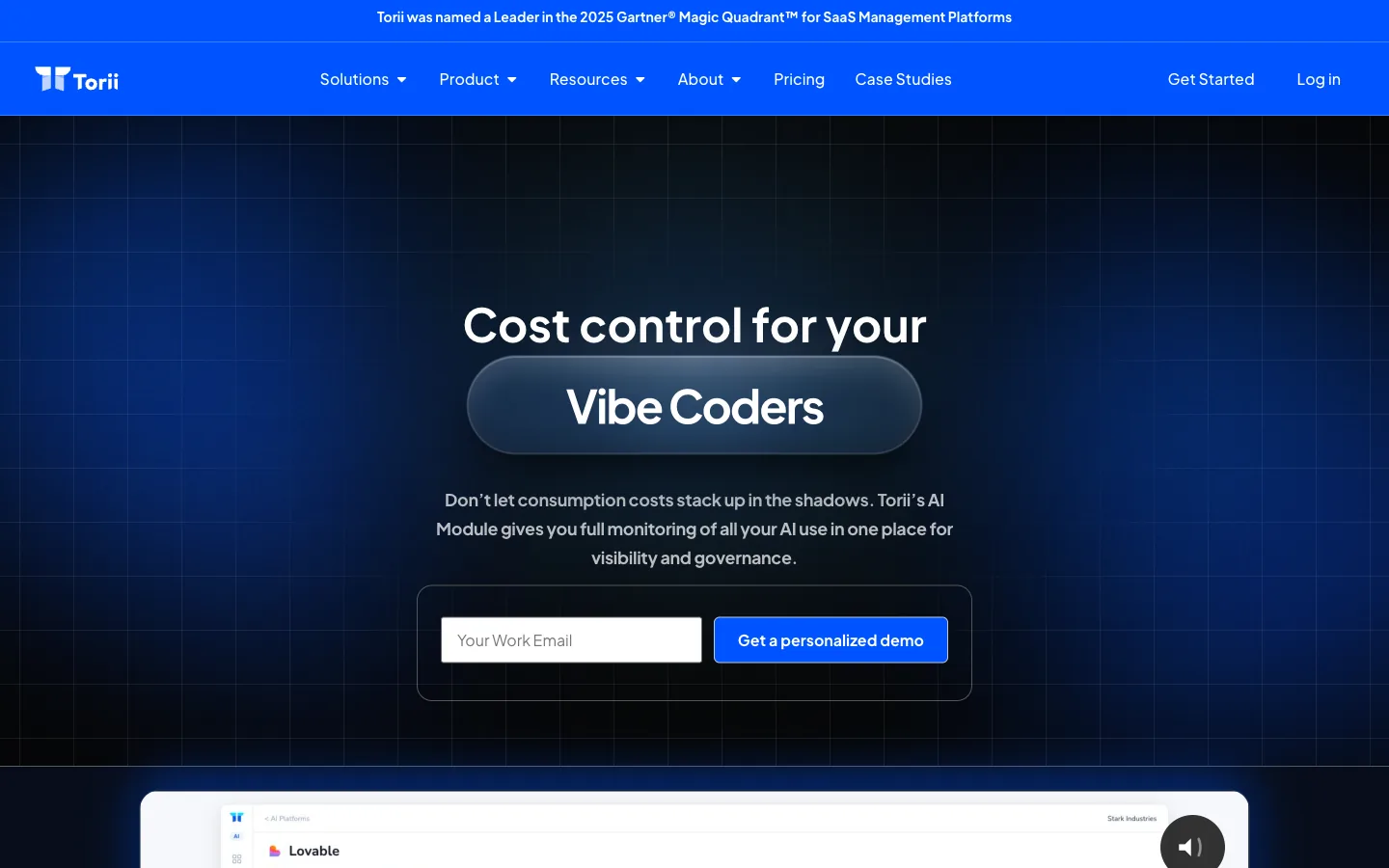
Torii sits a layer above the vault, at the question of which AI accounts and keys your company actually has. It discovers every app and AI service in use, including the shadow AI accounts employees spin up on a personal OpenAI or Anthropic key without telling IT. SSO, finance, expense, and browser-extension signals feed that inventory, so an unsanctioned ChatGPT or Claude workspace shows up instead of hiding on someone’s invoice.
Spend attribution is where Torii adds the most operational value. It ties AI usage back to the team that owns it, which lets finance set budgets, track Anthropic and OpenAI spend, and catch the odd charge that often means a key leaked or got shared around. Its workflow automation handles the lifecycle too, revoking access and triggering offboarding so orphaned AI accounts and their keys don’t linger after someone leaves — the kind of AI governance control auditors increasingly ask for. You can explore the Torii platform to see how that discovery works.
Where Torii fits AI credential governance:
- Discovers shadow AI accounts through SSO, expense, and browser data
- Attributes AI spend to the owning team for budget control
- Flags unusual usage that can signal a leaked or misused key
- Revokes access automatically when someone changes roles or leaves
Pros:
- Surfaces AI accounts and keys nobody registered with IT
- Connects every key back to a named owner and budget
- Automates revocation so orphaned credentials don’t pile up
- Covers the whole SaaS estate, not just one provider
Cons:
- Built for enterprise breadth, so it isn’t the cheapest pick
- Focused on SaaS and shadow IT, without on-premise deployment
| G2: 4.5/5 (303 reviews) | Capterra: 4.9/5 (26 reviews) |
GitGuardian
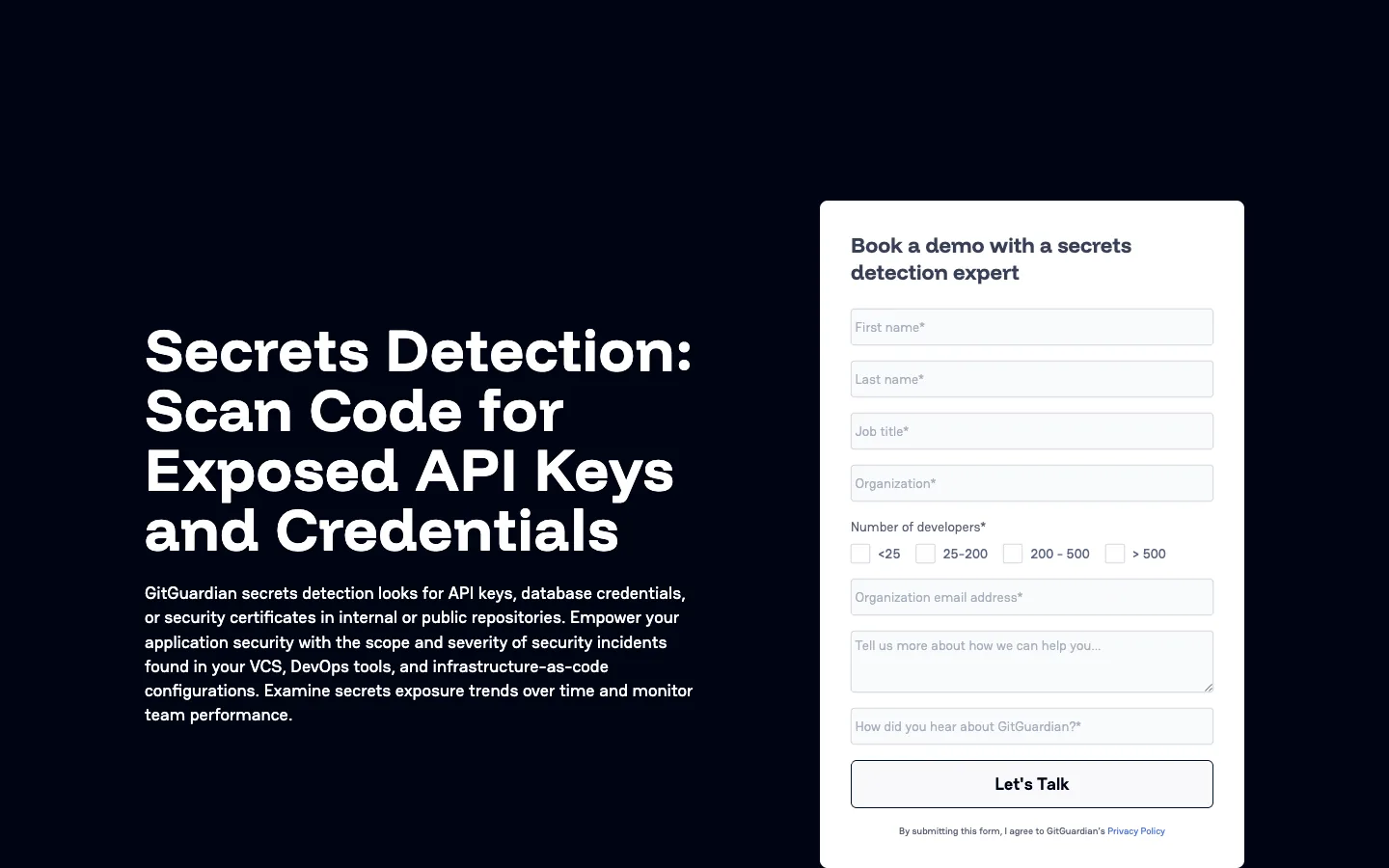
GitGuardian comes at the problem from the opposite end, catching AI keys after they slip into places they never should. Its engine scans code repos, CI/CD pipelines, Slack, and Jira for hardcoded secrets, with named detectors for OpenAI, OpenAI admin, and Anthropic Claude keys. When it finds one, it validates the key against the provider to confirm whether it still works, then routes remediation to the owner with a provider-specific rotation playbook.
That live-validation step matters because most exposed keys never get rotated. GitGuardian’s own research found that “64% of valid secrets from 2022 are still not revoked in 2026.” In December 2025 the company extended its Non-Human Identity Governance product to inventory OpenAI and Anthropic credentials directly and revoke them from one dashboard. The GitGuardian secrets detection platform fits teams whose main fear is a key escaping into a public repo. A leaked credential is just one slice of AI vendor risk, but it tends to be the most expensive.
What GitGuardian watches:
- Code, CI/CD, Slack, and Jira for hardcoded AI keys
- Named detectors for OpenAI, OpenAI admin, and Claude tokens
- Live key validation to confirm an exposure is still active
- NHI inventory and revocation for AI provider credentials
Pros:
- Detects leaked AI keys across code and collaboration tools
- Confirms which exposures are real through live validation
- Drives rotation with owner assignment and playbooks
Cons:
- Scanning finds accidental leaks, not deliberate key storage
- Full NHI governance suits larger security teams
G2: 4.6/5
Akeyless
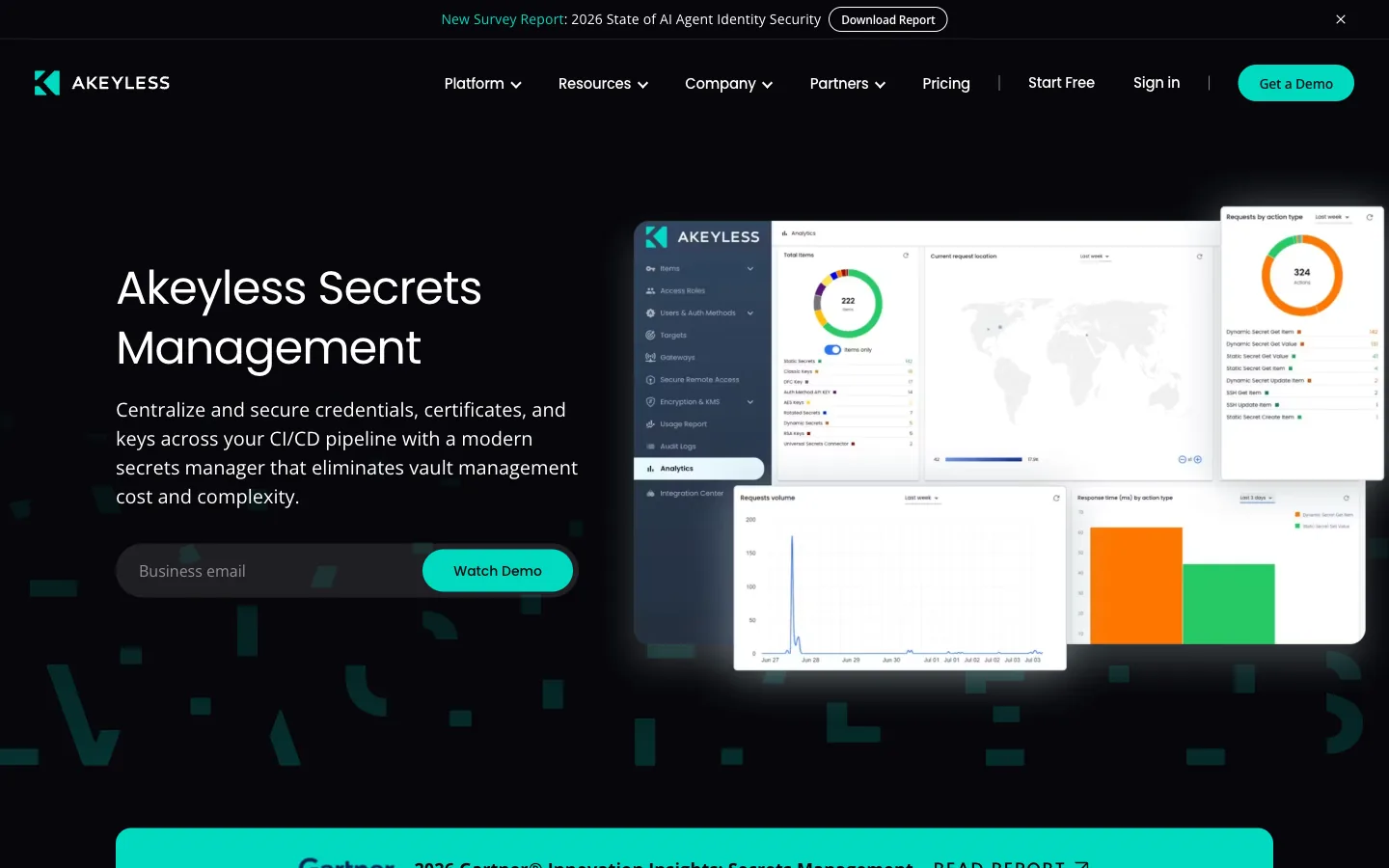
Akeyless attacks the root cause behind most AI key breaches: the long-lived static key. Its SaaS-native platform is vaultless, built on patented Distributed Fragments Cryptography that splits each secret across regions so even Akeyless can’t read it. Rather than store a permanent OpenAI key, its secrets management service issues dynamic, just-in-time credentials that expire after a set TTL.
For AI agents specifically, its SecretlessAI feature hands out ephemeral credentials based on machine identity, things like cloud IAM roles, Kubernetes service accounts, or SPIFFE. The agent authenticates and gets a short-lived token, so it never holds a static key that could leak in the first place. Akeyless then layers on Agentic Identity Intelligence to discover and map the AI agents already running across an environment.
What sets Akeyless apart:
- Vaultless design with zero-knowledge Distributed Fragments Cryptography
- Just-in-time credentials that expire on a TTL
- Ephemeral secrets issued to AI agents by machine identity
- Discovery and mapping of agents across the environment
Pros:
- Short-lived credentials shrink the damage from any single leak
- Zero-knowledge model keeps secrets unreadable at rest
- Built with AI agent authentication in mind
Cons:
- Dynamic-secrets setup carries a real learning curve
- Newer to the market than the legacy vault tools
G2: 4.8/5
Doppler
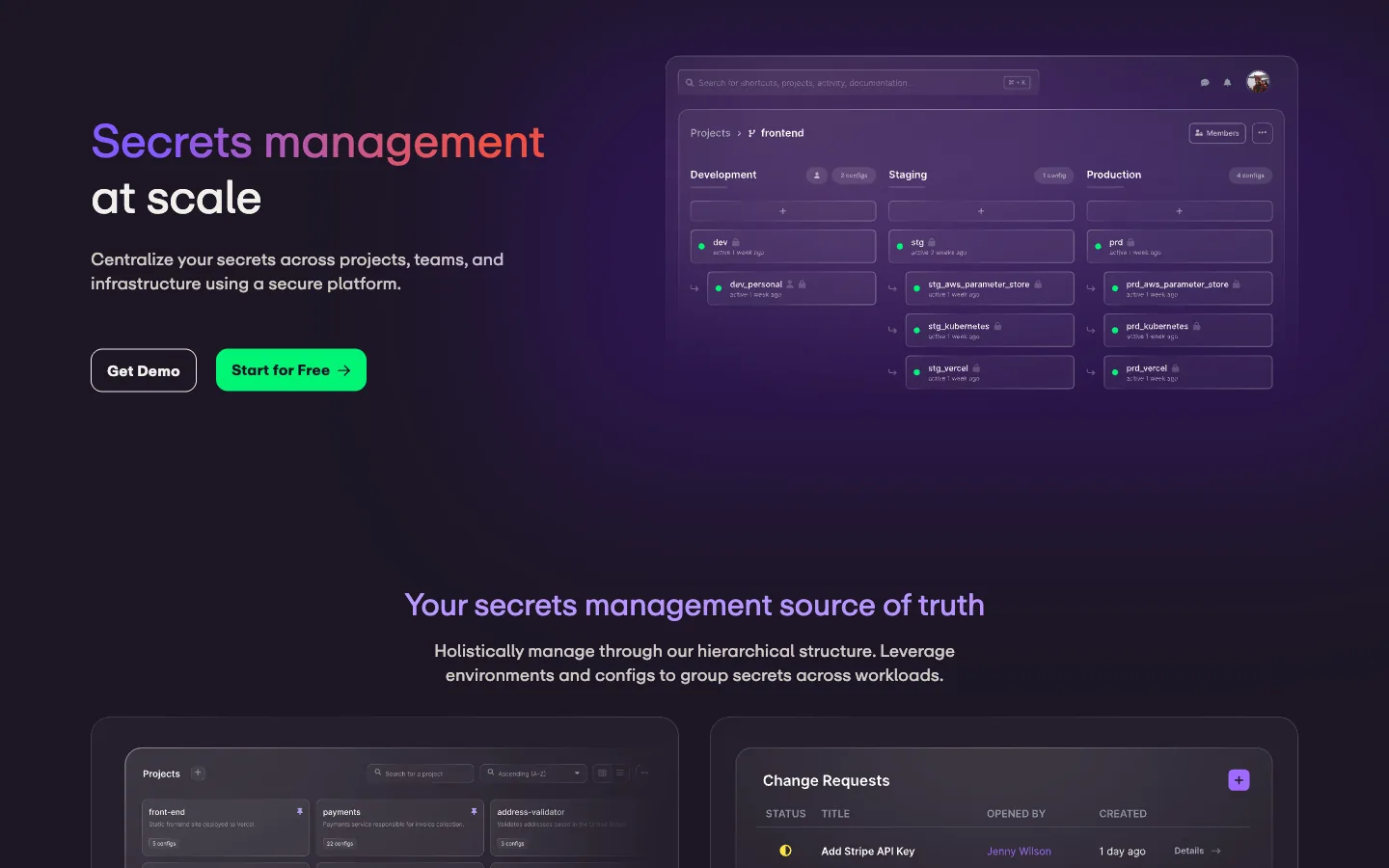
Doppler keeps things developer-friendly, organizing AI keys by project, environment, and config. A team can hold separate OpenAI or Anthropic keys for dev, staging, and production without ever hardcoding one into the codebase. Secrets get injected at runtime through the CLI, so a single command passes the key to the app and nothing lands in a plaintext config file.
The platform markets itself for humans, pipelines, and AI agents alike, and it counts non-human identities at no extra charge. Automated rotation uses a two-secret alternating strategy that swaps keys without downtime, backed by full version history and per-environment access control. That combination keeps a freshly rotated Anthropic key flowing to every service that depends on it. You can see the setup on the Doppler secrets manager.
Where Doppler fits day to day:
- Keys organized by project, environment, and config
- Runtime injection through the CLI instead of config files
- Two-secret rotation that avoids any downtime
- Version history and per-environment access rules
Pros:
- Clean developer workflow with little setup friction
- Rotation runs without breaking the running services
- Non-human identities included at no extra cost
Cons:
- Less suited to heavy dynamic-secrets use cases
- Discovery of unmanaged keys isn’t its job
G2: 4.6/5
Vaults and scanners assume you already know which AI keys are in play. Torii works the other side, discovering shadow OpenAI and Anthropic accounts through SSO, browser, and expense signals, then tying each one to an owner and a budget. See how Torii surfaces hidden AI credentials.
HashiCorp Vault
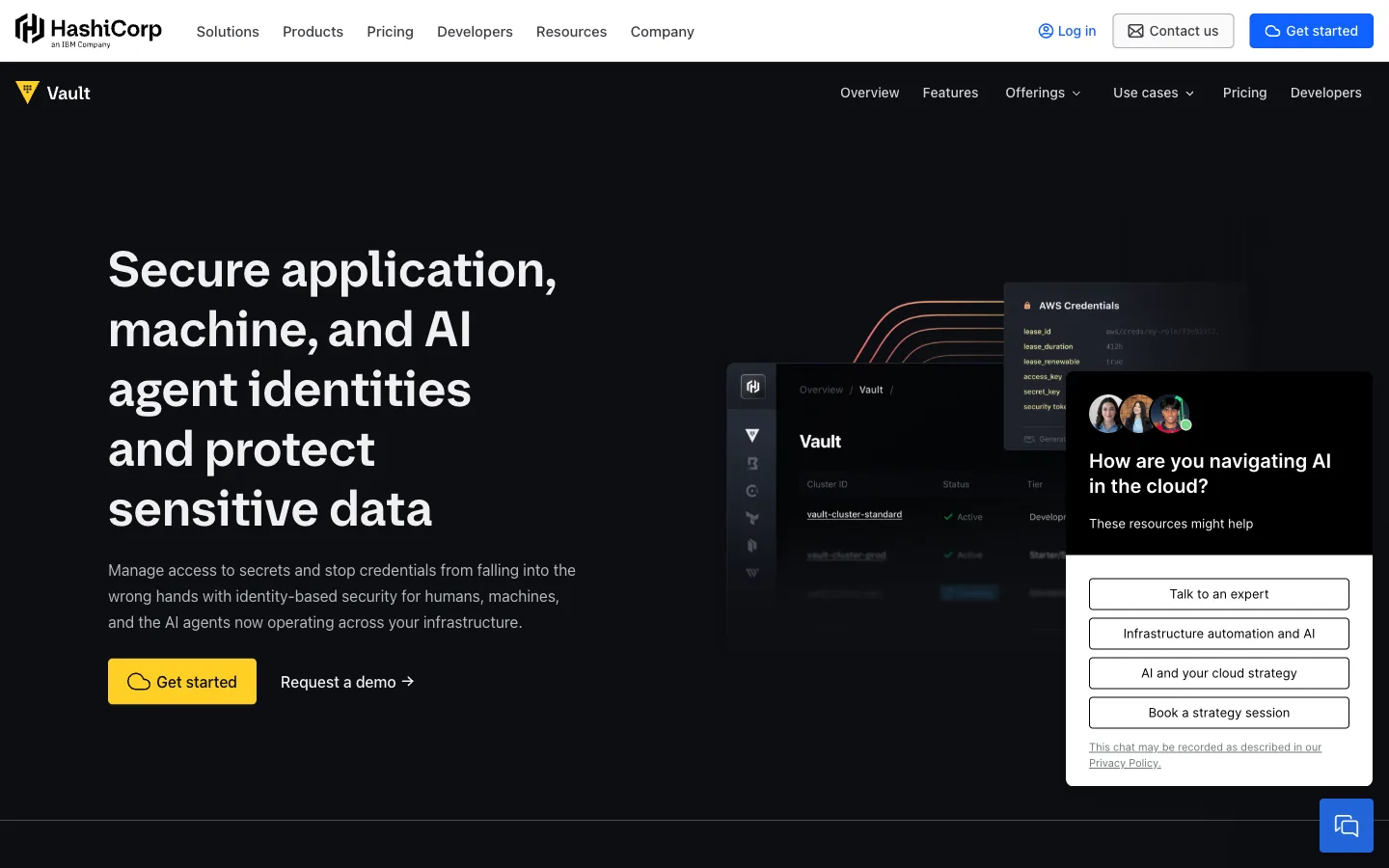
HashiCorp Vault is the enterprise standard for replacing static keys with generated ones. Instead of a permanent credential, Vault issues short-lived secrets on demand, each with a TTL that auto-expires once the work is done. A community OpenAI secrets-engine plugin on the HashiCorp Vault platform uses the OpenAI Admin API to create, rotate, and revoke project service accounts and their keys automatically.
For providers without a dynamic engine, the key-value store holds static keys like an Anthropic token under identity-based access policies. A documented LangChain proof of concept showed full traceability, with every model request logged against a session correlation ID for audit. The tradeoff is operational weight, since Vault must be self-hosted and configured before any of this runs.
Where Vault earns its place:
- Dynamic, short-lived credentials with automatic expiry
- An OpenAI plugin that rotates service accounts through the Admin API
- Identity-based policies on static keys in the KV store
- Request-level audit logging for AI agent traceability
Pros:
- Dynamic secrets remove long-lived keys from the picture
- Deep policy and audit controls satisfy compliance teams
- Proven at enterprise scale across many secret types
Cons:
- Self-hosting and configuration demand real engineering time
- Heavier to run than a managed SaaS vault
G2: 4.3/5
Infisical
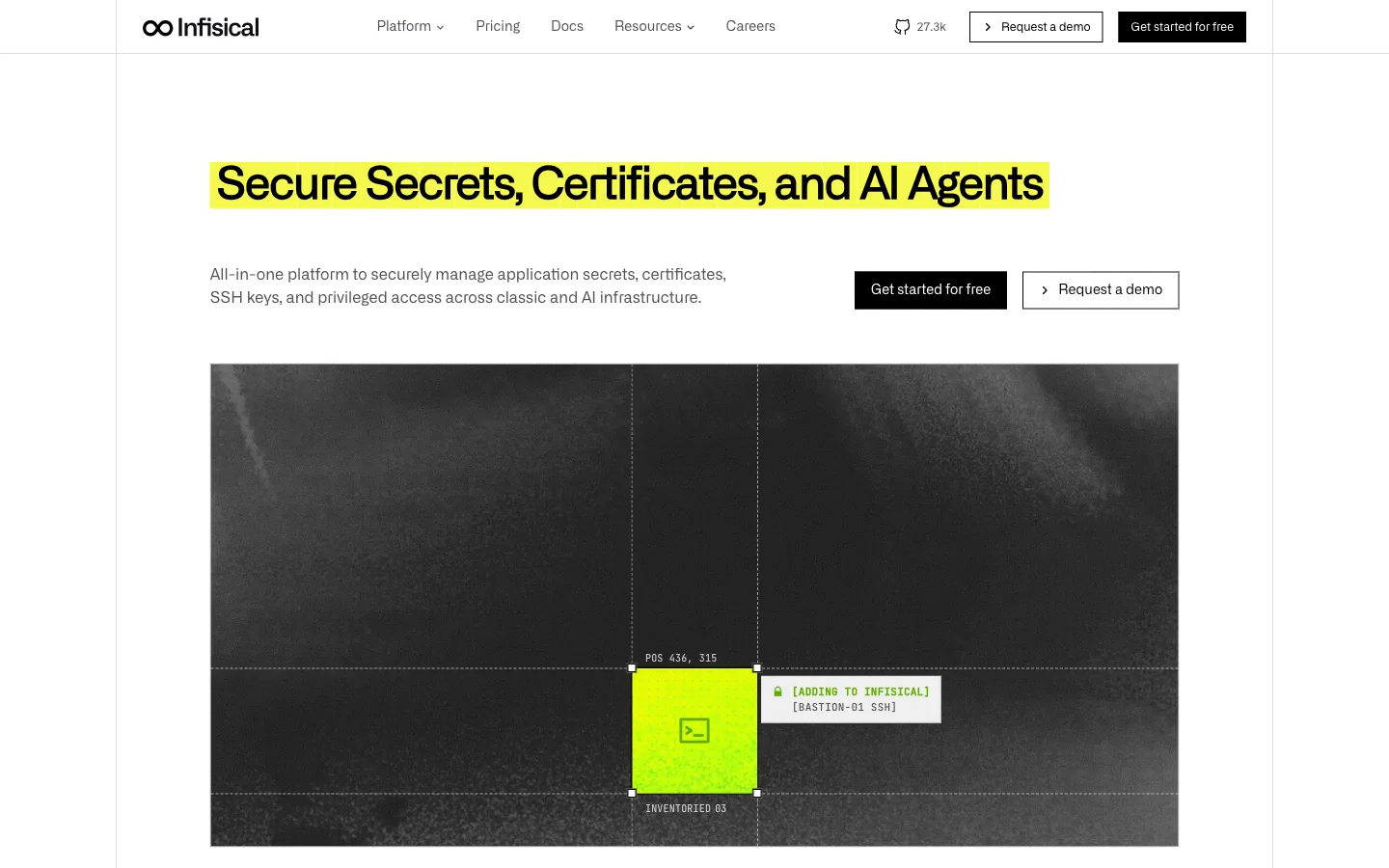
Infisical brings an open-source answer to AI key management, with an MIT license and more than 27,000 GitHub stars. Teams can self-host the vault and sync AI keys across environments through the CLI, language SDKs, or a Kubernetes operator. That transparency appeals to engineers who want to read the code holding their secrets.
Its secret-scanning engine watches repos, CI, and local directories for 140-plus secret types and blocks a leak at commit time. Scheduled and incident-triggered rotation cycles long-lived keys before they grow stale. In April 2026 the team open-sourced Agent Vault, a TLS-intercepting forward proxy that attaches the key to an AI agent’s outbound request so the agent itself never sees the secret. The Infisical secrets management docs cover each piece.
Where Infisical stands out:
- Open-source, self-hostable vault under an MIT license
- Sync through the CLI, SDKs, or a Kubernetes operator
- Commit-time scanning for 140-plus secret patterns
- Proxy-based key injection that hides secrets from agents
Pros:
- Open code gives full transparency and no vendor lock-in
- Built-in scanning catches leaks before they reach a repo
- Agent proxy keeps keys out of agent memory
Cons:
- Self-hosting still means infrastructure to maintain
- Smaller ecosystem than the largest incumbents
G2: 4.7/5
1Password
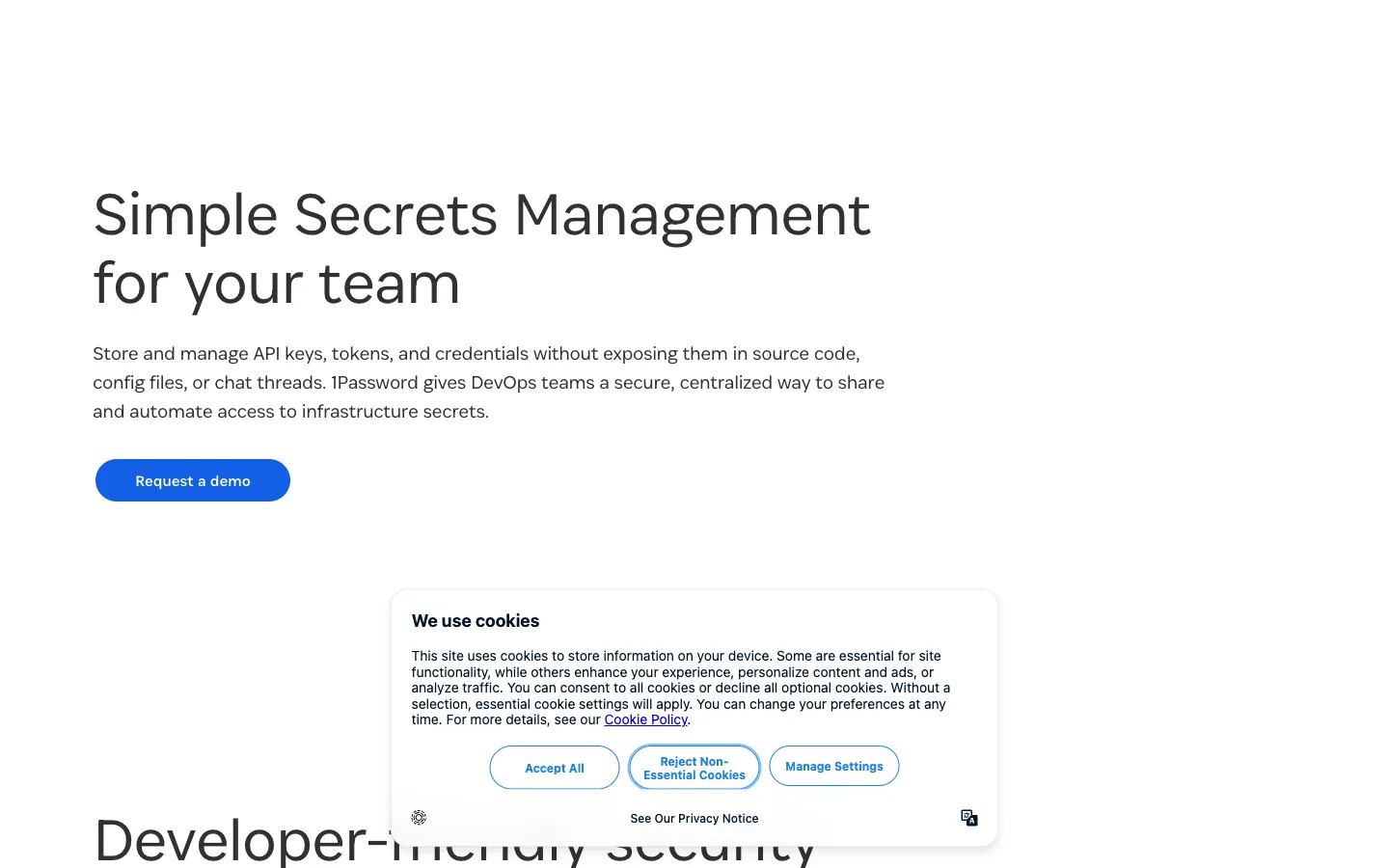
1Password extends the password manager people already know into developer and AI secrets. It stores AI keys, tokens, and SSH keys in encrypted vaults that never expose the secret in plaintext code or a chat message. Scoped service accounts let an agent or CI/CD job pull a key at runtime through the CLI, the Connect REST API, or Python, JS, and Go SDKs, without ever sharing a human’s credentials.
The audit trail is where it helps AI governance most. Its Activity Log records every secret access by service account, giving each agent its own access history for review. Centralized updates mean a rotated OpenAI key reaches every consumer without a code change, and Extended Access Management adds SaaS visibility to surface the unmanaged individual AI accounts staff sign up for. You can find the developer tools on the 1Password secrets management page.
Where 1Password bridges the gap:
- Encrypted vaults for AI keys, tokens, and SSH keys
- Scoped service accounts for agents and CI/CD jobs
- Per-account access logging for an agent audit trail
- Extended Access Management to find unmanaged AI accounts
Pros:
- Familiar interface lowers the bar for adoption
- The access log gives a clean per-agent audit trail
- Bridges human and machine secrets in one tool
Cons:
- Less focused on dynamic, short-lived credentials
- Discovery features sit in a separate product tier
| G2: 4.7/5 | Capterra: 4.8/5 |
How to Choose an AI Credential Management Tool
The right tool depends on where your credential risk actually sits. Teams fighting leaks in code reach for GitGuardian’s detectors or Infisical’s commit-time scanning, while those killing off static keys lean on Akeyless or HashiCorp Vault for short-lived credentials. Doppler and 1Password handle clean storage and runtime delivery for the keys you already manage.
Every one of those assumes you know which AI keys exist in the first place. Torii starts at discovery, surfacing the shadow OpenAI and Anthropic accounts scattered across the org and attributing each one’s usage, so no credential ever runs without an owner.
Discover the keys and AI accounts you don't already track · rotate or expire long-lived static keys · attribute usage and spend to an owning team · detect keys leaking into code and chat · produce an audit trail for compliance. Few tools cover all five, so pair a discovery layer with a vault or scanner.
Frequently Asked Questions
Attackers can run LLMjacking and other misuse, burning $46,000–$100,000 per day on a stolen OpenAI or Bedrock key. With a median time to first abuse under four minutes, public exposures quickly become costly financial and security incidents.
Breaches usually stem from long‑lived static keys, hardcoded tokens, reused credentials, and shadow IT—employees signing up with personal OpenAI or Anthropic keys. These practices leave keys discoverable and valid for extended periods without rotation or ownership controls.
Torii discovers shadow AI accounts via SSO, expense, and browser signals, attributes spend to owning teams, flags unusual usage, and automates revocation during offboarding. That visibility prevents orphaned credentials and ties each key to a named owner and budget.
GitGuardian scans repos, CI/CD, Slack, and Jira for hardcoded AI keys, uses named detectors for OpenAI and Claude, validates whether exposed keys still work, and routes owner-specific rotation playbooks to remediate confirmed leaks quickly.
Dynamic secrets issue short‑lived, just‑in‑time credentials tied to machine identity and TTLs, reducing blast radius from leaks. Ephemeral tokens prevent long-lived exposure, improve auditability, and remove permanent keys from code and developer workflows.
Pick tools based on your risk: pair discovery (to find unmanaged keys) with a vault or scanner. Confirm capabilities to discover keys, rotate or expire tokens, attribute usage and spend, detect leaks in code/chat, and produce audit trails for compliance.