

8 Spend Management Tools for Claude Code in 2026
 Chris Shuptrine
•
Jun 3, 2026
•
16 min read
Chris Shuptrine
•
Jun 3, 2026
•
16 min read

Compare 8 Claude Code spend management tools for 2026 to control seat costs, token burn, shadow API keys, and AI budgets.
Ask about this article
Opens Claude in a new tab to answer, using this article as the source.
Claude Code usage became the line item finance teams stopped recognizing in 2026. Anthropic’s own cost guidance puts the range at around $13 per developer per active day and $150 to $250 per developer per month, with costs staying below $30 per active day for 90 percent of users. Heavy agentic users sit well above that band, because agentic loops resend the whole conversation on every step. As Anthropic’s Claude Code cost documentation puts it, “Claude Code sends your full conversation with every request, and each time Claude uses tools it sends another request carrying that batch of tool results” (Manage costs effectively). Token burn therefore climbs faster than any seat-based budget can model.
Native Anthropic admin coverage still ends at the SSO door for most teams. Pro and Max accounts get expensed on personal cards, and API keys live inside untracked .env files, so neither ever reaches the console. Attribution inside the console is also narrower than finance expects. The Usage and Cost Admin API lets you “filter by API key, workspace, model, service tier, context window, data residency, or speed,” and its own FAQ points elsewhere for people-level numbers, recommending the separate Claude Code Analytics API “which provides per-user estimated costs and productivity metrics without the performance limitations of breaking down costs by many API keys” (Usage and Cost API docs). Two APIs, two scopes, and neither one sees the personal-card Pro account at all.
The eight platforms below approach the same problem from different angles. Discovery, gateway control, observability, governance, procurement, SaaS management, and FinOps unit economics each play a role in keeping Claude Code spend honest.
Token burn scales with agentic depth, an idle Max seat costs $100 a month at Max 5x and $200 at Max 20x, and 26 of the top 50 unsanctioned apps in Torii's 2026 Benchmark Report are AI tools. Most spend lands on personal cards before procurement ever sees it.
★ = low · ★★ = medium · ★★★ = high
| Tool | Seat Visibility | Token Tracking | Budget Guardrails | Renewal Management |
|---|---|---|---|---|
| Torii | ★★★ | ★★ | ★★★ | ★★★ |
| Portkey | ★ | ★★★ | ★★★ | ★ |
| Helicone | ★ | ★★★ | ★★ | ★ |
| Langfuse | ★ | ★★★ | ★★ | ★ |
| Credal | ★★ | ★★ | ★★ | ★ |
| Spendflo | ★★ | ★ | ★★ | ★★★ |
| Zylo | ★★★ | ★★ | ★★ | ★★ |
| CloudZero | ★ | ★★★ | ★★ | ★ |
Table of Contents
Torii
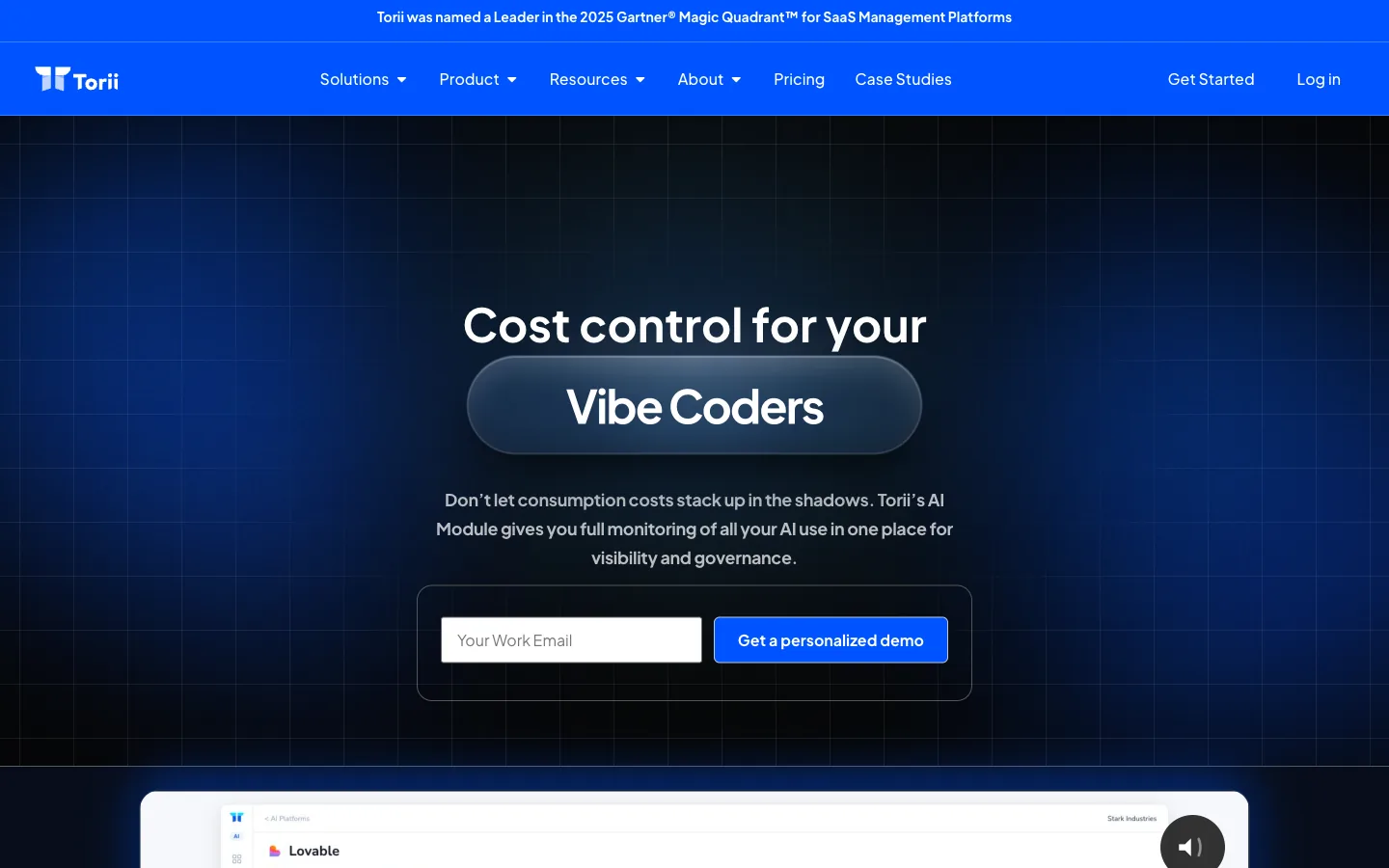
Torii sits upstream of the Anthropic bill, catching Claude Code accounts before the first invoice arrives. The multi-source discovery engine combines browser telemetry, IdP feeds, expense parsing, and OAuth grants to surface Pro and Max subscriptions paid on personal cards. SSO-only tools miss those signups entirely because the card never touches finance until the statement closes.
The AI Dashboard slices that inventory by employee, model, and time window, with overlap detection flagging redundant Claude, Copilot, and Gemini subscriptions on the same engineer. Automated deprovisioning closes accounts on offboarding, and renewal alerts apply to every AI tool in the stack rather than just one vendor. The broader AI spend posture stays consistent across surfaces, with the 2026 Benchmark Report documenting the shadow-AI growth curve.
Eko, the conversational copilot, answers procurement questions like “show me Claude Max seats idle 14 days” against the live inventory. Torii’s hosted MCP server lets other AI agents read SaaS data directly, so an agent can query the inventory without a human opening the dashboard.
Pros:
- Multi-source discovery catches Pro and Max signups outside SSO
- AI Dashboard slices token and seat spend by employee, model, and time window
- Overlap detection flags redundant Claude, Copilot, and Gemini subscriptions
- Eko copilot answers spend questions conversationally against live data
Cons:
- Pricing reflects enterprise-grade coverage rather than entry-level point pricing
- Built for SaaS and shadow-IT environments, with no on-premise deployment
| G2: 4.5/5 (302 reviews) | Capterra: 4.9/5 (26 reviews) |
Portkey
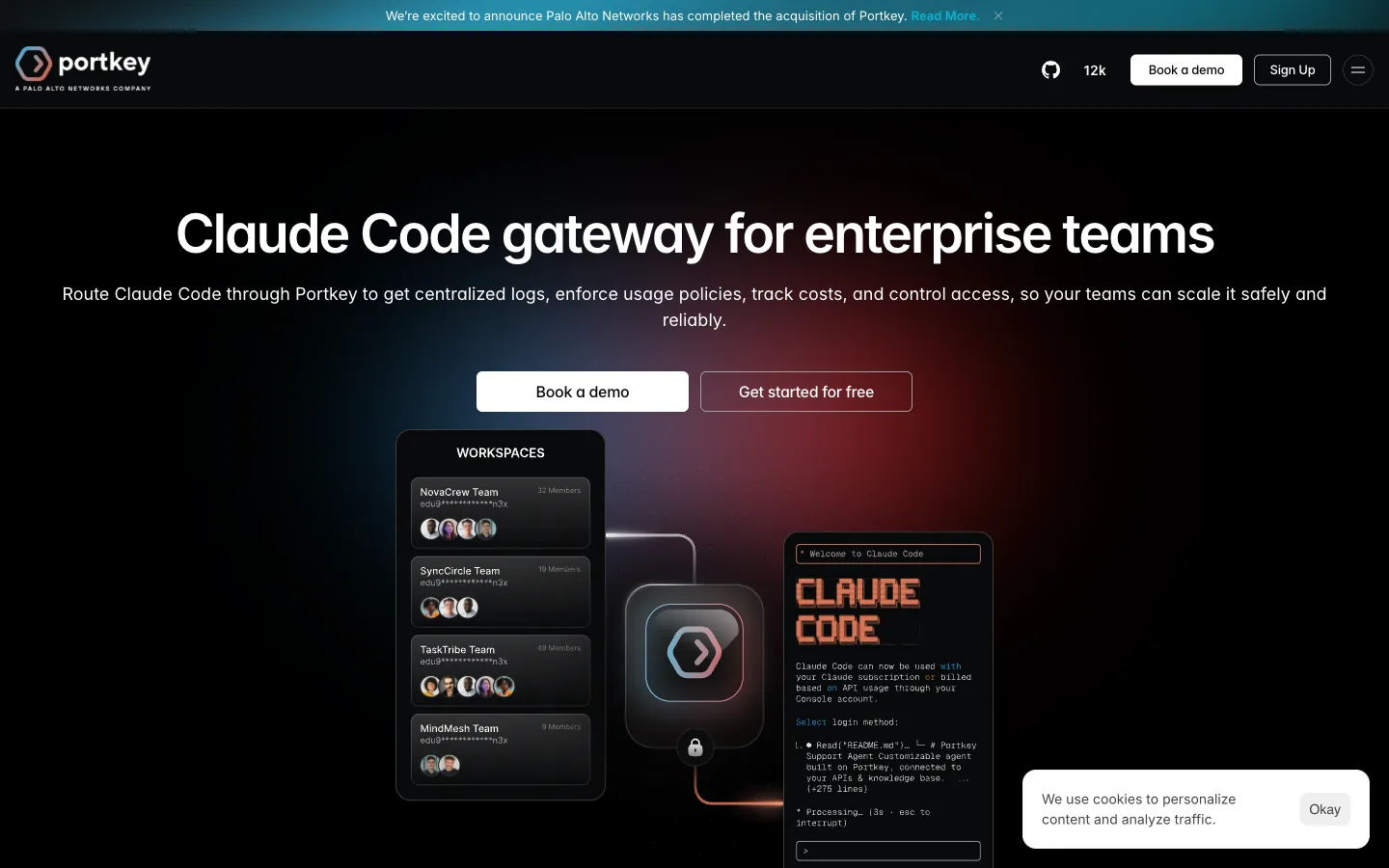
Portkey is the one inline AI gateway on this list, sitting between Claude Code and Anthropic’s API endpoints rather than reading logs after the fact. A three-line edit to .claude/settings.json routes every request through Portkey, logging tokens, cost, and the requesting team in real time. Because the proxy sees each call as it happens, it can attribute burn to a squad and cut the call off, which log-based tools cannot.
The Model Catalog enforces per-team budget caps and rate limits, cutting off runaway agentic sessions before they breach a monthly ceiling. Portkey’s guidance for enterprise Claude Code rollouts is to “set budget limits at the team or project level before distributing access,” issuing “scoped API keys that inherit the provider credentials from above but have their own budget limits, rate limits, and access controls” (Claude Code best practices). Those scoped keys replace personal Anthropic keys, so revoking a departing employee’s access does not require rotating credentials across every laptop in the org. Provider fallback routes traffic from Anthropic to Bedrock or Vertex during outages, and semantic caching reduces duplicate billing on repeated prompts.
Governance layers include SSO, RBAC, and prompt guardrails for PII redaction. Portkey’s own summary of the setup is that you “route Claude Code through Portkey to get centralized logs, enforce usage policies, track costs, and control access, so your teams can scale it safely and reliably” (Portkey for Claude Code), and the same guide walks through the settings.json switch step by step.
Pros:
- Inline gateway enforces hard budget caps per team before the API call
- Virtual keys consolidate personal Anthropic keys into a single revocable identity
- Semantic caching cuts duplicated billing on repeated prompts
- Provider fallback handles Anthropic outages without breaking developer flow
Cons:
- No SaaS discovery for Pro and Max accounts outside the gateway
- Setup requires developer cooperation to point Claude Code at the proxy
Helicone
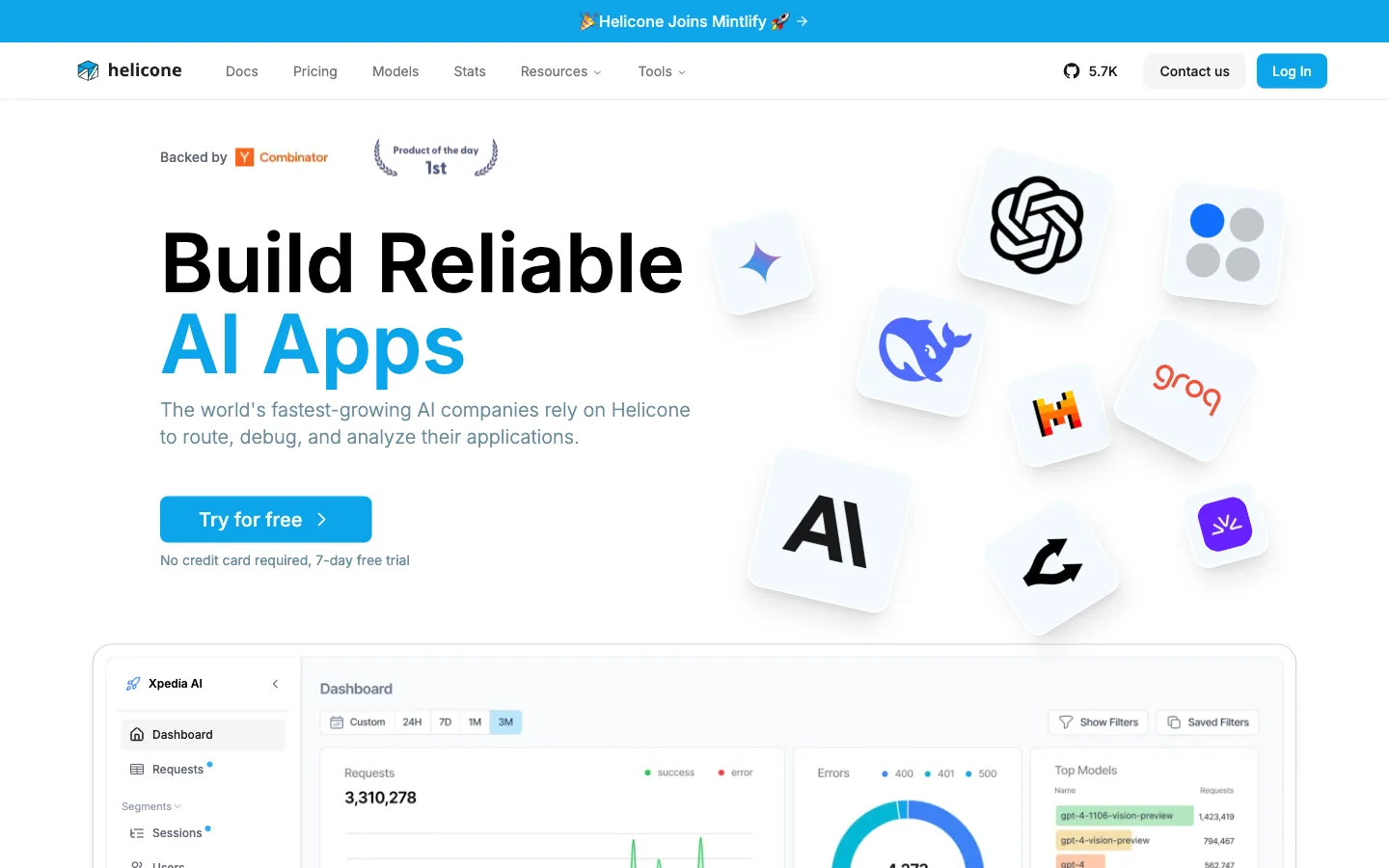
Helicone is an open-source proxy that logs every Claude API call with token counts, cost, latency, and custom metadata after a one-line baseURL change, complementing the kind of shadow-AI detection finance teams already run on the SaaS side. The lightweight footprint suits engineering teams that want observability without committing to a full gateway product, and setup takes minutes against an existing Claude Code project.
Session-level grouping is the standout feature for agentic workflows. Dozens of related API calls from a single agentic chain roll up to one coding-task cost instead of scattering across hundreds of log lines. Helicone’s own documentation describes the behavior plainly: “Sessions group these related requests together, letting you trace the entire agent flow from initial user input to final response in one unified view” (Helicone docs). User and feature-tag attribution segment spend by developer or environment, native Anthropic prompt-cache support tracks cached-token savings as a separate line item, and published pricing runs from a free Hobby tier to $79 a month for Pro and $799 a month for Team, with self-host available on the open-source build.
Mintlify acquired Helicone on March 3, 2026, and the product now sits in maintenance mode by the team’s own description: “Helicone’s services will remain live for the foreseeable future in maintenance mode. This means security updates, new models, bug & performance fixes all keep shipping.” The proxy still works reliably, but net-new feature development has stopped, which buyers should weigh against Langfuse’s active roadmap.
Pros:
- One-line baseURL swap deploys against existing Claude Code projects in minutes
- Session-level grouping rolls agentic chains into single coding-task costs
- Native Anthropic prompt-cache reporting tracks cached-token savings separately
Cons:
- Mintlify acquisition put new feature development on hold in March 2026, per Helicone’s own announcement
- Lighter governance surface than Portkey or Credal for enterprise controls
Langfuse
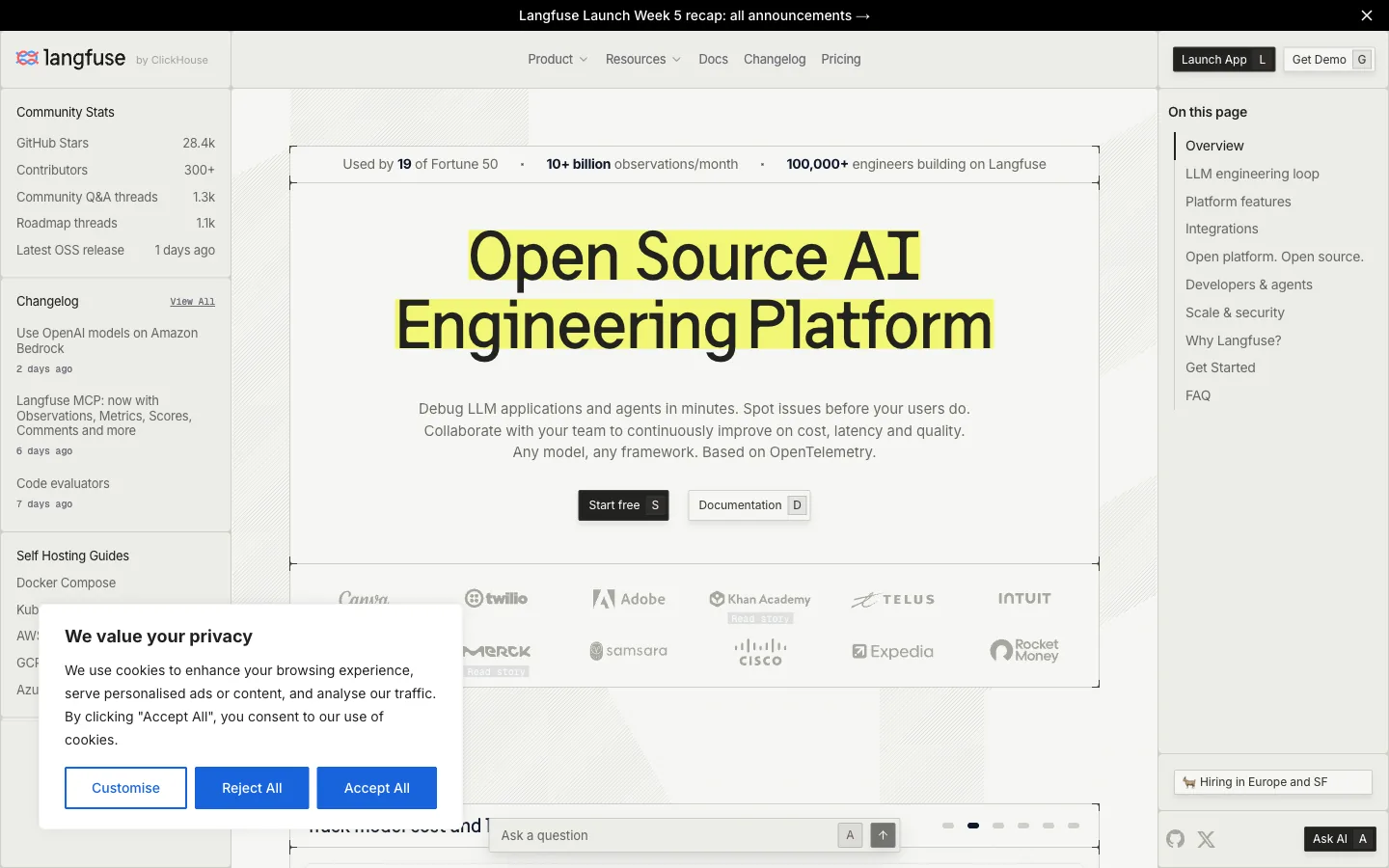
Langfuse is open-source LLM observability with a dedicated Claude Code plugin. Installing it takes two commands, claude plugin marketplace add langfuse/Claude-Observability-Plugin followed by claude plugin install langfuse-observability@langfuse-observability. Langfuse describes the mechanism as follows: “By using Claude Code’s hooks system, this integration captures full conversation interactions and sends them to Langfuse” (Claude Code tracing docs). Nested tool calls and tool results render as child spans inside a visual tree.
That span tree surfaces inefficient patterns most teams cannot see otherwise. Repeated file reads, redundant bash invocations, and subagent loops show up as a visual hierarchy, so engineering managers can spot the waste before the monthly invoice closes. On the cost side, Langfuse’s documentation states that it “tracks the usage and cost of every LLM call in your application, so you can monitor spend across models, use cases, and over time” (token and cost tracking), and the Metrics API exists to “aggregate cost, token usage, volume, latency, and score data” for downstream billing systems or rate-limit logic.
Published pricing runs a free Hobby tier, Core at $29 a month, Pro at $199 a month, and Enterprise at $2,499 a month, which adds SCIM, SSO, and audit logs. Self-hosting stays free on the open-source build. Active development continues across both the open-source repo and the cloud product.
Pros:
- Dedicated Claude Code plugin hooks into sessions without code changes
- Span-tree visualization exposes wasteful agentic patterns by session
- Free self-host tier keeps observability viable at startup budgets
- Metrics API pipes token spend into downstream billing logic
Cons:
- Engineering setup required versus a procurement-led tool
- Enterprise tier pricing climbs quickly at higher seat counts
Credal
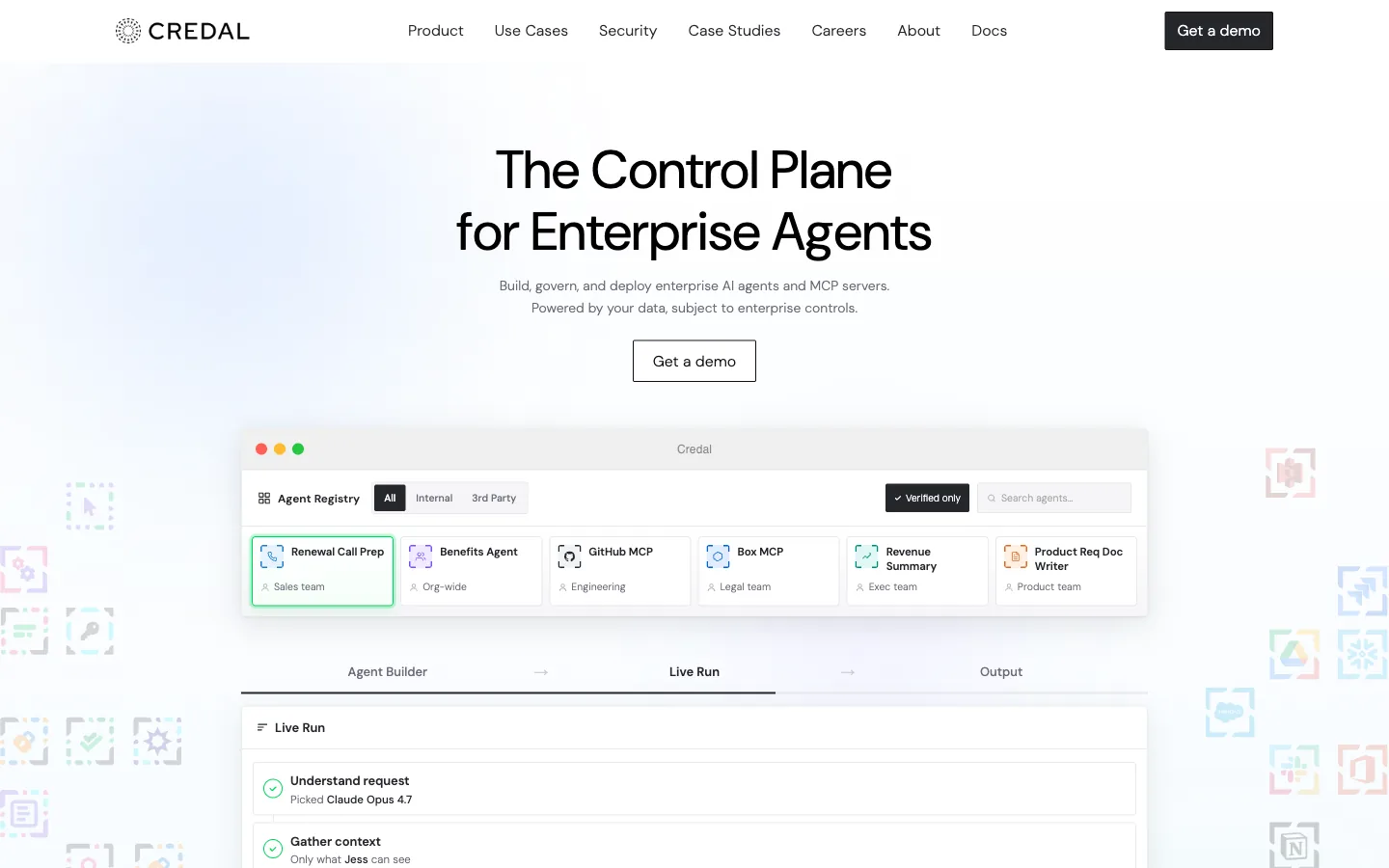
Credal is the governance control plane for enterprise agents, sitting in front of Claude, Cursor, ChatGPT, and Gemini to enforce uniform policy. For Claude Code specifically, the platform scopes agents to engineering teams, requires human-in-the-loop approval for destructive shell commands, and logs every prompt, tool call, and data access with full lineage.
That lineage exports into Splunk and Datadog SIEM pipelines, closing the audit loop most compliance teams have been missing on AI agents. The Agent Registry verifies, publishes, or revokes individual agents or MCP servers org-wide, so shutting down a rogue Claude install takes one action instead of a manual sweep across laptops. Customers including Wise, MongoDB, and Lattice run the platform across SOC 2 Type 2 deployments, with on-prem options and zero-retention agreements with Anthropic for sensitive data.
Spend control here comes through governance rather than direct budgeting. Credal does not publish hard dollar caps per user, so the savings curve runs through eliminating unsanctioned agent traffic. Credal describes the registry as “every agent in your organization, versioned, governed, and auditable in a single source of truth” (Agent Registry).
Pros:
- Uniform governance across Claude, Cursor, ChatGPT, and Gemini in one policy
- Agent Registry revokes rogue Claude installs and MCP servers org-wide in one action
- SOC 2 Type 2, on-prem, and zero-retention support cover enterprise compliance
Cons:
- Hard dollar caps per user are not publicly documented
- Spend savings come through governance rather than direct budgeting controls
Torii's AI Dashboard catches Pro and Max signups before they hit the corporate AmEx, meters token burn by developer and model, and rightsizes seats against actual 30-day activity before renewal. Pair it with a gateway or observability tool and the full Anthropic bill stops surprising finance. See it on the AI-powered SaaS management page.
Spendflo
Spendflo brings procurement leverage to Anthropic renewal cycles, backed by a benchmark database of 1,500+ SaaS vendors benchmarked with real-contract ACV data, slotting next to Claude Code contract management workflows on the procurement side. A Claude Code Team or Enterprise negotiation walks in with actual peer pricing rather than guessing at the discount floor.
Flo AI agents handle the surrounding workflow. The Contract Analyst extracts renewal dates and flags auto-renew clauses 60 days out, while the Payables Agent reconciles Anthropic invoices against the negotiated tier. Intake-to-procure routing pushes every new Claude Code request through classification, budget check, and approval before a card gets charged. Spendflo publishes outcome stats of 11 percent average savings on SaaS spend and 70 percent faster intake-to-procure cycles.
Spendflo is the procurement and contract layer, not a token observability tool. Buyers usually pair it with a gateway or SMP for usage telemetry. Spendflo does not publish dollar pricing, describing its model on the pricing page as a platform fee plus a per-completed-request charge, so budget for a quote rather than a list rate.
Pros:
- 1,500+ vendor benchmark database with real ACV data on Anthropic deals
- Contract Analyst flags auto-renew clauses 60 days before each renewal hits
- Intake workflows gate Claude Code purchases before a card ever gets charged
- Publishes its own outcome stats of 11 percent average savings and 70 percent faster intake
Cons:
- No token-level observability, so pair with a gateway or SMP for usage data
- No published list pricing, so every deal starts as a quote
| G2: 4.6/5 (50 reviews) | Capterra: not listed |
Zylo
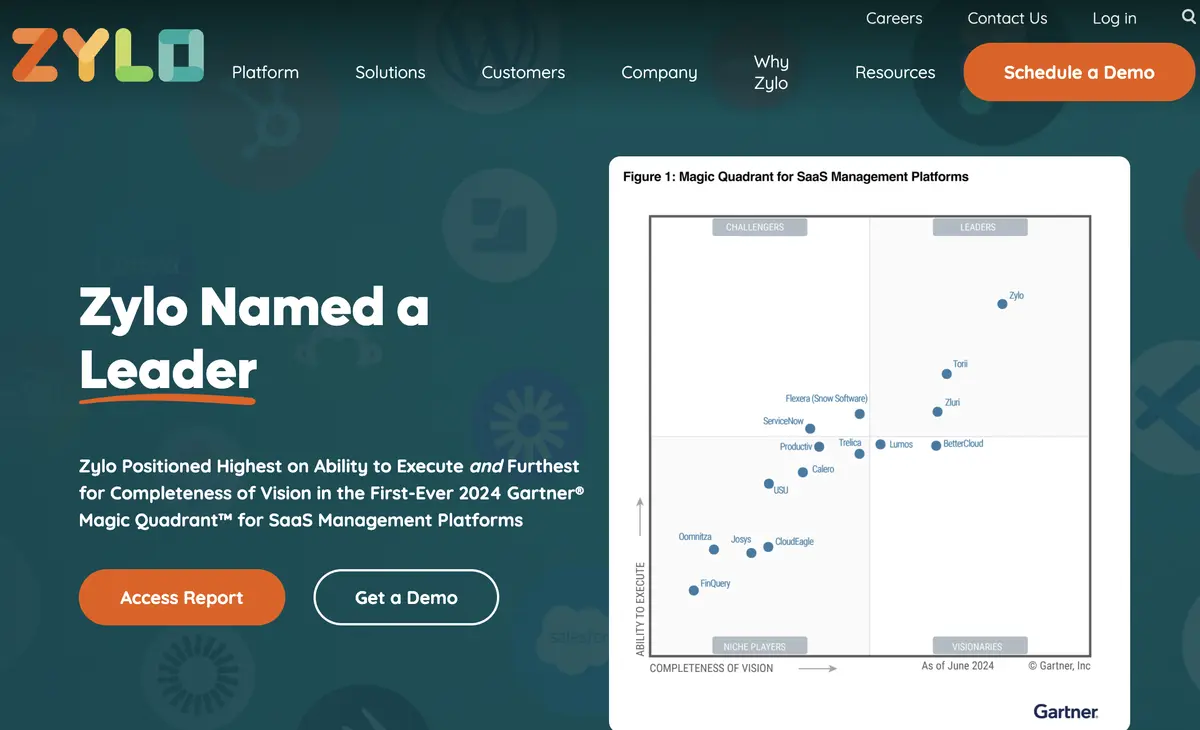
Zylo is a Gartner MQ Leader SMP with a dedicated AI Consumption Cost Management product built for token-billed tools like Claude Code, sitting alongside shadow-AI discovery on the inventory side. SSO, expense, and AP feeds catch personal-card Pro subscriptions alongside team leads buying Claude Team without IT approval.
Consumption-based usage tracking sits alongside seat-licensed SaaS in a single view, which is still rare in the SMP category. Daily and monthly spend visibility, forecast-versus-commitment projections, and team-by-team token breakdowns let finance attribute burn to a specific squad rather than dividing the total by headcount. Clarity AI benchmarks Anthropic renewals against $75B+ of SaaS and cloud spend data sourced from the Zylo customer base.
An MCP server entered public preview in May 2026, opening that dataset to other agents. Where Zylo and Torii overlap is on discovery; Zylo’s differentiator is the consumption-management depth and benchmark scope, with the AI Consumption Cost Management page covering the token-billing model in detail.
Pros:
- AI Consumption Cost Management product purpose-built for token billing
- Forecast-versus-commitment view models Claude Code spend against contract tiers
- Clarity AI benchmarks Anthropic renewals against $75B+ of peer spend
- MCP server opens the spend dataset to other agents in public preview
Cons:
- Pricing skews toward larger enterprise SaaS portfolios
- Overlaps with broader SMPs on the discovery layer
| G2: 4.7/5 (146 reviews) | Capterra: not listed |
CloudZero
CloudZero brings cloud-FinOps unit economics to Claude Code spend. On Anthropic’s Usage and Cost Admin API, CloudZero claims the first-mover slot outright: “CloudZero is now the first cloud cost platform to integrate directly with it” (CloudZero blog). The 2026 Claude Code Plugin embeds an MCP server inside the editor itself, with nine specialized skills and 45+ ready-to-use prompts available without switching context.
CostFormation, CloudZero’s patented allocation engine, ties spend to business dimensions like cost per feature, per customer, per engineer, or per inference without requiring complete tag coverage. CloudZero’s own claim for the engine is that it “captures and allocates 100% of your costs, showing you where (and how) to save” (shared cost allocation). The company reports managing over $14B in spend across cloud and AI combined, which gives the unit-economics benchmarks real weight. AI Hub cross-links spend spikes to GitHub commits, Jira tickets, and PagerDuty incidents, so a Claude Code cost outlier connects directly to the engineering work that drove it.
The question CloudZero answers best is “cost per feature shipped,” not just “cost per month.” That framing exists because forecasting AI spend is where most teams miss: CloudZero’s own survey of 475 organizational leaders found that 80 percent of organizations miss their AI spend forecasts by 25 percent or more, and only 51 percent feel confident they can measure AI ROI at all. Engineering finance teams comparing margins by product line depend on the per-feature view, and the Claude Code Plugin page documents the MCP integration.
Pros:
- Claims first-mover integration with Anthropic’s Usage and Cost Admin API
- CostFormation allocates costs without requiring full tag coverage
- AI Hub links spend spikes to GitHub commits and PagerDuty incidents
- $14B+ in tracked cloud and AI spend gives the benchmark data real depth
Cons:
- Cloud-FinOps origins steer the product toward engineering finance, not procurement
- Heavier setup than a proxy or SMP-only deployment
How to Choose a Claude Code Spend Management Tool
Claude Code spend control in 2026 splits across discovery, gateway enforcement, observability, governance, procurement, and unit economics. Most engineering organizations end up running two layers at once, with a SaaS management platform on the inventory side and either a gateway like Portkey or an observability tool like Langfuse handling per-call attribution.
The split matters when you pick. If the surprise on the invoice is accounts nobody knew about, start with discovery. If it is one team’s runaway agentic sessions, start with a gateway that can cap them mid-call. If it is the renewal number itself, start with benchmark data. Anthropic’s own documentation is the baseline worth measuring against, since it puts typical enterprise usage at $150 to $250 per developer per month.
Cover all four layers before renewal season: discovery for shadow Pro and Max accounts, gateway enforcement for hard per-team caps, observability for token attribution by developer, and procurement leverage on the Team or Enterprise contract. Most stacks need at least two of the four to keep finance ahead of the bill.
Frequently Asked Questions
Catch shadow Pro and Max signups with a discovery layer, pair it with a gateway or observability proxy for per-call token attribution, enforce per-team caps and RBAC, rightsize idle seats before renewal, and negotiate better Anthropic contracts via procurement.
Agentic sessions resend the full conversation on every tool call, so token burn climbs faster than a seat budget predicts. An idle Max seat costs $100 a month at Max 5x and $200 at Max 20x. Pro and Max subscriptions often sit on personal cards, and per-user cost data lives in a separate Claude Code Analytics API rather than the main console, so procurement rarely sees it.
A gateway routes Claude requests through a proxy that logs tokens, enforces per-team budget caps and rate limits, uses virtual keys to centralize credentials, and applies semantic caching and provider fallbacks to cut duplicated billing and prevent runaway agentic sessions.
Discovery and SMPs surface Pro/Max signups on personal cards via browser telemetry, IdP and expense feeds, inventory by employee and model, forecast-versus-commitment views, and benchmarked renewal data so finance can attribute token burn and avoid surprise charges.
Use observability when you need per-call token attribution, session-level grouping for agentic chains, span-tree visualizations to find inefficient patterns, and Metrics APIs to pipe token costs into billing systems, especially during rapid agent development or before renewals.
Procurement tools negotiate Anthropic tiers, flag auto-renewals, and gate new purchases, while FinOps platforms allocate token spend to features, link spikes to commits or incidents, and provide unit-economics benchmarks to measure cost per feature or engineer.