

7 Tools to Manage Cursor Business and Enterprise Plans in 2026
 Chris Shuptrine
•
Jun 18, 2026
•
14 min read
Chris Shuptrine
•
Jun 18, 2026
•
14 min read
Compare 7 tools to manage Cursor Business and Enterprise plans in 2026, from seat provisioning to license reclamation and right-sizing.
Ask about this article
Opens Claude in a new tab to answer, using this article as the source.
Cursor crossed $4B in annualized revenue in 2026, with Forbes reporting it “topped $4 billion in annualized revenue in the last week … up from $3 billion in late April, and $2 billion in February.” Roughly 64% of the Fortune 500 now write code with it. That scale turned seat management into a real budget line. Teams Standard runs $40 per user a month, and Premium jumps to $120 for five times the usage, so finance feels every seat that sits idle.
The Cursor admin console handles invites and a single team-wide spend cap, then stops short of the rest. It has no automated idle-seat detection, so admins scan the usage dashboard by hand. Annual plans lock a used-then-removed seat for the full term, while SCIM provisioning and per-user spend limits both sit behind the Enterprise tier.
That gap is where third-party tools earn their keep, and the seven below each close a different part of it. Some provision and reclaim seats, some surface shadow Cursor installs through finance and browser data, and others right-size Business against Enterprise on real usage. Seat sprawl also feeds the renewal problem, which is why Cursor contract management sits next to it, the same way GitHub Copilot contract management handles committed-seat true-ups on the Microsoft side. Here is how Torii, Lumos, BetterCloud, Josys, CloudEagle, Zylo, and Productiv compare for managing Cursor in 2026.
Cursor Teams Standard runs $40 per user a month and Premium jumps to $120 for 5x the usage. Annual plans lock a removed seat for the full term, and per-user spend limits plus SCIM both sit behind the Enterprise tier. Cursor's docs note that "on-demand usage allows you to continue using models after included usage is consumed, billed in arrears," so the bill runs past the base seat. A single idle Premium seat left for a year is $1,440 that never had to be spent.
★ = low · ★★ = medium · ★★★ = high
| Tool | Ease | Cost | Seat & License Management | Reviews |
|---|---|---|---|---|
| Torii | ★★★ | ★★ | ★★★ | ★★★ |
| Lumos | ★★ | ★ | ★★★ | ★★ |
| BetterCloud | ★★ | ★★ | ★★ | ★★ |
| Josys | ★★★ | ★★ | ★★ | ★ |
| CloudEagle | ★★ | ★ | ★★★ | ★★ |
| Zylo | ★ | ★ | ★★★ | ★★ |
| Productiv | ★★ | ★ | ★★★ | ★ |
Table of Contents
Torii
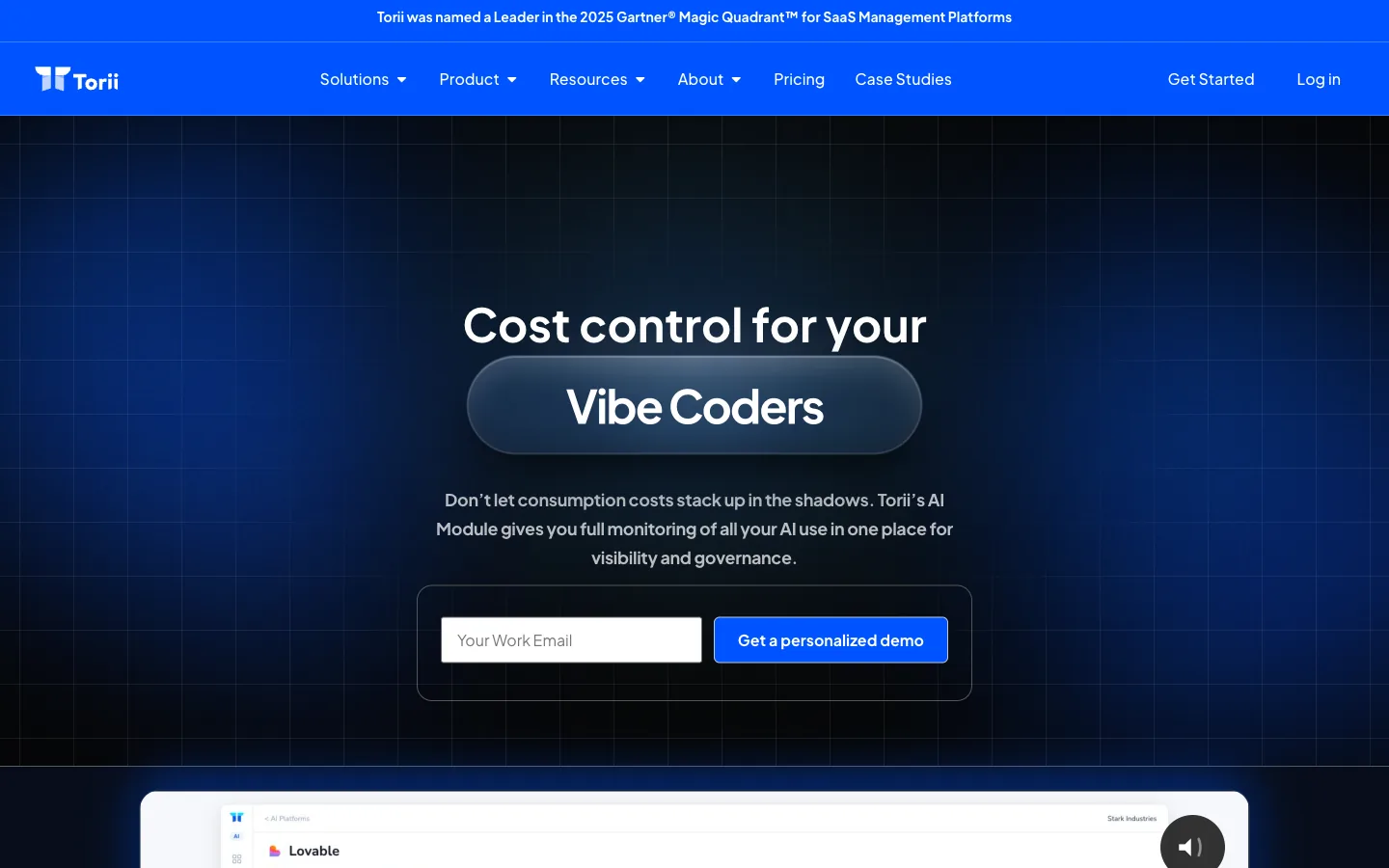
Torii is an AI management platform that finds Cursor seats your procurement team never approved. Its discovery engine pulls from browser activity, finance records, SSO, and email, which matters because Torii’s 2026 SaaS Benchmark report found that “61.3% of apps are Shadow IT,” used without review, ownership, or lifecycle controls. A Cursor Business seat expensed on a personal card shows up next to every other coding assistant in use.
The AI Dashboard tracks coding-assistant sprawl by user, team, and spend, so Cursor stays in view alongside Copilot and Tabnine. Torii reads usage depth by license tier instead of login dates, then reclaims or downgrades idle Cursor seats automatically. Continuous right-sizing keeps that waste from creeping back after the next hiring wave.
Policy-based workflows provision approved tools at onboarding and revoke them across the full estate when someone exits. Its Eko AI copilot turns usage into cut, keep, or right-size recommendations tied to each renewal date, and contract ingestion captures per-seat terms so a Cursor annual renewal never blindsides finance. You can see the model on the Torii AI management platform page.
Where Torii fits Cursor plan management:
- Surfaces shadow Cursor seats through finance, browser, and SSO data
- Flags idle Premium seats from real usage, not last login
- Reclaims, reassigns, or downgrades seats through approval workflows
- Revokes Cursor access automatically the day someone leaves
Pros:
- Multi-source discovery that catches Cursor seats off the IdP
- Usage-based reclamation that downgrades idle Premium licenses
- Automated offboarding that frees Cursor seats on exit
- AI Dashboard that tracks coding-assistant spend in one place
Cons:
- Built for enterprise breadth, so it is not the cheapest option here
- Centered on SaaS and shadow IT, with no on-premise deployment
| G2: 4.5/5 (303 reviews) | Capterra: 4.9/5 (26 reviews) |
Lumos
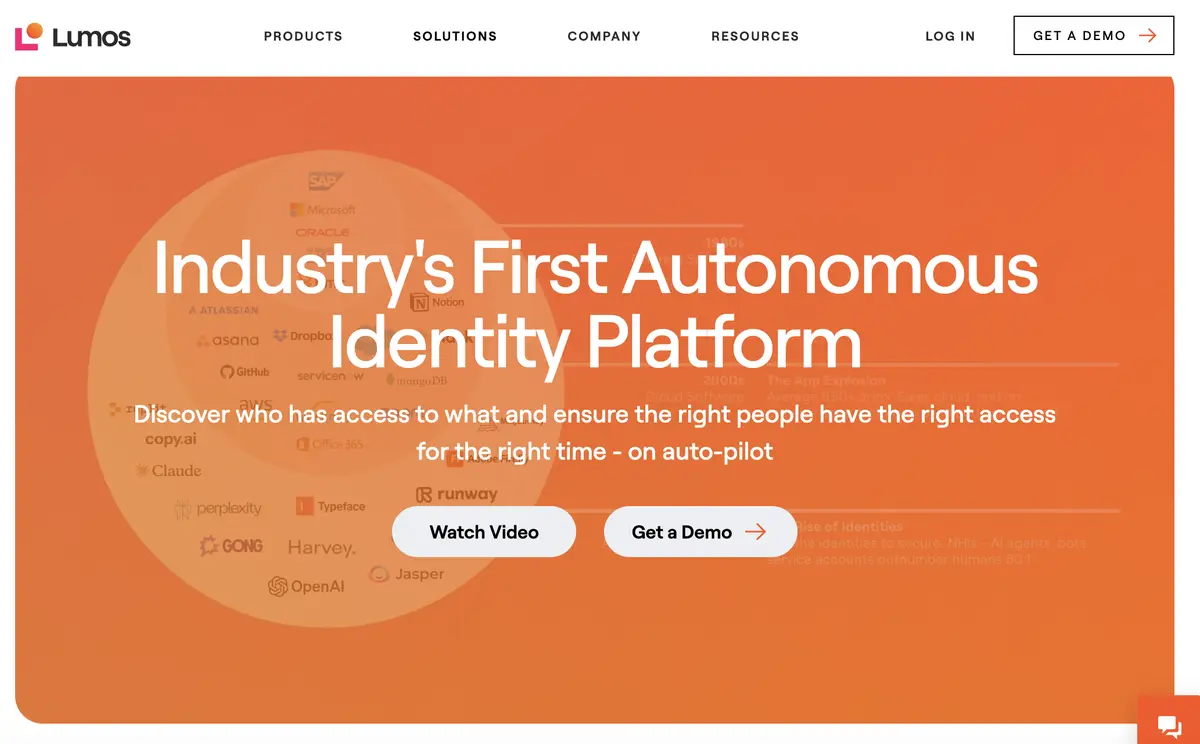
Lumos approaches Cursor management from identity first, calling itself an autonomous platform built for the agentic era. Its Access Request Agent and Role Mining Agent grant and revoke Cursor seats on a continuous, policy-driven basis without an admin firing each workflow by hand. The license and the account behind it land in the same system your team already runs.
Joiner-mover-leaver automation reads hiring, role-change, and termination events from more than 300 HRIS connectors, including Workday, ADP, and BambooHR. The moment a record changes, Lumos provisions or strips a Cursor seat to match. A self-service AppStore then issues time-bound access that auto-revokes when the window closes, which kills the standing trial seats that quietly renew.
The Cost Optimization Engine reclaims idle licenses from last-login and activity signals. The Role Mining Agent then proposes whether a job function needs Business or Enterprise. The Lumos SaaS management page walks through the approach.
Where Lumos helps manage Cursor seats:
- Agent-driven provisioning and revocation without manual triggers
- Birthright access across 300-plus HRIS integrations on hire
- Time-bound AppStore requests that auto-revoke on expiry
- Role mining that maps each user to the right Cursor tier
Pros:
- Autonomous agents handle the access lifecycle end to end
- Self-service AppStore cuts shadow Cursor requests
- HRIS-driven offboarding reclaims seats fast
Cons:
- Governance leans toward identity over token spend
- Heavier fit for teams without a mature HRIS
G2: 4.7/5 (69 reviews)
BetterCloud
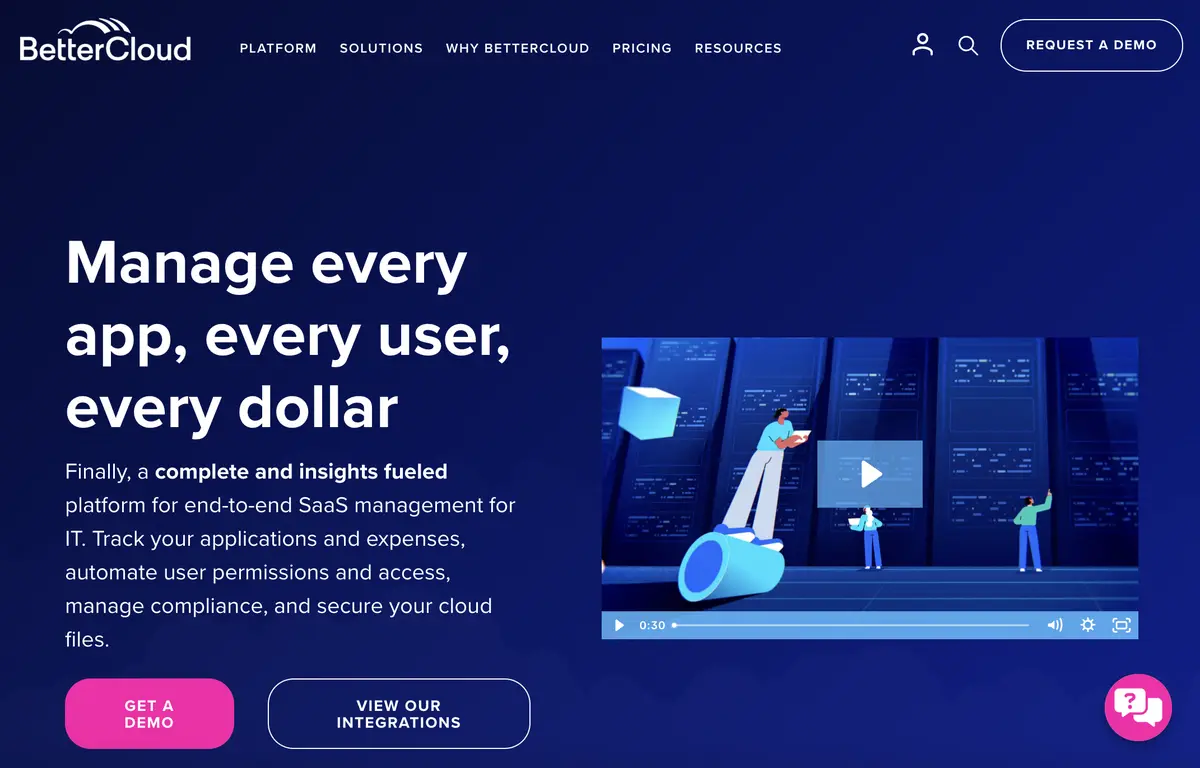
BetterCloud built its name on SaaS lifecycle automation, and that engine is the draw for Cursor management. Its no-code builder spans more than 100 integrations and hundreds of prebuilt actions, so a Cursor seat gets provisioned at onboarding and revoked the instant someone exits. No ticket sits in a queue waiting for an admin to act.
Shadow-AI detection runs through SSO, a browser extension, and ERP data, sorted against a catalog of 90,000-plus categorized apps. When a rogue Cursor install appears, a workflow can auto-trigger a review before it spreads. Its Spend Optimization module flags unused seats and uses BetterRenewal utilization data to right-size counts before an annual term locks them in.
Recent reporting places BetterCloud under CoreStack’s agentic governance platform after a 2026 acquisition. The workflow engine remains why teams pick it for license cleanup. A conversational IT Agent answers plain-language queries like seats unused for 30 days, with human approval and one-click reversal. The BetterCloud platform page covers the details.
Where BetterCloud fits seat management:
- No-code provisioning and deprovisioning of Cursor seats
- Auto-triggered reviews when shadow Cursor appears
- Utilization data that right-sizes seats before renewal
- Conversational IT Agent for plain-language seat queries
Pros:
- Deep no-code automation for provisioning and offboarding
- Large integration and app-discovery library
- Renewal data that heads off over-bought tiers
Cons:
- Workflow depth carries a learning curve for small teams
- AI roadmap still settling after the CoreStack deal
| G2: 4.4/5 (483 reviews) | Capterra: 4.0/5 (27 reviews) |
Most tools here act only once a seat already exists. Torii reads real usage across Cursor and your other AI coding tools, flags the seats nobody touched, and routes a downgrade or reclaim through approval before an annual term renews. See how Torii manages AI spend.
Josys
Josys is the only tool here that unifies SaaS license management with device management in one console. So when a Cursor seat-holder’s laptop is wiped or returned, the hardware and software lifecycle get handled from the same screen. That pairing matters for developer tools, where a machine and a paid seat usually move together.
It surfaces license counts and unused seats within minutes of connecting integrations. From there, IT can unassign Cursor licenses and deprovision without logging into each vendor portal. Anker used the platform to cut SaaS costs by 75%, with savings closer to 25% in typical cases. Low-activity surveys ask users to justify a seat or flag it for reclamation.
Josys can auto-downgrade underused people from Enterprise to Business and consolidate Cursor buys that started in separate departments. It also claims roughly three times more shadow-IT discovery, including AI-agent identities. The Josys cost optimization page shows how the cleanup runs.
Where Josys fits Cursor management:
- One console for Cursor seats and the devices that run them
- License counts and unused seats visible within minutes
- Activity surveys that justify or flag seats for reclamation
- Auto-downgrade from Enterprise to Business on low usage
Pros:
- Combined SaaS and device lifecycle in a single view
- Fast time to first license inventory
- Strong shadow-IT and AI-identity discovery
Cons:
- Spend benchmarking is lighter than finance-first rivals
- Device features add scope teams may not need
G2: 4.6/5
CloudEagle
CloudEagle owns the full path from an HRIS event to a deprovisioned Cursor seat. Automated license harvesting removes unused seats after configurable idle thresholds, like 30 or 60 days, on a weekly or monthly schedule. Freed Cursor seats return to a reassignment pool instead of renewing untouched.
HRIS integrations with Workday, BambooHR, ADP, and Zoho provision access before day one and fire deprovisioning the instant a termination is logged. With 500-plus app integrations on nightly syncs, it compares active against assigned users and reads feature-level usage to place each developer on the right Cursor tier. Orphaned-identity detection then catches lingering Cursor API and service tokens after offboarding.
Procurement benchmarking against more than $50B in transactions helps recover 10% to 30% of spend within 90 days. That data gives buyers a reference when negotiating a Cursor Enterprise contract. You can review the workflow on the CloudEagle license management page.
Where CloudEagle fits Cursor management:
- Idle-threshold harvesting on a set 30 or 60-day schedule
- HRIS-triggered provisioning before a new hire’s first day
- Orphaned-token cleanup after a developer offboards
- Benchmark data for Cursor Enterprise negotiation
Pros:
- End-to-end automation from hire to deprovision
- Configurable idle thresholds for seat reclamation
- Large integration library with nightly usage syncs
Cons:
- Breadth can feel heavy for a single-tool cleanup
- Full value needs HRIS and finance both connected
G2: 4.8/5
Zylo
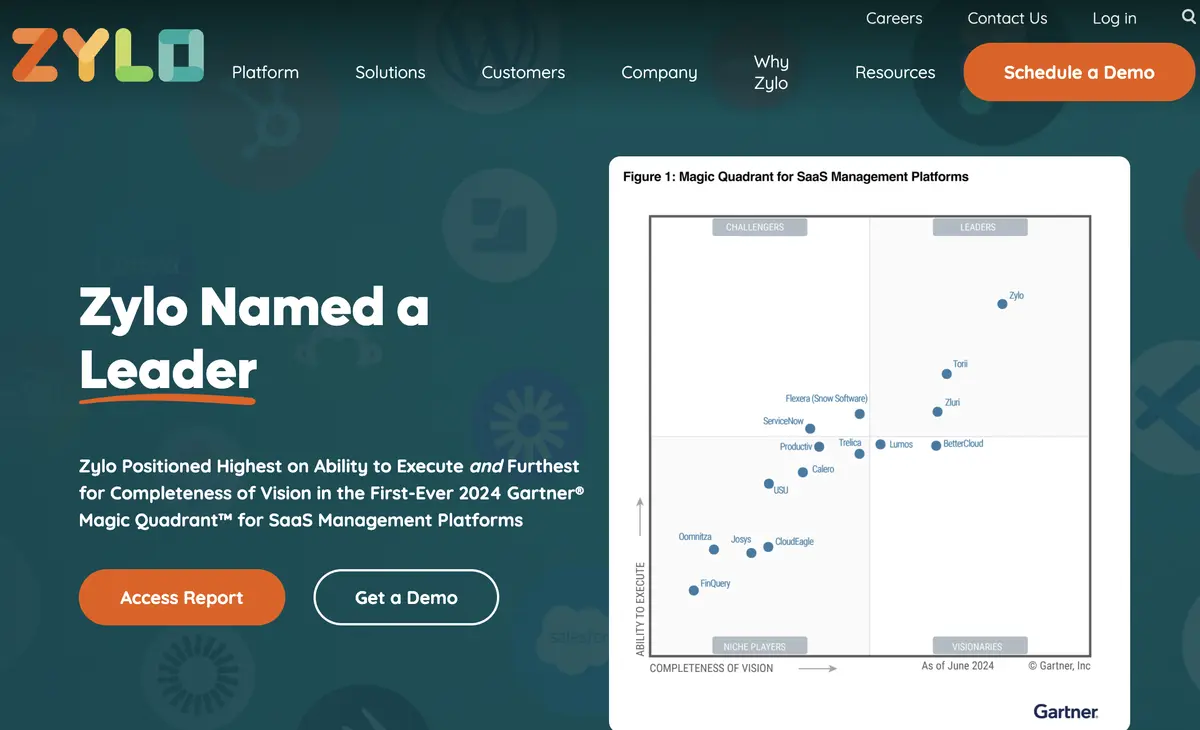
Zylo is the enterprise spend-intelligence layer, built for SAM, FinOps, and procurement teams at scale. It detects idle Cursor seats by comparing license assignments against real activity, then launches confirmation surveys before anything gets cut. One customer found 509 inactive seats out of 1,549 provisioned and reclaimed them on a rolling cadence rather than waiting for renewal.
Its Okta OAuth integration was the category’s first, so license harvesting runs without a brittle service account that breaks on a password change. Multi-method ingestion across direct connectors, SSO, Usage Connect, and API catches Cursor even when a team installed it outside SSO. That coverage closes the gap Cursor’s own console leaves open.
A spend dataset above $75B gives procurement real benchmarks for right-sizing and renewal talks, surfacing users on Enterprise who only touch base features. The Zylo license management page details the approach.
Where Zylo fits Cursor management:
- Activity-based detection of inactive Cursor seats
- Survey-confirmed reclamation on a rolling cadence
- Okta OAuth harvesting without a service account
- Benchmark data for right-sizing Enterprise seats
Pros:
- Finance-grade spend intelligence and benchmarking
- Multi-method discovery that catches off-SSO installs
- Survey workflow that confirms before reclaiming
Cons:
- Lighter on real-time identity and provisioning
- Survey-based reclamation adds a manual step
G2: 4.7/5 (52 reviews)
Productiv
Productiv reads feature-level engagement inside apps, not just whether someone logged in. So a developer who opens Cursor but never touches premium agent features gets flagged as a downgrade candidate, not counted as fully active. That signal is the difference between a seat that looks used and one that earns its tier.
Its Elastic License Management add-on automates harvesting, reclamation, and tier downgrades through no-code workflows with configurable inactivity thresholds, defaulting to 60 days. ELM pushes deprovisioning through Okta Lifecycle Management across 7,000-plus connected apps. It removes a user from the right Okta group so Cursor will not re-provision on their next login.
Benchmarking and right-sizing recommendations make each Business-versus-Enterprise call defensible with usage facts rather than a guess. Teams that lead with engagement data over raw spend tend to land here. The Productiv SaaS management page shows the workflow.
Where Productiv fits Cursor management:
- Feature-level engagement as the reclamation signal
- ELM workflows with configurable inactivity thresholds
- Okta-group removal that stops silent re-provisioning
- Usage-backed Business-versus-Enterprise recommendations
Pros:
- Deep feature-level usage intelligence
- Automated downgrades tied to real engagement
- Defensible right-sizing for tier decisions
Cons:
- Engagement focus over token and spend tracking
- Heavier fit for larger AI portfolios
G2: 4.6/5 (75 reviews)
How to Choose a Cursor Management Tool
The right tool depends on where your Cursor risk sits in 2026. Teams fighting idle seats and locked annual terms lean toward Torii or CloudEagle, while those governing identity and provisioning look at Lumos or BetterCloud. Zylo fits finance-led right-sizing, Josys suits shops that pair seats with devices, and Productiv wins on feature-level usage data. If the spend side is your priority over the seat side, our guide to tracking Cursor usage and spend covers that angle, and the same lifecycle questions apply to Claude Enterprise and Team plans if your stack runs more than one assistant.
If shadow installs and seats nobody touches are the real problem, start with what you can actually see. Torii surfaces every Cursor account through SSO, browser, and finance data, then reclaims idle seats and revokes access automatically when people leave.
You can only govern the Cursor seats you can see. Torii discovers every AI coding tool in use through SSO, HRIS, browser, and expense data, reads real usage by license tier, and revokes access the moment someone leaves. Explore the Torii platform.
Frequently Asked Questions
Use multi-source discovery that combines SSO, browser telemetry, finance records and HRIS data, and measure feature-level activity by license tier. Tools like Torii, Zylo, and Productiv automatically flag idle Premium seats and surface reclaim recommendations before renewal.
Cursor Premium costs $120 per user per month; an idle annual seat costs $1,440. Multiply by dozens or hundreds of seats and annual plans lock waste into budgets, so unclaimed idle seats materially increase software spend and skew renewal negotiations.
For hands-off provisioning and deprovisioning, Lumos and CloudEagle excel: Lumos uses autonomous agents and deep HRIS connectors, while CloudEagle ties HRIS events to configurable idle harvesting. BetterCloud also offers no-code workflows for lifecycle automation across platforms.
Workflows range from survey-confirmed reclamation (Zylo) to feature-engagement signals (Productiv) and scheduled idle harvesting (CloudEagle). Torii and Josys add automated downgrades and device-linked reclamation, while BetterCloud and Lumos provide policy-driven approvals.
Reclaim seats well before renewal dates, ingest contract terms into a management tool, and run continuous right-sizing. Use renewal intelligence (Torii, BetterCloud) to schedule downgrades, reassignments, or nonrenewals so annual plans don't lock wasted spend.
Connect HRIS (Workday, ADP), SSO/IdP (Okta), finance and expense systems, browser telemetry, and email to capture shadow installs and offboarding events. These integrations enable discovery, activity tracking by tier, and automated provisioning or reclamation workflows.