

Top 7 Zluri Alternatives for SaaS Management (2026)
 John Baker
•
Aug 12, 2026
•
15 min read
•
Updated October 5, 2026
John Baker
•
Aug 12, 2026
•
15 min read
•
Updated October 5, 2026

Compare 7 Zluri alternatives for 2026, from Torii and Zylo to Lumos and JumpCloud, framed by why teams leave Zluri, plus what Zluri pricing looks like now.
Ask about this article
Opens Claude in a new tab to answer, using this article as the source.
Zluri’s homepage now leads with “Identity Security for Autonomous Enterprises,” a line written for security buyers more than for the people who own SaaS spend. The copy under it reads, “Built on IRIS, Zluri delivers three tightly integrated capabilities that together form a unified identity security platform” (Zluri). SaaS management keeps its own live product page, so Zluri still sells it, though it no longer leads the pitch.
The teams shortlisting Zluri alternatives tend to be the ones that bought it for discovery, spend, and renewals, plus security teams comparing its identity governance with that of Zluri competitors such as Lumos and CloudEagle. Neither group gets much to compare on Zluri pricing, because no prices are public and the old pricing address now opens a demo request form.
The right replacement depends on which part of Zluri a team actually used, whether that was the finance and procurement side, IT lifecycle automation, or identity governance. Productiv, which some older lists still include, shut down on August 6, 2026, so it isn’t on this one. Readers who aren’t anchored on Zluri can start with our list of the best SaaS management platforms instead.
- The three capabilities on its IRIS layer are IVIP for discovery, IGA for governance, and ISPM for security.
- The SaaS management page is live and claims 300+ direct API integrations, license reclaim or downgrade below a usage threshold, renewal alerts, and spend forecasting.
- A homepage banner announces that identity visibility for non-human identities (service accounts, bots, and AI agents) is now live.
- Zluri's homepage claims access reviews run 10x faster with end-to-end automation.
Source: Zluri homepage, SaaS management page, and demo page, checked October 5, 2026.
★ = low · ★★ = medium · ★★★ = high
| Tool | Discovery | Renewals | Lifecycle | Identity |
|---|---|---|---|---|
| Torii | ★★★ | ★★★ | ★★ | ★★ |
| Zylo | ★★ | ★★★ | ★ | ★ |
| BetterCloud | ★ | ★★ | ★★★ | ★ |
| 1Password SaaS Manager | ★★★ | ★★ | ★★ | ★★★ |
| CloudEagle | ★★ | ★★★ | ★★ | ★★ |
| Lumos | ★ | ★ | ★★★ | ★★★ |
| JumpCloud | ★★ | ★ | ★★ | ★★ |
Discovery covers finding apps and measuring usage, Renewals covers spend, contracts, and procurement, Lifecycle covers onboarding and offboarding automation, and Identity covers access requests and reviews. Ratings are Torii's editorial read of each vendor's product pages, October 2026.
Torii
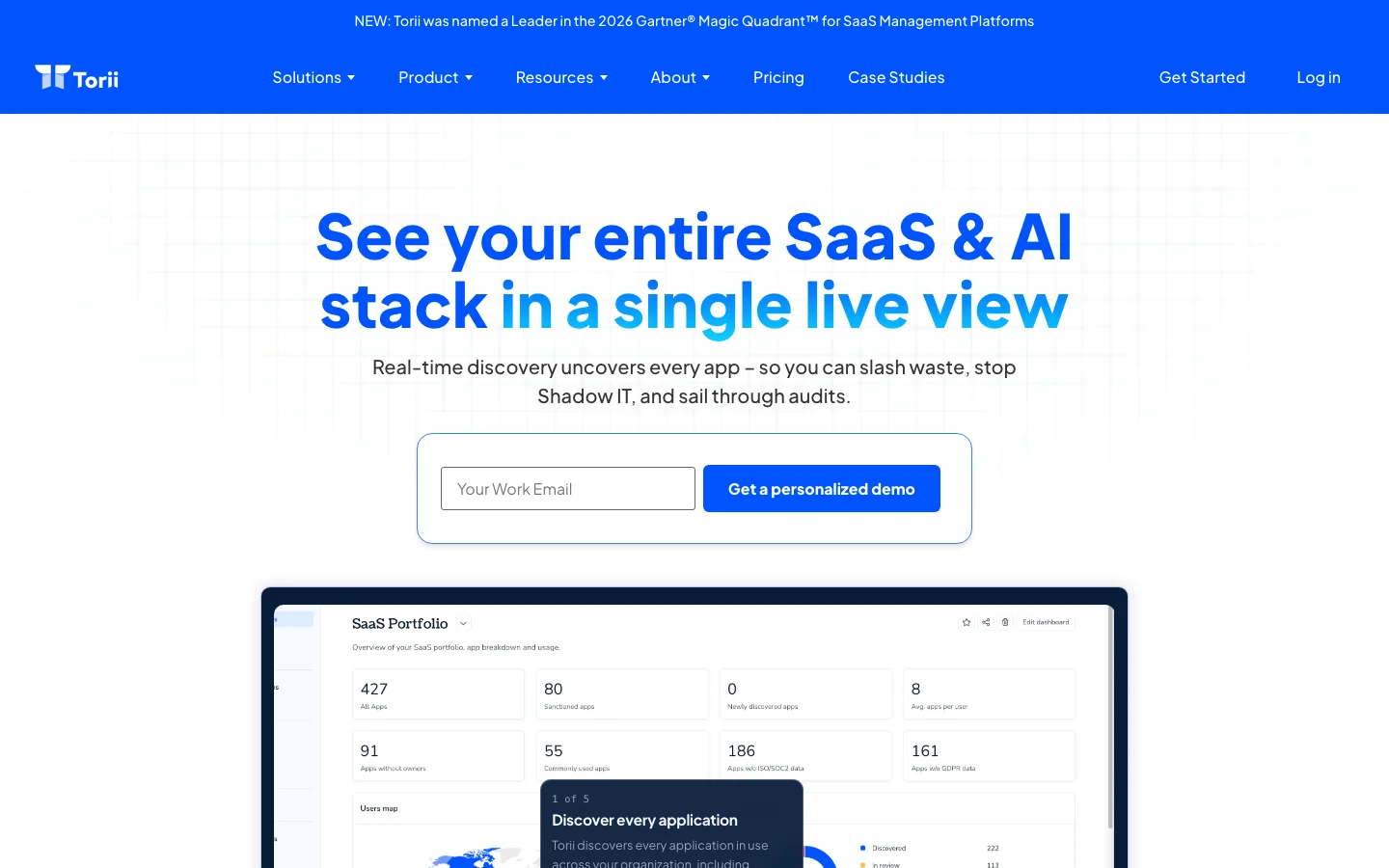
Torii covers the identity governance a Zluri team already runs and adds spend, contracts, and renewals to the same inventory. Gartner evaluated 16 vendors for its 2026 Magic Quadrant for SaaS Management Platforms and named Torii a Leader for the third year in a row, though 1Password, CloudEagle, and Zylo report Leader placement too, so the case for Torii rests on scope.
For a Zluri team, access reviews are the first thing to compare, and Torii runs them on its Enterprise plan. They run as scheduled campaigns across integrated and non-integrated apps, put usage, SSO, and HRMS data in front of each reviewer, and export reports for SOC 2, ISO 27001, and HIPAA audits. Governance policies mark access to each app as Allowed, Birthright (granted automatically by role), or Denied and can fix deviations automatically, falling back to a task when they can’t. Service accounts, bots, and AI agents get their own Users tab in the identity governance platform.
Finance and procurement get the half that Zluri now treats as one product among several. Expenses arrive from integrations such as NetSuite, Coupa, Ramp, and Brex and are matched to each app, Magic Auto-Fill reads contract PDFs into a renewal calendar, and Enterprise customers get Renewal Forecast, which compares purchased and used licenses before each renewal. Discovery underneath draws on the IdP, SSO, the browser extension, desktop agents, and expense and contract data, so apps bought outside SSO still land in the inventory.
Torii’s 2026 SaaS Benchmark report found that about 2.5% of seats in paid apps are still assigned to people who have left the company, and the Licenses page flags those seats as wasted so they can be reclaimed.
Source: Torii, 2026 SaaS Benchmark report, data January to December 2025.
Pros:
- Identity governance and SaaS spend tracked in one app inventory
- Access reviews that show reviewers usage, SSO, and HRMS data
- Contracts flow from Magic Auto-Fill into the renewal calendar and Renewal Forecast
- Discovery past the IdP through the browser extension and desktop agents
Cons:
- Quote-only pricing sized for enterprise programs, with access reviews and Renewal Forecast on the Enterprise plan
- SaaS and cloud apps only, with no on-premise deployment
Zylo
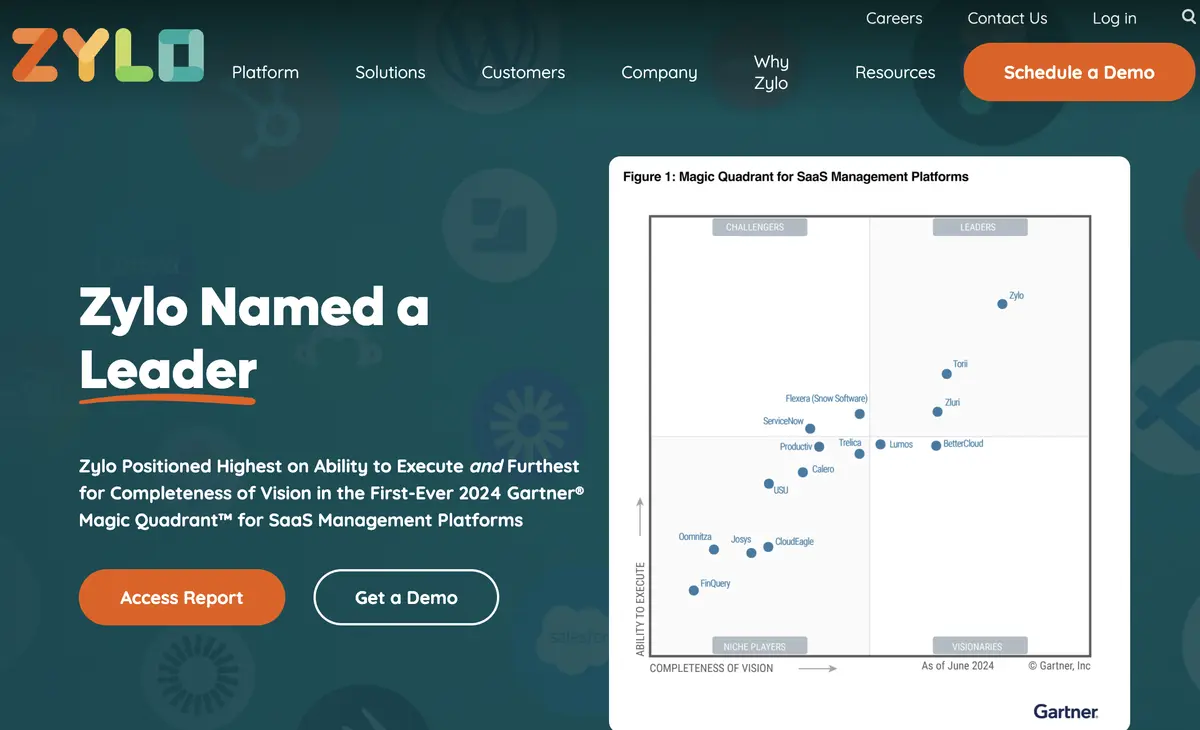
Zylo is the closest match for the Zluri customer who bought for spend and renewals and now sees the product leaning toward identity security. Its renewal calendar is assembled from contract, spend, and app data and ranks upcoming renewals by savings potential. Contract Assist pulls metadata out of uploaded contracts, and SaaS Negotiator is a managed service that handles the negotiation for you.
The cost of that focus shows up on the access side, where a Zluri team would give up the most. A September 2026 Zylo blog post on offboarding automation says Zylo leans on partners such as Okta and Microsoft Entra to deprovision or downgrade users instead of doing it natively. Zylo’s navigation shows no access request or access review product either, so the identity half of a Zluri deployment would move to the IdP or to a second tool.
Zylo sells three quote-only tiers named Core, Premium, and Enterprise, and its pricing page puts benchmarks, the Okta and Entra actions, ITSM automations, and cost allocation on Premium. If Zylo wins and later needs replacing in turn, our Zylo alternatives guide covers its own competitors.
Pros:
- A renewal calendar ranked by savings potential
- Contract Assist extracts terms from uploaded contracts
- A managed negotiation service for purchases and renewals
Cons:
- Deprovisioning depends on Okta or Entra
- No access review or access request product
A team leaving Zluri for deeper spend tracking doesn't have to give up access reviews to get it. Torii runs both from one inventory, with expense feeds and Magic Auto-Fill for Finance and usage-informed reviews for Security. There is no Zluri connector, so plan the move around your Zluri renewal date. See Torii's SaaS management platform.
BetterCloud
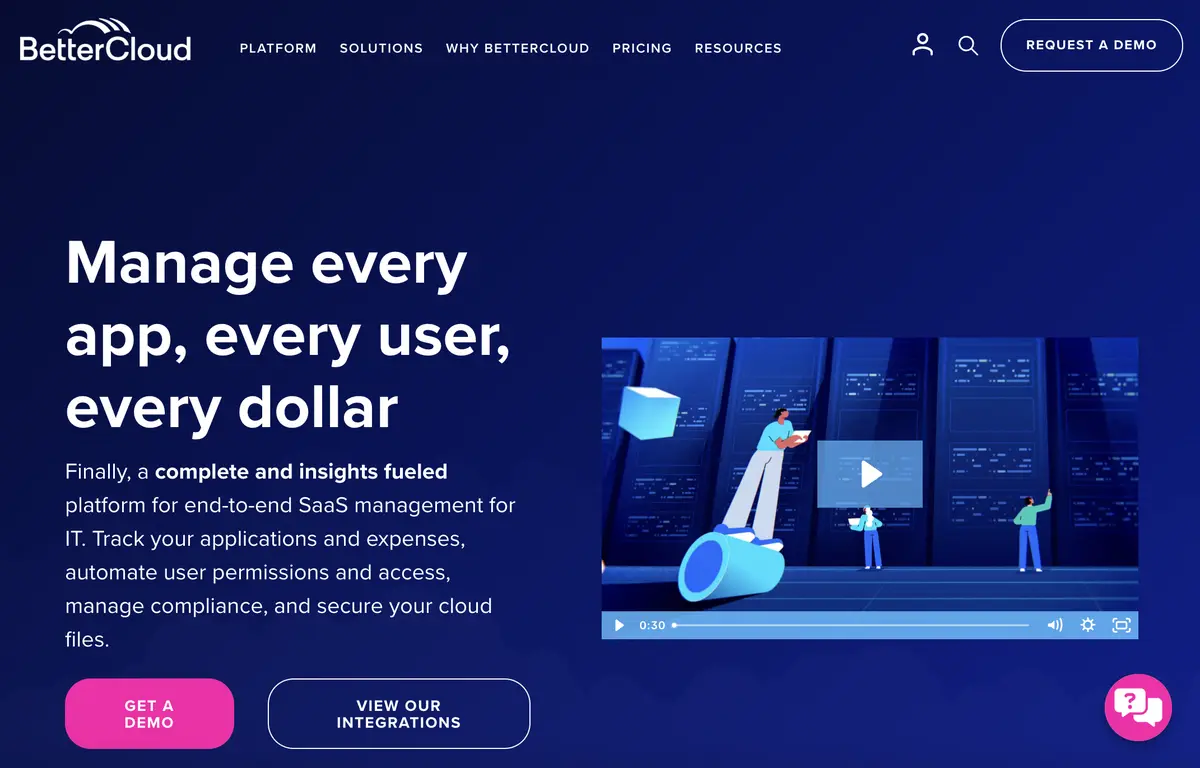
BetterCloud’s no-code workflow engine is built for the Zluri customer whose daily work was lifecycle automation, meaning the onboarding and offboarding runs that move people in and out of apps. The BetterCloud homepage counts 100+ integrations and 1,000+ actions in that engine, and User Automation adds HRIS triggers, if/else branching, and scheduled runs. Workspace Management covers Google Workspace administration and File Governance handles shared files, which suits suite-heavy IT teams. Our guide to automating the SaaS user lifecycle walks through the workflows themselves.
Discovery is the main trade for a team coming from Zluri. BetterCloud’s product pages list no browser extension or desktop agent, so its discovery leans on the apps you connect, which is narrower than Zluri’s multi-signal discovery. Access reviews have no named module, so a Zluri customer that runs quarterly certifications would keep that work in its IdP or another tool.
Pricing is a custom quote built from license count, connected apps, modules, and add-ons. The pricing page does list a Spend Optimization Basic tier at $0 a month, and BetterCloud’s spend optimization page promises custom 30/60/90-day key date alerts for renewals, so a team can test the spend side before paying for it.
Pros:
- A no-code workflow builder with HRIS triggers and branching
- 1,000+ actions across 100+ integrations
- Google Workspace administration and file governance modules
- A free Spend Optimization Basic tier
Cons:
- No browser extension or desktop agent for discovery
- No dedicated access review module
1Password SaaS Manager (Trelica)
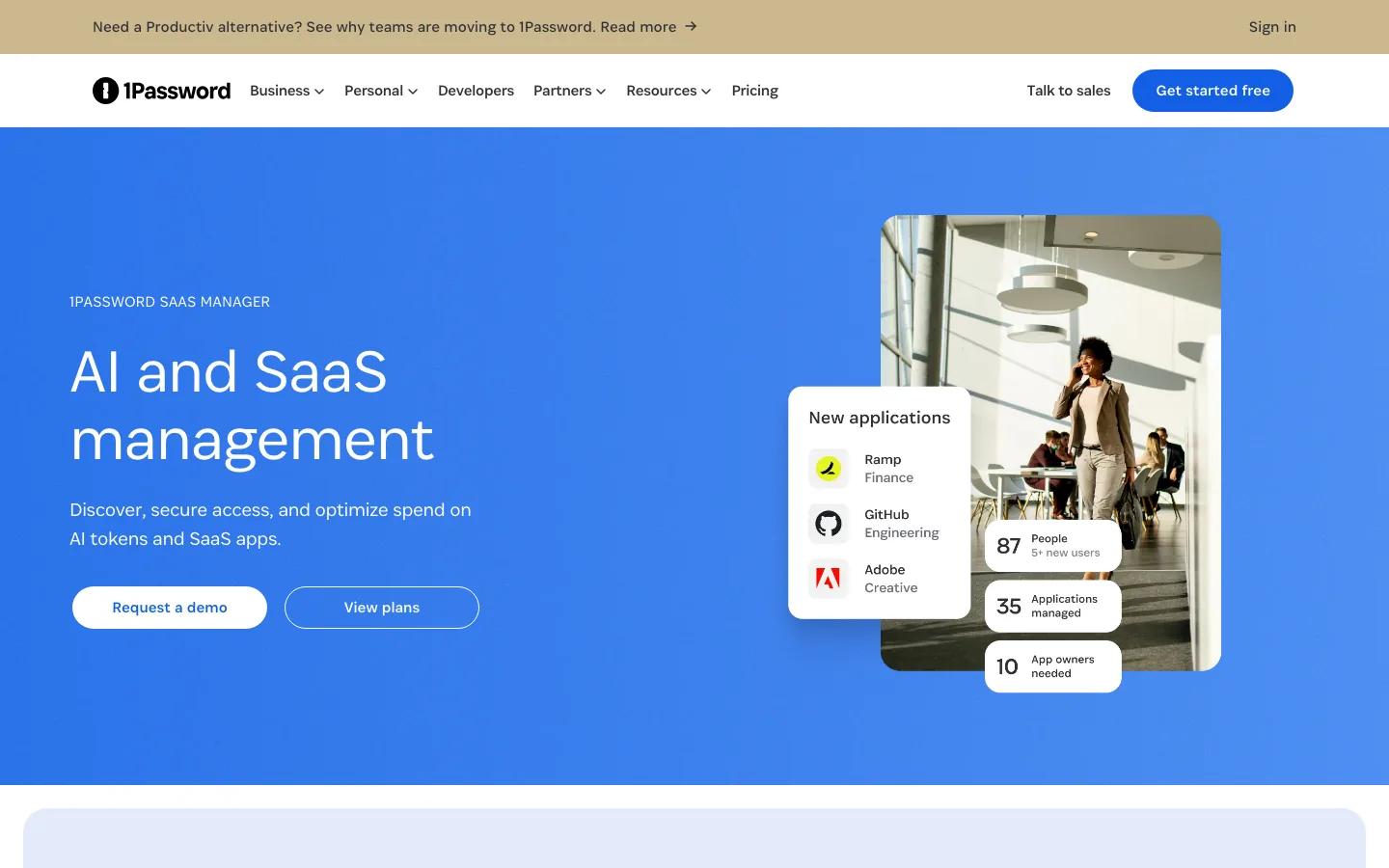
Companies that already run 1Password across their workforce, with security leading the Zluri review, are the buyers 1Password SaaS Manager suits best. 1Password announced the Trelica acquisition on January 7, 2025, renamed the product in January 2026, and sells it today as part of its Unified Access platform. The SaaS Manager product page describes it in one line: “Discover, secure access, and optimize spend on AI tokens and SaaS apps.”
Discovery reads 1Password Enterprise Password Manager vaults alongside IdPs, SSO, finance systems, and the browser extension, so accounts created outside SSO still turn up. Access reviews run through 400+ integrations, provisioning and deprovisioning are automated, and an AI spend view splits token costs by team, user, model, and API key.
Procurement is the gap, since the product page names no procurement features at all. Pricing is quote-based, either standalone or inside Unified Access, and 1Password is also sold through AWS Marketplace. Teams already on SaaS Manager and weighing a move can read our Trelica alternatives guide.
Pros:
- Vault and browser extension discovery that finds accounts outside SSO
- AI token spend broken down by team, user, model, and API key
Cons:
- No procurement features named on the product page
- Packaging tied to 1Password Unified Access
- Vault-based discovery only helps teams already on 1Password Enterprise Password Manager
CloudEagle
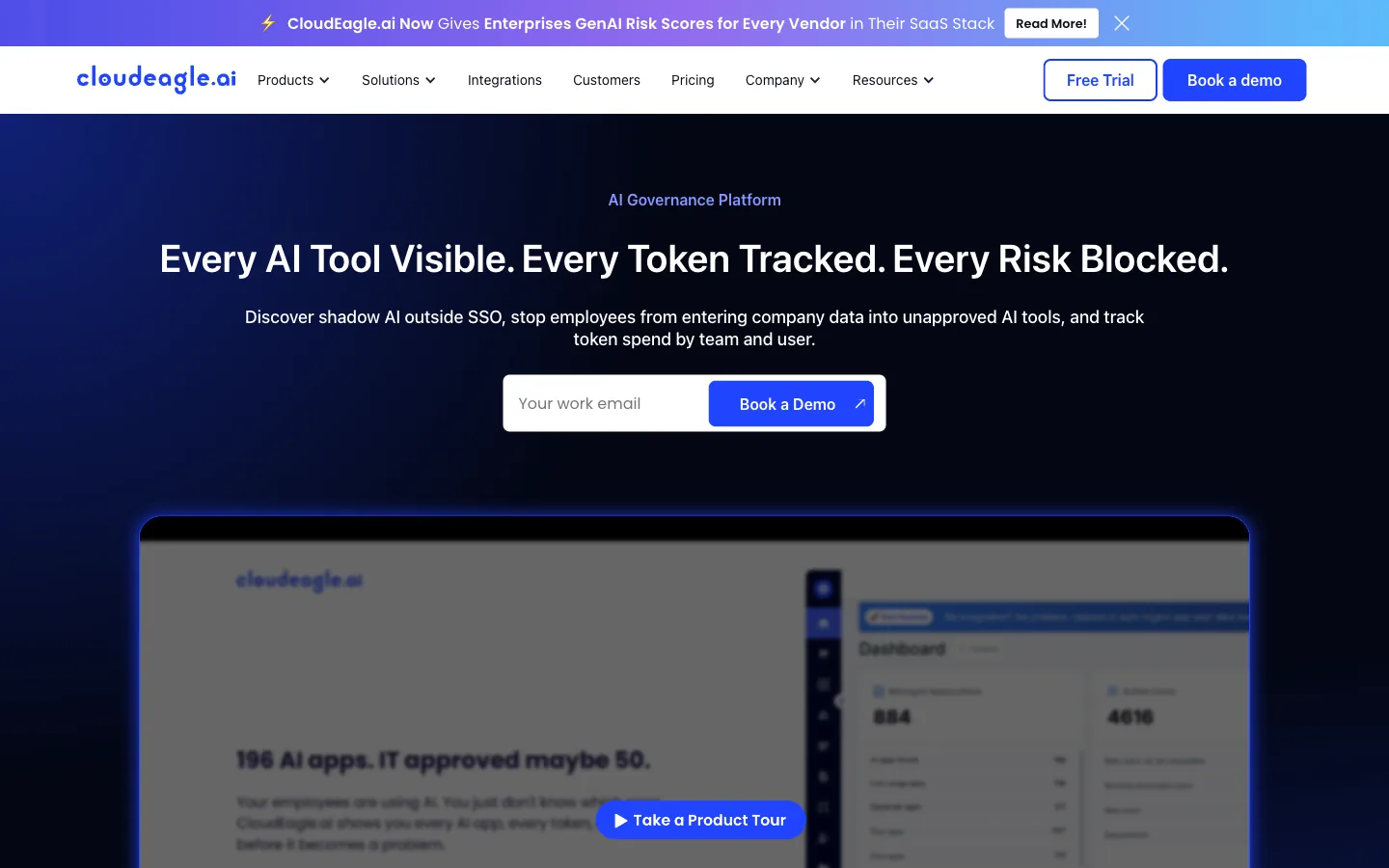
CloudEagle sells SaaS, identity, and procurement as modules from a single vendor, so a Zluri team can add procurement without dropping the governance it already uses. The CloudEagle pricing page lists five modules: AI Governance, SaaS Management, SaaS Security & Compliance, Identity Governance, and SaaS Procurement. Identity Governance offers a self-service catalog over Slack and onboarding and offboarding across SCIM and non-SCIM apps (SCIM is the standard for creating and removing accounts automatically), and the security module covers access reviews and non-human identities.
Procurement is where CloudEagle goes furthest, with peer price benchmarks, intake-to-procurement workflows, and negotiation advisory. CloudEagle claims 500+ direct integrations and automated 90-day renewal alerts, and it announced a move from Niche Player in 2025 to Leader in the 2026 Gartner Magic Quadrant for SaaS Management Platforms. A Zluri team would lose less of its identity side here than with a spend-first vendor like Zylo.
Scoping CloudEagle means one conversation per module, because each module sits behind its own personalized demo request. Pricing comes back only after you name the modules you need, so a Zluri team should decide first which part of its program is moving.
Pros:
- Peer price benchmarks and intake workflows for procurement
- Identity governance and access reviews from the same vendor
- A free trial offered from its site
Cons:
- Five modules to scope, each behind a demo
- No published prices, since quotes depend on the modules chosen
Lumos
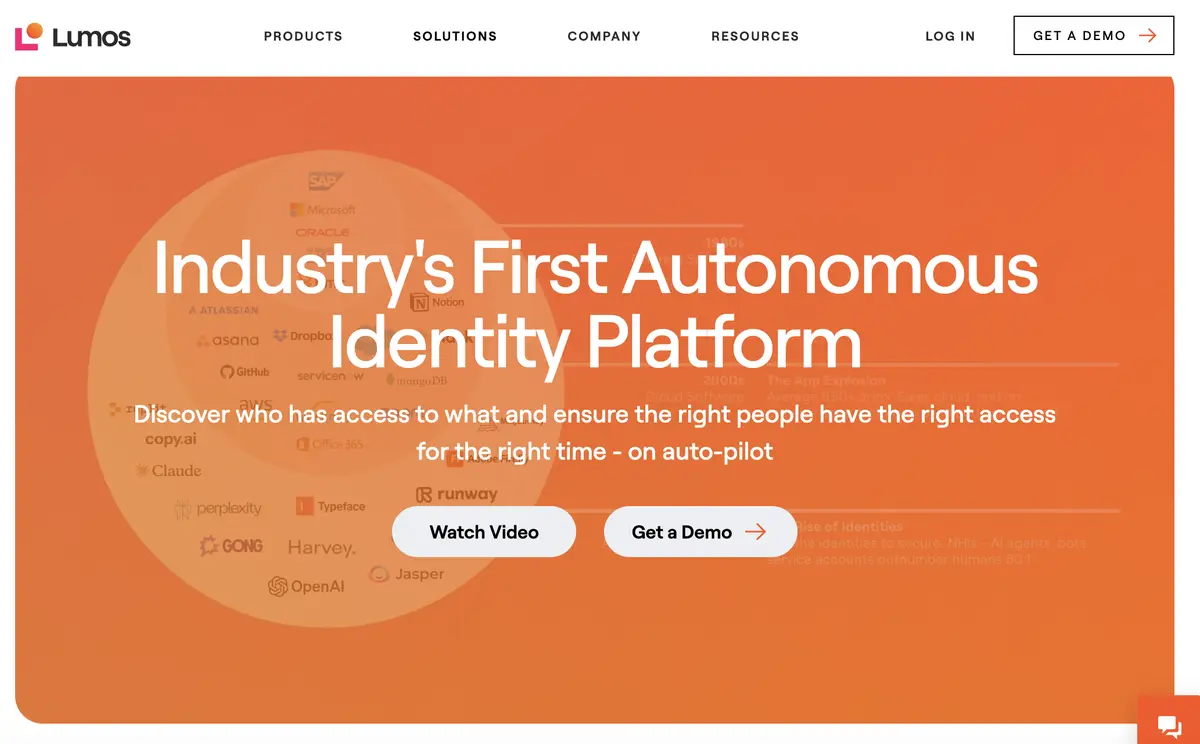
Lumos is for the buyer who liked Zluri’s identity governance and wants finer control over who holds which access. The Lumos AppStore takes access requests from Slack, Teams, a CLI, or the ITSM tool and grants time-bound access that expires on its own. Reviews go down to entitlements (the specific permissions a person holds inside an app) across the IdP, HRIS, ITSM, SaaS, cloud, and on-prem systems, and HRIS events trigger lifecycle changes.
Its homepage lists 300+ integrations, and NHI Governance and MCP Governance modules extend the same reviews to non-human identities and AI agents, with an AI agent of its own called Albus working alongside. For a security team watching AI agents gain access to production apps, those two governance modules are the main reason to shortlist Lumos.
Lumos gives up the SaaS management side, and its navigation shows no spend, license, or renewal module. Its old spend page now returns a 404. A Zluri team that relied on license reclaim or renewal alerts would need a second tool, and pricing isn’t published because the pricing page routes to a demo request.
Pros:
- Entitlement-level reviews across IdP, HRIS, cloud, and on-prem systems
- Time-bound access requests from Slack, Teams, or a CLI
- Governance modules for non-human identities and MCP
Cons:
- No spend, license, or renewal module, so license reclaim and renewal tracking need a second tool
- No published pricing
JumpCloud
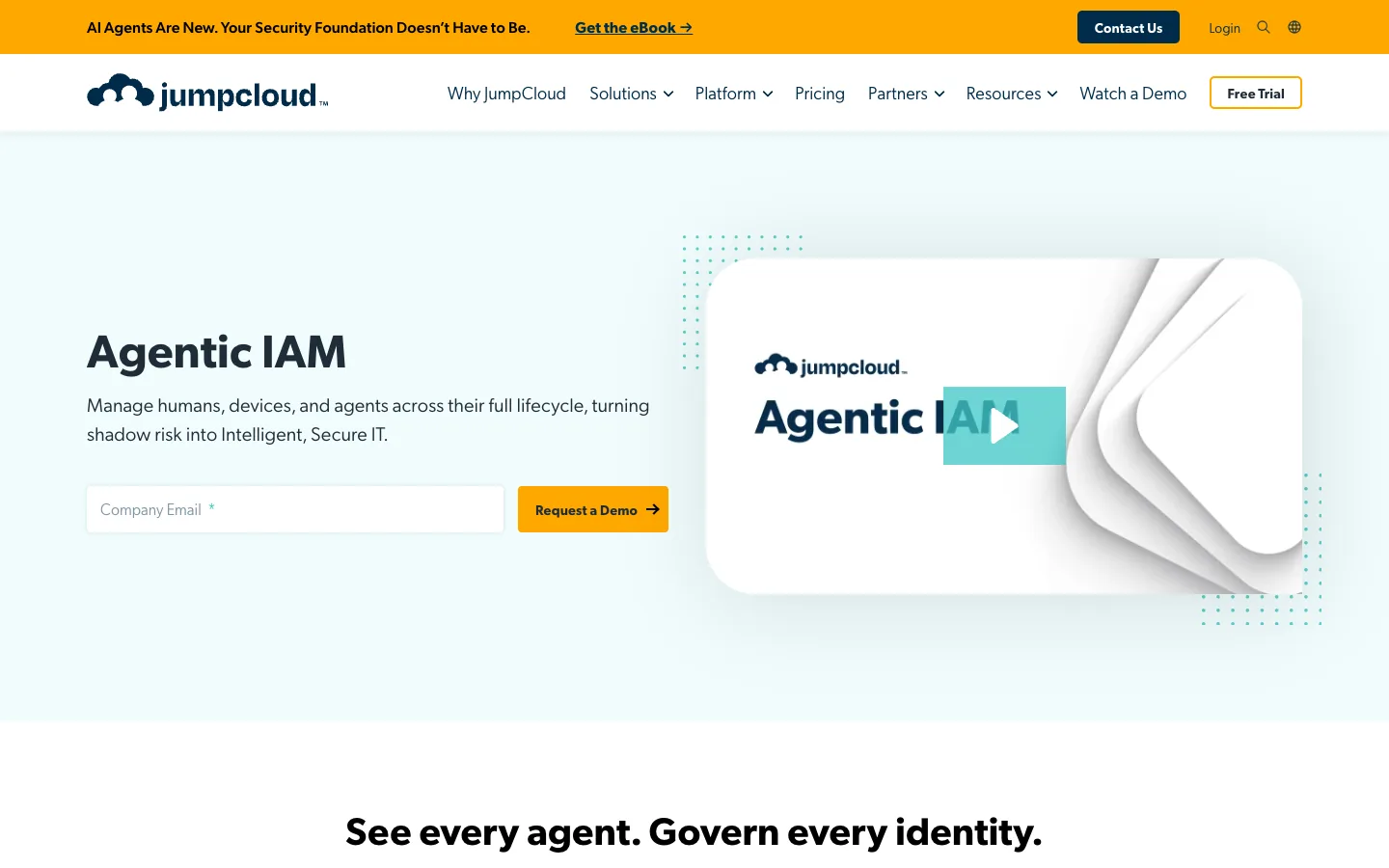
JumpCloud fits the mid-market IT team that wants directory, devices, and SaaS discovery managed from one console. Its product list covers a cloud directory, SSO, MFA, device management, patching, User Lifecycle Management, Access Requests, and an AI & SaaS Management group with SaaS Discovery and SaaS License Management. HRIS import and SCIM provisioning tie hiring and departures to app accounts.
Published per-user prices set JumpCloud apart from every other vendor on this list, which helps a team budgeting a Zluri replacement. The JumpCloud pricing page lists Device Management at $9, SSO at $11, and Device Identity Management at $13 per user per month billed annually, plus User Lifecycle Management at $3.00 a la carte and a 30-day free trial. SaaS Discovery sits only in Platform Prime, a Contact Sales package. Platform Essentials is capped at 300 users.
Offboarding deserves a test during the trial, because SCIM deprovisioning in JumpCloud deactivates accounts rather than deleting them. The SCIM connector documentation says that afterward “the account still exists in the application, but it is placed in an inactive state,” and apps without SCIM stay manual.
Pros:
- Published per-user prices and a 30-day free trial
- Directory, SSO, device management, and SaaS discovery in one console
- HRIS import and SCIM provisioning for joiners and leavers
Cons:
- SaaS Discovery only in the Platform Prime package
- SCIM deprovisioning deactivates rather than deletes, so check it against your offboarding policy
- Apps without SCIM need manual offboarding
How to Choose a Zluri Alternative
Staying on Zluri makes sense for a security-led team that wants identity visibility, governance, and posture management from one vendor, because that is the product Zluri now leads with. Everyone else can pick by the reason they’re leaving, using this table.
| If you're leaving Zluri because you want | Start with |
|---|---|
| Spend and renewals as the core of the program | Zylo |
| Lifecycle automation on Google Workspace | BetterCloud |
| Deeper identity governance | Lumos |
| One vendor alongside your 1Password rollout | 1Password SaaS Manager |
| Procurement and identity governance from one vendor | CloudEagle |
| Directory, devices, and published prices for a mid-market team | JumpCloud |
| Identity governance plus the Finance and Procurement view | Torii |
For a head-to-head look at the last row, our Zluri vs Torii comparison sets the two products side by side. Whichever vendor wins, start well before the Zluri renewal date, since Torii’s Renewal Forecast help article recommends beginning renewal preparation 120 days in advance.
- App inventory with owners Every discovered app, its owner, and its status
- Contracts and renewal dates So the next platform's renewal calendar starts complete
- Workflow definitions Onboarding and offboarding steps, written down before they are rebuilt
- Access review history Past campaigns and audit evidence your auditors may ask for
- Integration list Every connected app you will need to reconnect
Run that export before signing anything new, and give the final say to the team that will run the program day to day, because they are the ones who will work around whatever the new platform leaves out.
Frequently Asked Questions
The main Zluri alternatives and competitors in 2026 are Torii, Zylo, BetterCloud, 1Password SaaS Manager, CloudEagle, Lumos, and JumpCloud. Torii suits teams that want identity governance and spend tracked together, Zylo leans toward renewals, BetterCloud toward workflows, CloudEagle toward procurement, Lumos toward identity, 1Password SaaS Manager toward teams already on 1Password, and JumpCloud toward mid-market IT.
Yes. As of October 5, 2026, Zluri's SaaS management page is live and lists discovery, license reclaim, renewal alerts, and spend forecasting. Its homepage now leads with identity security, though, and names three capabilities on its IRIS layer (IVIP, IGA, and ISPM), so SaaS management is no longer the headline product.
Zluri doesn't publish pricing. As of October 5, 2026, its pricing URL redirects to a demo request page, so every quote comes through a sales conversation. Among the alternatives covered here, JumpCloud is the only vendor that lists per-user prices, while Torii, Zylo, CloudEagle, Lumos, and 1Password SaaS Manager are quote-based.
Zluri's homepage now leads with identity security, and its SaaS management page sits beneath that headline. Torii runs identity governance alongside expense matching and Magic Auto-Fill contract reading in one app inventory, with access reviews and Renewal Forecast on its Enterprise plan. Torii has no Zluri import connector, so time the switch to your Zluri renewal date.
Lumos goes deepest on identity, with entitlement-level reviews across IdP, HRIS, cloud, and on-prem systems. Torii runs access reviews on its Enterprise plan with usage, SSO, and HRMS data shown to reviewers and exportable audit reports, and tracks spend and renewals alongside them. CloudEagle and 1Password SaaS Manager include access reviews too.
Zylo and Torii focus most on spend and renewals. Zylo ranks renewals by savings potential and offers a managed negotiation service, but relies on Okta or Entra for deprovisioning. Torii matches expenses to apps, reads contracts with Magic Auto-Fill, and, on the Enterprise plan, compares purchased and used licenses before each renewal, while keeping access reviews in place.