

Top 5 BetterCloud Alternatives for SaaS Management (2026)
 John Baker
•
Sep 16, 2026
•
15 min read
•
Updated October 6, 2026
John Baker
•
Sep 16, 2026
•
15 min read
•
Updated October 6, 2026

Five BetterCloud alternatives and competitors matched to why teams leave, from Torii's discovery to Zylo's renewals, plus BetterCloud pricing and migration.
Ask about this article
Opens Claude in a new tab to answer, using this article as the source.
Anyone comparing BetterCloud alternatives in October 2026 starts from a homepage that reads “Govern every SaaS app, user and AI agent in one platform” (BetterCloud). The homepage now leads with an IT Agent, which takes plain-language requests and waits for an admin to approve each action before it runs.
Under the new headline sits a mature no-code workflow engine with 100+ integrations and 1,000+ actions out of the box, per the BetterCloud homepage. User Automation runs onboarding, offboarding, and mid-lifecycle changes from HR system triggers. Workspace Management for Google and File Governance complete a platform built for IT teams that live in Google Workspace and Microsoft 365.
BetterCloud closed a discovery gap of its own on March 10, 2026, when it launched a Chrome browser extension. The launch post gave the reason plainly, saying “Traditional API-based discovery is powerful, but it can sometimes leave a gap in capturing real-time user behavior within the browser” (BetterCloud blog). BetterCloud’s own 2026 State of SaaS survey, which polled 525 IT and security professionals, found that only 56% of apps in use carry IT approval. Those unapproved apps are what the extension was built to find.
That leaves narrower reasons to look at BetterCloud competitors in 2026: discovery past Chrome and connected apps, access reviews next to SaaS management, access requests and identity governance as the main job, one console for directory and devices, or deeper spend and procurement work. The five alternatives below each match one of those reasons, with Torii first.
- Modules are sold individually. The pricing page names User Automation, Spend Optimization, and Workspace Management for Google, and the homepage adds the IT Agent and File Governance.
- Pricing is a custom quote based on license count, connected apps, chosen modules, and add-ons such as Data Loss Prevention.
- Spend Optimization Basic is listed at $0 a month, and File Governance has a 21-day trial.
- BetterCloud offers a "3x ROI in 90 days" guarantee that it calls contractual, and the terms aren't published.
- The Chrome extension feeds the App Discovery Dashboard in Spend Optimization, which sorts apps into managed apps, shadow IT, and AI tools.
- Productiv, once a regular entry on lists like this one, closed on August 6, 2026 (why Productiv shut down).
Source: BetterCloud homepage, pricing page, and blog; Torii blog; as of October 2026.
★ = low · ★★ = medium · ★★★ = high
| Tool | Discovery | Lifecycle | Access reviews | Spend |
|---|---|---|---|---|
| BetterCloud (today) | ★★ | ★★★ | ★ | ★★ |
| Torii | ★★★ | ★★★ | ★★ | ★★ |
| Zluri | ★★ | ★★ | ★★★ | ★ |
| JumpCloud | ★★ | ★★ | ★★ | ★ |
| Lumos | ★ | ★★ | ★★★ | ★ |
| Zylo | ★★ | ★ | ★ | ★★★ |
Lifecycle means onboarding and offboarding automation, Access reviews covers review and request modules, and Spend covers spend, license, and renewal tooling. Directory and device management isn't rated, since only JumpCloud sells it. ★★★ means a dedicated module for the job, ★★ means the job is covered but limited to some packages, plans, or connectors, and ★ means partial coverage or a job left to another tool. Ratings are Torii's editorial read of each vendor's product pages as of October 2026.
Torii
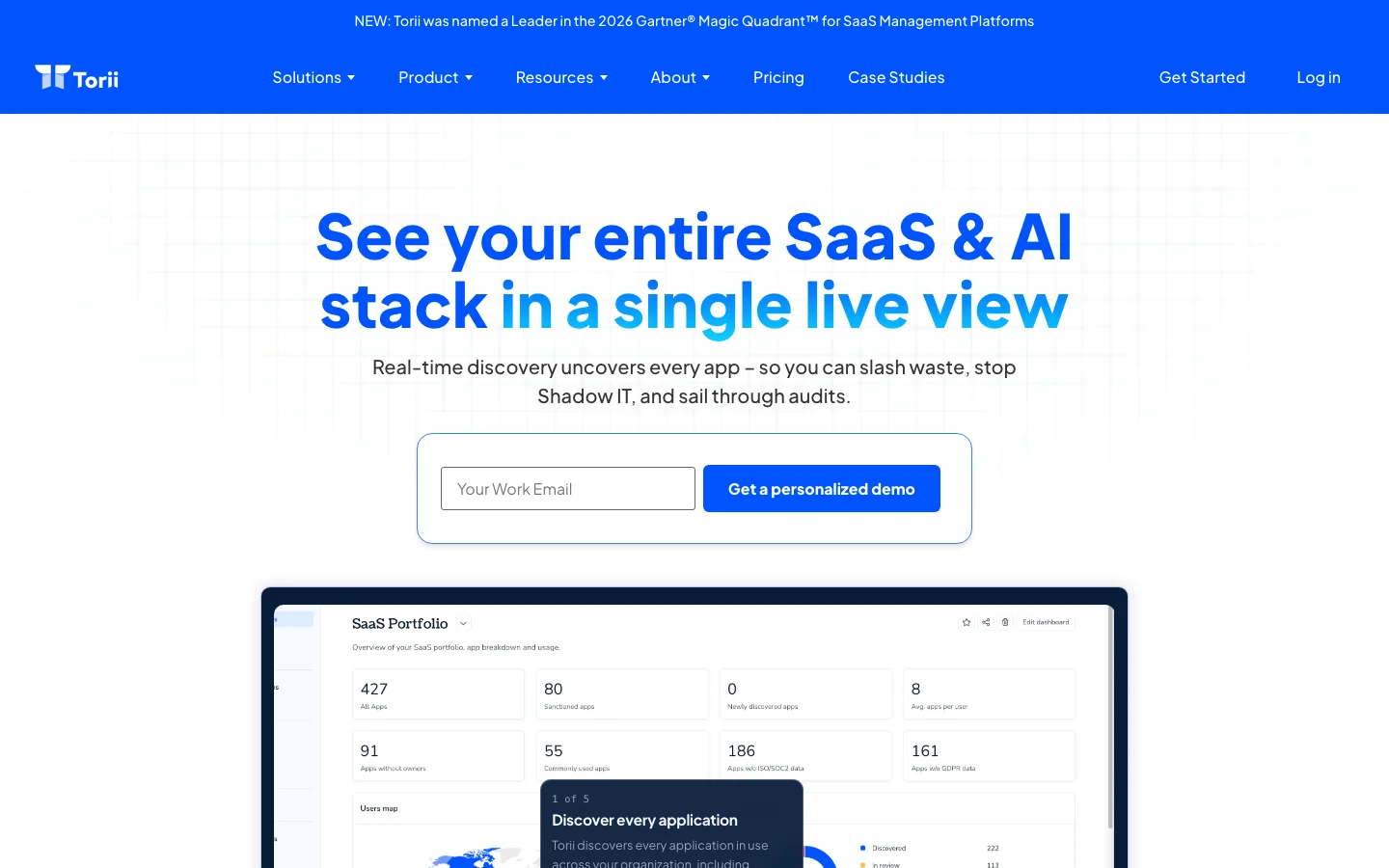
Torii suits the BetterCloud team that wants to keep running onboarding and offboarding as no-code workflows, but needs those workflows to see more apps and to carry the spend and renewal data Finance and Procurement use. Torii sums up that lifecycle side in one line, “Torii turns every joiner, mover, and leaver into a no-code workflow” (Torii SaaS management), meaning new hires, role changes, and departures. Gartner named Torii a Leader in the 2026 Magic Quadrant for SaaS Management Platforms, its third year in a row.
Discovery starts from the same places BetterCloud’s does (the identity provider and SSO, finance and expense data, direct integrations, and a browser extension) and then adds contract management software and desktop agents through Jamf, Kandji, and Microsoft Intune. The desktop agents pick up apps people run offline, such as the Adobe suite. The browser extension records days used per month for each business app, runs its analysis locally, and collects business-email logins only.
On BetterCloud’s home turf, Torii’s integration catalog lists 51 workflow actions for Google Workspace, among them “Transfer Google Workspace Docs and Drive data” and “Remove Google Workspace user from all shared drives”. Microsoft 365 is the smaller set at 20 actions, so a Microsoft-first team should list its own offboarding steps and look for each one in that set. Apps without a connector take a “Custom action (HTTP Request)” against any public REST or GraphQL API, or a delegated task sent by email, Slack, or Jira.
Each app gets its own offboarding method (Automatic, Delegate, or Ignore). In Torii’s 2026 SaaS Benchmark report, covering January to December 2025, about 2.5% of seats in paid apps were still assigned to people who had left the company.
For Finance and Procurement, expenses from NetSuite, Ramp, Coupa, or Brex are matched to each app with month-over-month spend. Magic Auto-Fill scans contract PDFs for terms and dates (or, on Professional and Enterprise plans, by email to contracts@toriihq.com), so each contract lands on a renewal calendar. Access reviews run on the Enterprise plan, and the BetterCloud vs Torii comparison sets the two products side by side.
Pros:
- Google Workspace workflows with 51 named actions, plus custom HTTP actions for apps without a connector
- Discovery through desktop agents and contract data on top of the IdP, SSO, and browser
- Expenses, contracts, and a renewal calendar for Finance and Procurement in one place
- Access reviews on the Enterprise plan, plus access governance policies that flag and fix deviations
Cons:
- Quote-only pricing with no public tiers, sized for mid-market and enterprise programs
- Microsoft 365 has 20 workflow actions against 51 for Google Workspace, so Microsoft-first teams should check offboarding steps by name
Zluri
BetterCloud’s homepage pitches audit readiness with tools for compliance and user permissions, but access reviews aren’t a named module there. Zluri fits the BetterCloud team that needs to fill that gap. Its homepage now leads with identity security for human and non-human identities, organized as three capabilities: IVIP for discovery, IGA (identity governance and administration) for governance, and ISPM for security posture.
Each Zluri access review gives the reviewer Approve, Modify, and Revoke decisions, can pass through several levels such as the app owner and the reporting manager, and ends in a PDF report that can’t be edited and can go straight into an audit file. Remediation runs automatically only for apps on a direct API connection, per Zluri’s access reviews page. Everything else turns into a manual task in Jira, ServiceNow, or email.
Rebuilding BetterCloud workflows would land on Zluri’s native iPaaS engine (an integration platform as a service, the builder that connects apps) and its SDKs, and the Zluri SaaS management page claims 300+ direct API integrations. Discovery draws on CASBs, MDM tools, HR systems, and directories next to SSO and finance data.
On spend, Zluri reclaims or downgrades licenses once usage drops below a threshold and sends renewal alerts, close to the key date alerts in BetterCloud’s Spend Optimization. Teams already on Zluri can read the platform from the other side in our guide to Zluri alternatives.
Pros:
- Access reviews with Approve, Modify, and Revoke decisions and multi-level reviewers
- Discovery signals from CASB, MDM, HR, and directory systems
- A native iPaaS engine for rebuilding lifecycle workflows
Cons:
- Positioning now leads with identity security (IVIP, IGA, ISPM), so confirm spend and renewal depth in the demo
- No public pricing, since the pricing page opens a demo request
- Automatic remediation needs a direct API connection to each app
List each active BetterCloud workflow by the trigger that starts it, and a Torii demo maps it to a Torii trigger such as "User joins", "User left", or "User attribute changed", then to named Google Workspace and Microsoft 365 actions. Steps with no connector or API go to the app owner as a tracked task. Book a Torii demo with your workflow list.
JumpCloud
JumpCloud suits mid-market IT that would rather own the directory, the devices, and SaaS access in one console than manage on top of Google Workspace or Microsoft 365. Its cloud directory replaces or syncs with Active Directory, Google Workspace, or Microsoft 365. The product list runs from SSO, MFA, and device management to patching, access requests, and an AI and SaaS Management group with SaaS Discovery and SaaS License Management.
Lifecycle runs as a pipeline from the HR system out to the apps, according to JumpCloud’s provisioning guide. It pulls users from an HRIS, with a prebuilt Workday path, and pushes them to SaaS apps through SCIM, the standard protocol for creating and removing app accounts. New hires can wait as STAGED users and aren’t provisioned to SCIM apps until someone activates them.
JumpCloud’s connector docs list the limits at the leaver end of that pipeline. SCIM deprovisioning leaves the account in the app in an inactive state, not every app supports all three provisioning actions, and apps without SCIM stay manual. BetterCloud makes a related point in its 2026 State of SaaS post, writing that “Disabling a single sign-on credential doesn’t scrub OAuth tokens, clean up data permissions, or reclaim licenses” (BetterCloud).
JumpCloud publishes more of its pricing than any other vendor on this list. The JumpCloud pricing page puts Device Management at $9 per user a month billed annually ($11 month to month), SSO at $11 ($13), and Device Identity Management at $13 ($15), with a 30-day free trial. SaaS Discovery comes only in Platform Prime, a Contact Sales package, and Platform Essentials caps at 300 users.
Pros:
- Directory, SSO, MFA, and device management in one console
- Published per-user prices and a 30-day free trial
Cons:
- SaaS Discovery only in the top Platform Prime package
- SCIM deprovisioning deactivates accounts rather than deleting them, and non-SCIM apps stay manual
- Platform Essentials caps at 300 users
Lumos
Lumos’s homepage tagline frames its job as keeping people, non-human identities, and AI agents from becoming your next breach. Every module it sells is an identity governance product, so it suits teams whose main job is access requests and identity governance. The lineup runs from Access Reviews and Lifecycle Management to Just-in-Time Access, Role Mining, NHI (non-human identity) Governance, MCP Governance for the tool connections AI agents use, and the AppStore.
Requests can start in the Lumos AppStore or come in from Slack, Teams, a CLI, or the ITSM tool. Grants can be time-bound, so access revokes itself when the window closes, and joiner, mover, and leaver changes follow HR system events.
Lumos’s access reviews page describes reviews that work at the account level or down to individual permissions. Its AI agent, Albus, recommends routine decisions before a reviewer signs off.
A BetterCloud user moving to Lumos gives up the spend side, and that gap is worth planning for before the contract ends. Lumos lists no spend, license, or renewal module, so the 30, 60, and 90-day key date alerts from BetterCloud’s Spend Optimization would need a new home. Lumos makes no public claim about shadow IT discovery beyond its connected systems, and it doesn’t publish pricing.
Pros:
- Access requests from Slack, Teams, a CLI, or the ITSM tool
- Time-bound grants that revoke themselves
- Reviews at account or permission level, with AI-recommended decisions
- Separate modules for non-human identity and MCP governance
Cons:
- No spend, license, or renewal module
- No public pricing
Zylo
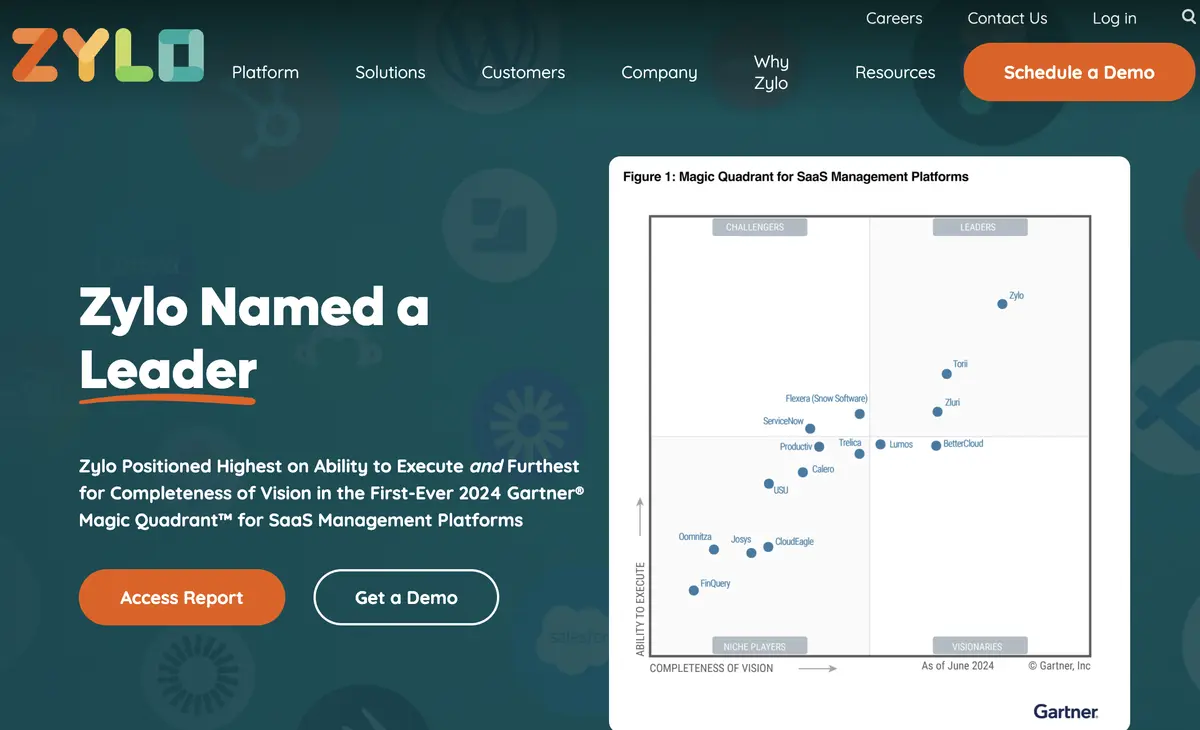
Zylo builds a centralized renewal calendar from contract, spend, and app data and ranks upcoming renewals by savings potential. In January 2026 it added a Contract Assist agent that pulls metadata out of uploaded contracts, which suits a team whose BetterCloud gap sits in spend and procurement more than in IT operations.
On its pricing page, Zylo sells the platform in three quote-only tiers named Core, Premium, and Enterprise, with pricing benchmarks on Premium and above. For teams without a procurement desk, SaaS Negotiator is a managed service that runs purchases and renewals on the customer’s behalf.
The trade for a BetterCloud team is lifecycle work, which Zylo hands to the identity provider. A Zylo blog post from September 2026 explains that Zylo doesn’t run deprovisioning or downgrades itself and relies on partners such as Okta and Microsoft Entra. Those Okta and Entra actions, along with ITSM automations, are Premium features.
So Zylo fits a team that already runs lifecycle in its IdP, or one that keeps BetterCloud’s User Automation and moves only the spend work across. Readers weighing Zylo itself can see how it compares in our Zylo alternatives guide.
Pros:
- A renewal calendar with renewals ranked by savings potential
- Contract Assist for pulling contract metadata
- Pricing benchmarks and a managed negotiation service
Cons:
- Deprovisioning runs through Okta or Microsoft Entra, with those actions on Premium
- No access request or access review product
How to Choose a BetterCloud Alternative
The vendor to shortlist first is the one built around the job BetterCloud isn’t doing for you today. If that job is discovery beyond Chrome and connected apps, with expenses, contracts, and renewals for Finance and Procurement in the same platform as the workflows, start with Torii. A security-led gap points to Zluri when reviews have to sit beside SaaS management and to Lumos when requests and reviews are the whole job, while JumpCloud fits a team ready to own its directory and devices, and Zylo suits a gap that is mostly spend and renewals.
When Staying on BetterCloud Makes Sense
Some teams should keep BetterCloud, or keep part of it, once they map what they actually use. File Governance is the clearest case, because Torii’s Magic Auto-Fill and Email to Contract scan contract files for terms and dates, a different job from governing how Drive and OneDrive files are shared. A team that relies on File Governance should test that use case hardest in every demo, or keep BetterCloud for it and move only what’s missing, and Workspace Management for Google deserves the same check, action by action.
Before deciding BetterCloud’s spend side falls short, try the free Spend Optimization Basic tier listed on the BetterCloud pricing page. If the “3x ROI in 90 days” guarantee is part of the case for staying, ask for its terms in writing at renewal.
What Moving Your Workflows Involves
A migration starts with an export of every active BetterCloud workflow and the trigger that starts it. Check each target’s actions by app name instead of by integration count, because a large catalog says little about whether your own Google Workspace offboarding steps exist there.
Offboarding is where a missing action costs the most, and few teams have it automated yet. The same State of SaaS survey found that only 1 in 4 organizations automates offboarding (BetterCloud, 2026), so a team that already has working offboarding flows in BetterCloud should rebuild and test those flows early on the new platform.
Teams that aren’t anchored on BetterCloud at all can compare the wider field first. Our list of the seven best SaaS management platforms covers the category without starting from one incumbent.
- Trigger timing Which identity provider events fire in real time and which arrive on a scheduled sync
- Who deprovisions Whether the platform removes accounts itself or hands the job to your IdP
- Actions by name The Google Workspace and Microsoft 365 actions your current workflows call, checked one by one
- Access review plan Which plan or tier includes access reviews
- Contract import How your existing contracts and renewal dates get into the new platform
Shortlist two vendors, then run this checklist in each demo against your own three busiest workflows. Any workflow that fails the test there is one to rebuild by hand or keep on BetterCloud for now.
Frequently Asked Questions
Five BetterCloud competitors stand out in 2026. Torii pairs discovery and spend and renewal data with no-code workflows, Zluri puts access reviews beside SaaS management, JumpCloud runs directory and devices from one console, Lumos centers on access requests and reviews, and Zylo covers renewals and procurement. Start from the job BetterCloud isn't doing for you.
BetterCloud doesn't publish list prices. Its pricing page describes a custom quote based on license count, connected apps, chosen modules, and add-ons such as Data Loss Prevention. Spend Optimization Basic is listed at $0 a month, and File Governance comes with a 21-day trial, as of October 2026.
Yes. BetterCloud discovers apps through SSO and identity providers, ERP and financial systems, and a Chrome browser extension it launched on March 10, 2026. Results land in the App Discovery Dashboard inside Spend Optimization, sorted into managed apps, shadow IT, and AI tools. BetterCloud's extension is available for Chrome only, as of October 2026.
Both run no-code onboarding and offboarding workflows and discover apps through SSO, finance data, and a browser extension. Torii also discovers through desktop agents and contract data, matches expenses to each app with month-over-month spend, and puts renewals on a calendar. Its Google Workspace connector has 51 workflow actions, and its Microsoft 365 connector has 20.
BetterCloud covers user lifecycle automation and pitches audit readiness for compliance and user permissions, but access reviews aren't a named module. Zluri and Lumos sell dedicated access review modules. Zluri's reviews offer Approve, Modify, and Revoke decisions with multi-level reviewers, and Lumos reviews run at the account or permission level.
Yes, and some teams do exactly that. A team that relies on Workspace Management for Google or File Governance can keep BetterCloud for those modules and add a platform for the gap, such as Zylo for renewals or Torii for broader discovery, spend, and contracts. Check that both tools don't run the same offboarding steps.