

5 Best Enterprise Software License Management Tools (2026)
 John Baker
•
Oct 23, 2026
•
13 min read
•
Updated October 23, 2026

Compare 5 enterprise software license management tools on SaaS and AI seats, true-ups, audits, and ITSM fit, including Torii, Zylo, ServiceNow SAM, and USU.
Ask about this article
Opens Claude in a new tab to answer, using this article as the source.
Large enterprises buy software on two different clocks, and most license tools were built to watch only one of them. Contracts with Microsoft, Oracle, IBM, or SAP settle their counts on the publisher’s calendar: an annual true-up (the yearly order for seats added since signing), IBM usage reports signed at least every quarter, or an audit the publisher starts. SaaS and AI seats move every week, added by managers and left behind by people who quit.
Enterprise software license management means tracking what a large company owns against what it actually uses, across publisher contracts and SaaS seats alike, while total software spend keeps climbing. Our broader roundup of software license managers covers the basics, so this shortlist sticks to what changes at enterprise scale, such as audits, true-ups, business units, and the ITSM (IT service management) stack.
In practice, enterprise license management now takes two kinds of tool. SAM (software asset management) suites handle publisher math for Oracle, IBM, and SAP, meaning effective license position (what you own against what you run), true-ups, and audit defense, and each one bolts SaaS on through a separate module. SaaS-first platforms handle the seats that should follow usage, and the five tools below include both, with Torii, which publishes this guide, listed first.
Gartner forecasts worldwide software spending of $1,468 billion in 2026, up 15.5% from 2025.
Source: Gartner forecast via TelecomTV, July 2026.
On average, 2.5% of license seats are still assigned to users who have been offboarded.
Source: Torii 2026 SaaS Benchmark report, data from January to December 2025.
★ = low · ★★ = medium · ★★★ = high
| Tool | SaaS and AI | Publisher | Reclaim | ITSM fit |
|---|---|---|---|---|
| Torii | ★★★ | ★ | ★★★ | ★ |
| ServiceNow SAM | ★★ | ★★★ | ★★ | ★★★ |
| Flexera One ITAM | ★★ | ★★★ | ★★ | ★★★ |
| Zylo | ★★★ | Not rated | ★★ | ★★ |
| USU SAM | ★★ | ★★★ | ★★ | ★★ |
SaaS and AI: coverage of subscription and AI tool seats (★★★ in the core product, ★★ through a separate SaaS module or product sold next to the SAM suite). Publisher: effective license position, true-up, and audit work for publishers such as Oracle, IBM, SAP, and Microsoft (★★★ publisher-specific tooling, ★ seat counts only). Reclaim: removing unused seats based on activity (★★★ native workflows with an approval step, ★★ reclaim through rules, automated insights, an add-on module, or an identity provider). ITSM fit: how license data reaches the service desk (★★★ license data lives in or feeds the CMDB, ★★ an ITSM connector or ITSM automations, ★ tickets and seat data only). Not rated: outside the tool's stated scope. Ratings are Torii's editorial read of each vendor's public pages and docs as of October 23, 2026.
Torii
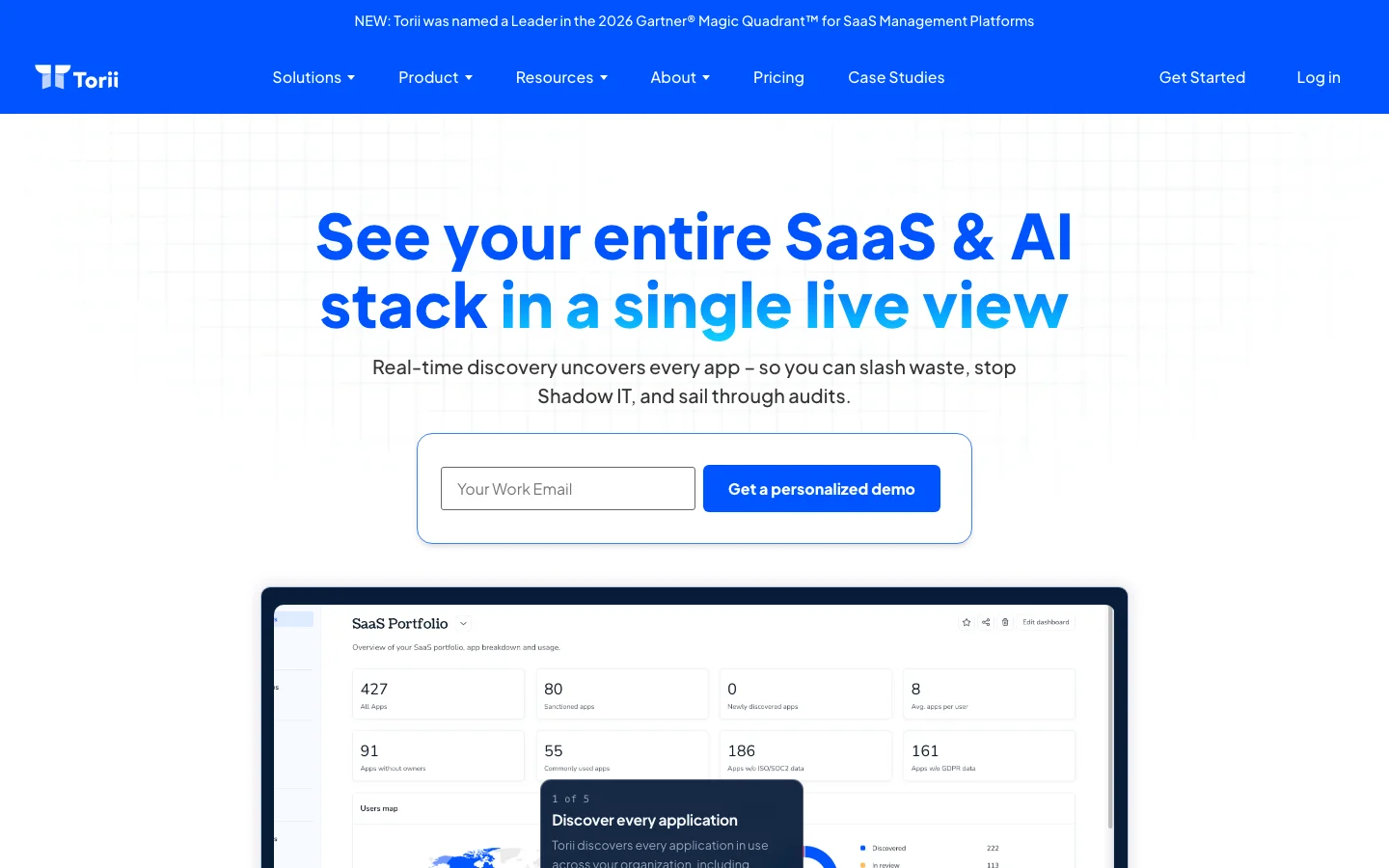
Torii is the pick for the SaaS and AI layer of an enterprise estate, where seats change every week and real usage should decide how many you keep. Its Licenses page splits each app’s licenses into Active, Inactive, and Unassigned, and Torii’s help center defines Inactive as no engagement during an org-wide window that defaults to 30 days. Those idle seats are the unused SaaS licenses that pile up between renewals.
Acting on them runs through the license optimization workflow template. When the “License not in use” trigger fires, the template branches on HRMS job title: managers get an approval request in Slack or email, C-level users get a Slack notification, and everyone else loses the seat through an in-app action such as “Unassign Microsoft 365 license”. Integrations sync daily and triggers are checked hourly, so nobody exports a spreadsheet to make it happen.
The rest of an enterprise estate reaches Torii as seat data rather than publisher math. Custom integrations or a CSV import bring in users, licenses, roles, and last-used dates from on-prem and home-grown apps, and Jamf, Kandji, or Microsoft Intune report installed apps per device. For ServiceNow shops, Torii reads Requester, Approver, and Fulfiller license types and can open a ServiceNow ticket from a workflow, though it doesn’t feed the CMDB.
On Enterprise plans, Renewal Forecast compares licenses purchased with licenses used, and Torii recommends starting it 120 days before a renewal. HiBob cut SaaS spend 22% in 2023 with Torii (HiBob case study). Raveh Kahaner, its head of global procurement, puts it this way: “I rely on Torii as my source of truth to provide all of the renewal data I need to make informed decisions and better negotiations.”
Three more controls start to matter once licenses are spread across many departments and teams.
- The AI Module shows members, usage, and adoption for AI tools, with billed cost for Cursor, OpenAI, Claude Platform, and Claude.ai.
- Cost allocation breaks each app’s cost down by department, cost center, or division, and the Licenses page has a Chargeback tab.
- Custom roles set each scope to full access, read-only, or none, so admins can restrict who sees contracts and expenses.
Pros:
- Reclaim tied to real usage, with an approval step for managers’ seats
- AI tool members and usage beside SaaS seats, with billed cost for four AI platforms
- On-prem and home-grown seat counts through custom integrations, CSV, and MDM agents
- Renewal Forecast on Enterprise plans, plus license cost benchmarks (Enterprise, billed annually) where a benchmark exists
Cons:
- SaaS- and cloud-focused with no on-premise deployment, so Oracle, IBM, and SAP license positions stay in a SAM suite
- No public pricing, so budgeting needs a demo and a quote
In a Torii demo, connect Microsoft 365, see which seats land in Inactive, and run the license optimization template, which asks managers before it removes their seats, while your SAM suite keeps the publisher positions. Torii is a Leader in the 2026 Gartner Magic Quadrant for SaaS Management Platforms, for the third year in a row. Book a Torii demo.
ServiceNow Software Asset Management
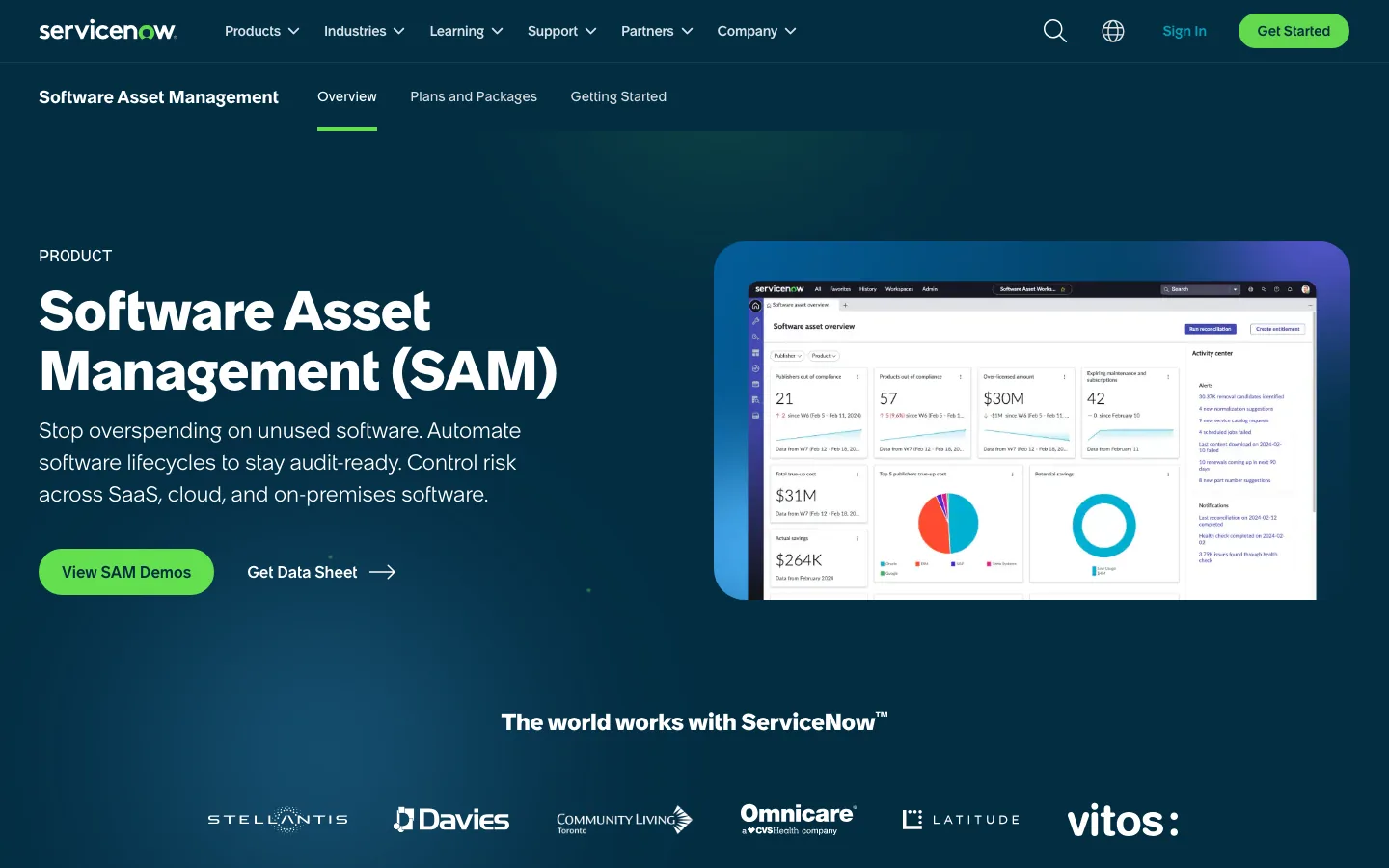
ServiceNow Software Asset Management makes the most sense for an enterprise that already runs ITSM and its CMDB (configuration management database) on ServiceNow. SAM is the software-license module of ServiceNow IT Asset Management, so license records live on the same instance and the same CMDB the service desk uses. Publisher packs cover Adobe, Citrix, IBM (including Red Hat Enterprise Linux), Microsoft, Oracle, SAP, and VMware.
SaaS coverage arrives as an add-on rather than as part of the core SAM license. The SaaS License Management release notes describe a separate store app that requires SAM Pro or SAM Enterprise, with direct integrations for Microsoft 365, Adobe Cloud, and Zoom Workplace and SSO coverage through Microsoft Entra ID and Okta. Its reclamation rules cancel subscriptions that show little or no activity, and that SaaS push took ServiceNow from Niche Player in 2025 to Leader in the June 2026 Gartner Magic Quadrant for SaaS Management Platforms, according to ServiceNow’s community SAM blog.
Pros:
- License data on the CMDB and ITSM workflows the service desk already uses
- Publisher packs for seven publishers, including Oracle, SAP, and IBM
- SaaS reclamation rules backed by SSO coverage from Entra ID and Okta
Cons:
- SaaS License Management is a separate app on top of SAM Pro or SAM Enterprise
- Assumes an existing ServiceNow instance and CMDB
Flexera One IT Asset Management
Flexera One IT Asset Management is built for estates where Microsoft, Oracle, and IBM contracts carry most of the audit risk. The Flexera One ITAM page covers effective license position, audit readiness, and renewal and true-up optimization for those publishers, and pitches the product as an alternative to IBM License Metric Tool (ILMT). IBM’s own Sub-Capacity FAQs say ILMT is mandatory for sub-capacity licensing (licensing by the cores a product actually uses), with no exceptions accepted since May 1, 2023, so confirm with IBM how any ILMT alternative fits that rule before you retire ILMT.
Inventory spans on-prem, cloud, SaaS, and containers in one view. Normalized license data then flows into ServiceNow and other ITSM tools to improve CMDB quality, which helps when a service desk owns the asset record.
Snow Software now belongs to Flexera, which completed the acquisition on February 15, 2024 (ITAM Review). Flexera still sells Snow Atlas as its own product, with effective license position calculated from data Oracle has verified. SaaS subscriptions sit in a third product, Flexera One SaaS Management, so covering publishers and SaaS with Flexera means buying two lines.
Pros:
- Effective license position and true-up work for Microsoft, Oracle, and IBM
- An ILMT alternative for IBM sub-capacity licensing
- Normalized license data for a ServiceNow CMDB
- One inventory across on-prem, cloud, SaaS, and containers
Cons:
- Overlapping product lines to choose between (Flexera One ITAM and Snow Atlas)
- SaaS license work needs a second product
Zylo
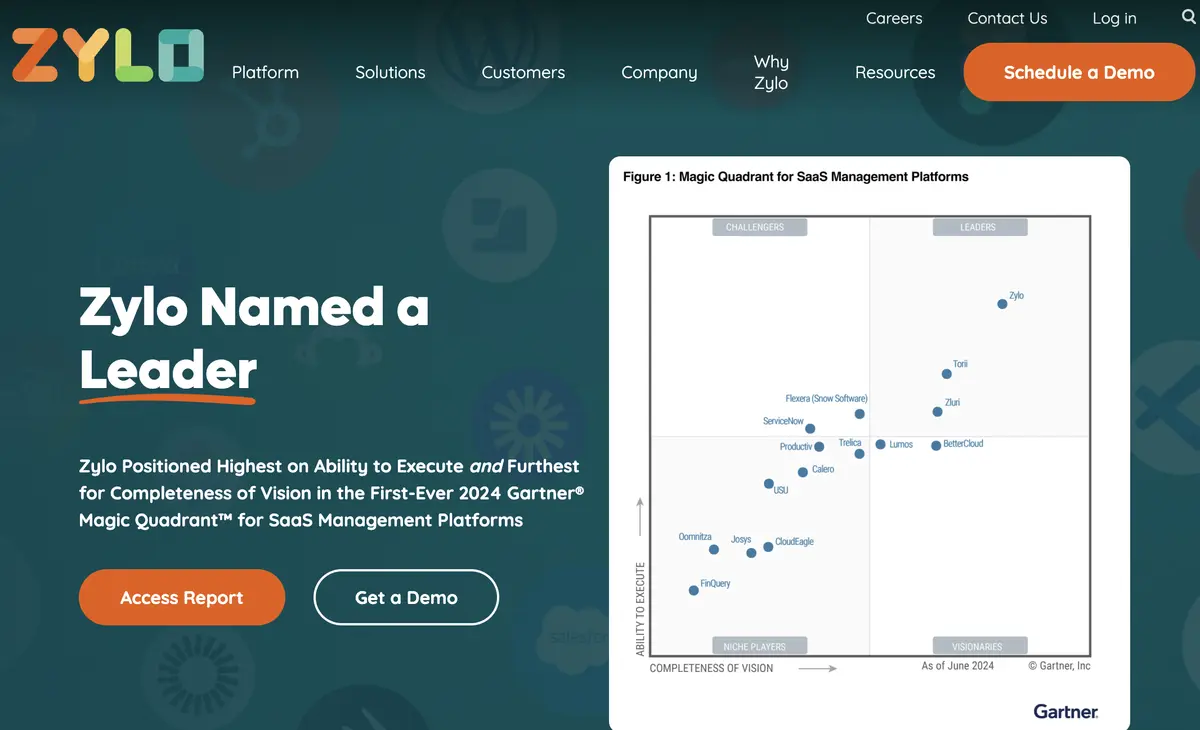
For spend and renewal owners, Zylo is the SaaS-first option, with a renewal calendar built from contract, spend, and application data. It tracks AI consumption cost in a separate product and uses its Contract Assist agent to pull metadata from uploaded order forms. Teams that would rather hand off the vendor call can buy SaaS Negotiator, a managed service that runs purchases and renewals for them (our renewal management software comparison goes deeper).
Packaging at Zylo is built around enterprise structure, with an Enterprise tier that adds multiple business units, M&A support, and a sandbox, while Okta or Entra Actions and ITSM automations sit on the Premium tier. Zylo is also a Leader in the 2026 Gartner Magic Quadrant for SaaS Management Platforms.
Zylo leaves seat removal to identity providers, and the Zylo blog says plainly that it “does not execute deprovisioning or downgrading natively but rather relies on partners like Okta and Microsoft Entra.” Its usage data updates every 24 hours.
Pros:
- A renewal calendar plus a managed negotiation service for Procurement
- Multiple business units and M&A support on the Enterprise tier
- AI consumption cost tracked next to SaaS spend
Cons:
- Reclaim and deprovisioning depend on Okta or Entra
- ITSM automations and identity Actions need Premium
- Built for SaaS and AI spend, so on-prem publisher licenses stay in another tool
USU Software Asset Management
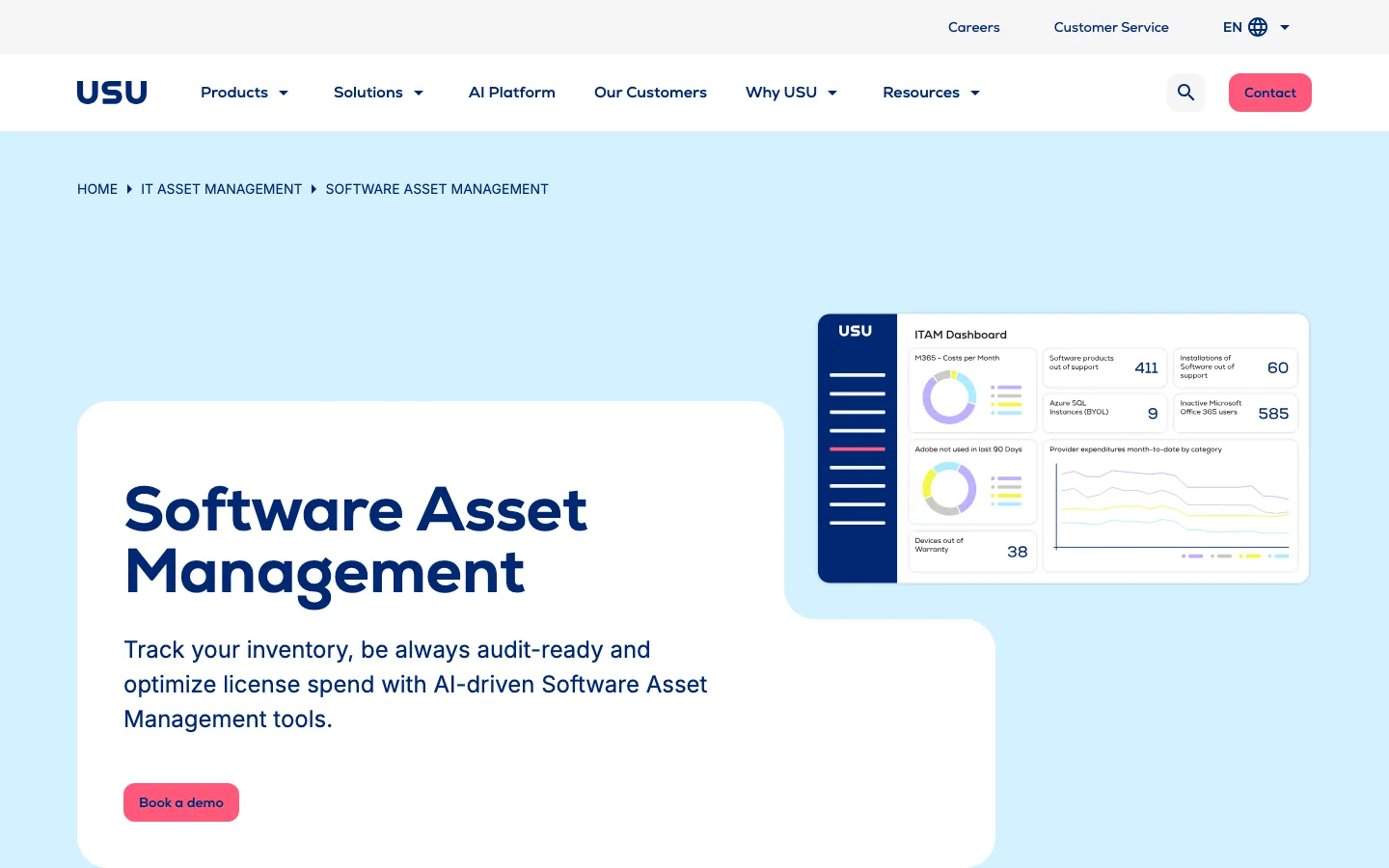
USU Software Asset Management is the specialist for SAP- and Oracle-heavy estates, sold as modules for clients and datacenter, SaaS, SAP software, and managed services. Under S/4HANA and RISE with SAP, license costs follow user authorizations rather than actual use, and according to USU’s SAP license management page, that shift can raise license needs by 50% to 150%. Its SAP-verified module handles role classifications, FUE (full use equivalent) sizing, and Digital Access analysis.
Oracle tooling is Oracle-verified across on-prem, virtual, and cloud deployments on OCI, Azure, and AWS. USU’s license management page lists 50+ built-in connectors, SCCM, ServiceNow, and ILMT among them.
USU’s SaaS coverage is newer, because it bought saasmetrix on March 4, 2025 (USU’s announcement) after years of serving mostly large enterprises with complex license requirements. The same release describes the SaaS reclaim in one line: “Unused or duplicate licenses are automatically identified and eliminated.”
Pros:
- SAP authorization-based licensing and FUE sizing
- Oracle-verified tooling across on-prem, virtual, and cloud
- Connectors into SCCM, ServiceNow, and ILMT
Cons:
- The SaaS module is younger, built partly on the 2025 saasmetrix deal
- A Niche Player in the 2026 Gartner Magic Quadrant for SaaS Management Platforms, and USU’s own blog says a Niche Player may not fit a team that needs a quick, lightweight SaaS management platform for a single cloud domain
How to Choose an Enterprise Software License Management Tool
Start with where the money and the audit risk sit: if Oracle, IBM, SAP, or a Microsoft Enterprise Agreement drive the exposure, a SAM suite should own the true-up and audit calculations. Microsoft’s EA guidance shows how tight that calendar is, since an EA runs three years and each annual true-up order must reach Microsoft between 60 and 30 days before the anniversary. The same guidance admits that most organizations “do not have a clear idea of how many users or devices they will have over the next three years, and they may be inclined to over purchase to be safe.”
Among the suites, the stack you already run settles most of the choice. ServiceNow shops start with ServiceNow SAM, SAP estates with USU, and mixed-publisher estates with Flexera, which also feeds normalized license data into a ServiceNow CMDB.
Many enterprises end up running two pieces of enterprise license management software, one of each kind, so pick the SaaS-first tool on its own terms. Compare how each takes a seat back. Torii acts through its own workflows and integrations and counts home-grown and on-prem seats through custom integrations, while Zylo acts through Okta or Entra.
- SaaS and on-prem coverage Which seats live in the core product and which need a second module
- Enterprise agreement, true-up, and audit support Publisher-specific license positions for Microsoft, Oracle, IBM, and SAP
- Multi-entity reporting Costs and seats split by business unit, division, or cost center
- ITSM and CMDB fit How license data and tickets reach the service desk you already run
- Usage-based reclaim Whether the tool removes idle seats itself or hands the job to another system
Frequently Asked Questions
The best enterprise software license management tool depends on where your license risk sits. Torii fits the SaaS and AI layer, where seats should follow real usage. Companies already on ServiceNow ITSM should look at ServiceNow SAM first, Microsoft, Oracle, and IBM estates at Flexera One ITAM, SAP estates at USU, and spend and renewal teams at Zylo.
Enterprise software license management tracks the software a large organization owns against what it installs and uses, across publisher agreements with Microsoft, Oracle, IBM, and SAP and across SaaS and AI subscriptions. SAM suites handle true-ups and audit positions, while platforms such as Torii reclaim idle SaaS seats based on usage.
A SAM suite calculates effective license position, true-ups, and audit exposure for on-prem publishers such as Oracle, IBM, and SAP, and adds SaaS through a separate module. A SaaS management platform such as Torii tracks subscription and AI seats against usage and reclaims idle ones. Many enterprises run both side by side.
Torii tracks on-prem and home-grown seats through custom integrations or a CSV import, syncing users, licenses, roles, and last-used dates, and Jamf, Kandji, or Intune report installed apps per device. It doesn't calculate publisher license positions or audit exposure, so Oracle, IBM, and SAP contracts stay with a SAM suite.
Flexera completed its acquisition of Snow Software on February 15, 2024, but it still sells Snow Atlas as its own product rather than folding it into Flexera One IT Asset Management. SaaS subscriptions sit in a third Flexera product, Flexera One SaaS Management, so buyers choose between overlapping lines.
Torii marks a seat Inactive after no engagement in an org-wide window that defaults to 30 days. A workflow on the License not in use trigger can then ask managers for approval or unassign the license directly. ServiceNow uses reclamation rules in SaaS License Management, and Zylo hands deprovisioning to Okta or Microsoft Entra.