

7 Best Renewal Management Software Tools (2026)
 John Baker
•
Oct 7, 2026
•
14 min read
•
Updated October 7, 2026
John Baker
•
Oct 7, 2026
•
14 min read
•
Updated October 7, 2026

Compare 7 renewal management software tools for the SaaS you buy, scored on owner alerts, usage-based right-sizing, price benchmarks, and auto-renewal handling.
Ask about this article
Opens Claude in a new tab to answer, using this article as the source.
Microsoft’s commercial price update took effect on July 1, 2026, and the timing rule in its FAQ is short: “Existing customers remain on current pricing until renewal” (Microsoft Licensing). For Office 365 E3 that meant a 13% rise, from $23 to $26 per user per month, arriving on each customer’s own renewal date.
Renewal management software here means tools for renewing the software your company buys, a narrower job than SaaS contract management and a different one from the customer-success tools vendors use to keep their own customers. Seat counts get decided on the same date as price, and Torii’s 2026 SaaS Benchmark report (data from January to December 2025) found that between 24% (Slack) and 55% (Salesforce) of seats in a dozen widely deployed apps weren’t earning their keep (Torii, 2026 SaaS Benchmark report).
Each tool below gets four scores, for auto-renewal handling on a calendar built from contract data, owner alerts, right-sizing (renewing only the seats people actually use), and price benchmarks. The list spans SaaS management platforms (Torii, Zylo, Zluri), buying and negotiation services (Vertice, Spendflo, Tropic), and one contract repository (ContractSafe). Torii publishes this guide and is listed first, and it calculates each contract’s cancellation deadline and forecasts the seats each app needs at renewal.
- Vendr is now part of Vertice, which announced the acquisition on June 1, 2026, so Vendr appears inside the Vertice entry rather than as its own tool.
- This list covers buyer-side renewals only. Sell-side contract lifecycle tools and customer-success platforms are left out.
Source: Vertice acquisition announcement, June 1, 2026, checked October 7, 2026.
★ = low · ★★ = medium · ★★★ = high
| Tool | Auto-renewal | Owner alerts | Right-sizing | Benchmarks |
|---|---|---|---|---|
| Torii | ★★★ | ★★ | ★★★ | ★★ |
| Zylo | ★ | Not rated | ★★ | ★★ |
| Zluri | ★ | ★ | ★★★ | Not rated |
| Vertice | ★ | ★ | ★★ | ★★★ |
| Spendflo | ★★★ | ★★ | ★ | ★★ |
| Tropic | ★★ | ★ | ★ | ★★★ |
| ContractSafe | ★★★ | ★★★ | Not rated | Not rated |
Auto-renewal: a renewal calendar built from contract data (★★★ auto-renewal notice dates tracked, ★★ auto-renewing contracts flagged, ★ renewal dates only). Owner alerts: a lead time and a named recipient (★★★ lead time set on each reminder, ★★ lead times set per workflow or module, ★ alerts or owners named with no lead time described). Right-sizing: seat counts from actual usage (★★★ a usage-based forecast or automatic reclaim, ★★ unused licenses flagged from usage data, ★ a usage feed whose depth isn't documented). Benchmarks: price data for the negotiation (★★★ price-point or SKU-level data, ★★ benchmarks with limited coverage or no published detail). Not rated: Zylo's owner alerts and Zluri's benchmarks, which no public page describes, and ContractSafe's right-sizing and benchmarks, which sit outside its scope. Ratings are Torii's editorial read of each vendor's public pages as of October 7, 2026.
Torii
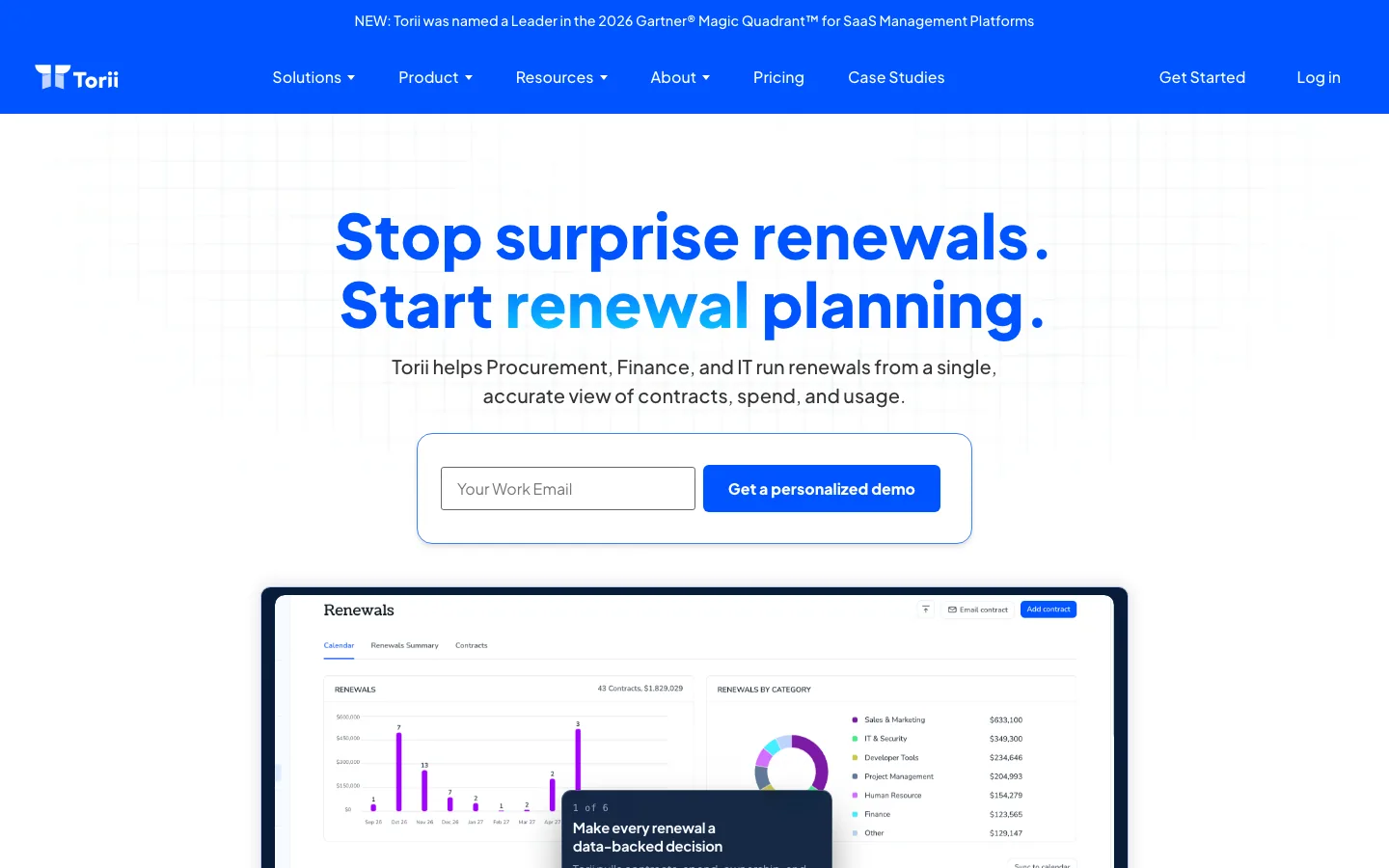
Torii keys renewal alerts to the cancellation deadline rather than the renewal date, since that deadline is the last day to stop an auto-renewal. Auto-renewal terms sit in three contract fields (Auto-Renewal, Cancellation Notice Period, and Cancellation Deadline). Magic Auto-Fill reads the first two from the contract PDF, Torii calculates the deadline from the end date and the notice period, and auto-renewing contracts get their own icon and filter on the Renewal Calendar. The contract and renewal management page states the goal as “Stop surprise renewals. Start renewal planning.”
Each renewal reaches a named owner instead of a shared inbox. Out-of-the-box notifications cover the basics, while workflows send tailored ones by email or Slack to the app or contract owner and can open a renewal ticket in Jira or Asana. For auto-renewing contracts, the help center recommends keying that notification to the Cancellation Deadline, and the built-in renewal template fires 90 days out and branches on auto-renewal.
A second or third lead time, such as a 60-day or 30-day notice, needs its own workflow, because a contract enrolls in a given workflow only once. The calendar can be shared as an iCalendar feed that Google Calendar or Outlook subscribes to, so people without a Torii login see the dates too.
The seat count comes from Renewal Forecast, an Enterprise plan feature that Torii suggests starting 120 days before the renewal. It compares licenses purchased with licenses used across three steps (Review Users, Review Licenses, Review Forecast), then adds a renewal buffer for the hiring plan. License cost benchmarks mark a price per license as Above, At, or Below benchmark for apps that have one, and the Enterprise plan’s Renewals Yearly Summary charts contract values year over year as a waterfall.
Pros:
- Cancellation deadline calculated from the end date and notice period, and flagged on the calendar
- Owner alerts by email or Slack, with an optional Jira or Asana ticket
- Seat forecast from users and licenses, with a hiring buffer (Enterprise plan)
- A calendar feed that people outside Torii can subscribe to
Cons:
- No negotiation service or buyer team, so your own people run the vendor call
- Renewal Forecast and the Yearly Summary need the Enterprise plan, and pricing is quote-based
In a Torii demo, load one auto-renewing contract, find its Cancellation Deadline on the calendar, and open the seat forecast for that app. Torii was named a Leader in the 2026 Gartner Magic Quadrant for SaaS Management Platforms, for the third year running. Book a Torii demo.
Zylo
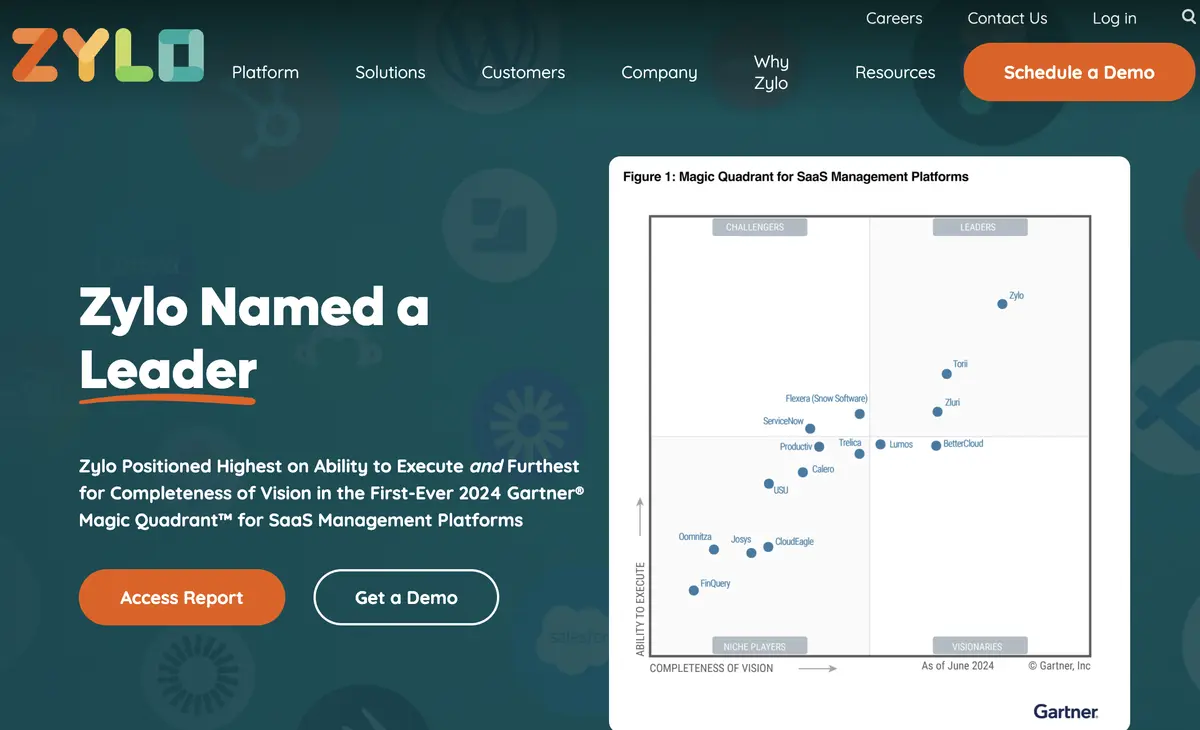
Zylo comes at renewals from the spend side, as an enterprise SaaS and AI spend platform for IT, Procurement, and FinOps (cloud and software cost) teams. According to its renewal savings page, “Zylo aggregates contract, spend, and application data to create a centralized renewal calendar across the SaaS portfolio”. Renewals are ranked by savings potential, and unused or underused licenses are flagged ahead of the date so the seat conversation starts early.
Getting contracts in got faster on January 22, 2026, when Zylo announced Contract Assist, an agent that pulls metadata out of uploaded order forms. Pricing benchmarks come with the Premium tier and above. For teams that would rather hand the whole renewal off, SaaS Negotiator is a managed service that runs it for them.
Zylo’s limits for this job show up when it is time to act on the seat count. Seat removal isn’t native, because Zylo runs deprovisioning through Okta or Microsoft Entra, so apps outside them can’t be deprovisioned automatically, and those Okta and Entra Actions are a Premium feature. Pricing is quote-only across three tiers, so confirm early which renewal features sit on Premium.
Pros:
- A renewal calendar built from contract, spend, and app data
- Benchmarks plus an optional managed negotiation service
- AI extraction of contract metadata from order forms
Cons:
- Benchmarks and Okta or Entra seat removal are Premium features
- No public prices
Zluri
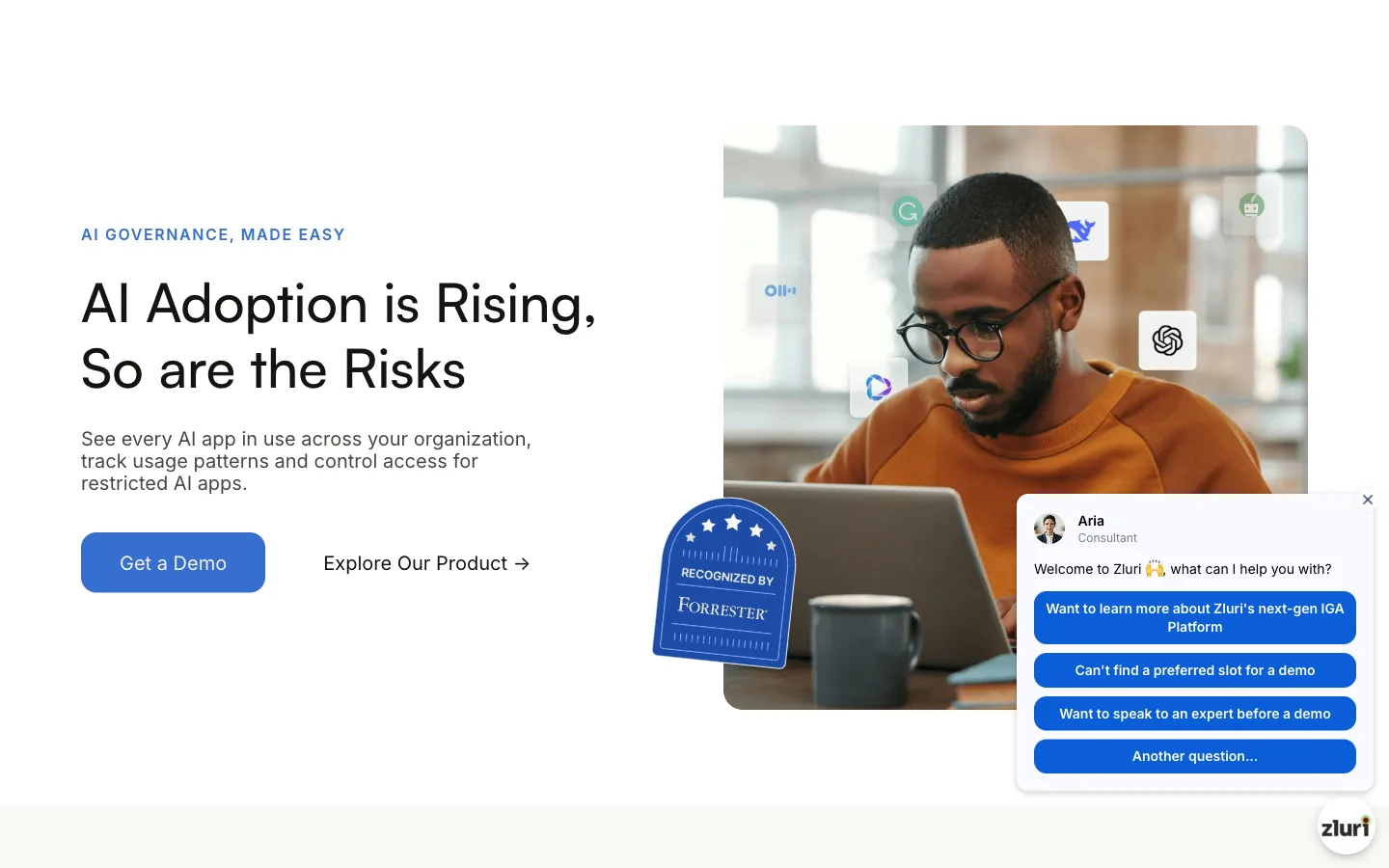
Zluri has moved its center of gravity to identity security, and its homepage now leads with identity visibility, governance, and posture products. SaaS management has become a product page instead of a homepage pillar.
The renewal pieces sit on the Zluri SaaS management page, which lists software renewal alerts, spend forecasting, and license reclaim or downgrade once usage drops below a threshold you set. That page claims 300+ direct API integrations. Discovery pulls from SSO, finance systems, a browser extension, and other sources, so the reclaim rules work from a fuller seat count than an identity provider alone would give them.
For a team that wants identity governance and renewal right-sizing from one vendor, Zluri is a reasonable fit. Contract tracking exists without being the focus, and its pricing link leads to a demo request rather than a price.
Pros:
- Automatic license reclaim or downgrade on usage thresholds
- Broad discovery feeding the seat count before a renewal
Cons:
- Renewal and contract tooling comes second to identity security
- No public pricing
Vertice
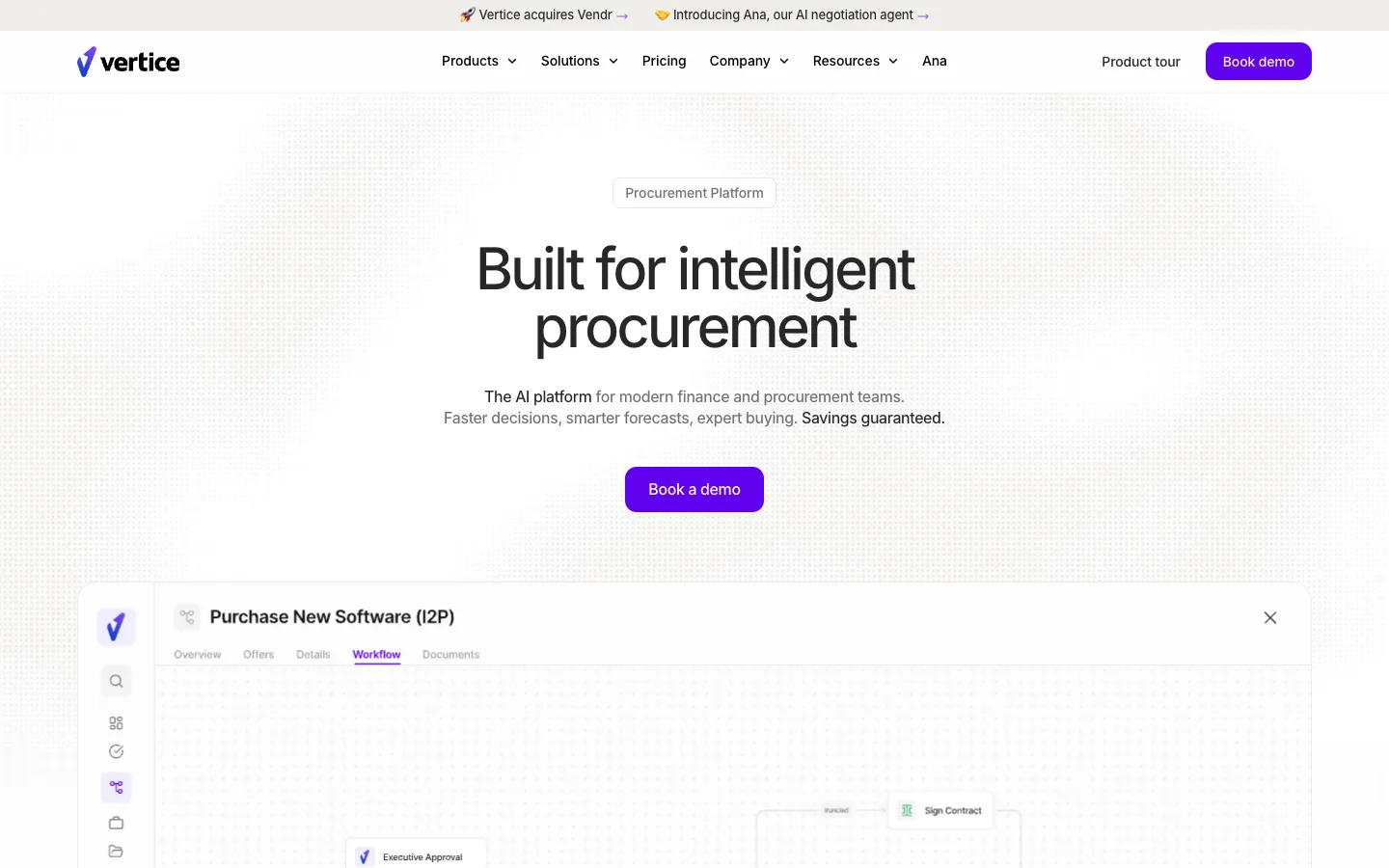
Two of the better-known SaaS buying services now answer to one company, since Vertice acquired Vendr. Vendr.com still runs as a brand. Its Ruth negotiation agent now shares an owner with Vertice’s own agent, Ana, so a team renewing through either brand should ask which agent and which people will work the next one.
For the renewal itself, Vertice’s SaaS Purchasing product tracks contract lifecycles, owners, key terms, and renewal dates. The SaaS Purchasing page pitches the usage side as “Optimize licenses and expected upgrades based on actual usage.” That usage arrives through SSO and finance connectors, and a dedicated SaaS buyer then negotiates with benchmark data in hand, under a savings guarantee Vertice writes into the contract.
Vertice suits a Finance or Procurement team that wants the renewal negotiated on its behalf. For how Vertice handles intake and new purchases, see our comparison of SaaS procurement platforms.
Pros:
- Expert buyers working alongside AI negotiation agents
- Benchmarks backed by the combined Vertice and Vendr data
- Savings guaranteed in the contract
Cons:
- How Ruth and Ana will divide the work isn’t public yet
- Built around a dedicated buyer, which suits Procurement more than IT’s own renewal work
Spendflo
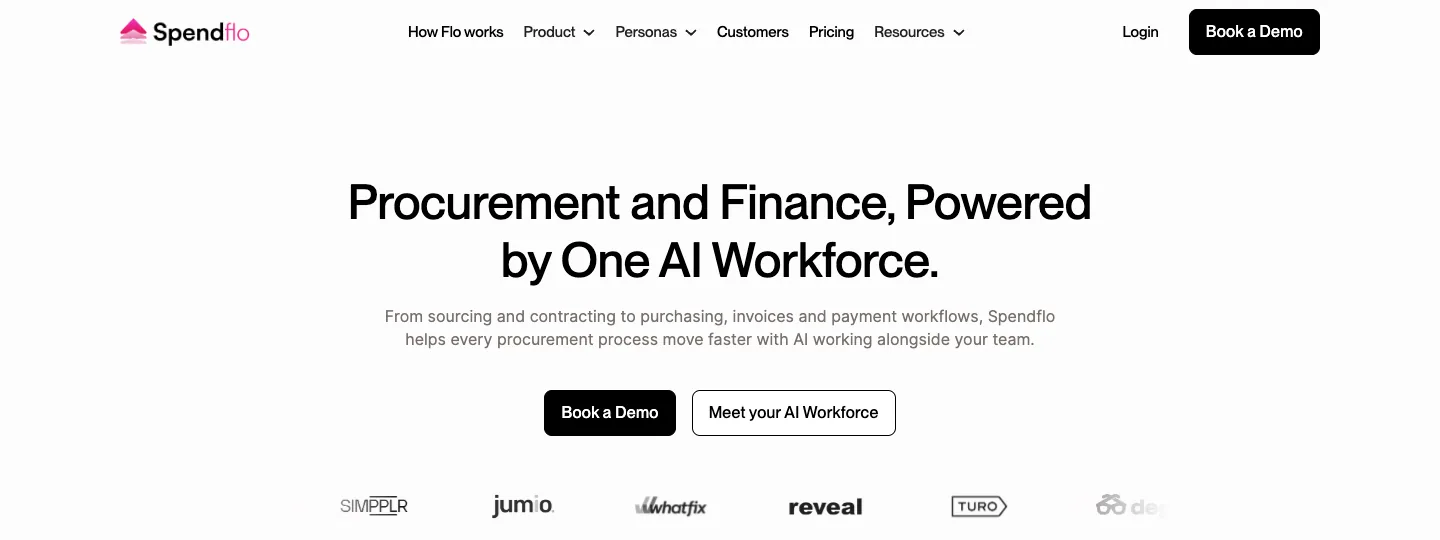
Spendflo started as a SaaS buying service and now sells AI agents, branded Flo, across procurement and finance work. On renewals, its managed procurement pod still negotiates each contract and benchmarks the price.
Lead times in the renewal module are configurable at 30, 60, or 90 days, alongside a renewal calendar and AI contract ingestion, according to Spendflo’s pricing page. On auto-renewals, the Spendflo homepage advertises “Auto-renew clause detection 60 days out, with benchmark data attached so the team can negotiate before the window closes.” Flo flags vendor-wide price increases before a renewal date arrives, which gives the pod something concrete to push back on.
Right-sizing is the thinner half of Spendflo, because seat usage depends on the identity-provider connection and the public pages don’t document how deep it goes. Pricing pairs a platform fee with a charge per completed request, across three quote-only tiers. Several modules in its navigation are still marked “Coming Soon” as the product widens into general procurement.
Pros:
- Auto-renew clause detection with benchmarks attached
- Lead times configurable at 30, 60, or 90 days
- Negotiation handled by a managed pod
Cons:
- Usage depth depends on the identity-provider connection and isn’t documented
- Several modules marked “Coming Soon” as the product widens
- Quote-only tiers
Tropic
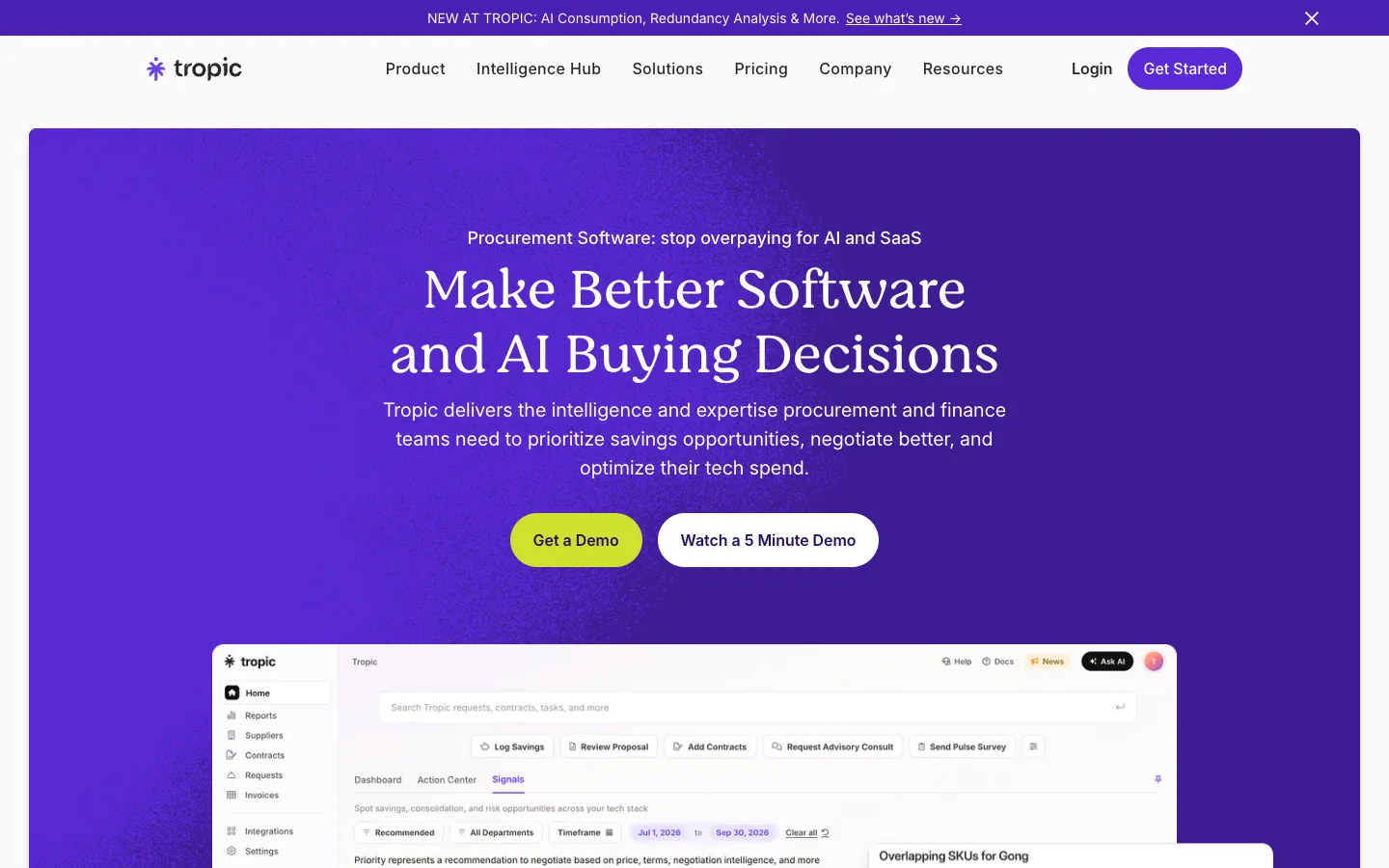
Tropic’s Renewal Agent triages the renewal calendar that your uploaded contracts create. Signals ranks savings, consolidation, and risk opportunities by contract end date. The Action Center tracks auto-renewals and overdue work, so a notice window that nobody picked up still surfaces somewhere.
On price, Tropic pairs its benchmarks with negotiation playbooks for specific product tiers (SKUs) and sells full-service negotiation as an add-on. The Tropic homepage is direct about whose side it takes, saying “we made a deliberate choice to work exclusively for buyers”. Usage syncs from Okta, which gives the seat side of the negotiation its numbers.
Tropic’s pricing page lists a starting price of $3,083 a month based on employee count, one of only two public prices on this list. Coverage is only as complete as the contract set you load, so the first job is gathering and uploading contracts.
Pros:
- A public starting price
- A renewal calendar worked by agents in end-date order
Cons:
- Contracts must be uploaded before anything works
- Full-service negotiation costs extra
ContractSafe
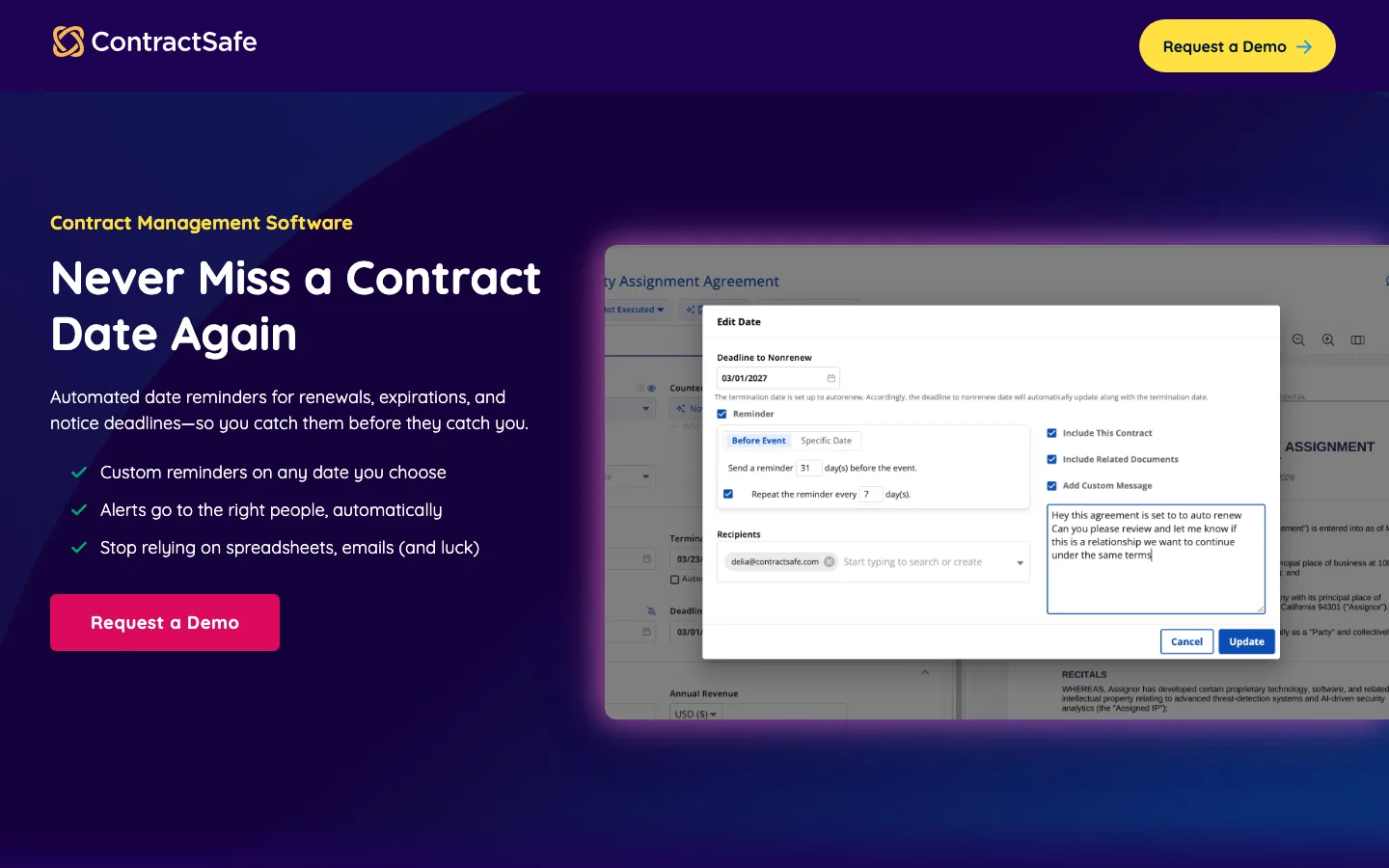
ContractSafe is the pick for a team that only needs dates tracked, a contract repository for any contract type (vendor agreements, sales contracts, NDAs) rather than a SaaS tool. Its contract date reminders page opens with “The most expensive contract is the one you forgot was about to auto-renew.” AI reads each uploaded contract and suggests renewal, termination, and notice dates, and a person confirms each one.
ContractSafe reminders go out 30, 60, or 90 days ahead, or on any lead time you pick, and they can reach anyone, including people without a login. Because reminders belong to the contract instead of a person, they survive a role change and can be reassigned in one click. The Autorenew setting rolls the renewal and notice dates forward each cycle and resets the reminders with them.
ContractSafe holds no usage or seat data from SSO or app connectors, no benchmarks, and no discovery, so it tells you when to act without telling you how many seats to keep. Per ContractSafe’s pricing, plans start at $450 a month billed annually with unlimited users, and the Jump Start migration service starts at $2.50 per contract. Teams moving off a spreadsheet can weigh it against the options in our guide to Excel alternatives for renewal tracking.
Pros:
- Public pricing with unlimited users
- Reminders that reach people outside the tool
- Autorenew rolls dates forward each cycle
- Reminders tied to the contract, so they survive a role change
Cons:
- No usage or seat data to right-size before a renewal
- Only knows about contracts someone uploads
How to Choose Renewal Management Software
Start with who owns renewals at your company and what that team needs to know before each one. A Legal or Ops team that wants contract renewal management software for dates across every contract type is well served by ContractSafe, and a team that wants a negotiator on its side should look at Vertice, Spendflo, or Tropic.
When the open question is how many seats to renew, software renewal management works best inside a SaaS management platform that IT, Finance, and Procurement share. Torii’s Renewal Forecast and cancellation-deadline alerts are built for that question, Zylo suits a spend-led team, and Zluri suits an identity-first one.
Whichever tool you pick, don’t rely on the vendor to warn you before an auto-renewal locks in another term. Notice rules exist in a few places, and they are narrow.
In Wisconsin, a business contract with an initial term over a year that auto-renews for more than a year can't be enforced against the customer unless the seller sends written notice 15 to 60 days before the deadline to decline renewal. That protects Wisconsin contracts only, so set your own alert.
Source: Wisconsin Legislature, Wis. Stat. § 134.49, checked October 7, 2026.
Once your alerts run from the cancellation deadline, our SaaS renewal playbook covers what to pull together in the 90 days before a renewal.
Frequently Asked Questions
It depends on who owns renewals. Torii fits IT, Finance, and Procurement teams that need usage-based seat forecasts and cancellation-deadline alerts. Zylo matches a spend-led team and Zluri an identity-first one. Teams that want a negotiator should look at Vertice, Spendflo, or Tropic, while ContractSafe covers Legal or Ops teams that only track contract dates.
Renewal management software tracks when your software contracts renew, alerts a named owner before the deadline, and helps decide what to renew. Stronger tools add usage data for right-sizing seats and price benchmarks for the negotiation. Torii, Zylo, and Zluri tie renewals to usage, while ContractSafe focuses on contract date reminders.
Start 90 to 120 days before the cancellation deadline rather than the contract end date, because an auto-renewing contract's notice period closes before its term ends, and a missed notice locks in another term. Torii, for example, recommends starting a Renewal Forecast 120 days before the renewal, and its renewal workflow template triggers 90 days out.
Record each contract's auto-renewal clause and notice period, work out the cancellation deadline, and send notice before it passes. Torii calculates the Cancellation Deadline from the end date and the notice period, flags auto-renewing contracts on its Renewal Calendar, and can alert the contract owner by email or Slack well ahead of that date.
Public prices are rare in this category. Tropic's pricing page starts at $3,083 a month based on employee count, and ContractSafe's pricing starts at $450 a month billed annually with unlimited users. Torii, Zylo, Zluri, Vertice, and Spendflo quote prices on request, usually after a demo or scoping call.
Vertice announced its acquisition of Vendr on June 1, 2026. Vendr's site still runs as a brand, and its Ruth negotiation agent now sits at the same company as Vertice's own agent, Ana. Before a renewal through either brand, ask which of the two agents, and which team, will run it.