

8 Ways to Run Ramp Access Audits in 2026
 Chris Shuptrine
•
Apr 3, 2026
•
18 min read
Chris Shuptrine
•
Apr 3, 2026
•
18 min read

Compare 8 tools for running Ramp access reviews in 2026, covering license governance, expense admin certification, and SaaS access auditing workflows.
Ask about this article
Opens Claude in a new tab to answer, using this article as the source.
Ramp’s growth in corporate spend management has made it a fixture in finance teams across mid-market and enterprise companies. But as Ramp adoption scales, access governance tends to lag. More users get provisioned as the company grows, admin roles multiply across departments, and no one tracks which finance team members still need their card management permissions after an org change.
Finance platforms carry a different kind of access risk than generic SaaS tools. Ramp users with admin roles can view all company spend, approve or reject expense reports, and manage card programs. Ramp’s own help center is direct about it: “Owner and Admin are super-user roles and are granted all permissions” (Ramp user roles overview). During an audit, those access levels need to be justified. SOX-regulated companies feel this pressure most directly: finance tool access is a direct input to internal controls testing, and gaps in Ramp access review documentation can surface as audit findings.
Ramp's admin roles carry significant reach: card program management, expense approval authority, and visibility into all company spend data. Many IT and finance teams review Ramp access manually via spreadsheets or during annual audits only, leaving months of unchecked access drift in between. The eight tools in this comparison automate that process, bringing structured certification workflows, audit trails, and risk-based flagging to Ramp access governance.
Each tool in this list takes a different angle on Ramp access audits: some focus on SaaS discovery and user lifecycle, others on identity governance workflows, and a few on financial compliance automation. The right one depends on your team size, compliance requirements, and how Ramp fits into your broader tech stack.
★ = low · ★★ = medium · ★★★ = high
| Tool | Ease | Cost | AI Capabilities | Reviews |
|---|---|---|---|---|
| Torii | ★★★ | ★★ | ★★★ | ★★★ |
| Veza | ★★ | ★ | ★★★ | ★ |
| Nudge Security | ★★★ | ★★ | ★★ | ★ |
| One Identity | ★ | ★★ | ★★ | ★★ |
| Saviynt | ★★ | ★ | ★★★ | ★★ |
| Omada Identity | ★★ | ★ | ★★ | ★★ |
| CloudEagle | ★★★ | ★★ | ★★ | ★ |
| Ping Identity | ★ | ★ | ★★★ | ★★★ |
Table of Contents
Torii
Torii connects to Ramp and pulls identity data into a centralized access governance view. From there, IT teams can see each Ramp user’s role, status, and license assignment without logging into Ramp separately. That context matters during quarterly access reviews: you can cross-reference the user list against your HRIS data and flag anyone whose role or department no longer justifies their Ramp license or admin access.
Torii’s workflow automation handles the repeat work in Ramp governance. Access review campaigns can be configured to route certification requests to the right manager automatically, based on department data pulled from HR. When an employee’s status shifts to inactive, Torii can trigger deprovisioning workflows across connected apps. For Ramp, that includes the Deactivate Ramp User action.
Torii also surfaces shadow SaaS that finance teams may have connected to Ramp (expense tools, receipt processors, procurement apps) through its AI-powered discovery engine. If those connected apps fall outside your sanctioned stack, Torii flags them for review alongside the Ramp access data itself. Gartner named Torii a 2025 Magic Quadrant Leader for SaaS Management Platforms; the Ramp connector’s details are on Torii’s Ramp integration page.
Pros:
- Pulls each Ramp user’s role, status, and license assignment into one access governance view
- Automated review campaigns with manager routing require minimal IT overhead to run
- Shadow IT discovery surfaces Ramp-connected finance apps alongside core access data
- Cross-app deprovisioning means Ramp access revocation happens as part of a broader offboarding workflow
Cons:
- Pricing is higher than lighter-weight SaaS management tools
- Cloud-only platform: organizations with on-premise infrastructure requirements will need a separate solution
G2 rating: 4.5 out of 5 stars (302 reviews)
Capterra rating: 4.9 out of 5 stars (26 reviews)
Veza
Veza’s Access Graph technology provides permission-level visibility into who can actually take what actions in Ramp, not just who holds a user account. That distinction matters for finance platforms: a Ramp user assigned a member role may have had their permissions elevated temporarily for a project and never reverted. Veza surfaces those mismatches by analyzing effective access rather than assigned roles alone, which gives security teams a more accurate picture of financial exposure.
For Ramp access audits, Veza’s certification campaigns let managers review user access across Ramp and adjacent systems simultaneously. Risk-based sorting prioritizes high-privilege Ramp accounts (admins, card managers, spend approvers) for immediate attention, so certifiers don’t wade through low-risk accounts before getting to the ones that carry real compliance weight. Veza also tracks whether entitlements are actively used, which helps reviewers justify removals when a finance user hasn’t touched their admin access in months.
Veza is positioned for larger enterprises and carries a 4.9 rating on Gartner Peer Insights across 29 reviews. Pricing is custom with no public free trial, so it works best for organizations already running structured IGA programs that need deeper permission analysis layered on top. On December 2, 2025, ServiceNow announced it would acquire Veza, which then served nearly 150 global enterprise customers. ServiceNow’s Amit Zavery tied the deal to the same problem Ramp reviewers face: “It’s only when you have continuous visibility into each identity’s permissions that you can trust it.”
Pros:
- Permission-level visibility goes beyond assigned roles to show what Ramp users can actually do
- Risk-sorted certification campaigns help reviewers prioritize high-privilege finance accounts first
- Tracks active vs. unused entitlements to support confident access removal decisions
Cons:
- No transparent pricing and no free trial make initial evaluation harder for mid-market teams
- Very limited public review data (0 G2, 1 Capterra) makes third-party validation difficult
- Enterprise-focused pricing may not be practical for organizations under 500 employees
Capterra rating: 5.0 out of 5 stars (1 review)
Nudge Security
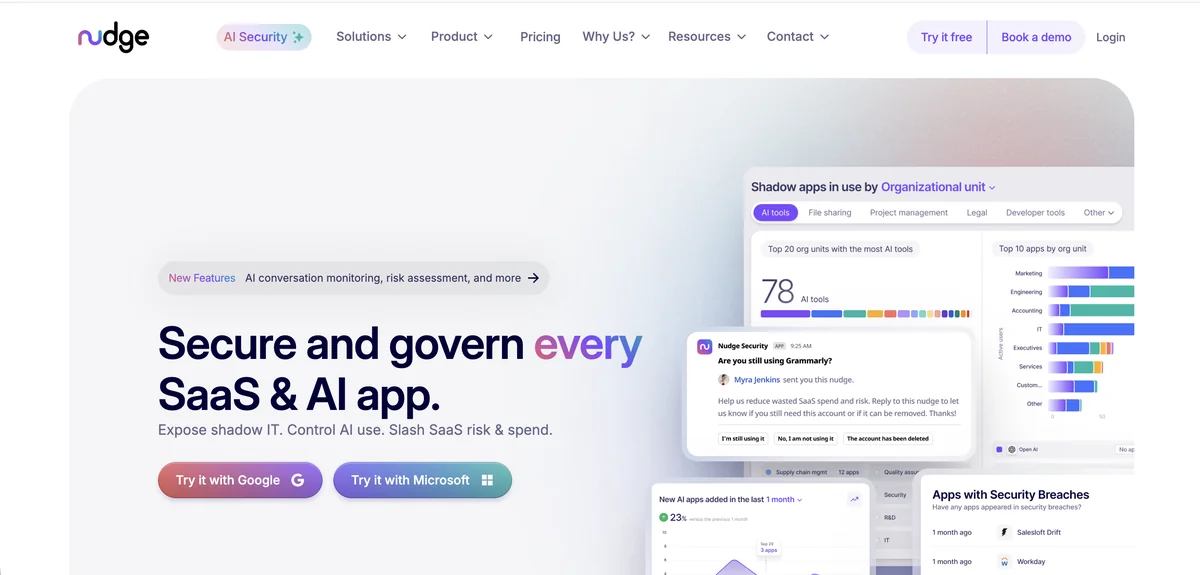
Nudge Security discovers Ramp usage through email-based detection rather than requiring connector configuration upfront. If employees have created Ramp accounts, received Ramp notifications, or connected Ramp to third-party tools like accounting platforms or receipt processors, Nudge Security surfaces those connections automatically, typically delivering a full SaaS inventory within 75 minutes of setup.
Finance tools tend to have satellite apps orbiting them, and Ramp is no exception. Teams running expense management through Ramp also tend to use Ramp’s AP automation tools, card management features, and integrations with accounting systems like NetSuite or QuickBooks. Nudge Security maps those relationships and flags users who access Ramp-adjacent tools outside sanctioned channels, broadening the scope of what an access review actually catches.
When it’s time to run the actual certification workflow, Nudge Security’s User Access Review Playbook categorizes Ramp accounts and sends behavioral nudges via Slack or email to prompt users and managers to confirm whether access is still needed. At KarmaCheck, SOC 2 access reviews for 40 in-scope apps used to take over 100 hours of manual effort each quarter. IT Specialist Chris Tuley describes the change: “Now I’m finishing the quarterly audits in one to three days by myself, instead of one to two weeks with a colleague.” Nudge’s Essential plan is $750 per month for up to 150 users, billed annually. From 150 to 1,500 users, the Growth plan costs $5 per user per month.
Pros:
- Email-based discovery catches Ramp shadow usage and connected apps that connector-based tools miss
- Behavioral nudges via Slack and email achieve high compliance rates without blocking workflows
- Access review playbook reduces quarterly audit time significantly for small IT teams
- Fast deployment with no agents, proxies, or browser extensions required
Cons:
- Requires Google Workspace or Microsoft 365 for email-based discovery to function properly
- Behavioral nudges guide rather than enforce, so users can still ignore prompts without immediate consequence
G2 rating: 5.0 out of 5 stars (limited reviews)
One Identity
One Identity Manager provides formal attestation policy frameworks that work well when Ramp sits within a compliance-driven governance program. Organizations in heavily regulated industries (financial services, healthcare, government) often need access certifications tied to specific regulatory frameworks, and One Identity’s attestation policies can be linked directly to SOX or GDPR requirements. That gives audit teams a clear paper trail connecting each Ramp access decision to a compliance control.
One Identity’s deepest strengths show up in hybrid environments where cloud SaaS and on-premise infrastructure coexist. If your organization runs Active Directory alongside cloud SaaS tools like Ramp, One Identity can govern both from a single platform, using SCIM 2.0 connectors for cloud applications and Starling Connect for SaaS apps like Salesforce, Slack, and Okta. Ramp can be onboarded via SCIM, after which managers receive structured attestation cases detailing each user’s access for approval or denial.
One Identity serves over 11,000 organizations globally and holds a 4.4 rating on Gartner Peer Insights across 155 reviews. Implementation typically requires a partner, and users consistently note that the attestation interface is not intuitive for non-technical reviewers. It’s a stronger fit for organizations with dedicated IAM teams than those expecting self-service certification workflows.
Pros:
- Attestation policies can be tied to SOX and GDPR frameworks, which matters for finance tool governance
- Hybrid environment support lets IT govern Ramp and on-premise systems from a single platform
Cons:
- Attestation user experience is widely noted as dated and difficult for line managers to navigate
- Implementation typically requires an external partner, adding cost and deployment time
- Steep learning curve makes it difficult for teams without dedicated IAM expertise
- Azure AD and Entra ID connector gaps can be a problem for Microsoft-centric cloud environments
G2 rating: 3.5 out of 5 stars
Saviynt
Saviynt’s Trust Scoring engine can reduce approver workload by up to 75% on Ramp access certification campaigns by automatically handling low-sensitivity decisions. For a company running Ramp with hundreds of employees, most users hold standard member-level access consistent with their role and department. Saviynt identifies those accounts through peer group analysis and processes routine certifications automatically, routing only high-privilege or anomalous accounts to human reviewers.
Continuous compliance monitoring is Saviynt’s other strong suit for Ramp governance. Rather than waiting for scheduled quarterly campaigns, SaviAI flags access anomalies in real time. If a Ramp user gains elevated permissions outside a standard provisioning workflow, Saviynt triggers a micro-certification immediately, which directly supports internal controls documentation for SOX-regulated organizations with Ramp in their financial controls stack.
Saviynt received the Gartner Peer Insights Customers’ Choice recognition for IGA four consecutive years from 2021 through 2024, with 85% of its 185 reviewers giving five stars. Pricing starts at $10,000, positioning it for larger deployments; smaller teams should evaluate whether the governance depth justifies the investment. Saviynt’s platform tiers and feature breakdowns are available on their site.
Pros:
- Trust Scoring automates routine Ramp certifications, cutting manual review burden by up to 75%
- Real-time compliance monitoring catches Ramp access anomalies between scheduled certification campaigns
- Four-year Gartner Customers’ Choice recognition reflects strong enterprise satisfaction
Cons:
- $10,000+ starting price is a barrier for organizations under 500 users
- Customer support quality is inconsistent, with some users reporting slow ticket resolution
- Backend complexity requires significant IAM expertise to configure and maintain
Capterra rating: 4.5 out of 5 stars (2 reviews)
Omada Identity
Omada Identity’s IdentityPROCESS+ framework provides structured access review processes that organizations can apply to Ramp and adjacent finance tools without building campaign logic from scratch. The platform guarantees implementation in 12 weeks, which is faster than most enterprise IGA tools and addresses a common pain point for teams waiting months before running their first formal access certification. Once live, Omada automates data collection across connected systems, removing the manual spreadsheet prep that typically precedes access reviews.
For Ramp specifically, Omada’s cross-system certification campaigns let IT teams certify Ramp access alongside other finance tools (NetSuite, Concur, QuickBooks) in a single campaign run. That’s practical when the relevant user population overlaps significantly across multiple platforms. Omada’s AI assistant, Javi, allows entitlement owners to initiate Ramp access reviews directly from Microsoft Teams, lowering friction for finance team leads who manage Ramp but aren’t comfortable navigating a dedicated IGA portal.
If your Ramp users are primarily finance and ops team members who work heavily in Microsoft Teams, look for an IGA tool with native Teams integration. Certification requests that surface in Teams rather than requiring a separate login consistently see higher completion rates, especially during busy close periods when finance teams have the least bandwidth for governance tasks.
Omada holds a 4.6 rating on Gartner Peer Insights across 211 reviews and won the Overall ID Management Solution Provider of the Year at the 2025 CyberSecurity Breakthrough Awards. The cloud SaaS version costs more than the on-premise deployment, and some users report slow performance during large-scale re-certification runs. More on deployment options and the Javi AI assistant is available at omadaidentity.com.
Pros:
- Cross-system campaigns certify Ramp alongside other finance tools in a single workflow
- Javi AI assistant lets finance managers launch access reviews from Microsoft Teams
- 12-week deployment guarantee is significantly faster than typical enterprise IGA timelines
- Audit trail architecture captures every access decision with timestamps for compliance documentation
Cons:
- Cloud version is significantly more expensive than on-premise deployment
- Large-scale re-certification campaigns can run slowly, which is a concern for organizations with many Ramp users
G2 rating: 4.5 out of 5 stars
CloudEagle

CloudEagle approaches Ramp access reviews from the SaaS management angle. The platform aggregates access data from SSO providers, HRIS systems, and Ramp’s own API to build a unified view of who’s using the platform, under which license tier, and how actively. For Ramp, IT teams can see which users hold admin roles, which have inactive accounts (no logins in 90+ days), and which licenses are overprovided relative to actual usage, without manually pulling reports from Ramp’s admin console.
CloudEagle’s Slack-native workflows are a practical advantage for Ramp access certifications. Finance managers typically live in Slack, and having certification approvals surface there rather than requiring logins to a separate governance portal improves participation rates. Reviewers can approve or revoke Ramp access directly within Slack, with escalation procedures activating automatically when approvals sit idle and the platform’s 500+ integrations keeping Ramp governance connected to the broader SaaS spend management view.
CloudEagle holds a 4.7 rating on G2 across 150+ reviews and 4.6 on Gartner Peer Insights. Customers including RingCentral have reported 3x ROI, and one organization saved $450,000 in five months through license reclamation. Users note that some integrations require manual intervention when automation breaks, and the platform lacks API access for custom development; a full integration list is available at cloudeagle.ai.
Pros:
- Slack-native certification workflows improve finance manager participation without requiring new tool logins
- Automatically flags inactive Ramp accounts and overprivileged users, reducing manual audit prep
- 500+ integrations allow Ramp governance to sit alongside broader SaaS spend management in one platform
Cons:
- No API access limits custom integration and reporting options for technical teams
- Some integrations require manual intervention when automated workflows break down
G2 rating: 4.7 out of 5 stars (150+ reviews)
Ping Identity
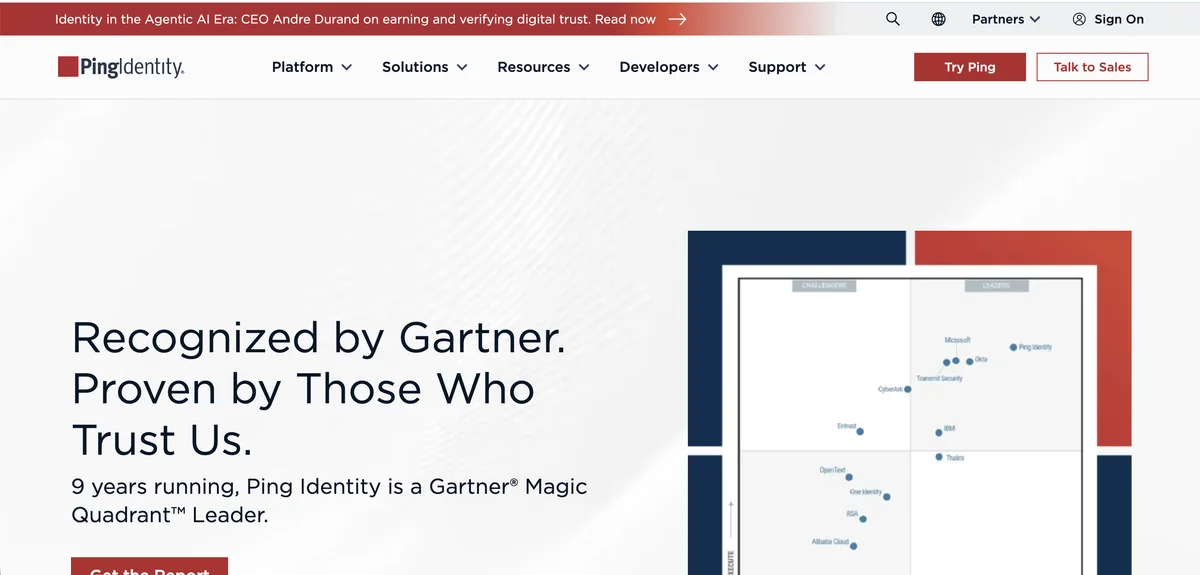
Ping Identity’s Autonomous Identity engine uses machine learning to evaluate millions of permissions per minute and identify access blind spots that standard identity platforms miss. For Ramp, that means the platform can analyze permission patterns across the user base, flag accounts where admin access is anomalous relative to peer groups, and give certifiers AI-assisted recommendations before they approve or revoke. Finance platforms accumulate permission drift over time as employees change roles and get promoted without systematic access reviews, and Ping’s behavioral analytics surface those patterns at scale.
The DaVinci orchestration platform (with 6,500+ capabilities across 350+ connectors) allows Ramp to be integrated into broader identity workflows spanning SSO, governance, and provisioning. Certification campaigns in PingOne Identity Governance support micro-certifications: targeted reviews that trigger on specific events, such as a Ramp admin’s departure, a department restructure, or a compliance audit, rather than waiting for quarterly cycles. Ping describes itself as the identity platform behind over half of the Fortune 100, which makes it a credible choice for highly regulated environments where Ramp is part of a broader financial controls program.
Ping Identity holds a 4.5 rating on G2 across 264 reviews and 4.7 on Capterra across 39 reviews. Note that PingOne Identity Governance requires a separate purchase from the core access management platform, and initial setup requires substantial IAM expertise. Ping’s site lists the full product lineup, including where Identity Governance fits.
Pros:
- Autonomous Identity AI evaluates Ramp permission patterns at scale and surfaces access anomalies automatically
- Event-triggered micro-certifications allow just-in-time Ramp access reviews without waiting for scheduled campaigns
Cons:
- PingOne Identity Governance requires a separate purchase from the core platform, adding cost and complexity
- Initial setup is complex and typically requires experienced IAM consultants
- Starting at $16,000+ annually, it sits firmly in enterprise pricing territory
- Interface complexity makes governance administration difficult for teams without dedicated IAM staff
G2 rating: 4.5 out of 5 stars (264 reviews)
Capterra rating: 4.7 out of 5 stars (39 reviews)
How to Choose
Ramp access reviews sit at the intersection of IT governance and finance compliance, which means the right tool depends on both technical and organizational factors. Start with your compliance requirements: if you’re in a SOX-regulated environment or going through a security audit, you need a platform that produces formal certification records, not just access data exports. That narrows the field toward tools with structured campaign workflows and immutable audit trails.
Does the tool connect to Ramp directly and pull user data automatically, or does it require manual exports? Can certification requests reach finance managers through Slack or Teams without requiring new tool logins? Does it produce audit-ready reports that satisfy SOX or ISO 27001 requirements? Can it govern Ramp alongside your other finance and SaaS tools in a single campaign?
For teams managing 50+ SaaS tools alongside Ramp that want access governance and SaaS spend management in one place, Torii is one option to evaluate. It connects to 200+ applications including Ramp, flags license reclamation opportunities, and runs certification campaigns that IT can manage without dedicated governance staff. It fits best when Ramp access reviews belong to a broader SaaS governance program and shadow IT discovery matters too.
Veza, Saviynt, and Ping Identity are worth evaluating if your Ramp access reviews are part of a larger enterprise IGA program with complex permission structures and formal regulatory obligations. Nudge Security and CloudEagle are practical options for teams that need faster deployment and lighter-weight governance workflows integrated with Slack and email. Omada and One Identity serve hybrid environments where Ramp is one of many applications governed under a unified identity program spanning on-premise and cloud infrastructure.
Frequently Asked Questions
Ramp admin roles control card programs, expense approvals, and full spend visibility; unchecked access drift creates audit failures, fraud risk, and noncompliance. Regular Ramp access reviews establish audit trails, enforce least privilege, and ensure finance controls remain demonstrable for auditors.
For SOX-regulated firms, inadequate Ramp access reviews can produce audit findings when admin privileges lack justification. Missing certification records weaken internal controls testing, increase remediation costs, and expose financial data to misuse or unapproved approvals during sensitive reporting periods.
Torii uses connectors and HR data to centralize Ramp identities and automate deprovisioning, plus shadow IT discovery; Nudge Security relies on email-based detection to quickly surface Ramp accounts and connected apps without upfront connectors, enabling faster inventorying.
Prioritize direct Ramp connectors, structured certification workflows, immutable audit trails, risk-sorted campaigns for high-privilege accounts, and integrations with HRIS, SSO, Slack or Teams. Evaluate deployment speed, pricing, and whether the platform supports SOX-compliant reporting.
Yes. Embedding certification requests in Slack or Teams reduces friction for finance managers, increases response rates during busy close periods, and enables approvals or revocations inside familiar workflows, improving governance participation without forcing new tool logins.
Veza analyzes effective permissions to reveal actual Ramp capabilities beyond assigned roles, while Saviynt applies trust scoring and real-time anomaly detection to automate low-risk certifications. Both support risk-prioritized campaigns that simplify audit justification for high-privilege Ramp accounts.
Automate quarterly certification campaigns, connect Ramp to HRIS and provisioning systems for event-triggered deprovisioning, use risk-based sorting to prioritize admin accounts, and deploy discovery to catch shadow apps so access revocations happen immediately after role changes.