

Datadog User Access Reviews: 7 Leading Vendors in 2026
 Chris Shuptrine
•
Jan 22, 2026
•
15 min read
Chris Shuptrine
•
Jan 22, 2026
•
15 min read

Review the top identity governance platforms for Datadog access reviews in 2026, comparing features, pricing, and implementation approaches across vendors.
Ask about this article
Opens Claude in a new tab to answer, using this article as the source.
Datadog sprawl happens faster than most teams expect in 2026. Your security team starts with three dashboards and standard monitoring, then six months later you have 12 teams creating custom metrics, spinning up synthetic tests, and inviting contractors for incident response rotations.
This rapid expansion creates governance headaches you cannot ignore. Contractors still have admin access months after their engagement ended, former employees retain their API keys, and junior engineers have production access they should not. Without regular access reviews, your Datadog environment becomes a compliance and security risk.
Auditors increasingly ask specific questions about monitoring tool access during SOC 2 and ISO 27001 reviews. They want to see evidence that only authorized personnel can view production metrics, modify alerting thresholds, or access logs containing customer data. Generic application-level certifications no longer satisfy these requirements.
Traditional tools often miss the details that matter for Datadog access governance. Standard identity governance platforms see “has Datadog access” but not whether someone can modify production monitors, access sensitive log data, or change rate limits on expensive custom metrics. These tools track authentication without understanding what users actually do inside the platform.
This guide examines seven platforms that handle Datadog access reviews differently. Some integrate directly with your SSO provider to track Datadog permissions, while others focus on broader SaaS governance with Datadog as one piece of your app portfolio. The right choice depends on whether you need deep Datadog-specific controls or comprehensive visibility across your entire SaaS stack.
★ = low · ★★ = medium · ★★★ = high
| Tool | Ease | Cost | AI Capabilities | Reviews |
|---|---|---|---|---|
| Torii | ★★★ | ★★ | ★★★ | ★★★ |
| Veza | ★★★ | ★ | ★★ | ★★ |
| Lumos | ★★★ | ★★ | ★★★ | ★ |
| Okta | ★★★ | ★★ | ★★ | ★ |
| Sailpoint | ★★ | ★ | ★★★ | ★★ |
| MiniOrange | ★★ | ★★★ | ★ | ★★ |
| Avatier | ★★ | ★★ | ★★ | ★★ |
Table of Contents
Torii
Access reviews for infrastructure monitoring tools like Datadog require visibility into who has access and what they can actually do. Torii’s Datadog integration syncs each user’s role, status, and license assignment, then pairs that account data with your HR and SSO records. That lets a reviewer see whether a contractor who left last month still has an active Datadog account, or whether someone in finance holds the Datadog Admin role.
Torii combines SaaS management and identity governance in one product. Access review campaigns can be scheduled for quarterly audits and scoped to privileged users, which Torii defines as users whose role in the app contains “Admin”. Reviewers work through a guided review in Torii with usage insights and Torii recommendations, and can add comments to explain each decision.
Rejected access goes to a remediation owner. For Datadog, Torii workflows can run four actions: Create Datadog user, Disable Datadog user, Add Roles To Datadog user, and Remove Roles From Datadog user. Completed campaigns export as reports for SOC 2 or ISO 27001 evidence. Access reviews are available on Torii’s Enterprise plan.
Pros:
- Datadog Role Visibility - Syncs each Datadog user’s role, status, and license, mapped to HR and SSO data
- Remediation Workflows - Disables users or removes roles in Datadog after a reviewer rejects access
- Integration Ecosystem - 200+ integrations, so Datadog reviews can run in the same campaign as other apps
- Combined SMP and IGA - SaaS management and identity governance in one product, with spend and license data next to access data
Cons:
- Quote-Based Pricing - No public price list, and access reviews require the Enterprise plan
- No Last-Used Data From the Connector - The Datadog integration does not sync last login dates, so usage context comes from SSO or the browser extension
- No On-Premise Deployment - Built exclusively for cloud environments and Shadow IT discovery, not traditional on-premise infrastructure
Ratings: 4.5/5 on G2 (302 reviews), 4.9/5 on Capterra (26 reviews)
Veza
Datadog presents unique access review challenges because of its layered permission structures. Veza tackles this complexity through its authorization graph technology, which maps the actual relationships between users and Datadog resources rather than just showing assigned roles.
The platform excels at revealing effective permissions within Datadog environments. Veza shows what that access actually means in practice instead of simply displaying that someone belongs to a Datadog Admin role. Can they view all dashboards, modify alert configurations, or access sensitive log data. This permission-level visibility proves invaluable when reviewing access for compliance frameworks like SOC 2 and HIPAA.
Veza’s risk-based sorting helps reviewers prioritize what matters most for organizations with complex Datadog deployments spanning multiple teams and environments. The platform automatically highlights privileged accounts, flags toxic permission combinations, and identifies separation of duties violations. Agentless integrations mean you can connect Datadog and begin running access campaigns within minutes rather than weeks.
Pros:
- Authorization Graph Technology - Reveals hidden permission paths within Datadog environments
- Activity Tracking - Shows whether Datadog entitlements are actually being used
- Rapid Deployment - Agentless campaign creation in minutes
Cons:
- Enterprise Pricing - No free trial or transparent cost information available
- Limited Public Reviews - Few independent reviews make validation difficult
- Acquisition Uncertainty - ServiceNow acquisition may bring product direction changes
Ratings: Capterra 5.0/5 (1 review), Gartner Peer Insights 4.9/5 (29 reviews)
Lumos
Manual Datadog access reviews can drain dozens of hours each quarter from your security and IT teams. Lumos addresses this problem with Albus, an AI agent that automates the bulk of access review decisions through peer group analysis and usage pattern detection.
The platform’s agentic approach works particularly well for Datadog environments where access patterns tend to be role-specific. Engineers on the same team typically need similar monitoring dashboards and alert configurations, and Albus learns these patterns to automatically approve routine access requests while flagging anomalies for human review. Lumos says its product lets teams complete access reviews 7x faster.
Integration with Slack and Teams makes the review experience seamless for Datadog administrators. Reviewers receive notifications directly in their collaboration tools and can approve or deny access with a single click. The platform also supports delta reviews that focus only on access changes since the last review cycle, which significantly reduces review fatigue while maintaining compliance for frameworks requiring regular Datadog access certification.
Pros:
- Albus AI Automation - Lumos claims 7x faster reviews by automating routine decisions
- Slack and Teams Integration - One-click approve or deny actions in collaboration tools
- Delta Reviews - Focus only on changes since the previous certification cycle
- Self-Service Portal - Reduces IT bottlenecks for Datadog access requests
Cons:
- Steeper Learning Curve - More complex than marketing materials suggest
- No Live Chat Support - Complex implementation questions take longer to resolve
Ratings: G2 4.7/5 (54 reviews), Gartner Peer Insights 4.7/5 (47 reviews)
Okta Lifecycle Management
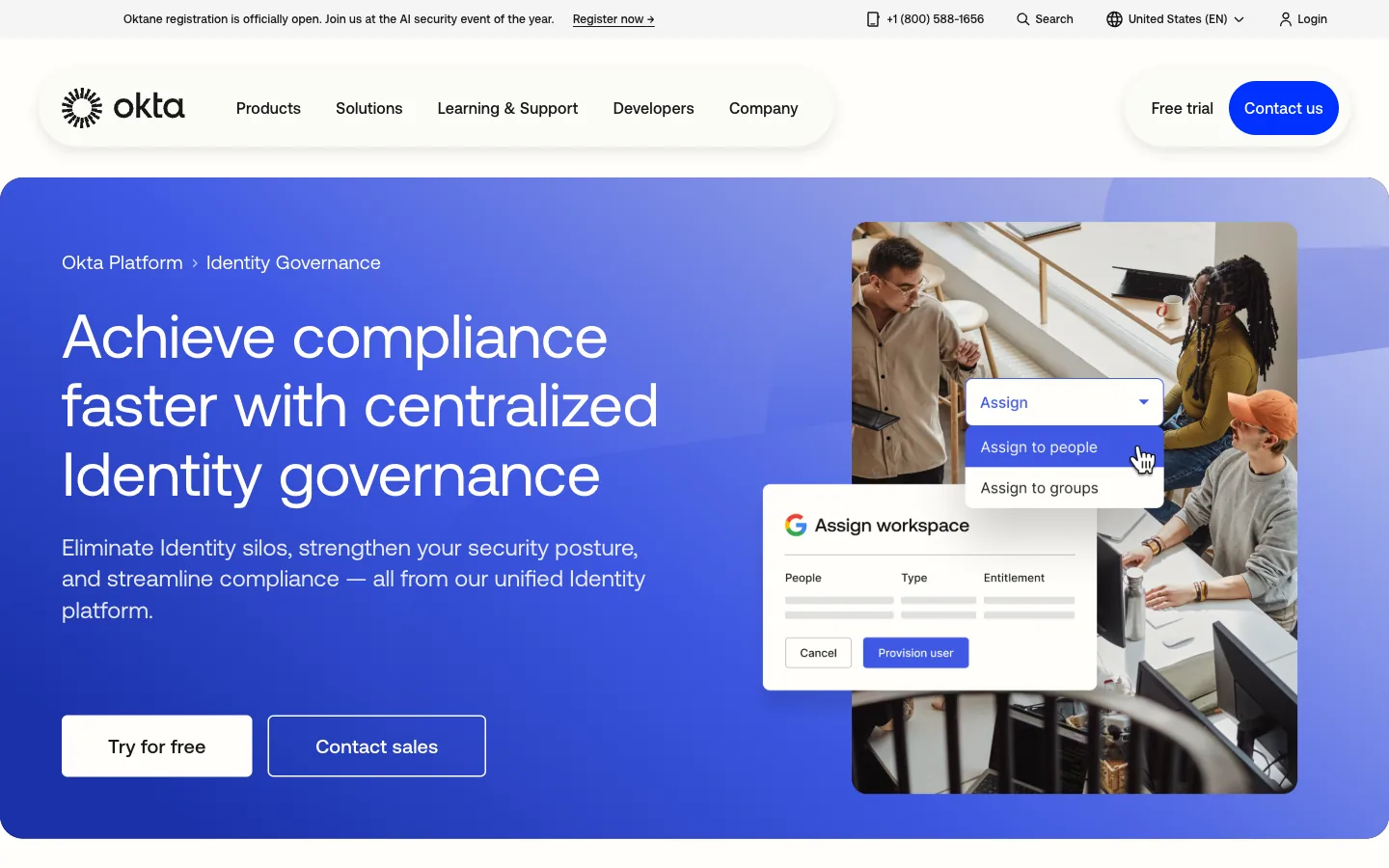
Organizations already using Okta for identity management have a natural advantage when implementing Datadog access reviews. Okta Lifecycle Management extends your existing identity infrastructure with governance capabilities, including automated access certification campaigns for Datadog and thousands of other applications.
The platform’s strength lies in its unified approach to identity. SSO, MFA, lifecycle management, and governance all operate within a single system, which means when you provision Datadog access through Okta, that same access relationship flows directly into your certification campaigns without additional integration work. Okta lists more than 8,000 pre-built integrations in the Okta Integration Network, and Datadog is one of them.
Recent 2025 enhancements introduced Security Access Reviews with event-triggered certifications specifically designed for security-focused scenarios. If a user’s risk profile changes or an unusual access pattern emerges in Datadog, Okta can automatically trigger a targeted review. AI-generated access summaries help reviewers quickly understand the context behind each certification decision without manually investigating user histories.
Pros:
- Unified Platform - Datadog SSO and access reviews share the same identity data
- Large Integration Library - 8,000+ integrations, including Datadog
- Preconfigured Campaigns - Accelerate deployment with ready-made certification templates
Cons:
- Group-Based Provisioning - Limits granular Datadog permission reviews
- Bundle Purchase Required - Identity Governance requires complete OIG bundle
- No Local Account Discovery - Cannot detect Datadog accounts that bypass SSO
- Higher Per-User Costs - More expensive than specialized governance platforms
Ratings: G2 4.5/5 (1,257 reviews), Capterra 4.7/5 (914 reviews)
Datadog's permission model varies across features. Its RBAC docs say "By default, Datadog offers three roles, and you can create custom roles so you can define a better mapping between your users and their permissions" (Datadog docs). Keys add another layer. "Application keys are associated with the user account that created them and by default have the permissions of the user who created them," per the API and application keys guide. Governance platforms that only sync from your IdP miss these nuances. Look for tools that either connect directly to Datadog's API or provide granular entitlement visibility beyond basic application access.
Sailpoint IdentityIQ
Large infrastructure teams require enterprise-grade identity governance for managing Datadog access. SailPoint IdentityIQ delivers deep entitlement modeling that goes beyond simple role assignments to granular permission-level visibility. When engineers need access to specific Datadog dashboards, monitors, or API keys, SailPoint can certify each entitlement individually rather than blanket-approving entire application access.
SailPoint’s AI-driven recommendations prove valuable during Datadog access certifications. The platform analyzes peer groups across your DevOps and SRE teams to identify access outliers, and if a marketing analyst somehow has admin privileges in Datadog, the system flags this deviation automatically. Reviewers see thumbs-up or thumbs-down suggestions based on what similar users typically have, which prevents the rubber-stamping that plagues manual reviews.
The tradeoff is significant investment in both cost and time. Implementation cycles run six to twelve months, annual costs average around $240,000, and organizations also need dedicated IAM teams with technical expertise to configure and maintain the platform. For large enterprises with complex Datadog deployments spanning multiple teams and environments, that depth can justify the cost.
Pros:
- AI-Powered Peer Analysis - Flags Datadog access anomalies and reduces reviewer fatigue through intelligent recommendations
- Granular Entitlement Certification - Covers individual Datadog permissions rather than just application-level access
- Massive Integration Ecosystem - Connects to over 1,100 enterprise applications alongside Datadog for unified governance
- Comprehensive SoD Controls - Prevents toxic permission combinations within monitoring infrastructure
Cons:
- Premium Pricing - Entry costs starting at $75,000 annually makes this prohibitive for smaller organizations
- Long Deployment Timelines - Six to twelve months delay time-to-value for Datadog governance initiatives
- Requires Technical Expertise - Often needs costly professional services to implement properly
Ratings: G2 4.5/5 (161 reviews), Capterra 4.2/5 (21 reviews)
MiniOrange
Budget-conscious teams looking to add basic access governance for Datadog should consider MiniOrange. The platform offers SSO integration and SCIM-based provisioning at a fraction of enterprise IGA pricing, providing an affordable entry point for organizations outgrowing manual Datadog user management at just two to three dollars per user monthly.
MiniOrange handles the fundamentals of Datadog access governance reasonably well. Automated provisioning creates Datadog accounts when employees join and removes access upon departure, and the platform supports adaptive authentication that evaluates login context before granting Datadog access. The access review capabilities themselves remain basic compared to dedicated IGA solutions.
The primary limitation is that robust access certification workflows require the Jira-based Access Governance Automation app. Organizations not using Jira for service management will find the governance features limited, and MiniOrange also lacks the AI-driven analytics and peer comparison capabilities that make access reviews intelligent rather than checkbox exercises. For straightforward Datadog SSO with basic lifecycle management, it works well enough.
Pros:
- Affordable Pricing - Two to three dollars per user monthly makes Datadog access governance accessible to smaller teams
- SCIM Provisioning - Automates Datadog account creation and removal throughout the employee lifecycle
Cons:
- Jira Dependency - Access certification workflows depend on Jira Service Management rather than being native
- No AI-Driven Insights - Lacks intelligent recommendations and peer group analysis for access reviews
- Variable Support Quality - User reports range from excellent to unresponsive based on experience
- Limited Customization - May not accommodate complex Datadog permission structures
Ratings: G2 4.5/5 (264+ reviews), Capterra 4.5/5 (36 reviews)
Avatier
Infrastructure teams juggling Datadog access alongside dozens of other monitoring and DevOps tools may like Avatier’s all-in-one approach. The platform combines identity governance, SSO, and password management in a single solution, eliminating the integration complexity that comes from stitching together separate tools for Datadog access management.
Avatier’s Delta Access Certification feature proves particularly useful for Datadog environments with frequent team changes. Reviewers only certify changes since the last review instead of reviewing every user’s Datadog access during each audit cycle, which dramatically reduces review fatigue when your engineering organization scales quickly. The platform also supports certifications from Teams, Slack, or mobile devices, letting busy managers approve Datadog access without context switching.
Deployment speed sets Avatier apart from heavyweight IGA platforms. Avatier’s homepage promises teams can “Save time and deploy in 14 days or less” (Avatier). Its containerized architecture runs on any cloud or on-premise environment, which aligns well with the infrastructure flexibility that Datadog users typically value. The interface can overwhelm new users, and the smaller market presence means fewer community resources when troubleshooting.
Pros:
- Delta Certification - Reviews only changed Datadog access since the last audit, significantly reducing reviewer workload
- Native Collaboration Integration - Teams and Slack integration lets infrastructure managers approve access without context switching
- Fast Deployment - Avatier says it deploys in 14 days or less, faster than most enterprise IGA rollouts
Cons:
- Interface Complexity - Can overwhelm users initially and requires proper training for effective adoption
- Small Market Presence - Limited community resources compared to Okta or SailPoint ecosystems
- No Analyst Recognition - Absence from Gartner and Forrester reports may complicate procurement approval
Ratings: G2 4.6/5 (31 reviews), TrustRadius 9.1/10 (92% satisfaction)
How to Choose the Right Datadog Access Review Platform
Selecting a governance platform for Datadog depends on your existing identity infrastructure and compliance requirements. Organizations already invested in Okta or Azure AD may find extending their current platform more practical than introducing a new vendor, while teams managing hundreds of SaaS applications beyond Datadog benefit from platforms like Torii that provide unified visibility across the entire software portfolio.
The complexity of your Datadog environment matters significantly when evaluating options. Smaller teams with straightforward monitoring setups can likely manage with lighter solutions like MiniOrange or native Okta capabilities, while enterprises running sophisticated Datadog deployments with multiple org accounts, custom role hierarchies, and strict separation of duties controls may need SailPoint’s depth.
Budget constraints should factor into your decision as well. Per-user pricing models work well for companies with stable headcount but become expensive at scale, and implementation costs vary dramatically. Spending six figures on professional services fees defeats the purpose if you simply need quarterly access certifications for compliance.
Platforms like Avatier and Lumos deploy in weeks, while SailPoint implementations stretch across quarters. If you need to satisfy audit requirements this quarter or want access reviews running before your next compliance cycle, deployment speed becomes a deciding factor alongside features and cost.
Teams seeking to minimize manual review burden should look at AI-driven platforms like Lumos or SailPoint. These tools use peer group analysis and usage patterns to automate routine decisions, letting reviewers focus on genuine access anomalies instead of spending engineering time on checkbox-style certifications.
For organizations where Datadog is one piece of a broader SaaS governance program, Torii is worth a look. It discovers shadow IT and tracks spend alongside access reviews, which matters because infrastructure monitoring costs scale quickly. Seeing Datadog license assignments next to review decisions makes it easier to reclaim seats during the same cycle.
Frequently Asked Questions
Discover all Datadog accounts and users, map identities to HR and SSO, enumerate entitlements (dashboards, monitors, API keys), run access certification campaigns, remediate orphaned or excessive privileges, and schedule recurring or event-triggered reviews to maintain compliance.
Rapid expansion creates orphaned accounts, lingering contractor admin access, retained API keys, and overprivileged junior engineers. Without regular reviews, auditors will find evidence gaps for SOC 2/ISO 27001 and risk exposure of sensitive logs and production metrics.
Look for direct Datadog API integration, granular entitlement visibility (dashboards, logs, API keys), SSO/HR mapping, delta and event-triggered reviews, AI-driven anomaly detection, collaboration approvals in Slack/Teams, and fast deployment aligned with your budget.
AI analyzes peer groups and usage patterns to auto-approve routine access, flag anomalies, prioritize high-risk accounts, and generate contextual summaries. This reduces manual checks, speeds campaigns, and directs human review to true security exceptions rather than routine permissions.
Extend your IdP if you need unified identity, SSO-driven provisioning, and simple certification for many apps. Choose specialized tools when you require deep Datadog entitlement visibility, API-level checks, shadow IT discovery, or SaaS cost and license management.
Platforms like Avatier, Lumos, and Torii typically deploy in weeks, offering delta reviews, Slack/Teams approvals, and rapid discovery. Enterprise IGA (SailPoint) takes months; Okta and SailPoint often require larger bundles and longer implementations.