

8 Tools for Rippling Access Reviews in 2026
 Chris Shuptrine
•
Jan 21, 2026
•
16 min read
Chris Shuptrine
•
Jan 21, 2026
•
16 min read

Compare 8 identity governance platforms for Rippling access reviews. Find the right solution for compliance, security, and automated certifications in 2026.
Ask about this article
Opens Claude in a new tab to answer, using this article as the source.
Rippling consolidates HR, IT, payroll, and benefits into a unified platform that touches nearly every employee system. When someone has access to Rippling, they can potentially see compensation data, social security numbers, bank account details, and even control who gets provisioned or deprovisioned across your entire tech stack.
Organizations running their first Rippling access review typically find 15-25% of active permissions belong to employees who changed roles, left the company, or never needed that level of access in the first place. Former HR coordinators, departed IT admins, and contractors who finished projects often retain dangerous permissions.
Manual access reviews through spreadsheets miss critical gaps in Rippling permissions, and teams struggle to track who can modify compensation, adjust benefits, or trigger bulk offboarding workflows. Identity governance platforms automate these certifications, surface dormant admin accounts, and create audit trails that satisfy SOC 2 and GDPR auditors.
Eight identity governance tools handle Rippling access certifications through different approaches to automation, integration depth, and compliance reporting.
★ = low · ★★ = medium · ★★★ = high
| Tool | Ease | Cost | AI Capabilities | Reviews |
|---|---|---|---|---|
| Torii | ★★★ | ★★ | ★★★ | ★★★ |
| ConductorOne | ★★★ | ★★ | ★★ | ★ |
| Lumos | ★★★ | ★ | ★★★ | ★ |
| Zluri | ★★★ | ★★ | ★ | ★★ |
| One Identity | ★ | ★★ | ★★ | ★★ |
| Saviynt | ★★ | ★ | ★★★ | ★★ |
| MiniOrange | ★★ | ★★★ | ★ | ★★ |
| Avatier | ★★ | ★★ | ★★ | ★★ |
Table of Contents
Torii
Torii maintains a direct integration with Rippling that pulls employee names, email addresses, job titles, departments, user status, license assignments, and license types into one governance dashboard. Torii correlates Rippling identity data with access across your entire SaaS portfolio, finding permission gaps that would stay hidden if you reviewed each system separately. When someone’s department changes in Rippling, the platform flags their access across connected applications for certification review instead of waiting until the next quarterly audit.
Shadow IT discovery in Torii complements Rippling governance by catching applications that employees use outside official provisioning workflows. Rippling controls access to sanctioned applications, but Torii extends visibility to unauthorized tools that employees adopt without IT approval. This combined approach ensures offboarding workflows actually remove access from every application, not just those provisioned through official channels.
Access certification campaigns in Torii use AI to flag suspicious Rippling permission patterns and route review decisions to appropriate managers. Reviewers can certify or revoke access without context switching, process multiple users in bulk, and trigger automated remediation that adjusts permissions based on certification outcomes. Compliance teams preparing for SOC 2 or GDPR audits get immutable audit trails documenting every access decision with timestamps and reviewer identities.
Pros:
- Direct Rippling integration surfaces employee names, titles, departments, status, and license data for contextualized reviews
- AI-powered anomaly detection flags unusual permission patterns across Rippling and connected SaaS applications
- Shadow IT discovery catches unauthorized applications that Rippling provisioning workflows miss
- Combined SaaS management and identity governance eliminates need for separate Rippling governance tools
Cons:
- Enterprise pricing reflects comprehensive platform capabilities rather than point solution economics
- Cloud-only architecture requires organizations comfortable with SaaS delivery for governance tooling
G2 Rating: 4.5 out of 5 stars (302 reviews) Capterra Rating: 4.9 out of 5 stars (26 reviews)
ConductorOne
HR-driven identity workflows require tight integration with systems of record, and ConductorOne supports Rippling alongside other HRIS platforms through its lifecycle management capabilities. The platform triggers access reviews and deprovisioning workflows based on employee status changes in Rippling, so role transitions and departures immediately initiate appropriate governance actions. Organizations using Rippling as their workforce management backbone can extend these triggers across 300+ connected applications through ConductorOne’s connector library.
AI agents in the platform handle routine Rippling access certifications autonomously, approving obvious permissions and flagging edge cases for human review. This automation reduces the certification burden that often leads to rubber-stamping when reviewers face hundreds of individual access decisions. Customers report completing access review campaigns in 24 hours that previously took two weeks of manual effort, with 85% reduction in overall review time after implementation.
ConductorOne’s just-in-time access capabilities convert standing Rippling privileges to time-bound temporary access that expires automatically. Instead of granting permanent admin rights that accumulate over time, organizations can provide elevated Rippling permissions only when needed and for specific durations. This approach shrinks the attack surface that grows when employees retain sensitive Rippling access long after their legitimate need expires.
Pros:
- HRIS integration triggers automatic reviews when Rippling employee status changes occur
- AI agents automate routine certification decisions while surfacing exceptions for human review
- Just-in-time access converts standing Rippling privileges to time-bound temporary permissions
Cons:
- Can only remove access during reviews without ability to modify permission levels directly
- Technical expertise in CLI and Terraform required for advanced workflow configurations
- Smaller review base compared to established enterprise IGA competitors
G2 Rating: 4.8 out of 5 stars (13 reviews)
Lumos
Certification fatigue undermines governance programs when reviewers rubber-stamp permissions just to clear their queues, and Lumos addresses this through its Albus AI agent. The agent handles routine certification decisions autonomously by analyzing peer group patterns and usage anomalies. For Rippling access reviews, the AI processes obvious approvals and denials based on whether permissions align with what colleagues in similar departments and roles typically hold.
The platform integrates with Slack and Teams to deliver certification workflows where reviewers approve or deny Rippling access without leaving their collaboration tools. This reduces friction that delays campaigns when reviewers must log into unfamiliar governance dashboards. Lumos reports completing reviews seven times faster through this combination of AI automation and conversational interfaces, saving 50+ hours per quarter on access certification activities.
Delta reviews focus only on Rippling access changes since the last certification cycle, dramatically reducing review fatigue for organizations with large employee populations. Reviewers examine only new access grants, modified assignments, and recently added user accounts instead of re-certifying hundreds of stable permissions. This targeted approach maintains compliance rigor while respecting reviewer time constraints during busy periods.
Pros:
- Albus AI agent automates routine Rippling certification decisions based on peer group analysis
- Slack and Teams integration enables approvals without switching to separate governance dashboards
- Delta reviews reduce workload by focusing only on Rippling access changes since last review cycle
Cons:
- Learning curve takes longer than expected for complex governance workflow configurations
- No live chat support makes resolving implementation questions slower than anticipated
- Premium pricing requires sales engagement to evaluate total cost of ownership
G2 Rating: 4.7 out of 5 stars (54 reviews) Gartner Peer Insights: 4.7 out of 5 stars (47 reviews)
Zluri
Zluri maintains a documented Rippling integration that pulls user data and status information through its HRMS discovery method. The platform receives real-time employee status updates from Rippling via webhooks, triggering automated access review workflows when employees join, change roles, or depart. This HR-driven approach ensures Rippling identity changes cascade across connected applications without manual intervention or delayed quarterly reviews.
Zluri’s patented nine-method discovery engine extends visibility beyond Rippling-managed identities to surface shadow IT and orphaned accounts across your SaaS portfolio. Zluri provides reconciliation capabilities that highlight discrepancies between Rippling provisioning and actual application permissions for organizations concerned about access drift. Users report reducing full-day audit processes to 30 minutes through automated access review workflows.
Closed-loop remediation in Zluri turns certification decisions into immediate action through API-based integrations. When reviewers deny Rippling-related access during campaigns, the platform automatically deprovisions affected users from connected applications without requiring manual follow-up in each system. Access review decisions actually result in permission changes rather than lingering in approval queues waiting for someone to act on them.
Pros:
- Direct Rippling integration receives real-time status updates that trigger automated review workflows
- Nine-method discovery engine surfaces shadow IT beyond Rippling-provisioned applications
- Closed-loop remediation automatically deprovisions users when access is denied during reviews
Cons:
- Reporting customization lacks flexibility for tailoring outputs to specific stakeholder needs
- Discovery engine occasionally misidentifies applications, creating unnecessary administrative alerts
- Workflow editor navigation becomes confusing for complex multi-step approval scenarios
G2 Rating: 4.6 out of 5 stars (175 reviews) Capterra Rating: 4.9 out of 5 stars (27 reviews)
Organizations implementing automated Rippling access reviews report 60-90% reduction in audit preparation time. Manual spreadsheet-based reviews that previously consumed entire weeks now complete in hours through workflow automation and AI-assisted certification decisions.
One Identity
Large enterprises with hybrid IT environments often need governance depth that cloud-native tools cannot deliver, and One Identity brings comprehensive identity governance capabilities through its Identity Manager platform. The platform supports 6,000+ pre-built connectors that enable integration with diverse application portfolios including HR systems. While a specific Rippling connector may require custom development through their Starling Connect framework, SCIM 2.0 support provides a standardized path for HR system integration.
The attestation policy framework enables sophisticated Rippling access certification scenarios with configurable rules governing which objects get attested, when reviews occur, who performs certifications, and what happens when access is denied. Organizations can link compliance frameworks directly to attestation policies, making sure Rippling access reviews address specific regulatory requirements like SOC 2, HIPAA, or GDPR controls that auditors examine during assessments.
One Identity combines IGA and privileged access management in a single platform, eliminating the need for separate solutions when governing both standard Rippling user access and elevated administrative permissions. Customers report threefold reduction in manual IAM activities through automation capabilities that streamline repetitive certification tasks.
Pros:
- Unified IGA and PAM platform handles both standard Rippling access and privileged administrative permissions
- 6,000+ pre-built connectors enable broad application coverage alongside HRIS integrations
- Cost-effective compared to enterprise competitors like SailPoint for equivalent governance capabilities
Cons:
- Attestation user experience feels dated compared to modern cloud-native governance tools
- Complex implementation needs specialized partners and significant configuration expertise
- Azure AD and Entra ID connector gaps create challenges for Microsoft-centric cloud environments
G2 Rating: 3.5 out of 5 stars Gartner Peer Insights: 4.4 out of 5 stars (155 reviews)
Saviynt
Saviynt’s continuous compliance approach moves beyond periodic Rippling access campaigns to always-on evaluation and remediation. The platform automatically detects risks and triggers micro-certifications without waiting for scheduled quarterly reviews, reducing the window where inappropriate access persists after organizational changes. Continuous monitoring addresses the gap between Rippling status updates and access adjustments that periodic review cycles tend to create.
Trust scoring in Saviynt reduces approver workload by up to 75% during Rippling access certifications by automating low-sensitivity approval decisions. AI predicts correct access assignments with up to 94% accuracy using peer group analysis and behavioral patterns, flagging outliers for human attention while processing obvious permissions autonomously. Saviynt customers report 60% improvement in review completion times alongside 35% increases in revocation rates when AI recommendations guide certification decisions.
Saviynt has earned Gartner Peer Insights Customers’ Choice recognition for IGA four consecutive years, with the highest percentage of 5-star reviews in the category. The platform converges IGA and PAM on a single code base, enabling unified governance across standard Rippling user access and privileged administrative permissions without bolt-on products that fragment the governance experience.
Pros:
- Continuous compliance detects Rippling access risks without waiting for scheduled review campaigns
- AI trust scoring reduces approver workload by 75% while maintaining certification accuracy
- Four consecutive years of Gartner Customers’ Choice recognition validates platform maturity
Cons:
- Mixed support experiences with tickets remaining open too long before resolution
- Steep learning curve despite user-friendly frontend masking complex backend configuration
- Starting price above $10,000 creates barriers for smaller organizations
G2 Rating: 3.5 out of 5 stars Capterra Rating: 4.5 out of 5 stars (2 reviews) Gartner Peer Insights: 4.8 out of 5 stars (185 reviews)
MiniOrange
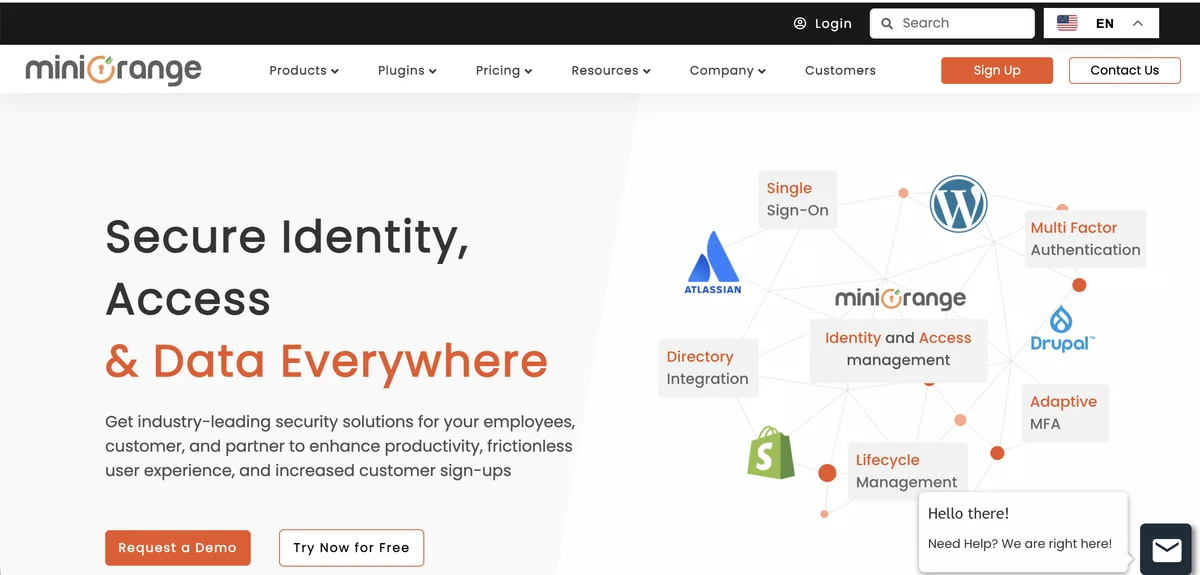
MiniOrange offers pre-built SSO integration with Rippling that enables cross-protocol authentication where Rippling serves as an identity provider for connected applications. Organizations can establish MiniOrange as an identity broker, federating Rippling identities across applications that require SAML, OAuth, or other authentication protocols. Configuration involves importing Rippling metadata into MiniOrange to establish the trust relationship between systems.
At $2-3 per user per month, MiniOrange brings governance capabilities to organizations that cannot justify enterprise IGA pricing for Rippling access management. The platform serves 25,000+ premium clients globally with rapid deployment measured in hours rather than the months typical of complex IGA implementations. Organizations seeking basic access governance without extensive automation requirements find this pricing accessible compared to enterprise alternatives that exclude smaller teams from formal certification programs.
SCIM-based provisioning through MiniOrange automates Rippling account lifecycle management across connected applications. When employees join or depart the organization in Rippling, their access across MiniOrange-connected systems adjusts automatically through HR-driven workflows. Teams already using Atlassian tools can leverage the Access Governance Automation app for Jira, enabling workflow-based access requests and certifications through familiar service management interfaces.
Pros:
- Pre-built Rippling SSO integration federates identities across applications needing SAML or OAuth
- Affordable $2-3 per user pricing makes governance accessible to budget-conscious organizations
- Rapid deployment in hours rather than months typical of enterprise IGA implementations
Cons:
- Limited native access certification compared to dedicated IGA platforms with full campaign automation
- Support quality varies significantly with some users reporting excellent service while others experience delays
- Access governance workflow features depend on Jira which may not align with all toolsets
G2 Rating: 4.5 out of 5 stars (264 reviews) Capterra Rating: 4.5 out of 5 stars (36 reviews)
Avatier
Avatier’s container-based Identity Anywhere platform provides deployment flexibility that cloud-only tools cannot match. Organizations can run Avatier on any cloud provider, on-premises, or in hybrid configurations without vendor lock-in, addressing data residency concerns that sometimes prevent adoption of SaaS governance solutions. Companies managing Rippling alongside legacy systems requiring on-premises deployment benefit from this architectural flexibility that enables unified governance across diverse environments.
Delta Access Certification in Avatier focuses subsequent audits on changed objects since the last review, reducing reviewer fatigue compared to full periodic certifications. When Rippling employee data changes trigger access adjustments, reviewers examine only the affected permissions rather than re-certifying entire user populations. This targeted approach maintains compliance rigor while respecting time constraints during busy operational periods when reviewers have competing priorities.
The platform delivers access certifications through multiple channels including iOS, Android, Microsoft Teams, Outlook, Slack, ServiceNow, and SMS. Reviewers can approve or deny Rippling-related access from any device without requiring desktop access to governance dashboards. Avatier reports enabling deployments in 14 days or less compared to the months typical of enterprise IGA implementations, and fixed-bid pricing eliminates professional services cost surprises.
Pros:
- Container-based architecture enables deployment on any cloud, on-premises, or in hybrid setups
- Delta certification focuses reviews on changed access rather than re-certifying entire populations
- Multi-channel access enables certifications from mobile devices, Teams, Slack, and ServiceNow
Cons:
- Interface complexity can overwhelm new users without adequate training first
- Limited out-of-box reporting customization compared to some governance competitors
- Small market presence creates fewer community resources and third-party integrations
G2 Rating: 4.6 out of 5 stars (31 reviews) TrustRadius Rating: 9.1 out of 10
Choosing the Right Rippling Access Review Platform
Selecting governance tooling for Rippling depends on your broader identity management strategy and compliance requirements. Organizations already using an identity provider like Okta may find platforms with strong IdP integration offer the smoothest path to Rippling governance. Companies with significant SaaS portfolios beyond Rippling benefit from unified platforms that govern access across the entire technology stack rather than point solutions focused on individual applications.
Consider Rippling integration depth, HRIS workflow triggers, AI certification automation, remediation capabilities, and total cost including implementation when comparing platforms for your access review requirements.
For organizations prioritizing AI-enabled governance with comprehensive SaaS visibility, Torii offers an approach that treats Rippling as one component of broader technology portfolio oversight. The platform combines direct Rippling integration with shadow IT discovery to surface access issues that point solutions might miss. Companies seeking automated license remediation alongside access reviews find this combined approach eliminates blind spots while also reducing SaaS spend through inactive license recovery.
Budget considerations matter significantly in this evaluation. Enterprise IGA platforms from vendors like Saviynt and One Identity can cost tens or hundreds of thousands annually, while cloud-native alternatives offer more accessible pricing for mid-market organizations. MiniOrange provides entry-level governance at $2-3 per user monthly with Rippling SSO integration, though with fewer automation capabilities than premium platforms. Total cost of ownership including implementation, training, and ongoing administration should factor into your comparison rather than licensing fees alone.
Frequently Asked Questions
Rippling centralizes HR, payroll, benefits and IT, so accounts can expose compensation, SSNs, bank details and provisioning controls. Excess or orphaned privileges allow data exposure and mass offboarding or manipulation risks, especially if admin access remains after role changes or departures.
Automated access reviews surface dormant admin accounts, correlate Rippling identities with SaaS permissions, and create immutable audit trails. They reduce manual spreadsheet errors, shorten audit preparation by up to 90%, enable closed-loop remediation and enforce timely deprovisioning after status changes.
Shadow IT is employee adoption of unauthorized apps and services that Rippling provisioning doesn't track. These hidden applications create orphaned accounts and access gaps; discovery tools like Torii and Zluri reveal unsanctioned apps so offboarding and certification campaigns remove access everywhere.
Delta reviews limit certification scope to Rippling access changes since the last audit, focusing reviewers on new grants, modified assignments and recently added users. This selective approach reduces review volume, cuts fatigue and accelerates campaigns without sacrificing compliance coverage.
Just-in-time access replaces permanent Rippling privileges with time-bound elevated permissions that expire automatically. JIT reduces standing admin accumulation, minimizes attack surface, and ensures elevated rights exist only for approved tasks and defined durations, preventing long-term sensitive access creep.
Compare platforms by Rippling integration depth, HRIS triggers, AI certification automation, closed-loop remediation, deployment model and total cost of ownership. Match compliance needs, existing identity provider and SaaS portfolio size to find the right balance between automation, visibility and budget.