

7 Tools for Claude Code Contract Management in 2026
 Chris Shuptrine
•
Jun 3, 2026
•
13 min read
Chris Shuptrine
•
Jun 3, 2026
•
13 min read
Compare 7 tools for Claude Code contract management in 2026, covering token billing, seat sprawl, renewal tracking, and Anthropic subscription oversight.
Ask about this article
Opens Claude in a new tab to answer, using this article as the source.
Claude Code became the developer tool of 2026 the way Slack became the team tool of 2015. This time the bill scales with Claude Code usage and renewals hit quarterly. Anthropic did announce a mid-2026 change that would have metered Agent SDK usage against a separate monthly credit that “resets at the start of each billing cycle” and does not roll over, then shelved it: “We’re pausing the changes to Claude Agent SDK usage described below. For now, nothing has changed” (Anthropic Help Center). Procurement teams still have to model the announced version, because a paused change is not a cancelled one. Anthropic’s own cost guidance puts current enterprise usage at $150 to $250 per developer per month, with heavy agentic users running above it.
Native admin gaps make the cleanup harder than the procurement work usually is. Anthropic offers SSO on Team plans and adds SCIM and audit logs at Enterprise, and per-user cost data does exist, but it sits behind a second API: the Claude Code Analytics API reports “daily Claude Code metrics per user: sessions, lines of code, commits, pull requests, tool acceptance, and estimated cost by model,” while the general Usage and Cost Admin API groups only by API key and workspace. Department chargebacks, license utilization, and forecasting still live outside the console entirely. Procurement teams stitch that picture together with third-party AI spend tooling or guesswork.
This article compares seven platforms built to handle Claude Code contract management end to end, from shadow Pro card signups through enterprise true-up reconciliation. For the broader category that pairs contract leverage with gateway and observability spend control, see our breakdown of Claude Code spend management tools, or our guide to tracking and governing Claude Code extensions.
Team seats run $20 a month for Standard and $100 for Premium when billed annually, and Enterprise is a seat price plus usage at API rates. Usage inside a seat allowance "isn't metered in dollars" (Anthropic docs), which is exactly why the invoice and the actual consumption curve stop matching. The announced Agent SDK credit split is currently paused, so contracts signed now should price both models.
★ = low · ★★ = medium · ★★★ = high
| Tool | AI Vendor Discovery | Token / Usage Tracking | Renewal & Contract AI | Procurement Workflows |
|---|---|---|---|---|
| Torii | ★★★ | ★★★ | ★★★ | ★★ |
| Zylo | ★★ | ★★★ | ★★ | ★★ |
| Tropic | ★ | ★★★ | ★★★ | ★ |
| Vendr | ★ | ★★ | ★★ | ★★★ |
| Spendflo | ★★ | ★★ | ★★ | ★★ |
| Sastrify | ★★ | ★ | ★★ | ★★★ |
| Cledara | ★★★ | ★★ | ★ | ★★ |
Table of Contents
Torii
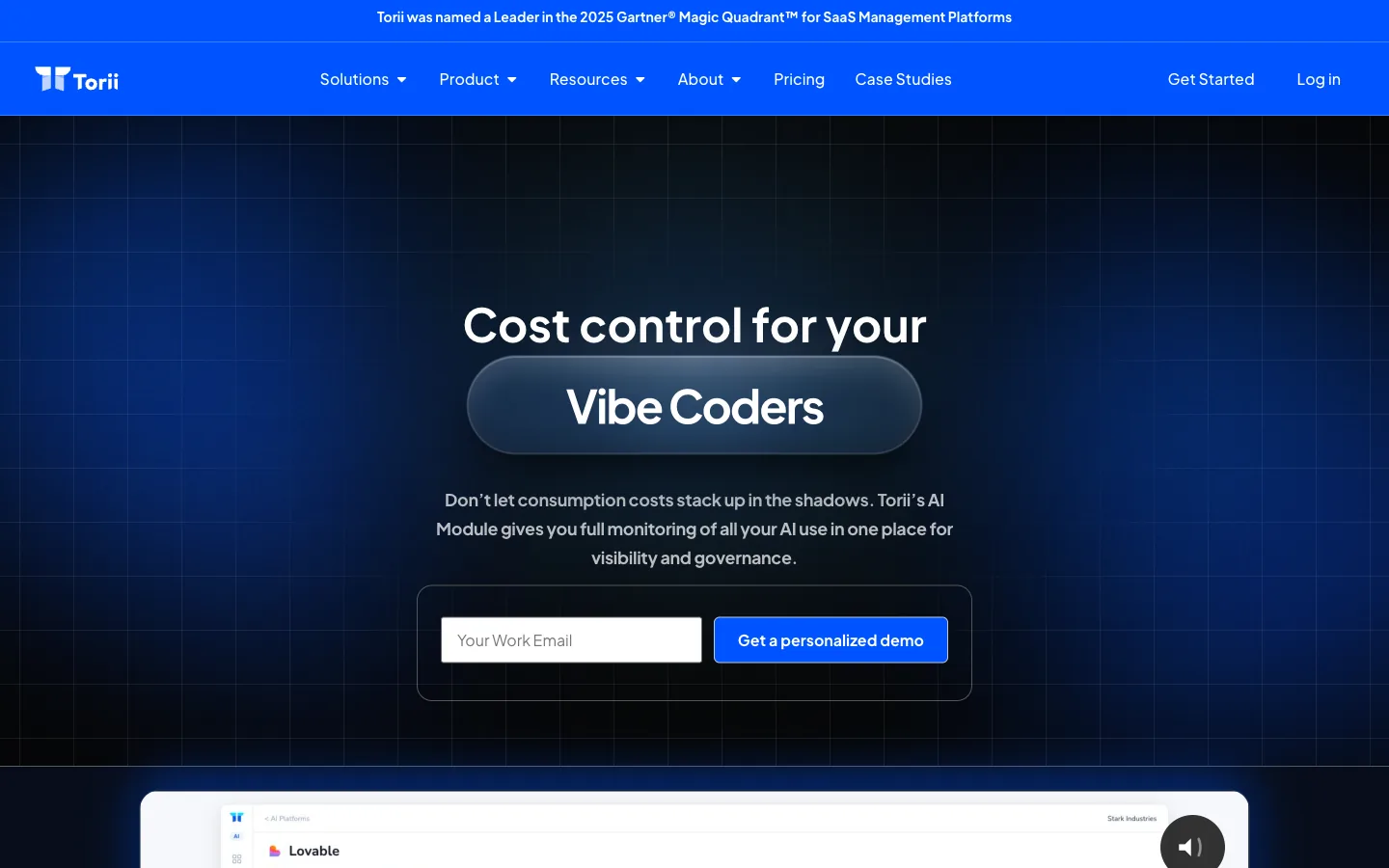
Torii treats Claude Code as the canary for AI sprawl, and the AI Dashboard surfaces every signup before the auto-renew hits. Most Anthropic spend starts on a personal card, so early shadow-AI detection matters. Discovery pulls from seven separate channels, including expense feeds, SSO logs, OAuth grants, and a browser signal, so a Pro account a developer expensed last quarter shows up next to the sanctioned Team Premium tier. The same view meters token burn by employee, model, and time window, and sits it next to every other AI tool the employee touches, which no single vendor’s admin API can do.
The platform also ingests Anthropic contracts through AI contract parsing, storing renewal dates, seat counts, true-up clauses, and cancellation terms in a structured record. Procurement teams query that data through Eko, the conversational co-pilot, with questions like which Claude Code seats sat idle the last 30 days. Torii’s hosted MCP server pushes context further by letting other AI agents read SaaS data directly. The Torii 2026 Benchmark backs the approach, finding that AI is expanding shadow IT rather than shrinking it.
Pros:
- Token-level usage metering for Claude Code by employee and model in one dashboard
- Seven-source AI discovery catches Pro and Max signups outside SSO
- Contract intake parses Anthropic renewal terms automatically
- Eko co-pilot answers procurement questions conversationally
Cons:
- Pricing reflects enterprise-grade coverage, not entry-level point pricing
- Built for SaaS and shadow-IT environments; no on-premise deployment
| G2: 4.5/5 (302 reviews) | Capterra: 4.9/5 (26 reviews) |
Zylo
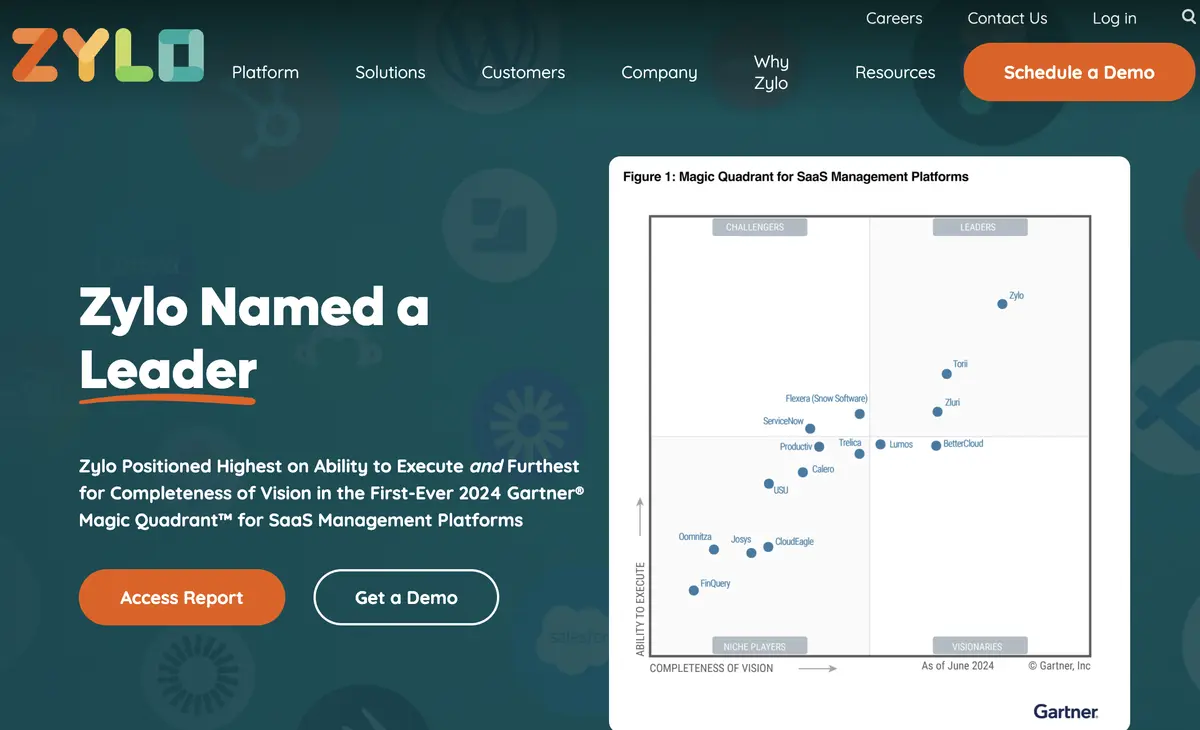
Zylo built an integration on top of the Anthropic Enterprise Analytics API, which Anthropic documents as “available to Claude Enterprise organizations” with data covering “dates on or after January 1, 2026” (Analytics APIs). That feed unlocks per-user Claude attribution, exportable renewal data, and a unified spend view spanning Claude Enterprise seats and standalone Anthropic API consumption. Engineering leaders can see who burned tokens last week instead of dividing the bill by headcount.
The Contract Assist Agent layers on top of that data, pulling structured fields from PDF Anthropic agreements with a confidence score next to each extraction. Zylo’s AI Consumption Cost Management module then forecasts the spend curve against the metered tier, which helps finance teams model next year’s true-up. Benchmark depth comes from over $75B in tracked spend across the Zylo customer base, plus 40M+ active licenses. The Zylo blog on the Anthropic integration walks through the per-user view shipping with the preview.
Pros:
- Direct Anthropic Enterprise Analytics API integration for per-user Claude attribution
- Contract Assist Agent extracts Anthropic contract metadata with confidence scoring
- AI Consumption Cost Management forecasts token spend against tier commitments
Cons:
- The underlying Anthropic Analytics API is Enterprise-only, so Team-plan buyers get nothing from it
- Pricing skews toward larger enterprise SaaS portfolios
| G2: 4.7/5 (146 reviews) | Capterra: not listed |
Tropic
Tropic’s Claude Connector, announced April 22, 2026, loads an Anthropic agreement directly into Claude and returns Tropic-pool benchmarking with negotiation guidance in one chat. Tropic’s announcement describes it as follows: “For Tropic customers, it requires no configuration and brings pricing benchmarks, negotiation playbooks, compliance checks, and contract insights into Claude.” The same release reports Tropic passing “$20 billion in spend under management” with “more than $15 million in customer savings” in the quarter. Procurement teams running a renewal review can ask for clauses to push back on, redline suggestions, and comparable deal data without leaving the conversation.
Spend Intelligence backs that workflow with infrastructure specifically tuned for consumption pricing rather than flat seat counts. The product tracks negotiated token caps, tiered pricing thresholds, variance against contract, and anomaly alerts when developer usage spikes outside the modeled curve. Tropic names Anthropic explicitly inside its intelligence hub, and the 2025 SaaS and AI buying trends report includes negotiation guidance to lock volume tiers before consumption grows.
Pros:
- Claude Connector loads contracts into Claude for instant Tropic-pool benchmarking
- Spend Intelligence handles token caps and variance alerts for consumption deals
- Anthropic listed by name in Tropic’s intelligence hub with negotiation playbooks
- Combines managed buying support with self-serve software
Cons:
- Heavier procurement focus than discovery, so shadow Pro signups need a separate signal
- Pricing reflects managed-services tier rather than entry-level SMP
| G2: 4.4/5 (310 reviews) | Capterra: not listed |
Vendr
Vendr keeps the pricing-transparency angle pointed straight at Anthropic, with a public marketplace page that publishes crowd-sourced benchmarks. As of its February 2026 update, the page reports a median buyer paying $138,462 per year based on data from 101 purchases, inside a $48,000 to $500,000 range. It also documents the discount structure: “Buyers with monthly spend commitments above $25,000 often achieved 15-30% off list pricing,” and “Multi-year contracts (24-36 months) commonly yielded additional 10-20% discounts compared to annual agreements.” Buyers walking into a renewal call now have data the vendor used to control.
Ruth, Vendr’s autonomous negotiation agent, drafts supplier outreach and counter-offers through email against a corpus Vendr puts at 130,000+ negotiation outcomes across 4,500+ suppliers. The platform pairs that automation with a human procurement bench, and Vertice acquired Vendr on June 1, 2026, with Vertice CEO Eldar Tuvey framing it as a data play: “Acquiring Vendr - combining their technology, data and their entire team with our own - will help us accelerate even faster.”
Pros:
- Public Anthropic benchmark with 101 sourced purchases and a $138,462 median
- Ruth negotiation agent drafts counter-offers from 130K+ negotiation outcomes
- Procurement bench available for hands-on negotiation on top of automation
Cons:
- Strongest before signing, weaker on mid-contract usage true-ups
- Discovery and shadow AI catch are not the focus
| G2: 4.7/5 (260 reviews) | Capterra: not listed |
Torii's AI Dashboard meters Claude Code token burn by developer and model, ingests Anthropic agreements with renewal dates and true-up clauses, and routes shadow Pro signups through Slack the moment a card hits expense. See it on the AI-powered SaaS management page.
Spendflo
Spendflo runs procurement as a set of autonomous AI agents called Flo, covering intake, approvals, contract management, and AP across a typical Anthropic renewal cycle. The Contract Analyst agent flags auto-renew clauses 60 days out and attaches peer benchmark data, applying cleanly to the annual contracts most enterprise Claude Code deals still use. Buyers can choose a fully self-serve model or layer on human negotiators through the Managed Procurement tier.
Pricing breaks from the category, since Spendflo charges outcome-based fees tied to closed deals rather than a flat per-seat platform rate. That structure aligns vendor incentives with the savings realized on Claude Code true-ups and overage settlements. Their AI procurement playbook covers how the Flo agents stitch into intake forms, Slack approvals, and DocuSign closeouts without manual triage.
Pros:
- Outcome-based pricing aligns Spendflo with Claude Code negotiation savings
- Contract Analyst agent flags auto-renew 60 days out with peer benchmarks
- Optional managed negotiators layer onto self-serve agents
Cons:
- Less mature on consumption-pricing analytics than Tropic or Zylo
- Smaller benchmark pool than Vendr’s 130K+ negotiation corpus
| G2: 4.6/5 (50 reviews) | Capterra: not listed |
Sastrify
Sastrify pairs a procurement platform with certified negotiators who source pricing against a benchmark pool the company puts at $6B+ in managed spend and invites buyers to “benchmark against 15k+ vendors in real time,” Anthropic included. The combination matters for Claude Code because most enterprise renewals still happen over email, and a human negotiator armed with peer data closes faster than an automated agent on a non-standard contract. G2 reviewers regularly cite per-license wins tied to the negotiation desk.
NLP-based clause extraction flags risky terms inside Anthropic contracts, then surfaces renewal reminders that route to the right owner. Sastrify also frames shadow AI bluntly, calling out tooling deployed by a team with a credit card in its procurement copy, which maps directly to the Claude Code Pro and Max signup pattern. Sastrify’s AI procurement blog walks through that framing in detail.
Pros:
- Human negotiation desk works Anthropic deals against $6B+ benchmark data
- NLP clause extraction flags risky Anthropic contract terms automatically
- Explicit shadow-AI framing matches the credit-card Claude Code pattern
Cons:
- Service-led model carries higher engagement costs than self-serve platforms
- Lighter on consumption metering than Zylo’s API-based approach
| G2: 4.6/5 (100 reviews) | Capterra: 4.7/5 (8 reviews) |
Cledara
Cledara controls Claude Code spend at the payment layer by issuing a dedicated virtual card for every subscription. Hard caps are baked into the card itself, so a runaway Agent SDK bill cannot bleed into the corporate AmEx. An employee’s Anthropic charge stays isolated, capped, and killable in one click from the Cledara dashboard. Finance teams get a per-vendor budget without standing up a separate FinOps stack.
Cledara Engage, a privacy-first browser signal that deploys in under five minutes, catches shadow Claude Code signups before they ever reach a finance feed. Cledara reports that 83% of Cledara customers discovered unauthorized software. Its March 2026 spend analysis puts the Anthropic growth curve in two separate numbers worth keeping straight: average spend per customer has “grown nearly 10x for Anthropic,” while Anthropic’s share of all SaaS transactions went from 1.2 percent in April 2025 to 15.4 percent in March 2026, “a 12x increase in under a year” (OpenAI vs Anthropic spending data).
Pros:
- Per-subscription virtual cards cap Anthropic charges at the payment layer
- Cledara Engage browser signal catches shadow Claude Code signups in minutes
- Publishes dated Anthropic spend-growth data from its own transaction book
- Spending caps killable in one click without involving the issuing bank
Cons:
- Contract intelligence lighter than Tropic, Zylo, or Vendr
- Best for SMB and mid-market finance ops, less for very large enterprises
| G2: 4.6/5 (60 reviews) | Capterra: 4.5/5 (12 reviews) |
How to Choose a Claude Code Contract Management Tool
Claude Code contract management splits along the lever each platform leans on most. Torii and Cledara hit the discovery side first, Zylo and Tropic go deep on consumption metering and contract analysis, and Vendr, Spendflo, and Sastrify lead with negotiation muscle and benchmark data.
Most teams in 2026 combine two of those layers: a SaaS management platform on the discovery side paired with a procurement service on the negotiation side. Pair that with a disciplined renewal cadence and you remove the last source of surprise. Torii fits the first slot for Anthropic spend, pairing AI app discovery with renewal alerts and per-developer token reconciliation inside one inventory.
Inventory every Pro, Max, Team, and Enterprise account across SSO and expense feeds. Pull 90 days of per-developer token consumption. Map seats to actual users active in the last 30 days. Confirm contract renewal date, true-up cadence, and cancellation window. Benchmark your effective per-seat and per-token cost against peer data before opening the negotiation.
Frequently Asked Questions
Anthropic announced a 2026 change that would meter Agent SDK usage against a separate monthly credit with no rollover, then paused it, so contracts signed now should price both models. Anthropic puts typical enterprise usage at $150 to $250 per developer per month. Per-user cost sits in a separate Analytics API, and chargebacks and license utilization live outside the console entirely.
Use SaaS management platforms and Anthropic integrations: Torii or Zylo expose token-level metering by employee via SSO, expense feeds, OAuth and browser signals, or the Anthropic Enterprise Analytics API, providing exportable per-user attribution and token burn reports for chargebacks and forecasting.
Implement contract parsing and renewal workflows, forecast metered consumption, and use negotiation services. Intake Anthropic contracts, extract renewal dates, true-up clauses and caps, run benchmark-based counteroffers (Vendr/Spendflo/Sastrify) and maintain a disciplined renewal cadence to avoid surprise overages.
Virtual cards can cap and isolate Anthropic charges per subscription. Tools like Cledara issue a dedicated card per account with hard spending caps, one-click kill switches, and browser signals to catch shadow signups, preventing runaway Agent SDK bills from hitting corporate cards.
Combine discovery-focused SMPs with procurement and negotiation services. Pair platforms that detect shadow Pro signups and meter token usage (Torii, Cledara, Zylo, Tropic) with negotiation desks or outcome-based agents (Vendr, Spendflo, Sastrify) to manage renewals and true-ups.
Inventory every Pro, Max, Team, and Enterprise account across SSO and expense feeds. Pull 90 days of per-developer token consumption, map seats to users active in last 30 days, confirm renewal date, true-up cadence, cancellation window, then benchmark per-seat and per-token costs.