

Top 7 Monday Access Review Solutions in 2026
 Chris Shuptrine
•
Jan 14, 2026
•
14 min read
Chris Shuptrine
•
Jan 14, 2026
•
14 min read
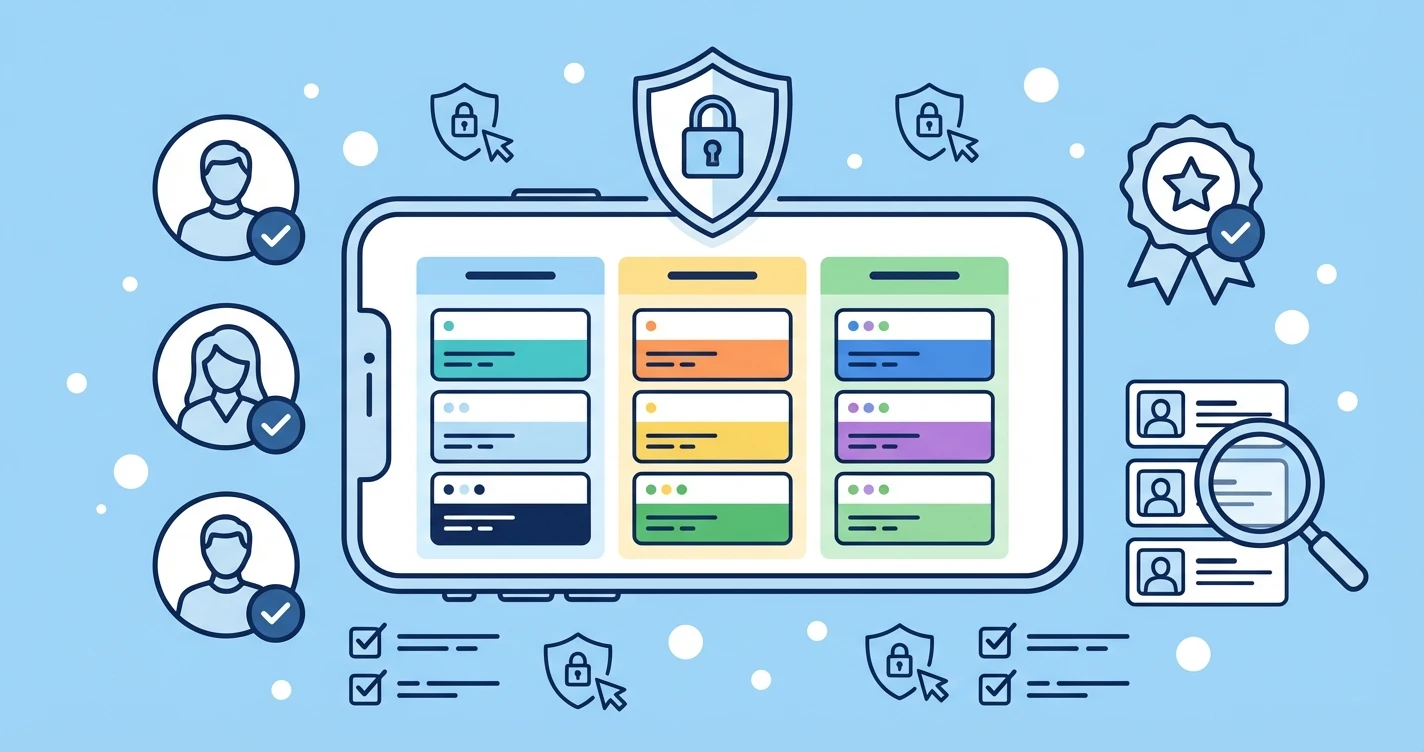
Compare seven platforms for running Monday.com access reviews in 2026, from SaaS governance tools to enterprise IGA solutions with AI automation.
Ask about this article
Opens Claude in a new tab to answer, using this article as the source.
Project management sprawl hits organizations harder than most IT teams realize. Monday.com adoption spreads quickly once a few teams discover its workflow capabilities, and before long the platform hosts everything from marketing campaigns to product roadmaps. Pro plans run $19 per seat monthly with Enterprise tiers at custom rates, meaning unreviewed accounts add up across billing cycles. Periodic access reviews verify that only current employees hold active Monday seats, that permission levels match job functions, and that guest access remains limited to people who genuinely need board visibility.
Monday.com Pro costs $19 per seat monthly. A single overlooked inactive account wastes $228 annually, and guest accounts with access to sensitive project boards create data exposure beyond your organization's control.
Monday.com governance extends well beyond simple seat counting and login tracking. The platform implements permissions at three distinct levels where account settings, workspace configurations, and board-specific access combine to determine what users can actually do. Someone might hold viewer rights at the account level but editor access on specific boards through workspace membership. A former contractor could retain guest access to client project boards months after their engagement ended, while a departed team lead might still have admin privileges nobody remembered to revoke. Monday provides user lists and permission settings through its admin console, but correlating this data with HR records and manager input requires manual effort that rarely happens systematically.
Third-party tools address this governance gap through SCIM integration, SSO authentication patterns, or direct API connections. Some pull user lists, roles, and workspace memberships directly from Monday.com for automated certification workflows. Others detect Monday usage through identity provider data without application-level visibility into specific board permissions. This article examines seven platforms worth considering for Monday access reviews in 2026, covering how each handles discovery, review workflows, and compliance documentation.
★ = low · ★★ = medium · ★★★ = high
| Tool | Ease | Cost | AI Capabilities | Reviews |
|---|---|---|---|---|
| Torii | ★★★ | ★★ | ★★★ | ★★★ |
| Veza | ★★★ | ★ | ★★ | ★★ |
| Lumos | ★★ | ★★ | ★★★ | ★★ |
| Zluri | ★★ | ★★ | ★★ | ★★ |
| Okta | ★★★ | ★ | ★★ | ★★★ |
| One Identity | ★ | ★★ | ★★ | ★★ |
| Saviynt | ★★ | ★ | ★★★ | ★★★ |
Table of Contents
Torii
Torii treats Monday.com as part of a broader SaaS portfolio rather than an isolated application to govern. The platform discovers Monday users through multiple data sources including SSO and IdP integration, direct API connections, browser extension activity, and expense data. For Monday specifically, Torii surfaces employee names and emails, job titles, departments, user status, last used dates, license information, and license types. This consolidated view helps identify accounts that no longer align with organizational needs while revealing shadow Monday instances that exist outside IT-sanctioned channels.
The platform’s access review capabilities include in-place attestations where managers can certify Monday access without context switching. Torii flags suspicious access patterns automatically, routing review requests to the correct app owners based on organizational hierarchy. When reviews complete, workflow automation can handle deprovisioning directly through Monday’s SCIM integration, reclaiming unused licenses and removing departed employees from workspaces.
Torii’s AI capabilities provide continuous monitoring rather than periodic review cycles alone. The system learns normal access patterns and flags anomalies when users accumulate permissions beyond their peer group or retain access to boards they no longer use. Real-time alerts through Slack notify admins when action is needed, and the platform maintains immutable audit trails for compliance documentation. Visit Torii to explore the platform.
Pros:
- Comprehensive SaaS discovery finds Monday users across multiple data sources including shadow accounts outside IdP management
- Combined SaaS management and IGA eliminates need for separate tools while providing financial visibility alongside security governance
- AI-powered anomaly detection identifies unusual access patterns before they become compliance issues
- Real-time Slack alerts keep teams informed of review deadlines, completions, and access changes requiring attention
Cons:
- Enterprise pricing positions the platform above budget options, reflecting comprehensive feature set and dedicated support
- Cloud-focused architecture means organizations with on-premise systems need alternative solutions for those environments
| Reviews: G2 rating of 4.5 out of 5 stars (302 reviews) | Capterra rating of 4.9 out of 5 stars (26 reviews) |
Veza
Veza takes a different approach by mapping access relationships through its authorization graph technology. The platform translates complex permission structures into plain language, showing who can access what data and what actions they can perform. For Monday.com environments specifically, this means understanding not just who holds accounts, but what those accounts can actually do across workspaces and boards given the three-layer permission model.
The Veza Access Graph models relationships between identities and resources, revealing effective permissions rather than just assigned roles. This proves particularly useful for Monday’s three-layer permission structure where account, workspace, and board settings combine to create effective access levels. The platform identifies dormant accounts, excessive privileges, and separation of duties violations that periodic manual reviews often miss.
Access review workflows in Veza support multiple certification types including user-centric, resource-centric, and on-demand microcertifications. Reviewers see risk-based sorting that prioritizes high-risk access first, with activity data showing whether permissions are actively used or granted but dormant. Remediation options include approve, reject, modify, or delegate, with closed-loop automation turning decisions into actions. Learn more at Veza.
Pros:
- Authorization graph provides deep visibility into effective permissions across Monday workspaces and boards
- Agentless deployment connects in minutes rather than weeks typical of legacy IGA implementations
- Activity insight distinguishes actually-used access from granted-but-dormant permissions
Cons:
- Enterprise pricing model without public tiers requires sales engagement for evaluation
- ServiceNow acquisition creates potential roadmap uncertainty during integration period
- Fewer public reviews than established competitors limits peer validation opportunities
| Reviews: Capterra rating of 5.0 out of 5 stars (1 review) | Gartner Peer Insights rating of 4.9 out of 5 stars (29 reviews) |
Lumos
Lumos built its platform around autonomous identity governance, using AI-driven automation to cut the manual burden of access reviews substantially. The Albus AI agent processes certification decisions automatically by approving or rejecting access based on peer group analysis and usage patterns. Human reviewers oversee agent decisions rather than making every determination manually, with Lumos reporting reviews complete seven times faster than traditional approaches.
For Monday.com governance, Lumos provides entitlement-level visibility across connected systems. The platform discovers applications, identities, and permissions in real-time, with shadow IT detection surfacing Monday accounts that exist outside sanctioned provisioning channels. Delta Reviews focus only on changes since the last review cycle, reducing fatigue while maintaining compliance coverage.
The self-service app portal enables employees to request Monday access directly, with automated approval workflows enforcing organizational policies. When managers complete reviews, closed-loop automation translates decisions into provisioning actions. Time-based access controls support temporary permissions for project-based Monday access that automatically expires. Explore capabilities at Lumos.
Pros:
- AI-powered Albus agent automates routine certification decisions based on peer analysis and usage data
- Delta Reviews reduce workload by focusing only on access changes since previous cycle
- Self-service portal decreases IT bottlenecks for routine Monday access requests
Cons:
- Steeper learning curve than marketing suggests, with teams spending weeks mastering configurations
- No live chat support means complex issues route through self-service resources first
- SaaS-focused design creates gaps for organizations with significant on-premises systems
| Reviews: G2 rating of 4.7 out of 5 stars (54 reviews) | Gartner Peer Insights rating of 4.7 out of 5 stars (47 reviews) |
Zluri
Zluri combines identity governance with SaaS management capabilities for organizations managing complex application portfolios. The platform’s patented discovery engine uses nine different methods to identify Monday.com accounts including API integrations, SSO group mapping, and browser-based detection. This comprehensive approach finds local, external, and service accounts that bypass traditional identity provider visibility.
Access review workflows in Zluri support recurring certifications with automated reminders to prevent delays. Multi-level reviewer assignments enable thorough reviews where managers and application owners both certify access. The platform flags orphaned accounts, over-privileged users, and external guest accounts with excessive access, helping reviewers focus on genuine risks rather than rubber-stamping obvious approvals.
Activity intelligence shows real-time usage data alongside access permissions, revealing who actively uses Monday versus who holds dormant accounts. This context enables confident removal decisions since reviewers can verify accounts truly are inactive before revocation. One-click remediation deprovisioning users directly through API connections eliminates the manual work of removing access across multiple systems separately. Details available at Zluri.
Pros:
- Patented discovery engine finds Monday accounts through nine different detection methods
- Multi-level reviewer support enables both manager and application owner certification
- Real-time activity data provides context for informed revocation decisions
Cons:
- Reporting customization lacks flexibility for specific stakeholder requirements
- Workflow editor can be difficult to navigate for complex approval chains
- Discovery engine occasionally misidentifies applications, requiring manual correction
| Reviews: G2 rating of 4.6 out of 5 stars (175 reviews) | Capterra rating of 4.9 out of 5 stars (27 reviews) |
Monday implements permissions at three layers: account-level controls, workspace settings, and board-specific access. A user's effective permissions combine all three layers, making manual audit across hundreds of boards impractical without automated tooling.
Okta Lifecycle Management
Okta leverages its dominant position as an identity provider to offer governance capabilities through the Identity Governance bundle. The platform connects to Monday.com through SCIM provisioning, enabling automated user lifecycle management across the organization. Employees joining, changing roles, or departing trigger automatic provisioning or deprovisioning of Monday access based on organizational policies.
Access certification campaigns in Okta support scheduled recurring reviews with preconfigured templates for faster deployment. The platform identifies inactive Monday users through authentication data, helping reduce both security risk and license spend. Bulk approval capabilities accelerate review processing for low-risk accounts, while risk-based prioritization helps reviewers focus attention on privileged access first.
Recent enhancements include AI-generated access summaries that help investigators quickly understand user access context during reviews. Security Access Reviews provide event-triggered certification for specific situations requiring immediate attention. No-code Okta Workflows enable custom automation without developer involvement, connecting Monday provisioning decisions to downstream actions. Visit Okta for product information.
Pros:
- Native SCIM integration with Monday.com enables automated provisioning and deprovisioning
- Massive integration library connects 7,000+ applications in unified governance workflows
- Fast deployment times measured in days rather than months typical of legacy IGA
Cons:
- Group-based provisioning limits granular permission assignment within Monday workspaces
- Identity Governance requires purchasing complete bundle rather than standalone access reviews
- Cannot discover local Monday accounts that bypass SSO authentication
| Reviews: G2 rating of 4.5 out of 5 stars (1,257 reviews) | Capterra rating of 4.7 out of 5 stars (914 reviews) |
One Identity
One Identity targets enterprise organizations with complex hybrid environments through its Identity Manager platform. The product combines IGA with privileged access management under a single vendor umbrella, reducing identity sprawl for enterprises managing both standard and privileged accounts. Deep integrations with SAP, Active Directory, and enterprise systems make the platform attractive for organizations with significant Microsoft or SAP investments already in place.
Attestation policies in One Identity define certification parameters including which objects are reviewed, review frequency, and responsible attestors. The platform supports various certification types including user attestation by managers, external user certification, role reviews, and organizational unit certifications. Each attestation step creates audit-proof tracking that can be reconstructed for compliance examinations.
The platform’s connector ecosystem includes over 6,000 pre-built application integrations through its OneLogin component, with Starling Connect providing additional cloud application coverage. SCIM connectors enable industry-standard provisioning for Monday.com and similar platforms. Implementation typically requires partner involvement given platform complexity, but customers report significant automation benefits once deployed. Learn more at One Identity.
Pros:
- Cost-effective compared to SailPoint and other enterprise IGA platforms
- Unified IGA and PAM eliminates need for separate privileged access solutions
- High customizability adapts attestation workflows to specific organizational requirements
Cons:
- Attestation interface receives criticism for outdated user experience
- Steep learning curve requires implementation partner for most deployments
- Complex initial setup takes weeks to months depending on environment complexity
| Reviews: G2 rating of 3.5 out of 5 stars | Capterra rating of 5.0 out of 5 stars (2 reviews) | Gartner Peer Insights rating of 4.4 out of 5 stars (155 reviews) |
Saviynt
Saviynt built its platform from the ground up as cloud-native identity governance with IGA and privileged access management sharing a common code base. Gartner Peer Insights has named the platform Customers’ Choice for IGA four consecutive years, with the highest percentage of five-star reviews in the category. This recognition reflects strong performance in certification workflows and continuous compliance capabilities that resonate with enterprise buyers.
The platform’s AI-powered trust scoring automates low-sensitivity approval decisions, reducing approver workload significantly. Peer group analysis predicts appropriate access based on similar users, while outlier detection identifies access that deviates from expected patterns. These intelligent recommendations help reviewers focus attention on genuine anomalies rather than rubber-stamping routine certifications.
Continuous compliance monitoring provides always-on evaluation rather than waiting for periodic campaign cycles. Automated triggers initiate micro-certifications when risk thresholds are exceeded, with real-time monitoring detecting issues as they emerge. Mobile certification enables on-the-go reviews for managers who need flexibility, with a business-friendly interface designed for non-technical attestors. Explore at Saviynt.
Pros:
- Highest Gartner rating in IGA category with four consecutive years as Customers' Choice
- AI-powered trust scoring reduces certification workload through intelligent automation
- Unified IGA and PAM on single code base eliminates bolt-on integration challenges
Cons:
- Mixed customer support reviews cite slow response times for complex issues
- Platform complexity creates steep learning curve despite user-friendly frontend
- High total cost of ownership including implementation and professional services
| Reviews: G2 rating of 3.5 out of 5 stars | Capterra rating of 4.5 out of 5 stars (2 reviews) | Gartner Peer Insights rating of 4.8 out of 5 stars (185 reviews) |
How to Choose
The right Monday.com access review solution depends on your organization’s broader identity governance needs and existing infrastructure investments. Organizations already running Okta as their identity provider may find value in extending to Okta’s governance capabilities for unified management. Enterprises with complex hybrid environments and existing SAP or Active Directory investments might prefer One Identity or Saviynt for their deep enterprise integrations.
AI-powered shadow IT discovery, combined SaaS financial governance with identity management, automated license remediation for inactive Monday accounts, and real-time alerts through existing Slack workflows.
For organizations prioritizing AI-driven automation, Lumos and Saviynt offer advanced capabilities that reduce manual certification burden through intelligent recommendations. Veza stands out for organizations needing deep permission visibility across complex environments where understanding effective access matters more than simple role assignments.
Mid-market companies managing substantial SaaS portfolios without enterprise IGA complexity often find Torii or Zluri provide the right balance of governance capabilities and implementation simplicity. Both platforms combine SaaS management with access governance, providing cost visibility alongside security controls. The choice ultimately depends on whether your priority is unified SaaS lifecycle management, deep permission analysis, or integration with existing enterprise identity infrastructure.
Frequently Asked Questions
Run access reviews at least quarterly, with targeted monthly checks for privileged roles and post-exit audits. Combine automated discovery, manager attestations, and HR reconciliation to remove inactive seats, adjust permissions, and limit guest exposure to control license spend and data risk.
Monday implements permissions at the account, workspace, and board layers; effective access is the sum of those settings. That layered model creates hidden privileges and makes manual audits impractical, so tooling that computes effective permissions is essential for accurate reviews.
Third-party platforms use SCIM, SSO, API connectors, and IdP telemetry to discover users, map permissions, and automate certification workflows. They enable closed-loop deprovisioning, anomaly detection, and audit trails, reducing manual effort and ensuring license recovery and compliance documentation.
Tools with broad discovery detect shadow Monday accounts: Torii and Zluri combine API integrations, SSO/group mapping, browser detection, and expense data, while Lumos and other vendors add real-time entitlement discovery. Choose platforms that reconcile IdP data with app-level permissions.
Pick Okta if you already rely on it as your identity provider and want native SCIM provisioning and fast deployment. Favor Saviynt or One Identity when you need enterprise-grade IGA, PAM convergence, deep SAP/AD integrations, or continuous compliance across hybrid environments.
Reduce license waste and exposure by enforcing periodic reviews, automating deprovisioning via SCIM, limiting guest permissions, using time-bound access for contractors, and correlating Monday user lists with HR records and manager attestations to promptly reclaim inactive seats.