

Jira Access Reviews: 6 Platforms to Consider in 2026
 Chris Shuptrine
•
Sep 29, 2025
•
12 min read
Chris Shuptrine
•
Sep 29, 2025
•
12 min read

Compare six platforms for running Jira access reviews in 2026, from SaaS governance tools to enterprise IGA solutions with automation.
Ask about this article
Opens Claude in a new tab to answer, using this article as the source.
Jira licenses accumulate faster than most teams expect, particularly when development, product, and business groups all need different access levels. Regular access reviews confirm that only current employees hold active Jira accounts and that their permission schemes match actual job requirements. You can catch former contractors who still have project access, find users with admin permissions they no longer need, and spot seats that could be downgraded from Premium to Standard.
The tools below handle Jira access reviews differently. Some pull user data and permission information directly through Atlassian integrations to show who has access to which projects and spaces. Others connect through SSO or IdP and may miss the granular details of Jira-specific permissions like project roles and issue-level security. A few target large enterprises with heavy compliance requirements, while others work well for mid-market teams that need faster setup without the overhead.
Jira Premium seats cost $17.50 per user monthly at scale. A single overlooked inactive account wastes over $200 per year. Regular access reviews catch these gaps and reduce security exposure from orphaned accounts with lingering project access.
This guide covers six platforms worth evaluating for Jira access reviews in 2026. Each section breaks down what the tool does well, where it falls short, and review ratings from G2 and Capterra.
★ = low · ★★ = medium · ★★★ = high
| Tool | Ease | Cost | AI Capabilities | Reviews |
|---|---|---|---|---|
| Torii | ★★★ | ★★ | ★★★ | ★★★ |
| Omada Identity | ★★ | ★ | ★★ | ★★ |
| Avatier | ★★ | ★★ | ★★ | ★★ |
| MiniOrange | ★★★ | ★★★ | ★ | ★ |
| Ping Identity | ★ | ★ | ★★★ | ★★ |
| Oracle | ★ | ★ | ★★ | ★★ |
Table of Contents
Torii
Jira sprawl happens when development teams spin up projects independently while product managers request their own boards. Torii connects to Jira Cloud and pulls license data across your Atlassian environment into one view. Reviewers can see exactly who holds which license type and whether those assignments align with actual usage patterns rather than just authentication events.
The platform surfaces Jira-specific fields that matter for access reviews. These include employee name and email, job title, department, user status, license type, and historical usage data. This context helps reviewers decide whether an engineer who authenticated once last quarter actually needs that Premium seat or whether a Standard license would suffice. AI flags unusual access patterns automatically, such as a marketing intern with Jira admin permissions or a departed contractor whose account remained active.
Torii handles remediation through workflow automation rather than just flagging issues for manual cleanup. When a reviewer certifies that someone no longer needs Jira access, the platform can trigger deprovisioning automatically through its direct Atlassian integration. License reclamation workflows catch seats that sit unused for configurable periods, and offboarding automation removes Jira access alongside other SaaS tools when someone leaves the organization.
Pros:
- Comprehensive discovery finds shadow Jira instances and projects that bypass central IT
- AI-powered anomaly detection flags suspicious access patterns during reviews
- In-place attestations let reviewers certify access without switching between tools
- Combined SaaS management and identity governance in one platform
Cons:
- Premium pricing reflects enterprise value rather than SMB budgets
- Cloud-only deployment without on-premise options for organizations with strict data residency requirements
G2: 4.5 out of 5 stars (302 reviews) · Capterra: 4.9 out of 5 stars (26 reviews)
Omada Identity
Omada positions itself as the governance-focused choice for organizations with heavy compliance requirements around Jira access. The platform connects to Atlassian environments and surfaces user accounts, project memberships, and permission schemes in centralized dashboards built for access certification campaigns. Their 12-week guaranteed deployment timeline stands out in an IGA market where implementations typically drag on for months or years.
For Jira access reviews specifically, Omada runs cross-system certification campaigns that cover Atlassian alongside other enterprise applications in a single workflow. Managers and resource owners can launch reviews directly from Javi, the AI assistant that works within Microsoft Teams. Reviewers see intelligent recommendations based on peer group analysis, so if someone in engineering has Jira permissions that differ significantly from their teammates, that access gets flagged for closer examination.
The platform handles automated deprovisioning when access reviews result in revocations. Stale Jira accounts get removed through configurable validity periods, and orphaned accounts trigger automatic cleanup. Omada supports up to nine layers of approval for sensitive Jira projects that require multiple sign-offs before access changes take effect.
Pros:
- Strong governance capabilities with 50 pre-built compliance report templates
- AI assistant enables access reviews directly within Microsoft Teams
- Rapid 12-week deployment versus the industry average of 6 to 12 months
Cons:
- Cloud pricing runs significantly higher than the on-premise version
- Large-scale recertification campaigns can experience performance slowdowns
- Custom reporting options feel limited despite the template library
Gartner Peer Insights: 4.6 out of 5 stars (211 reviews)
Avatier
Avatier takes a containerized approach to identity management that enables deployment flexibility across cloud providers, on-premise data centers, or hybrid environments. For Jira access reviews, the platform connects through its connector library and pulls user accounts, group memberships, and entitlements into certification workflows. The Delta Access Certification feature allows subsequent audits to review only changed access since the last certification rather than recertifying everything from scratch.
The platform supports access reviews through multiple channels including native mobile apps, Microsoft Teams, Slack, and ServiceNow integration. This flexibility means Jira access certifications can happen from wherever reviewers work rather than forcing them into a dedicated governance portal. Visual dashboards show completion percentages, due dates, and compliance status with color coding that surfaces overdue reviews quickly.
Avatier bundles SSO, identity governance, password management, and lifecycle automation in one platform rather than requiring separate tools for each capability. Organizations that need to certify Jira access alongside broader identity governance can consolidate without juggling multiple vendors. Their fixed-bid implementation model eliminates the professional services cost surprises that plague some IGA deployments.
Pros:
- Delta certification reviews only changed access rather than full periodic recertification
- Multi-channel access reviews through Teams, Slack, mobile, and ServiceNow
- All-in-one platform combines IGA with SSO and password management
Cons:
- Interface complexity can overwhelm new users during initial rollout
- Limited brand recognition compared to larger IGA vendors
- Native reporting customization requires workarounds for specific views
G2: 4.6 out of 5 stars (31 reviews)
Jira Standard runs $8.15 per user monthly for mid-sized teams, while Premium costs $17.50 per user. A 500-person organization with 20% over-provisioned Premium seats wastes roughly $21,000 annually on licenses that could be downgraded or removed entirely through regular access reviews.
MiniOrange
MiniOrange offers an SMB-friendly approach to Jira access governance at price points significantly lower than enterprise IGA platforms. Organizations can implement access reviews at $2 to $3 per user monthly, avoiding the six-figure investments that SailPoint or Oracle require. The platform connects to Jira through SCIM provisioning and SAML federation, enabling both authentication and user lifecycle management from one console.
The Access Governance Automation app for Jira handles access request workflows directly within Jira Service Management. End users submit requests through the service portal, and automated routing sends approvals to the right managers based on predefined rules. Every action gets logged for audit purposes, creating the evidence trail that compliance teams need during access reviews. SCIM provisioning handles the account lifecycle automatically, creating Jira accounts when employees join and removing them upon departure.
MiniOrange supports adaptive authentication that evaluates risk factors during Jira logins, including geographical location, device type, login frequency, and behavioral patterns. While not a dedicated access review feature, this risk intelligence helps identify anomalous Jira access that might warrant closer examination during certification campaigns.
Pros:
- Affordable pricing at $2 to $3 per user monthly versus enterprise IGA costs
- Deep Atlassian integration with access governance automation for Jira
- Rapid deployment in hours rather than months
Cons:
- Access review capabilities require Jira Service Management dependency
- Lacks sophisticated AI-driven analytics found in modern IGA platforms
- Support quality varies significantly based on user reports
G2: 4.5 out of 5 stars (264 reviews) · Capterra: 4.5 out of 5 stars (36 reviews)
Ping Identity
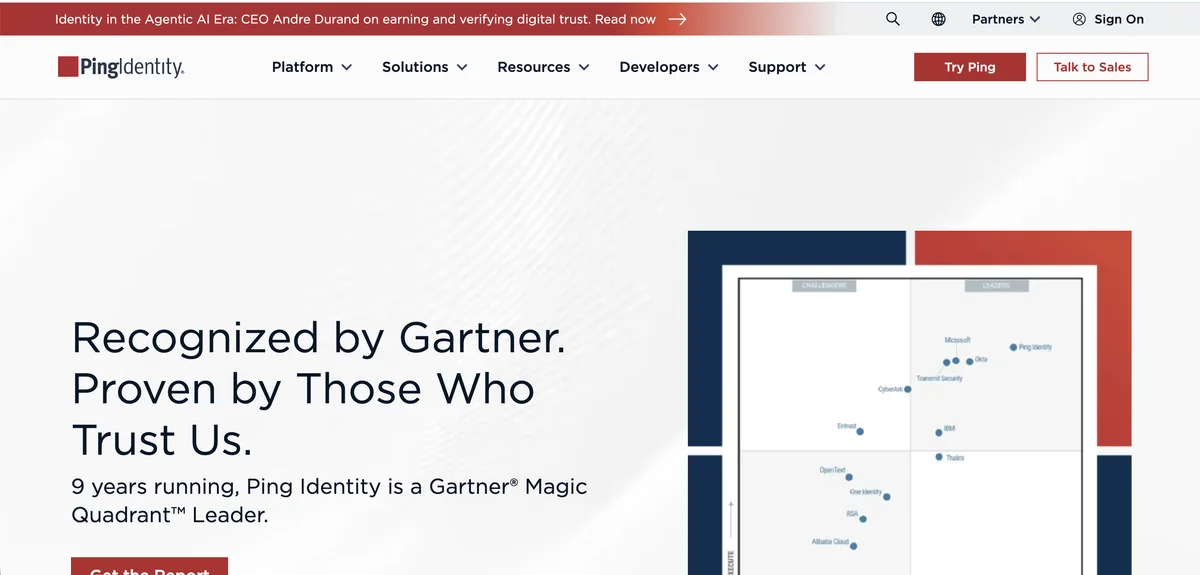
Ping Identity brings enterprise-scale access certification capabilities through their Autonomous Identity feature, which uses machine learning to analyze Jira permissions across your environment. The platform evaluates millions of permissions per minute and provides contextual insights into low, medium, and high-risk user access. For organizations with complex Jira deployments across multiple instances, this automated risk assessment helps prioritize review efforts on access that actually creates security concerns.
Access certification campaigns in Ping support multiple approaches including user-based reviews, role-based reviews, and entitlement-based reviews. Micro-certifications enable ad hoc, targeted reviews when specific Jira access changes warrant immediate validation rather than waiting for periodic campaigns. AI-assisted decisioning provides recommendations to help reviewers make informed decisions quickly, reducing the time spent on straightforward certifications while flagging access that deserves closer scrutiny.
The platform connects to Jira through their DaVinci orchestration layer, which offers 6,500 orchestrated capabilities across 350 connectors. Remediation happens automatically when access reviews result in revocations, immediately removing accounts and entitlements from Jira. Segregation of duties policies prevent conflicts of interest by detecting when Jira permissions create problematic combinations.
Pros:
- AI-powered Autonomous Identity evaluates millions of permissions per minute
- Micro-certifications enable targeted just-in-time access reviews
- Proven enterprise scale handling 200 million logins daily
Cons:
- Complex initial setup requires significant IAM expertise
- Governance features require separate purchase from core identity platform
- Premium pricing starts at $16,000 annually before implementation costs
G2: 4.5 out of 5 stars (264 reviews) · Capterra: 4.7 out of 5 stars (39 reviews)
Oracle Identity Governance
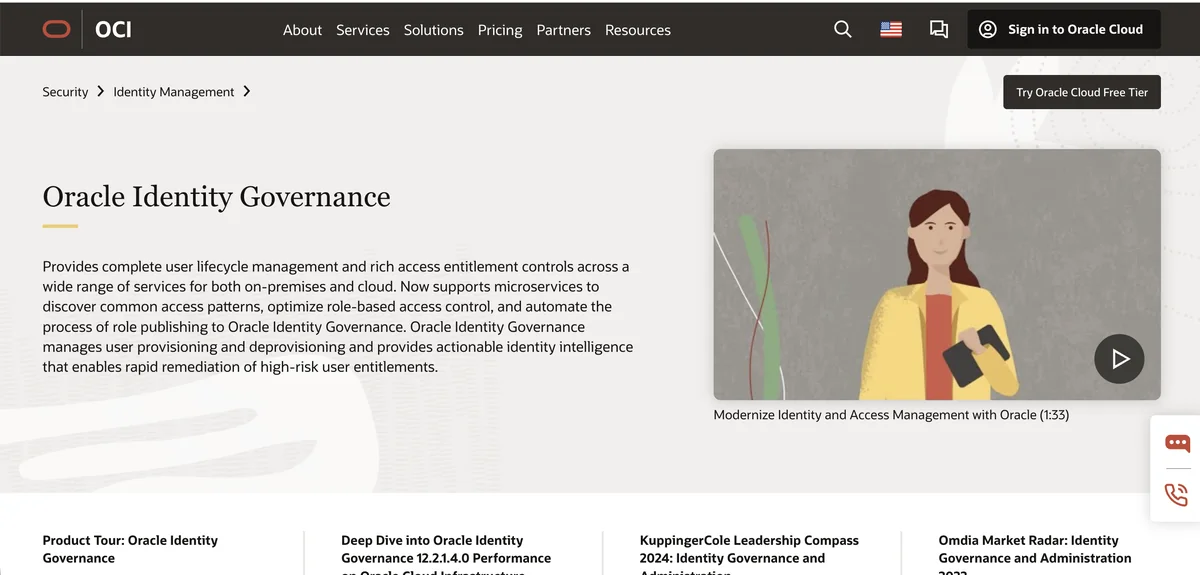
Oracle Identity Governance targets large enterprises with complex Jira deployments requiring institutional-grade access certification. The platform supports event-based micro-certifications that trigger automatically when job codes, departments, or organizational structures change. Jira access gets validated immediately when someone transfers to a new team or takes on different responsibilities, rather than waiting for periodic reviews.
Oracle Identity Role Intelligence uses machine learning to identify common Jira access patterns and suggest role optimizations. The system analyzes how permissions cluster across similar job functions and recommends standardized roles that simplify ongoing certification. Prescriptive analytics provide AI-equipped insights during reviews, flagging outliers whose Jira permissions differ significantly from their peer group.
The platform offers unique features like automatic vacation management that disables Jira accounts when employees are away and re-enables them upon return. This reduces security exposure from unattended privileged accounts while maintaining productivity for returning employees. Deep integration with Oracle ecosystem products makes it compelling for organizations already invested in Oracle databases and Fusion Applications.
Pros:
- Event-based micro-certifications trigger reviews on job or org changes
- AI-driven role intelligence optimizes Jira permission structures
- Automatic vacation management disables accounts during extended absences
Cons:
- Complex implementation takes months versus weeks for cloud alternatives
- Dated interface has not evolved significantly in recent years
- Technical support receives consistently poor user ratings
- High total cost of ownership starting at $3,600 per user
G2: 3.8 out of 5 stars (71 reviews) · Capterra: 4.4 out of 5 stars (7 reviews)
How to Choose the Right Platform
Selecting a Jira access review platform depends on several factors beyond feature comparisons alone. Organizations already running Oracle infrastructure will find Oracle Identity Governance integrates naturally, while teams seeking rapid deployment should consider Torii or MiniOrange for their faster time-to-value.
Budget constraints narrow the field quickly. MiniOrange and Avatier offer accessible pricing for mid-market organizations, while Ping Identity and Oracle target enterprises with dedicated identity management teams and matching budgets. Torii sits between these options, offering enterprise capabilities at pricing accessible to growing organizations.
For teams prioritizing AI-powered discovery and combined SaaS governance, Torii offers the strongest combination of visibility and automation. Organizations with heavy Microsoft investments should evaluate Omada for its Teams integration. Budget-conscious SMBs will find MiniOrange delivers essential capabilities without enterprise complexity.
Compliance requirements also play a significant role in the decision. Heavily regulated industries like financial services and healthcare need the audit trails and certification evidence that Omada, Ping Identity, and Oracle provide out of the box. Lighter governance needs might be well-served by MiniOrange or Avatier without the implementation overhead.
Torii stands out for organizations that want AI-enabled shadow IT discovery alongside Jira access reviews. The platform also provides SaaS financial governance that connects license costs to actual usage, plus automated license remediation that acts on review decisions rather than just reporting them. This approach handles Jira governance as part of a broader SaaS management strategy rather than treating it as an isolated compliance exercise.
Frequently Asked Questions
Regular Jira access reviews prevent wasted license spend, reduce security exposure from orphaned or inactive accounts, and ensure permissions match job roles. They can identify former contractors, unnecessary admin rights, and candidates for downgrading Premium seats to Standard.
Some tools integrate directly with Atlassian to surface project roles, issue-level permissions, and license details. Others rely on SSO/IdP or SCIM, which may miss Jira-specific entitlements, making thorough access certification and remediation harder without additional connectors.
Prioritize discovery of shadow Jira instances, AI anomaly detection, granular project-role visibility, automated deprovisioning and license reclamation, and integrations like SCIM, SAML, Teams or Slack. Compliance reporting, micro-certifications, and role intelligence simplify recurring reviews and audits.
Match platform to organization size, budget, and compliance needs. Choose MiniOrange or Avatier for SMBs and rapid deployment, Torii for AI-driven discovery and SaaS governance, Ping or Oracle for enterprise scale and compliance, and Omada when Microsoft Teams integration and governance templates matter.
Identify inactive or low-use accounts, flag unnecessary admin permissions, run license utilization reports, and configure automated reclamation or downgrades. Combine manual attestations with automated deprovisioning and set recurring review cadences to prevent future over-provisioning.
Yes. Many platforms trigger automatic deprovisioning, license reclamation, or role downgrades through direct Atlassian integrations, SCIM, or workflow automation. Some require extra modules or higher tiers, so verify connector depth and remediation pathways before choosing a vendor.