

Jamf Pro Access Certification: 7 Platforms to Consider in 2026
 Chris Shuptrine
•
Feb 23, 2026
•
16 min read
Chris Shuptrine
•
Feb 23, 2026
•
16 min read

Compare 7 identity governance platforms for Jamf Pro access certification in 2026, covering admin accounts, device policies, and MDM compliance.
Ask about this article
Opens Claude in a new tab to answer, using this article as the source.
Most Jamf Pro environments have an access problem that doesn’t surface until an audit. IT admins get provisioned with full administrator accounts during an urgent device rollout, those privileges never get reviewed, and by the time your security team asks who has console access, the list is longer than anyone expected.
Jamf Pro’s role-based access controls go deeper than most MDM platforms. You can scope access by device groups, limit enrollment capabilities, restrict access to specific site data, and assign custom privilege sets. API access stacks up too. Jamf’s developer docs say “One or more API Roles can be assigned to an API Client, granting their cumulative privileges” (Jamf developer docs).
That flexibility is useful in day-to-day administration. It also means access creep happens quietly, especially when device management responsibilities shift across teams.
Running periodic access reviews catches what static provisioning always misses over time. They identify which accounts still need admin-level access, which are scoped correctly, and which belong to contractors or former employees who should have been off-boarded months ago.
Jamf Pro administrator accounts, custom role assignments, site-scoped access, API client credentials, LDAP-authenticated accounts, and integration service accounts. Shadow access from third-party MDM tools connecting via Jamf API is also worth auditing if your environment has grown through acquisitions or team changes.
The seven platforms below all connect to Jamf Pro through API or SSO integrations to pull account data, surface permission details, and run certification campaigns. Each section covers what the tool does specifically for Jamf Pro governance, its limitations, and ratings from major review sites.
★ = low · ★★ = medium · ★★★ = high
| Tool | Ease | Cost | AI Capabilities | Reviews |
|---|---|---|---|---|
| Torii | ★★★ | ★★ | ★★★ | ★★★ |
| SAP Cloud IAG | ★ | ★ | ★★ | ★★ |
| SailPoint IdentityIQ | ★ | ★ | ★★★ | ★★★ |
| One Identity | ★★ | ★★ | ★★ | ★★ |
| Saviynt | ★ | ★★ | ★★★ | ★★ |
| CloudEagle | ★★★ | ★★ | ★★ | ★ |
| Ping Identity | ★ | ★ | ★★★ | ★★★ |
Table of Contents
- Torii
- SAP Cloud Identity Access Governance
- SailPoint IdentityIQ
- One Identity
- Saviynt
- CloudEagle
- Ping Identity
Torii

Torii treats Jamf Pro access reviews as part of a broader SaaS management picture. Rather than handling Jamf Pro as an isolated MDM console, Torii pulls it into one identity view alongside the other apps in your stack. MDM administrators often hold service account credentials and API tokens that sit outside normal SSO-based identity tracking, so seeing them next to the rest of a user’s access helps.
For Jamf Pro, the Torii connector reads each user’s role, groups, status, last used date, and license, plus Jamf computer groups, device models, device serials, and last inventory update. Usage data goes back 90 days on the first sync. Title and department come from your HR and identity sources. Seeing that an account belongs to a contractor in a department that stopped using Mac devices three quarters ago is more useful than a bare list of usernames.
Torii’s access review workflow routes certification requests to the correct app owner or manager automatically. Reviewers handle attestations inline without switching tools. Each campaign names remediation owners, who remove or downgrade access that reviewers reject. Torii workflows can also run Jamf Pro actions such as Delete Jamf user or Remove Jamf user from user groups. For teams running SOC 2 or ISO 27001 programs, the exported review report doubles as audit evidence.
Torii was named a Leader in the 2026 Gartner Magic Quadrant for SaaS Management Platforms. It is built for cloud-first IT teams that want access governance and SaaS spend management in the same place.
Pros:
- Jamf Pro connector reads role, groups, status, last used date, licenses, and device fields
- Access reviews across the rest of the SaaS stack through 200+ integrations
- Workflow actions in Jamf Pro, such as removing a user from groups or locking a user’s computers
- In-place attestations with automated routing to correct reviewers
Cons:
- Pricing is higher than lightweight SaaS governance tools
- No on-premise deployment; built entirely for cloud/SaaS environments
G2 Rating: 4.5/5 (302 reviews) · Capterra Rating: 4.9/5 (26 reviews)
SAP Cloud Identity Access Governance
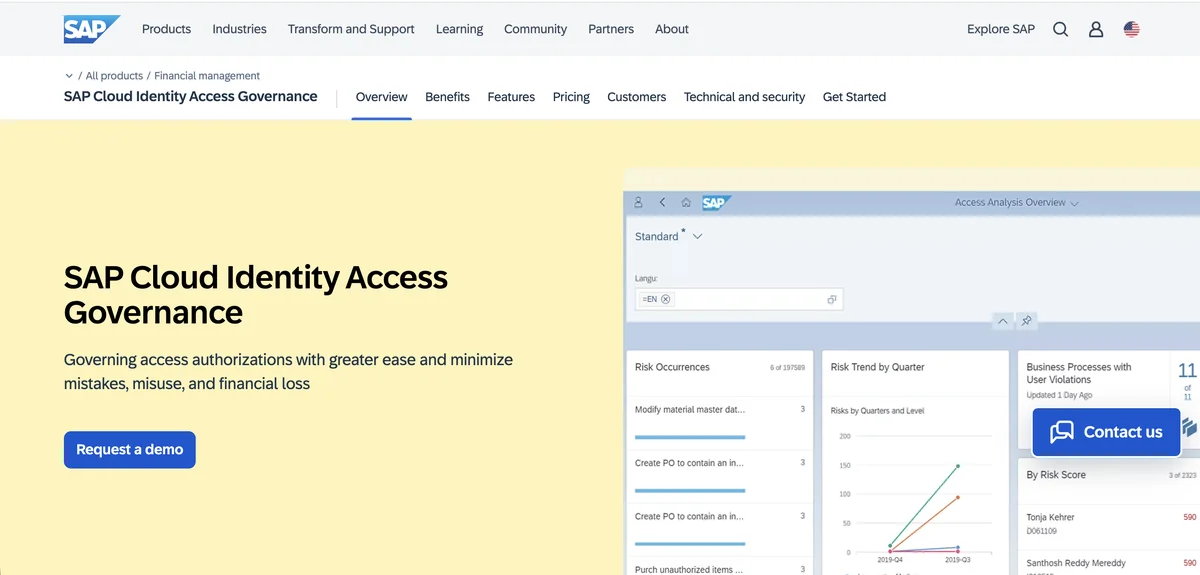
SAP Cloud Identity Access Governance was designed primarily around SAP’s own ecosystem: S/4HANA Cloud, SuccessFactors, Ariba. For organizations that run SAP as their core ERP alongside Jamf Pro for device management, IAG can serve as a compliance layer that bridges both environments, though SAP applications are where it performs most naturally.
Connecting Jamf Pro to SAP IAG typically requires SCIM-based integration or custom API connector work. The platform’s Access Certification service can run periodic reviews across connected systems, and its dashboard-driven interface makes campaign progress visible to compliance leads. The hybrid bridge capability is a real differentiator for SAP shops already running GRC Access Control on-premise who want to extend governance to cloud applications without ripping out existing infrastructure.
Where SAP IAG gets complicated for Jamf Pro-centric use cases is customization. The workflow engine is less flexible than dedicated IGA platforms, and organizations with complex Jamf Pro privilege structures may find that custom role hierarchies don’t map cleanly to IAG’s certification templates. Gartner reviewers consistently note the learning curve, and getting the most from SAP IAG typically requires certified SAP expertise on staff.
Pros:
- Strong compliance reporting for SOX, GDPR, and SAP-regulated environments
- Machine learning role optimization useful for organizations with sprawling SAP roles
- Unique hybrid bridge for organizations maintaining on-premise SAP GRC
Cons:
- Jamf Pro is not a native integration; requires connector setup
- Limited workflow customization compared to standalone IGA platforms
- Enterprise pricing not suited for mid-market organizations
Gartner Peer Insights Rating: 4.4/5 (114 reviews)
SailPoint IdentityIQ

SailPoint IdentityIQ handles Jamf Pro access reviews through its extensive connector ecosystem. The platform’s 1,100+ enterprise connectors and 20,000+ custom application support mean that Jamf Pro can be brought into SailPoint’s certification campaigns alongside Active Directory, Salesforce, and whatever else sits in a complex enterprise environment. That breadth is SailPoint’s core appeal.
The AI-driven certification recommendations are worth calling out for Jamf Pro. When SailPoint compares a Jamf Pro admin account against a peer group of similar IT staff and surfaces an outlier, that contextual data helps reviewers move faster than they would with a bare access list. The peer group analysis is particularly useful when an organization has Jamf Pro administrators whose actual device management scope has narrowed over time but whose account privileges haven’t been adjusted.
The real constraint with SailPoint is how long deployment actually takes. Typical IdentityIQ implementations run six to twelve months, and the professional services investment often matches or exceeds the software license cost. For a large enterprise where Jamf Pro is one of dozens of systems under governance, SailPoint’s depth justifies the investment. For organizations primarily focused on MDM governance, lighter options may reach production faster.
Pros:
- Detailed entitlement modeling that handles granular Jamf Pro privilege scopes
- AI peer group analysis reduces certification fatigue across large admin populations
- Handles millions of identities across complex hybrid environments
Cons:
- Six to twelve month implementation timelines typical
- Entry pricing at $75,000+ excludes most mid-market organizations
- Significant technical expertise required to maintain and customize
G2 Rating: 4.5/5 (161 reviews) · Capterra Rating: 4.2/5 (21 reviews)
One Identity
One Identity’s Identity Manager has been a practical alternative to SailPoint for organizations that need enterprise IGA depth without the associated price tag. The platform covers Jamf Pro through its Starling Connect cloud connectors and SCIM 2.0 support, and customers frequently cite cost-effectiveness as the primary reason they chose One Identity over competitors with similar positioning.
For Jamf Pro access reviews, the attestation policy framework gives administrators granular control. Policies define which accounts get reviewed, how frequently, and by whom, with full audit trails reconstructing each attestation step for compliance purposes. The unified IGA and PAM capabilities are relevant if your Jamf Pro environment includes privileged accounts used for mass enrollment or enterprise API automation, since those accounts typically warrant stricter review cycles than standard admin roles.
One area that comes up consistently in reviews is the attestation user experience. Gartner reviewers describe the interface as “old fashioned” and note usability concerns for the reviewers going through certifications. That’s worth weighing if your access review program involves non-technical business stakeholders approving access across many systems. Implementations also typically require a partner, which adds cost and timeline to an otherwise competitive platform.
Pros:
- More affordable than SailPoint for comparable enterprise IGA functionality
- Unified IGA and PAM in one platform, relevant for Jamf Pro API and service accounts
- Deep SAP integration for organizations running SAP alongside Jamf Pro
Cons:
- Attestation UX is dated; reviewers note usability challenges
- Implementation partner typically required, adding time and cost
- Azure/Entra ID connector has reported gaps in recent versions
Gartner Peer Insights Rating: 4.4/5 (155 reviews)
Saviynt

Saviynt’s cloud-native architecture handles Jamf Pro through pre-built connectors covering major cloud and on-premise systems. The platform’s SaviAI trust scoring system automatically routes low-sensitivity access decisions, so reviewers spend less time on routine Jamf Pro certifications where the answer is obvious. Saviynt says its customers have run more than 80,000 certification campaigns, producing over 5 million revocations of overprovisioned access.
For Jamf Pro specifically, Saviynt’s continuous compliance approach is more useful than the traditional quarterly campaign model for most MDM environments. Device management access tends to shift frequently: IT staff rotate through support teams, contractors cycle on and off device rollout projects, and Jamf Pro roles get modified during organizational changes. Rather than waiting for the next scheduled review, Saviynt can detect access anomalies and trigger micro-certifications as changes occur.
Saviynt was a Gartner Peer Insights Customers’ Choice for IGA for a fourth consecutive year in 2024, though the same reviews note that the backend complexity is real. Teams implementing Saviynt for the first time typically need six to twelve weeks of setup time, and the administrator experience is more demanding than the polished end-user interface suggests. The mobile certification option is a legitimate differentiator for organizations where managers prefer reviewing access on their phones.
Pros:
- Trust scoring reduces reviewer workload by up to 75% on routine certifications
- Continuous compliance model suits Jamf Pro’s frequently changing access patterns
- 60% improvement in review completion times reported by customers
Cons:
- Backend complexity significant despite clean end-user interface
- Support response times have been flagged as inconsistent
- $10,000+ starting price excludes smaller organizations
Gartner Peer Insights Rating: 4.8/5 (185 reviews) · Capterra Rating: 4.5/5 (2 reviews)
Full Jamf Pro administrators can manage all objects across all sites, create and modify accounts, run enrollment campaigns, and interact with the Jamf Pro API. Custom-role accounts with scoped access are more common in larger environments and require reviewing both the privilege set and the site or device group scope. API clients and service accounts used by integrations (HR systems, identity providers, third-party apps) represent a third category that often gets overlooked in standard review campaigns. Review them separately. Jamf's own guide notes that API role privilege sets "are completely unrelated to any user or group privileges set in Settings > System > User accounts and groups" (Jamf blog).
CloudEagle

CloudEagle approaches Jamf Pro governance as part of its broader SaaS management and access review platform. Founded in 2021 and Y Combinator-backed, the company has grown into a recognized vendor in the 2025 Gartner Magic Quadrant for SaaS Management Platforms. CloudEagle lists 500+ integrations, and its Slack-native review workflows are a common reason mid-market IT teams shortlist it.
For Jamf Pro access reviews, CloudEagle can identify inactive administrator accounts, flag users who haven’t authenticated to the Jamf console in 90+ days, and surface privileged accounts with excessive scope. The Slack-native workflow is practical for organizations where Jamf Pro managers don’t want to log into a separate governance portal to complete their certifications. Reviews happen inside the tools teams already use, which tends to improve completion rates for recurring campaigns.
CloudEagle’s access governance module is priced at $2,000/month, which positions it as a mid-market option. Organizations that need combined SaaS spend management and access governance find the modular pricing appealing since they can stack modules as needs grow. The platform does have noted limitations around workflow depth for complex multi-step approval chains, and advanced reporting customization is constrained compared to dedicated IGA platforms.
Pros:
- Slack-native certification workflows drive higher reviewer completion rates
- 80% time reduction in access reviews reported by customers
- Handles both SCIM and non-SCIM applications in one dashboard
Cons:
- Complex approval chains not as mature as dedicated IGA platforms
- No API access for custom integrations or data extraction
- English-only; limited value for global organizations with multi-lingual teams
G2 Rating: 4.7/5 (150+ reviews)
Ping Identity
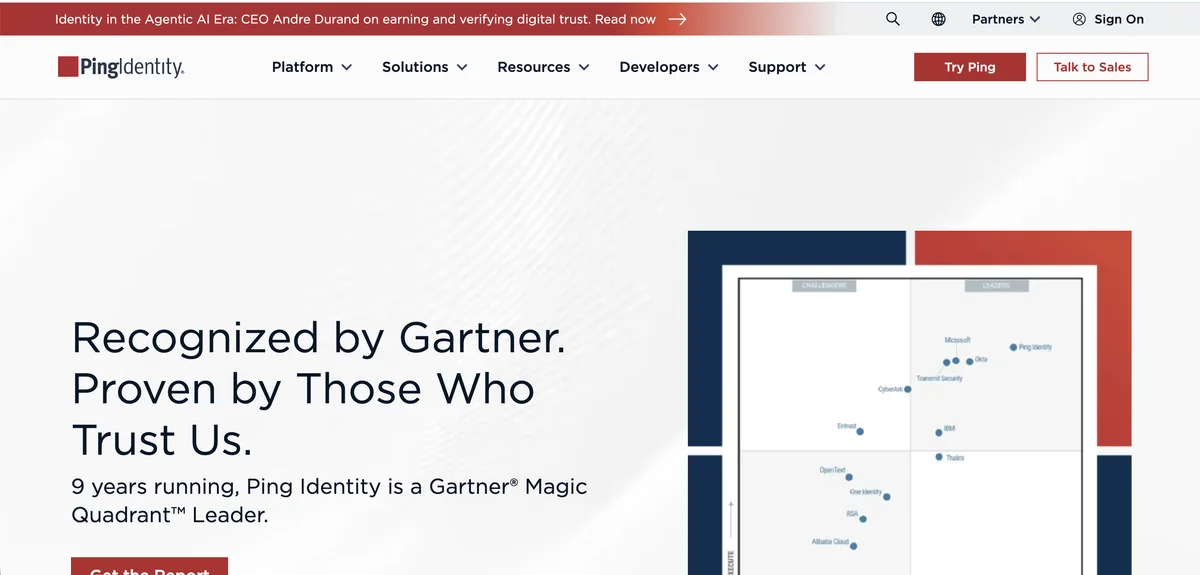
Ping Identity covers access management, IGA, and privileged access management in one platform, with cloud, hybrid, and on-premise deployment options. Ping was named a Leader in the Gartner Magic Quadrant for Access Management for the ninth consecutive year in 2025. The 2023 acquisition of ForgeRock added IGA capabilities under the PingOne Advanced Identity Cloud umbrella, giving large enterprises a path to consolidate what were previously three separate toolsets.
For Jamf Pro access reviews, Ping’s Autonomous Identity engine evaluates millions of permissions per minute and identifies access blind spots using machine learning. Micro-certifications allow targeted, ad-hoc reviews for Jamf Pro role changes outside normal campaign cycles, which is useful when device management responsibilities shift during an IT reorg. The platform also handles account certification at the entitlement level, so reviewers can certify specific Jamf Pro privilege sets rather than reviewing accounts as blunt whole-access decisions.
The governance features come with a caveat: PingOne Identity Governance is purchased separately from PingOne Advanced Identity Cloud, and initial setup requires meaningful IAM expertise. Users consistently note the interface complexity, and organizations without dedicated identity engineers typically find Ping Identity more demanding than lighter alternatives. The platform shines at Fortune 500 scale where Jamf Pro is one piece of a broad enterprise identity program, less so for mid-market teams that primarily need MDM governance.
Pros:
- Evaluates millions of permissions per minute with AI-powered access intelligence
- Micro-certifications support ad-hoc reviews for frequent Jamf Pro role changes
- Leader in the Gartner Magic Quadrant for Access Management for nine consecutive years (2025)
Cons:
- Identity Governance module requires separate purchase
- Complex initial setup requires dedicated IAM expertise
- Higher cost and implementation complexity than mid-market alternatives
G2 Rating: 4.5/5 (264 reviews) · Capterra Rating: 4.7/5 (39 reviews)
How to Choose the Right Jamf Pro Access Review Platform
Picking the right platform for Jamf Pro access reviews comes down to what your organization actually needs from governance. MDM access has specific characteristics that generic IGA evaluations often underweight.
For IT teams that manage a broad SaaS stack alongside Jamf Pro, a platform that handles both SaaS management and identity governance pays off quickly. Torii fits this profile, particularly for mid-market companies that want shadow IT discovery, SaaS cost oversight, and access certification in one tool. Its Jamf Pro connector covers user and device fields, but it has no on-premise deployment, so teams with on-premise identity systems should check the fit.
For large enterprises already invested in SAP, SailPoint, or Microsoft ecosystems, the calculation shifts. SAP Cloud IAG is logical for organizations managing SAP and Jamf Pro under the same compliance umbrella. SailPoint and Ping Identity both offer depth that enterprise environments with complex Jamf Pro privilege structures need, though both require meaningful implementation investment and ongoing technical support.
Saviynt is worth evaluating for cloud-first enterprises that want continuous compliance over periodic campaigns, especially if the Jamf Pro environment sees frequent role changes. CloudEagle makes sense for mid-market teams prioritizing speed of implementation and reviewer adoption through Slack-native workflows.
Whatever you choose, the evaluation should start with a clear map of what Jamf Pro access looks like in your organization: how many admin accounts, what privilege scopes exist, which are associated with active employees versus service accounts, and which ones haven’t been touched since the last device rollout project ended.
Export your current Jamf Pro account list and note how many accounts have full admin privileges versus scoped custom roles. Identify any API clients or service accounts used by integrations. Check last-login dates for all accounts, especially those tied to contractors or former employees. This inventory will help you gauge the volume and complexity of what each platform needs to handle, and make vendor demos more productive.
Related reading:
Frequently Asked Questions
Periodic Jamf Pro access reviews reveal dormant admin accounts, scoped-role mismatches, and orphaned service or contractor credentials. They prevent access creep, produce audit evidence for compliance, and reduce attack surface by ensuring only authorized identities retain console or API privileges.
Reviews usually assess full administrator accounts, custom role assignments, site- or device-group scoping, API client credentials, LDAP-authenticated users, and integration/service accounts. Shadow access from third-party tools connecting via the Jamf API should also be checked, especially after acquisitions or team changes.
Platforms that connect via API or SSO include Torii, SailPoint IdentityIQ, Saviynt, CloudEagle, Ping Identity, SAP Cloud IAG, and One Identity. They vary by implementation time, pricing, AI features, SaaS governance breadth, and suitability for mid-market versus large enterprise.
Start by mapping your Jamf Pro accounts: number of admins, scoped roles, API/service accounts, and last-login data. Match that inventory to vendor strengths—SaaS management, continuous compliance, SAP or enterprise IGA—and weigh implementation effort, costs, and reviewer experience.
Export your current Jamf Pro account list, flag full admins versus scoped custom roles, identify API clients and integrations, capture last-login dates and employment status, estimate campaign volume, and assign reviewers plus evidence retention requirements to streamline certification.
Enforce role-based scoping, limit full admin provisioning, require time-bound temporary privileges for rollouts, run regular automated reviews, remove or rotate contractor and service credentials, and integrate Jamf Pro with an IGA or SaaS governance tool to centralize attestations.