

6 HubSpot Access Review Solutions in 2026
 Chris Shuptrine
•
Oct 3, 2025
•
11 min read
Chris Shuptrine
•
Oct 3, 2025
•
11 min read

Compare 6 platforms for running HubSpot access reviews in 2026, from SaaS-native tools to enterprise IGA solutions with automation.
Ask about this article
Opens Claude in a new tab to answer, using this article as the source.
HubSpot licenses add up fast, especially when marketing, sales, and service teams all need different seat types. Running regular access reviews helps you confirm that only current employees hold active accounts. You can catch former contractors still logged in, spot users with permissions beyond their role, and identify seats that could be reallocated or downgraded.
The tools below handle HubSpot access reviews in different ways. Some pull user data and license information directly through HubSpot integrations. Others rely on SSO or IdP connections and may not see the full picture of who has what level of access. A few are built for enterprises with strict compliance requirements, while others target mid-market teams that want faster setup without the overhead.
This guide covers six platforms worth evaluating for HubSpot access reviews in 2026. Each section includes what the tool does well, where it falls short, and review ratings from G2 and Capterra.
★ = low · ★★ = medium · ★★★ = high
| Tool | Ease | Cost | AI Capabilities | Reviews |
|---|---|---|---|---|
| Torii | ★★★ | ★★ | ★★★ | ★★★ |
| ConductorOne | ★★★ | ★★ | ★★ | ★ |
| CloudEagle | ★★ | ★★ | ★★ | ★★ |
| Okta | ★★★ | ★ | ★★ | ★★ |
| Lumos | ★★ | ★★ | ★★★ | ★ |
| Nudge Security | ★★★ | ★★ | ★ | ★ |
HubSpot Professional seats cost $90-$150 per user monthly depending on the hub. A single overlooked inactive account wastes over $1,000 per year. Regular access reviews catch these gaps and reduce security exposure from orphaned accounts.
Table of Contents
Torii
HubSpot sprawl happens quietly. Marketing spins up a trial, sales buys seats separately, and before long you have multiple hub subscriptions with overlapping users. Torii connects to HubSpot and pulls license data across Marketing, Sales, Service, and Operations hubs into one view. Reviewers can see exactly who holds which seat type and whether those assignments align with actual job functions.
The platform correlates HubSpot access with employee data from your HRIS, surfacing mismatches like a departed contractor who still shows active or a finance employee holding a Marketing Hub Professional license. Certification workflows route to the right reviewer based on department or application ownership. When someone denies access during a review, automated deprovisioning removes the HubSpot seat without manual intervention.
Beyond governance, Torii tracks what you spend on HubSpot and identifies opportunities to consolidate or downgrade licenses. This dual focus on access and cost makes the review process easier to justify internally since findings translate directly into budget savings.
Pros
- Pulls license types across all HubSpot hubs through direct API integration
- Correlates access with HRIS data to catch role mismatches and departed users
- Combines access reviews with SaaS spend tracking in a single platform
- Automated deprovisioning executes immediately when reviewers deny access
Cons
- Cloud infrastructure integrations less developed than SaaS coverage
- Enterprise-oriented pricing may exceed smaller team budgets
G2: 4.5 out of 5 stars (302 reviews)
Capterra: 4.9 out of 5 stars (26 reviews)
ConductorOne
HubSpot permissions range from view-only access to Super Admin capabilities, and the gap between those levels matters. ConductorOne extracts permission data at the entitlement level rather than just showing who has an account. Reviewers see the actual capabilities each user holds, making it easier to spot a marketing coordinator with admin rights they accumulated over time.
The AI engine evaluates access patterns and handles routine certifications without human involvement. Accounts that look normal get approved automatically while anomalies surface for manual review. This approach cuts campaign duration from weeks to hours for organizations that previously relied on spreadsheet exports and email chains.
When a reviewer denies HubSpot access, the platform executes deprovisioning through the API connection. Built by former identity security leaders, the system deploys in about a month rather than the extended timelines legacy governance tools require. That speed matters when audit deadlines loom.
Pros
- Entitlement-level extraction shows actual HubSpot permissions beyond account existence
- AI auto-certifies standard access patterns and escalates exceptions
- Sub-hour campaign completion for reviews that previously took weeks
- Deprovisioning triggers automatically when reviewers revoke access
Cons
- Permission modification not supported during review workflows
- Pricing requires direct sales engagement to scope
- Limited customer reviews available for validation
G2: 4.8 out of 5 stars (13 reviews)
Capterra: Not listed
HubSpot offers Starter, Professional, and Enterprise tiers across Marketing, Sales, Service, and Operations hubs. Each tier carries different per-seat costs. Access reviews should verify that users have the appropriate tier for their actual job responsibilities.
CloudEagle
Marketing teams frequently sign up for HubSpot trials without telling IT, and those accounts accumulate permissions that never get reviewed. CloudEagle addresses this visibility gap by aggregating data from SSO, finance systems, and direct integrations to surface every HubSpot instance in your organization. Shadow IT detection catches the free accounts and trials that bypass official procurement.
The platform flags overprivileged users and inactive accounts automatically, prioritizing high-risk cases for review. When someone holds HubSpot admin rights but only logs in quarterly, reviewers see that mismatch immediately. Slack-native workflows let managers certify access without leaving their messaging app, which removes the friction that causes review campaigns to stall.
Automated deprovisioning executes when reviewers deny access, moving rejected users to a dedicated offboarding queue. The compliance reporting generates SOC 2 documentation in minutes rather than hours, capturing every approval and revocation decision with timestamps.
Pros
- Shadow IT detection surfaces HubSpot accounts outside official procurement
- AI flags overprivileged users and dormant admin accounts automatically
- Slack-native workflows enable certification without portal switching
- Compliance reports generate in minutes for SOC 2 and similar frameworks
Cons
- Feature richness creates a learning curve during initial setup
- Interface navigation can feel unintuitive for first-time users
- English-only language support limits global team adoption
- No native mobile app requires browser access for on-the-go reviews
G2: 4.7 out of 5 stars (150+ reviews)
Capterra: Featured in Best of recognition
Okta Lifecycle Management
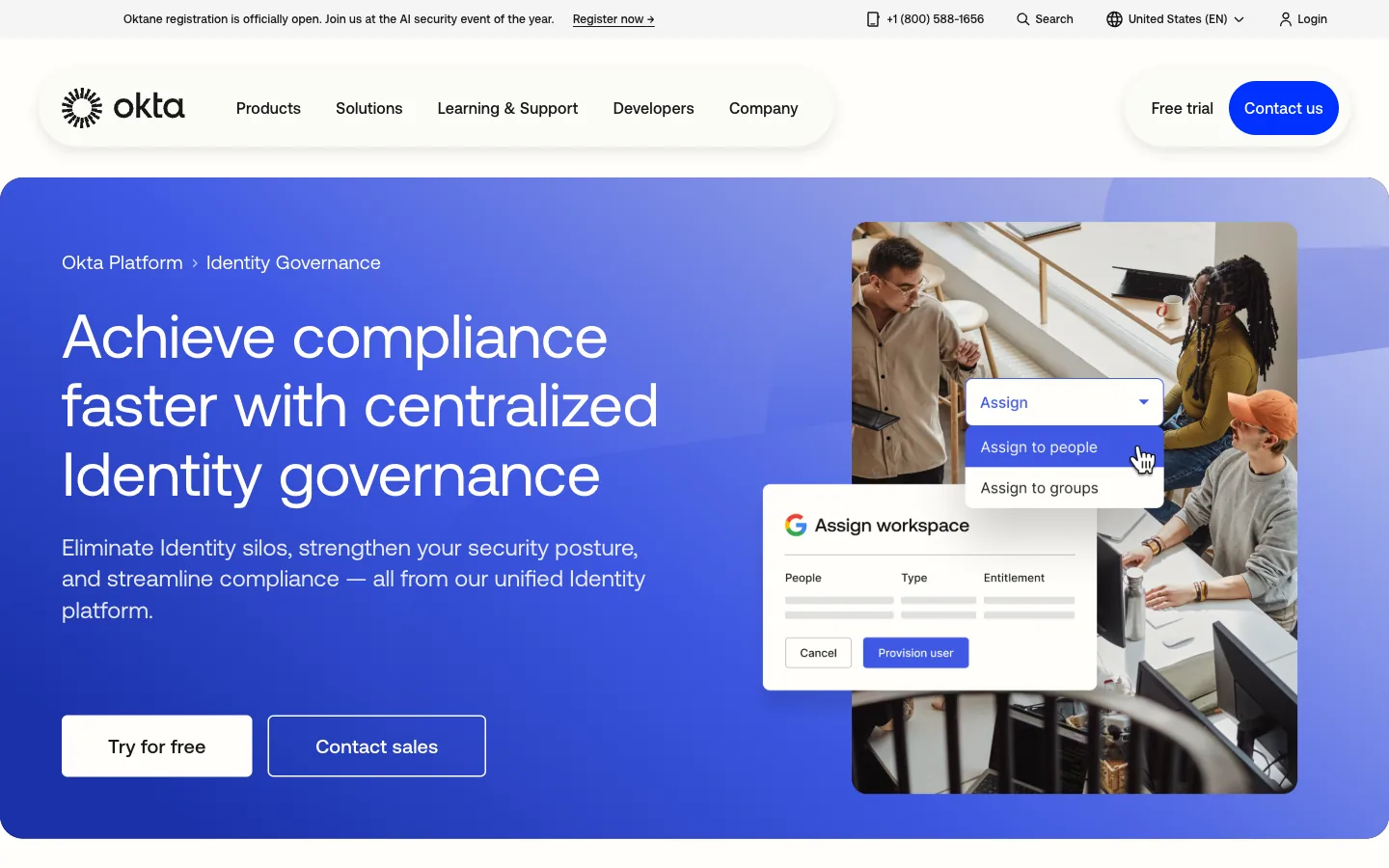
Teams already standardized on Okta for authentication can extend into HubSpot governance without adding another vendor. The Identity Governance add-on enables access certification campaigns where reviewers confirm HubSpot assignments on scheduled or recurring cycles. SCIM provisioning handles the lifecycle mechanics, creating and removing HubSpot accounts based on Okta group membership.
This group-based model simplifies administration but trades off permission granularity. Reviewers approve or deny HubSpot access at the group level rather than examining specific permission sets inside HubSpot. That works well when access tiers map cleanly to Okta groups, but creates blind spots when users accumulate permissions through other channels.
Recent platform updates added AI-generated summaries that give reviewers context during certification. No-code Workflows let you build custom automation without developer involvement, such as routing Marketing Hub access decisions to the marketing director specifically.
Pros
- Keeps identity, authentication, and governance consolidated in one platform
- SCIM provisioning automates HubSpot account creation and removal
- Extensive integration library connects HubSpot without custom work
- No-code Workflows enable custom certification logic
Cons
- Group-level reviews miss HubSpot permission nuances within accounts
- Governance features require purchasing the full bundle
- HubSpot accounts created outside SSO remain undetected
- Per-user costs increase significantly at scale
G2: 4.5 out of 5 stars (1,257 reviews)
Capterra: 4.7 out of 5 stars (914 reviews)
Lumos
Lumos takes an AI-first approach to HubSpot certification. The Albus AI agent automatically approves or denies access based on peer group comparisons and usage patterns. Human reviewers oversee agent decisions rather than making every call themselves, which accelerates campaigns while avoiding the mindless approval that renders reviews meaningless.
Delta Reviews further reduce reviewer burden by focusing only on changes since the last cycle. If someone already passed review last quarter and nothing changed, they skip the queue. Shadow IT detection catches HubSpot accounts created outside official channels, like a marketing intern who signed up for a free trial using their work email.
The Slack and Teams integrations make reviewer participation frictionless. Managers certify access with a single click from their messaging app rather than logging into a separate portal. Self-service request flows let employees ask for HubSpot access through the same channels, with time-bounded permissions that expire automatically.
Pros
- AI agent handles routine certifications and surfaces exceptions for human judgment
- Delta Reviews eliminate redundant decisions for unchanged access
- Messaging app integrations enable one-click certification from Slack or Teams
- Shadow IT detection finds HubSpot instances outside official subscriptions
Cons
- Actual learning curve exceeds what marketing materials imply
- Live chat support unavailable for troubleshooting
- User reports mention occasional bugs and confusing access controls
- Cloud-native focus leaves on-premises systems out of scope
G2: 4.7 out of 5 stars (54 reviews)
Capterra: Not rated
Nudge Security
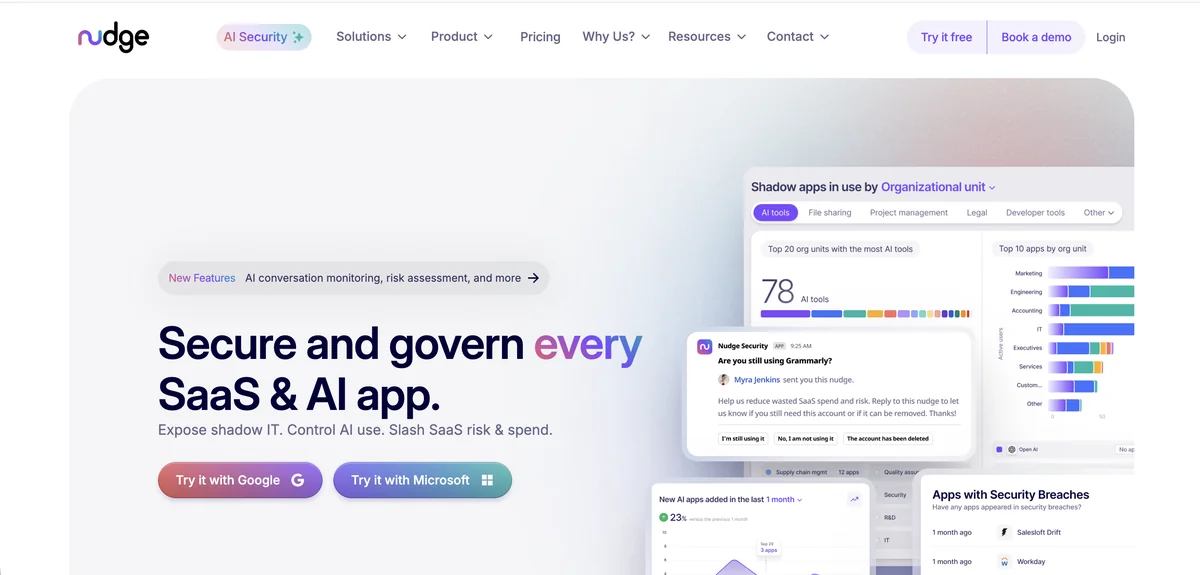
Most governance tools only review accounts they know about. Nudge Security starts by finding every HubSpot account anyone in your organization ever created. The email-based discovery engine scans for signup confirmations, password resets, and subscription notifications to build a complete picture, including free trials marketing started without telling anyone.
Rather than forcing policy through access denial, Nudge uses behavioral prompts to ask users whether they still need their HubSpot accounts. These nudges arrive via email, Slack, or Teams and route responses to application owners for action. The approach achieves higher compliance rates than traditional blocking because it works with users rather than around them.
The platform generates audit-ready reports documenting all review activity and user responses. Supply chain monitoring alerts you when HubSpot or connected vendors experience security incidents, adding risk context to governance decisions.
Pros
- Email-based discovery finds HubSpot accounts that bypass official procurement
- Behavioral nudges achieve higher user response rates than enforcement-based tools
- Deploys quickly without agents or complex integration work
- Supply chain breach alerts add security context to access reviews
Cons
- Discovery depends on Google Workspace or Microsoft 365 email integration
- Nudges suggest action rather than enforce policy automatically
- Cannot discover applications without email-based signup trails
- Limited user reviews make peer validation difficult
G2: 5.0 out of 5 stars (limited reviews)
Capterra: Not rated
How to Choose
- HubSpot integration depth Does it pull license types and user status, or just SSO data?
- Deployment timeline Weeks vs months matters for audit deadlines
- Existing stack Okta customers benefit from staying in-platform
- Budget reality Enterprise IGA runs $200K+/year vs mid-market options under $50K
Your selection depends on HubSpot complexity and broader governance needs across your organization. Teams with multiple hubs and seat types benefit from platforms that pull license data directly from HubSpot. Organizations already standardized on Okta may find it easiest to add governance through the same platform they use for authentication.
Deployment time matters as much as feature depth when evaluating these platforms. Some tools deploy in weeks while others require months of implementation work. Factor in ongoing maintenance and whether your team has the technical expertise to configure workflows without external help.
For organizations wanting more than just periodic HubSpot access reviews, consider platforms that combine identity governance with broader SaaS management capabilities. Torii stands out here by offering shadow IT discovery, license optimization, cost tracking, and automated workflows alongside access certifications. This means you get HubSpot governance plus visibility into your entire SaaS portfolio from a single dashboard.
Frequently Asked Questions
A: "Regular HubSpot access reviews stop license waste and reduce security risk. Professional seats cost $90–$150 monthly, so inactive accounts can cost over $1,000 yearly. Reviews catch former contractors, orphaned logins, and users with permissions beyond their role."
A: "Tools vary: some use HubSpot APIs to pull license types and entitlements, others rely on SSO/IdP so they see only authentication data. A few use email discovery to find trial accounts. Integration depth determines visibility into permissions and license details."
A: "Prioritize HubSpot integration depth, deployment timeline, and alignment with your existing identity stack. Also evaluate license cost tracking, automated deprovisioning, shadow IT discovery, and whether the tool offers entitlement-level visibility versus group-based approvals."
A: "Yes — many platforms trigger automated deprovisioning through HubSpot APIs or SCIM when reviewers revoke access. Some tools only send behavioral nudges or route requests to owners, so enforcement capability varies; check whether immediate seat removal is supported."
A: "AI and automation auto-certify routine access, surface anomalies, and run Delta Reviews that skip unchanged accounts. These features shrink campaigns from weeks to hours, enable one-click approvals in messaging apps, and reduce reviewer workload while preserving audit trails."
A: "Okta works well if you already use it for authentication: SCIM automates provisioning and group-based reviews simplify governance. However, group-level approvals miss HubSpot permission nuances, accounts created outside SSO go undetected, and governance features require buying the full bundle."
A: "Approaches differ: some tools use HubSpot API integrations to map licensed seats, others combine SSO and finance feeds to detect hidden instances, while email-based discovery scans signup notifications for trials. Each method affects coverage, timeliness, and ability to find informal or free accounts."