

Zoom Access Reviews: 4 Platforms to Consider in 2026
 Chris Shuptrine
•
Jan 12, 2026
•
11 min read
Chris Shuptrine
•
Jan 12, 2026
•
11 min read

Compare four platforms for running Zoom access reviews in 2026, from SaaS governance tools to enterprise IGA solutions with AI automation.
Ask about this article
Opens Claude in a new tab to answer, using this article as the source.
Zoom licenses tend to accumulate across organizations as remote work persists and video meetings remain the default communication channel. With Pro plans running $13.33 per host monthly and Business tiers at $18.33, each unreviewed account represents ongoing spending that compounds across departments. Running periodic access reviews confirms that only current employees hold active Zoom seats, that host privileges match actual meeting responsibilities, and that room system licenses stay allocated to physical spaces still in use.
The governance challenge with Zoom extends beyond simple seat counts. The platform supports multiple user types including Basic, Licensed, and On-Premise users, along with granular settings for recording permissions, webinar capabilities, and room system access. Someone who left the marketing team might retain webinar host rights three quarters after departing. A contractor could maintain full host privileges long after their project concluded. Zoom provides usage reports and activity dashboards, but correlating this data with HR records and manager decisions requires manual effort that rarely happens systematically.
Third-party tools address this gap through SSO integration, direct API connections, or browser extension monitoring. Some pull user lists, license types, and activity metrics directly from Zoom for automated certification workflows. Others detect Zoom usage through identity provider authentication without granular application-level permissions. This article examines four platforms worth considering for Zoom access reviews in 2026, covering how each handles discovery, review workflows, and compliance documentation.
Zoom Business costs $18.33 per host monthly, meaning a single overlooked inactive account wastes over $220 annually. Multiply that across departments with uncoordinated license requests, and the spending exposure grows significantly before anyone notices.
★ = low · ★★ = medium · ★★★ = high
| Tool | Ease | Cost | AI Capabilities | Reviews |
|---|---|---|---|---|
| Torii | ★★★ | ★★ | ★★★ | ★★★ |
| ConductorOne | ★★★ | ★ | ★★★ | ★ |
| SAP Cloud IAG | ★ | ★ | ★★ | ★★ |
| Oracle Identity Governance | ★ | ★ | ★★ | ★★★ |
Table of Contents
Torii
Torii connects to Zoom through direct API integration, pulling user accounts, license types, meeting activity, and last login timestamps on a regular sync schedule. The platform also discovers Zoom usage through SSO authentication logs, browser extension data, and expense system integrations, surfacing accounts that might exist outside official IT procurement channels. This multi-source approach catches the shadow Zoom instances that spring up when teams sign up directly with corporate cards.
Torii differentiates itself by combining SaaS management with identity governance in one platform rather than treating them as separate tooling categories. When access reviews flag inactive Zoom hosts, the same system can downgrade their license type or trigger deprovisioning workflows automatically. This end-to-end capability eliminates the coordination delays that happen when review tools identify problems but cannot execute remediation themselves.
Zoom-specific data fields available through Torii include employee name, email address, job title, department, user status, last activity date, license status, license types, and historical usage patterns. These data points feed directly into review campaigns where managers can certify, modify, or revoke access with full context about actual platform engagement rather than just authentication timestamps.
Pros:
- Direct Zoom API integration surfaces granular user data including license types, meeting activity, and usage patterns beyond simple login timestamps
- Workflow automation can execute license changes and deprovisioning directly within Zoom without requiring separate admin intervention
- Shadow IT discovery identifies Zoom accounts created outside official procurement, catching seats that escape standard review cycles
- Combined SMP and IGA functionality means one platform handles both cost optimization and compliance requirements for Zoom governance
Cons:
- Enterprise pricing model may exceed budgets for smaller organizations where Zoom represents only a fraction of total SaaS spend
- Cloud-only architecture means organizations requiring on-premise governance tooling will need alternative solutions
G2 Rating: 4.5 out of 5 (302 reviews) Capterra Rating: 4.9 out of 5 (26 reviews)
ConductorOne
ConductorOne offers connectors for both Zoom and Zoom Phone, enabling governance across video conferencing and telephony within the same platform. The integration requires admin credentials and supports either cloud deployment or self-hosted options where organizations run connectors on Kubernetes within their own infrastructure. Once established, user accounts, entitlements, and license assignments sync automatically and become available for certification campaigns.
ConductorOne brings AI-native capabilities to Zoom access reviews through their Access Copilot feature. Rather than presenting reviewers with raw permission exports, the system analyzes access patterns across your organization and surfaces recommendations about which entitlements look appropriate versus potentially excessive. The platform also supports just-in-time access workflows that convert standing Zoom privileges into time-bound grants, reducing the standing permission surface that accumulates over time.
ConductorOne targets modern cloud-first organizations seeking faster deployment than legacy IGA platforms typically deliver. Their average implementation timeline runs around four weeks, and the interface requires minimal training for reviewers to start making certification decisions. Customers report significant time savings, with one organization reducing access reviews from multiple weeks to under a day.
Pros:
- AI-powered Access Copilot reduces reviewer fatigue by highlighting anomalous access patterns and suggesting certification decisions
- Separate connectors for Zoom and Zoom Phone enable unified governance across video and telephony within the same review campaigns
- Average four-week implementation gets Zoom reviews operational faster than enterprise IGA tools requiring months of deployment
- Just-in-time access capabilities convert standing Zoom host permissions into temporary grants that expire automatically
Cons:
- Reviews only allow binary approve or revoke decisions, meaning reviewers cannot modify license levels as a middle-ground option
- Limited presence on review platforms makes independent validation more difficult for procurement teams evaluating options
- No public pricing requires sales engagement before organizations can assess budget alignment
G2 Rating: 4.8 out of 5 (13 reviews)
SAP Cloud Identity Access Governance
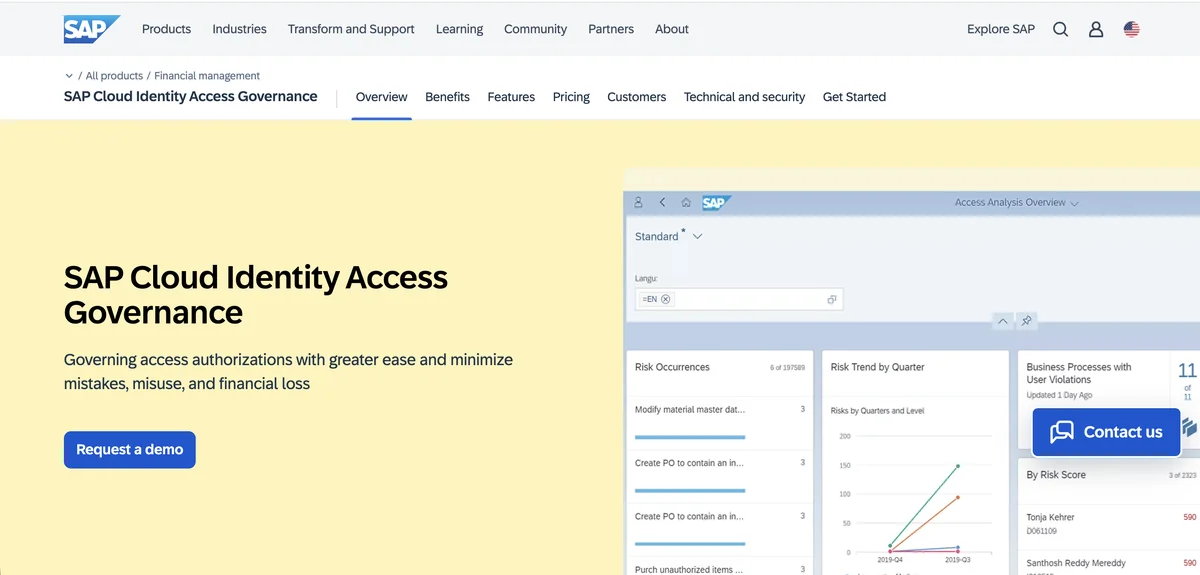
SAP Cloud Identity Access Governance extends governance capabilities beyond the SAP ecosystem through SCIM-based integrations with third-party applications including Zoom. The platform connects via standard identity protocols, pulling user account data for certification campaigns that can span both SAP and non-SAP systems simultaneously. Organizations already invested in SAP infrastructure find this approach valuable for maintaining governance consistency across their entire application portfolio.
SAP IAG provides five core governance components covering access analysis, role design with machine learning optimization, access request workflows, access certification campaigns, and privileged access management. For Zoom specifically, the access certification service enables periodic reviews where designated approvers confirm that license assignments remain appropriate. The platform tracks campaign progress through centralized dashboards showing completion rates and outstanding certifications.
SAP Cloud IAG delivers the strongest value for organizations already running SAP applications like SuccessFactors, Ariba, or S/4HANA Cloud. The unique Bridge capability connects on-premise SAP GRC investments with cloud governance, though this matters less for teams focused solely on Zoom reviews.
SAP IAG targets mid-market to large enterprises, particularly those operating hybrid landscapes with both cloud and on-premise systems. The platform runs entirely on SAP Business Technology Platform with automatic updates that deliver new features without IT maintenance burden.
Pros:
- SCIM-based integration enables Zoom governance within broader cross-system certification campaigns covering SAP and non-SAP applications
- Machine learning-based role optimization helps identify over-provisioned access patterns that warrant remediation
- Dashboard-driven interface provides visual campaign progress tracking and highlights critical issues requiring attention
Cons:
- Primary value proposition centers on SAP-centric environments, limiting appeal for organizations without existing SAP investments
- Enterprise-level pricing described as expensive and not suitable for smaller businesses evaluating standalone Zoom governance
- Complex product with steep learning curve that requires specialized knowledge for optimal configuration and use
- Public cloud only deployment means organizations with strict on-premise requirements cannot benefit
G2 Rating: 3.0 out of 5 (limited reviews) Gartner Rating: 4.4 out of 5 (114 reviews)
Oracle Identity Governance
Oracle Identity Governance provides enterprise-scale identity governance with extensive connector support for third-party applications including collaboration tools like Zoom. The platform connects through REST APIs and web services, enabling user account synchronization and entitlement data collection for certification campaigns. Oracle serves approximately 1,150 companies globally with this solution, primarily large enterprises in regulated industries requiring comprehensive governance frameworks.
Oracle brings AI and machine learning capabilities to access reviews through their Identity Role Intelligence feature. The system uses advanced data mining to identify common access patterns, flag outliers, and provide prescriptive analytics that help reviewers make informed decisions. Event-based micro-certifications can trigger automatically when job changes or organizational restructuring occurs, reducing the window where inappropriate access might persist between scheduled review cycles.
Oracle targets large enterprises with complex IT environments requiring extensive customization options. The platform supports both on-premise deployments and integration with Oracle Access Governance cloud for hybrid architectures. Users rate scalability highly, noting the system handles large volumes of data effectively for organizations with tens of thousands of employees.
Pros:
- AI and ML-powered prescriptive analytics provide reviewers with risk-based recommendations and peer group comparisons during certification
- Event-based micro-certifications trigger automatically on job changes, catching access issues between scheduled review campaigns
- Enterprise-grade scalability handles complex environments with thousands of users and applications under governance
Cons:
- Implementation timelines typically span months rather than weeks, requiring substantial project investment before Zoom reviews become operational
- Pricing starts at $3,600 per named user or $180,000 per processor, placing the platform beyond reach for mid-market organizations
- User interface has not significantly evolved in recent years, creating usability challenges that increase reviewer training requirements
- Complex configuration requires specialized IAM expertise that many IT teams lack internally
G2 Rating: 3.8 out of 5 (71 reviews) Capterra Rating: 4.4 out of 5 (7 reviews)
How to Choose the Right Zoom Access Review Tool
Your selection ultimately depends on governance requirements, existing technology investments, and budget constraints. Each platform profiled above brings distinct strengths that align better with certain organizational contexts than others.
Organizations seeking end-to-end SaaS governance with direct Zoom remediation capabilities should evaluate Torii, which combines discovery, review workflows, and automated actions within a single platform. The integrated approach eliminates coordination delays between identifying access issues and actually resolving them through license changes or deprovisioning.
Companies prioritizing AI-assisted review efficiency with modern cloud-native architecture will find ConductorOne compelling. The platform brings intelligent recommendations to reviewers while maintaining human oversight that compliance frameworks require. Fast implementation timelines make it suitable for organizations wanting quick wins before upcoming audits.
SAP-centric enterprises with existing investments in SAP applications and governance tooling benefit from SAP Cloud IAG’s ecosystem integration. The platform handles Zoom alongside SAP systems within unified certification campaigns, though organizations without SAP footprint will find better value elsewhere.
Large enterprises with complex hybrid environments and deep Oracle investments may prefer Oracle Identity Governance for its extensive customization and institutional-grade capabilities. The platform handles scenarios that lighter tools cannot address, though the investment in time, expertise, and licensing requires significant commitment.
For most mid-market organizations running Zoom alongside dozens of other SaaS applications, a platform offering AI-powered discovery, automated workflows, and financial governance provides the best balance of compliance capability and operational efficiency. Torii represents this category well, combining shadow IT detection, cost optimization, and access reviews with comprehensive Zoom integration that surfaces the specific data points needed for informed certification decisions.
Torii works well when you want combined SaaS management and identity governance in one platform, with AI-powered shadow IT discovery, automated license remediation, and direct Zoom API integration for granular user data across your entire video conferencing footprint.
Frequently Asked Questions
Periodic Zoom access reviews stop ongoing spend from unused seats, ensure host rights match responsibilities, and confirm room system licenses are assigned to active physical spaces. They prevent hundreds in annual waste per unused Business seat and reduce security exposure from orphaned privileges.
Shadow IT for Zoom refers to accounts, subscriptions, or room systems created outside official procurement or IT oversight—often via corporate cards or personal signups. These hidden instances bypass governance, inflate license costs, and create unmanaged security and compliance risks.
Discovery methods include direct Zoom API syncs, SSO and identity provider logs, browser extensions, and expense or procurement integrations. Tools merge these signals to list users, license types, last activity, and room allocations for automated certification and remediation workflows.
Torii emphasizes direct Zoom API integration, shadow IT discovery, and automated license remediation within a SaaS management+IGA platform. ConductorOne focuses on AI-assisted recommendations, separate Zoom and Zoom Phone connectors, just-in-time access, and faster cloud-native deployments but lacks mid-level license modification during reviews.
Large enterprises with complex hybrid environments and regulatory needs often choose Oracle or SAP for deep customization, scalability, and ecosystem integration. Mid-market organizations typically prefer Torii or ConductorOne for combined SaaS governance, AI discovery, quicker deployment, and lower operational overhead.
Schedule regular certification campaigns, integrate Zoom data with HR and SSO records, use automated discovery to catch shadow accounts, apply risk-based or AI recommendations, implement just-in-time or time-bound host grants, and automate license downgrades or deprovisioning where possible.