

8 Deel Access Review Vendors Compared in 2026
 Chris Shuptrine
•
Feb 23, 2026
•
17 min read
Chris Shuptrine
•
Feb 23, 2026
•
17 min read
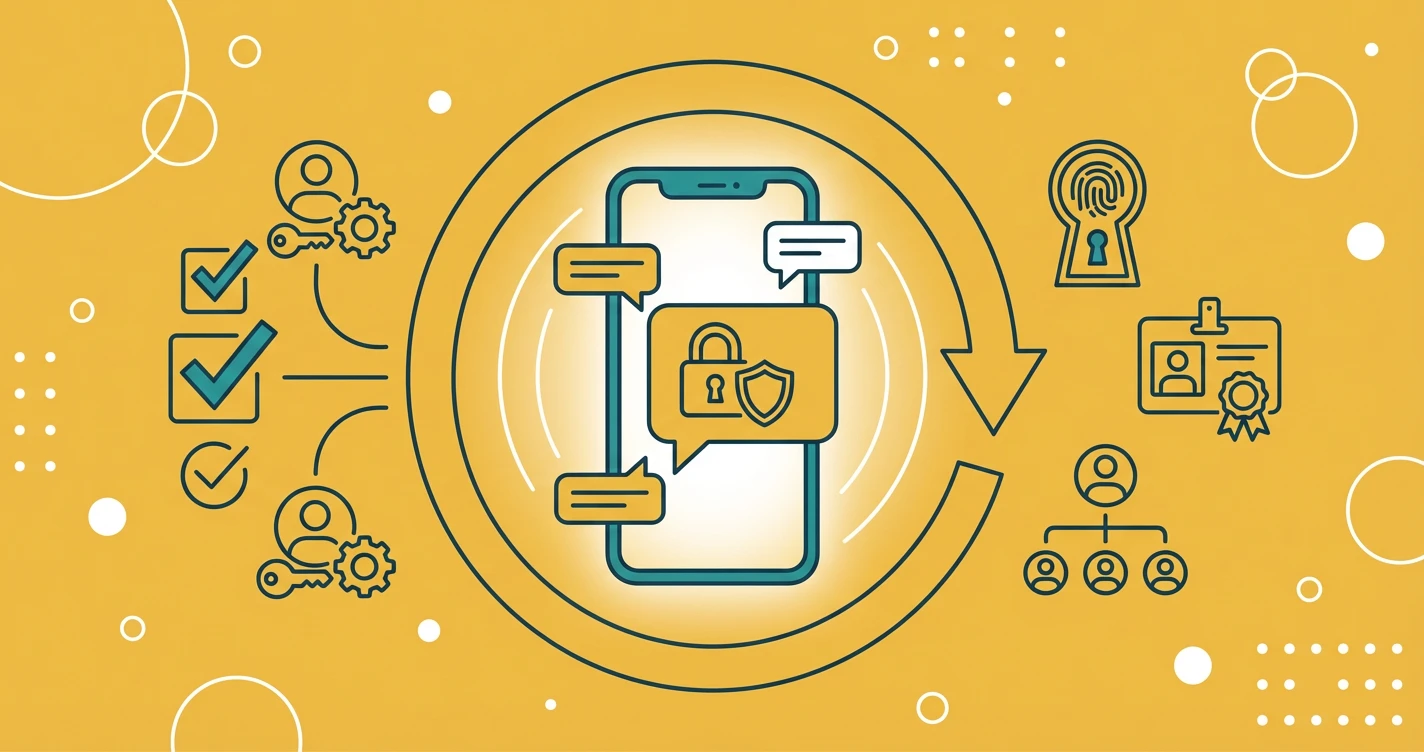
Compare 8 identity governance platforms for Deel access reviews in 2026, covering payroll roles, contractor permissions, and sensitive data access control.
Ask about this article
Opens Claude in a new tab to answer, using this article as the source.
Deel holds more sensitive data per user record than most enterprise SaaS tools in the average company stack. Banking account numbers, Social Security numbers, employment contracts, salary history, national ID documents, and multi-country tax filings all live inside one platform. In 2026, as global workforce management expands and audit expectations tighten around GDPR, SOC 2, and ISO 27001, controlling who can reach that data has become a genuine IT security priority.
Deel uses a two-tier role structure. Organization-level roles include Org Admin (full superuser access with payroll, billing, API control, and tax filing), IT Developer Admin, and Integrations Admin. Group-level roles range from Group Admin and Payer down to Viewer (Sensitive Data) and Viewer (Non-Sensitive Data), with a hard split on who can see compensation and PII versus non-sensitive professional information. API tokens and HR integration credentials are a third category that often goes unreviewed in standard campaigns.
Deel’s role architecture creates conditions where access creep is easy and quiet. Contractors cycle in and out, employees shift between groups, and Payer or Sensitive Data Viewer assignments don’t automatically expire when someone changes jobs internally. By the time your security team asks who can see payroll records, the list is usually longer than expected.
The eight platforms below approach Deel access governance differently, from AI-native certification engines to enterprise IGA suites to cost-effective lifecycle management tools. Each section covers what the platform does for Deel specifically, where it falls short, and ratings from major review sites.
★ = low · ★★ = medium · ★★★ = high
| Tool | Ease | Cost | AI Capabilities | Reviews |
|---|---|---|---|---|
| Torii | ★★★ | ★★ | ★★★ | ★★★ |
| ConductorOne | ★★★ | ★ | ★★★ | ★ |
| Lumos | ★★ | ★ | ★★★ | ★★ |
| Okta Lifecycle Mgmt | ★★ | ★ | ★★ | ★★★ |
| Saviynt | ★ | ★★ | ★★★ | ★★ |
| Omada Identity | ★★ | ★ | ★★ | ★★ |
| MiniOrange | ★★★ | ★★★ | ★ | ★ |
| Avatier | ★★ | ★★★ | ★★ | ★ |
Table of Contents
Torii
Torii connects to Deel and pulls each user’s role, status, and license assignment, plus the Deel department, job title, manager, start date, and termination date fields. With those fields side by side, a reviewer can spot someone in a changed role who still holds a Deel Payer or Sensitive Data Viewer assignment. Quarterly reviews exist to catch that kind of gap, and offboarding checklists often miss it.
Where Torii adds depth for Deel governance is in treating it as part of a larger identity picture rather than an isolated app. Because Deel stores your employment source data, connecting it to Torii lets access review campaigns cross-reference Deel user attributes with activity patterns across other connected apps. Contractors who went dormant in the broader stack but still hold active Deel group roles are the kind of risk that shows up quickly when access data is unified.
Torii’s automated reviewer routing sends certification requests to the correct manager or app owner based on Deel role structure, and reviewers complete attestations without switching tools. Gartner named Torii a Leader in the 2025 Magic Quadrant for SaaS Management Platforms. The Deel integration page lists what the connector reads and the workflow actions it can run, such as Create Deel admin and Update Deel user.
Pros:
- Deel field coverage: role, status, license assignment, department, job title, manager, and start and termination dates
- 200+ integrations, so Deel reviews run in the same platform as the rest of the app stack
- Automated reviewer routing with in-place attestations and retained audit evidence
- AI anomaly flagging surfaces unusual Deel access patterns without manual investigation
Cons:
- Pricing is higher than lightweight IAM tools; designed for mid-market and enterprise
- No on-premise option; built entirely for cloud and SaaS environments
G2 Rating: 4.5/5 (302 reviews) · Capterra Rating: 4.9/5 (26 reviews)
ConductorOne
ConductorOne builds a unified identity graph that maps Deel user assignments alongside every other connected application. For Deel governance, that means reviewing who holds Org Admin versus Group Admin roles, which accounts have Sensitive Data Viewer access to payroll and banking details, and which Payer assignments remain active for people who changed positions months ago, all from the same interface where your SOC 2 certification evidence is being collected.
The platform’s AI agents handle routine certification decisions automatically, routing low-risk approvals while escalating anomalous Deel role assignments for human review. That behavior matters for Deel specifically: the Sensitive Data Viewer role gives access to compensation data, national ID documents, and banking account information for every worker the role covers. Those decisions warrant human attention rather than automated approval, and ConductorOne’s risk-based routing is designed to make that distinction.
ConductorOne reports customers completing access review campaigns in 24 hours compared to previous two-week cycles, largely because AI handles the volume of routine approvals. The company also cites a four-week average go-live time, which is one of the faster implementation paths for formal Deel access governance.
Pros:
- AI agents handle routine Deel certifications; escalates Sensitive Data Viewer and Org Admin decisions
- Four-week average implementation timeline
- Strong audit trail supporting SOC 2 and ISO 27001 evidence requirements
Cons:
- Reviews can only remove access, not downgrade Deel role levels from within the interface
- No Capterra presence; smaller customer base than longer-established vendors
- Advanced configurations require CLI and Terraform familiarity
G2 Rating: 4.8/5 (13 reviews)
Lumos
Lumos built its Albus AI agent specifically to reduce the manual decision load in access reviews, and that design is well-suited to Deel environments with high contractor and EOR worker turnover. Albus evaluates each Deel role assignment against peer group norms and usage patterns, then automatically approves or flags items, so reviewers are focused on exceptions rather than working through a full certification list that mostly contains obvious approvals.
Delta Reviews is a standout feature for organizations with continuous Deel contractor onboarding. Rather than re-certifying every user assignment from scratch each quarter, Lumos surfaces only what changed since the last review cycle. For companies adding and offboarding international workers through Deel throughout the quarter, that narrows the review scope considerably without missing the Deel access changes that carry compliance risk.
Lumos describes its Access Review Agent this way: it “certifies the safe access on its own and brings you only the items that need a human call” (Lumos). One public result: Sun Country Airlines, which runs access reviews for SOX, saved 50 hours per quarter after moving them to Lumos. The self-service app portal also gives employees a structured channel for requesting elevated Deel access, replacing informal requests that bypass IT. Implementation typically reaches production in days rather than weeks, and the modern interface reduces the reviewer training burden for Deel managers completing certifications.
Pros:
- Albus AI automates routine Deel certifications and surfaces genuine exceptions
- Delta Reviews scope campaigns to changed access, reducing reviewer fatigue
- Self-service portal provides a structured path for Deel access requests
Cons:
- Initial setup and workflow configuration takes longer than vendor marketing suggests
- No live chat support; issue resolution relies on asynchronous channels
- No free trial; requires full sales engagement before evaluation
G2 Rating: 4.7/5 (54 reviews)
Okta Lifecycle Management
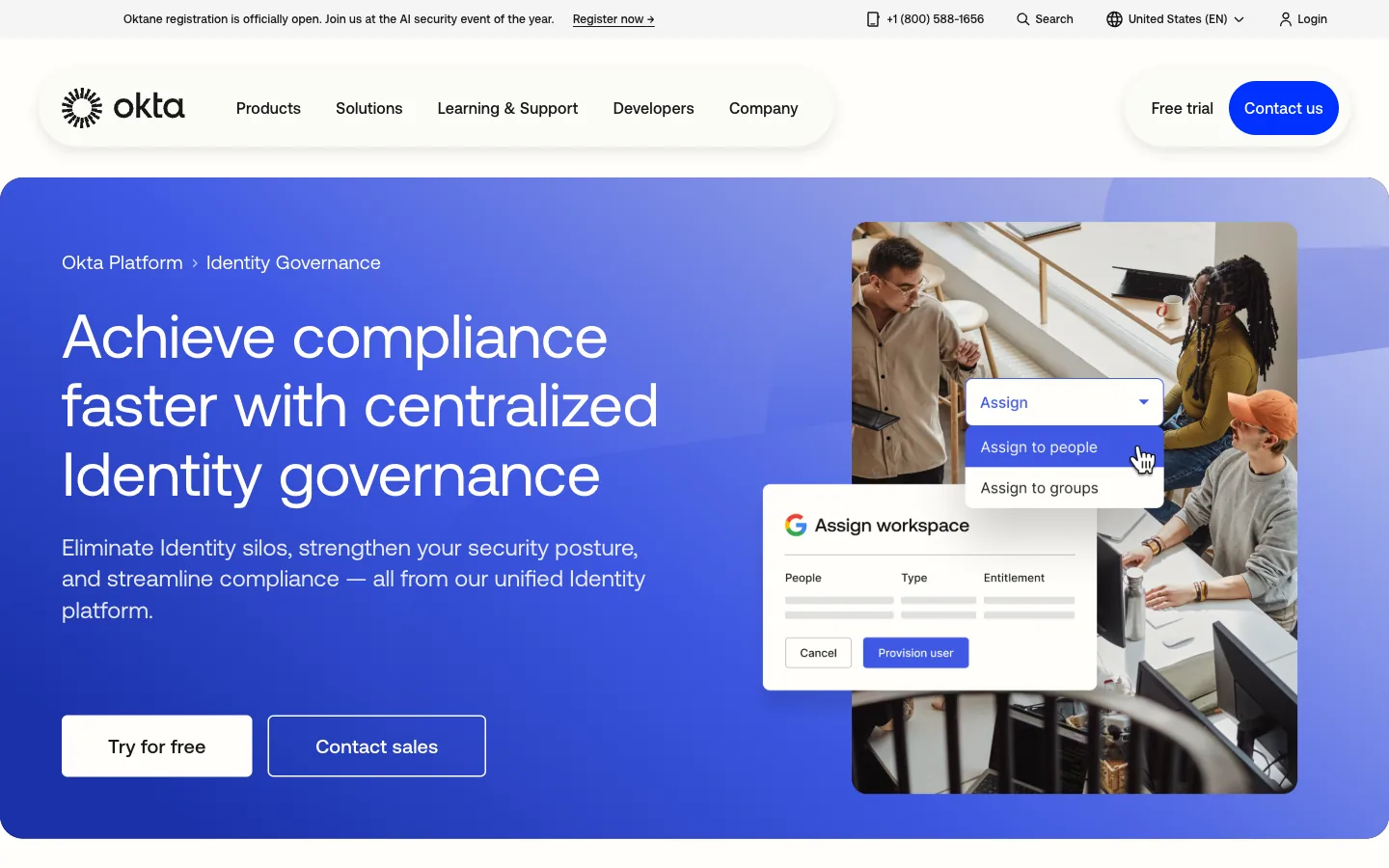
Okta’s practical advantage for Deel access reviews comes from being the IdP that many organizations already use to manage Deel SSO. Teams running Okta as their identity layer can extend that existing relationship into formal access certification campaigns through Okta Identity Governance (OIG), pulling Deel group assignments and app entitlements into recurring review cycles without standing up a separate governance tool.
The 2025 updates to Okta’s certification module added event-triggered reviews, which change how Deel governance works in practice. When a contractor finishes an engagement or an employee shifts departments, a Deel access review can trigger based on that event rather than waiting for the next quarterly campaign. AI-generated access summaries help reviewers who aren’t deeply familiar with Deel’s role hierarchy understand what each account can actually see before they approve or deny.
Okta’s help docs say identity campaigns let you “review and certify access to resources when specific events happen, such as a department, role, or project change” (Okta Help Center). For organizations with significant Deel complexity, Okta’s group-based provisioning model has real limits. Deel has seven distinct group-level roles plus multiple org-level roles, and certifying access at a fine-grained entitlement level works better in platforms built specifically for IGA. Okta fits best when Deel is part of a broader identity program rather than the primary governance focus.
Pros:
- Uses existing Okta SSO integration with Deel for faster certification campaign setup
- Event-triggered reviews automate certifications on Deel role changes and departures
- 8,000+ pre-built integrations bring Deel governance into a full identity management program
Cons:
- Group-based provisioning limits fine-grained Deel role entitlement review
- Identity Governance requires bundle purchase; not available as a standalone module
- Dashboard complexity increases with large Deel application portfolios
G2 Rating: 4.5/5 (1,257 reviews) · Capterra Rating: 4.7/5 (914 reviews)
Saviynt
Saviynt’s Trust Scoring addresses the scale problem that large Deel deployments create. When hundreds of users span employee, contractor, and EOR worker types across different group-level roles, quarterly certification campaigns generate significant reviewer volume. Trust Scoring automatically handles low-sensitivity approvals, so human attention goes to the Org Admin and Sensitive Data Viewer assignments that carry real payroll and PII risk. At the 2024 launch of Saviynt Intelligence, Chief Product and Strategy Officer Jeff Margolies said the suite would “reduce access certification effort by over 80%” (Saviynt press release). That figure is the company’s own forecast, so test it against your Deel volumes.
Deel's Sensitive Data Viewer role grants read access to compensation figures, banking account details, and personal identifiers for every worker it covers. Payer roles can approve and submit payroll runs. Org Admins have full control over billing, API tokens, and SSO configuration. These three role types should be the first focus of any access review campaign on a Deel instance.
Saviynt’s continuous compliance approach is more relevant for Deel environments than periodic campaigns alone. Device management access changes frequently, and Deel’s workforce population often shifts faster than a quarterly schedule captures, especially when contractor engagements end or workers move between legal entities. Saviynt detects access anomalies as they occur and triggers micro-certifications when role assignments look out of pattern, rather than accumulating risk until the next scheduled review.
The unified IGA and PAM platform is worth noting for larger organizations where Deel connects to finance systems or payroll infrastructure through API integrations. Privileged credentials associated with those integrations represent a category that pure IGA platforms often miss; having both under one governance layer closes that gap.
Pros:
- Trust Scoring auto-approves low-risk Deel certifications so reviewers see fewer items
- Continuous compliance triggers Deel access reviews on anomalous role changes
- Unified IGA and PAM handles Deel API integrations and privileged credentials
Cons:
- Backend complexity is significant despite the polished end-user interface
- Customer support response times have been flagged as inconsistent in reviews
- $10,000+ starting price creates a barrier for smaller organizations
Gartner Peer Insights Rating: 4.8/5 (185 reviews) · Capterra Rating: 4.5/5 (2 reviews)
Omada Identity
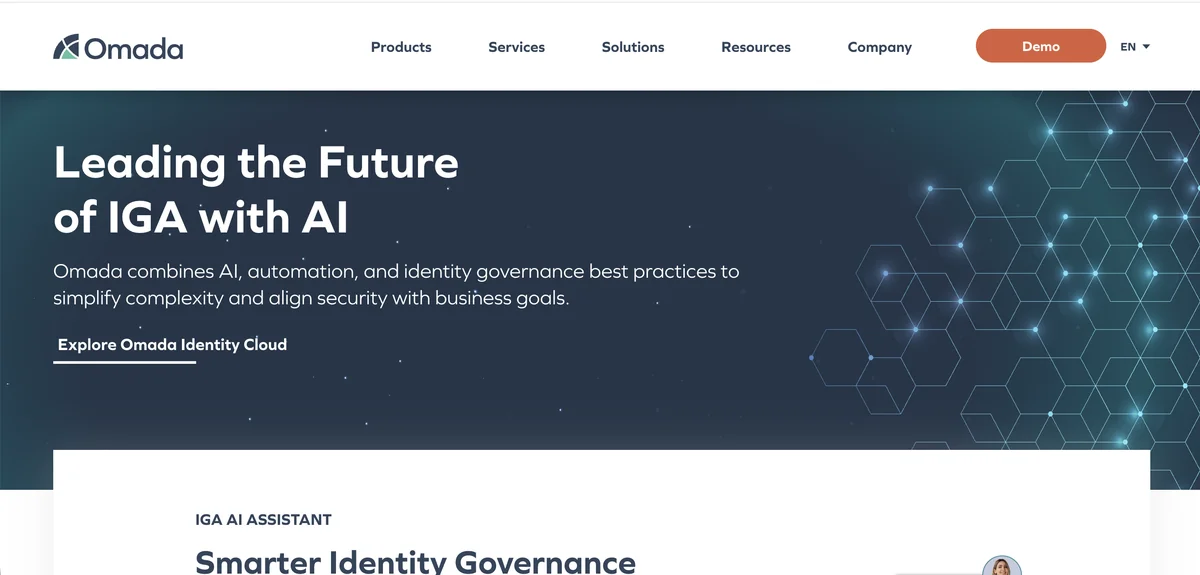
Omada is built around compliance-heavy governance requirements, which matches the audit stakes involved in Deel access control. For organizations managing Deel payroll across multiple countries and regulatory frameworks, Omada’s 50+ audit report templates reduce the documentation burden of proving access certifications happened and access changes were tracked.
Cross-system certification campaigns run Deel reviews alongside connected HR and finance systems in a single campaign rather than managing separate review cycles per application. Omada’s Javi AI assistant adds a Teams-native interface for entitlement owners, which is practical for Deel’s people operations stakeholders who manage group-level role assignments as part of daily workflow and won’t readily adopt a separate governance console.
Omada advertises a guaranteed 12-week, fixed-cost deployment, which is fast for enterprise-grade IGA, and the platform’s strength in Microsoft-centric environments makes it a natural fit when Deel sits alongside heavy Entra ID and Microsoft 365 usage. The SaaS version has documented feature gaps compared to the on-premise deployment, and large-scale re-certification campaigns can show performance latency, which is worth validating in a proof of concept before committing at enterprise scale.
Pros:
- 50+ compliance report templates covering frameworks applicable to Deel’s payroll data
- Cross-system campaigns run Deel certifications alongside other HR and finance tools
- Guaranteed 12-week, fixed-cost deployment
Cons:
- SaaS deployment lacks some features available in on-premise version
- Large re-certification campaigns can have noticeable performance issues
- Cloud version pricing is considerably higher than on-premise deployment
Gartner Peer Insights Rating: 4.6/5 (211 reviews)
MiniOrange
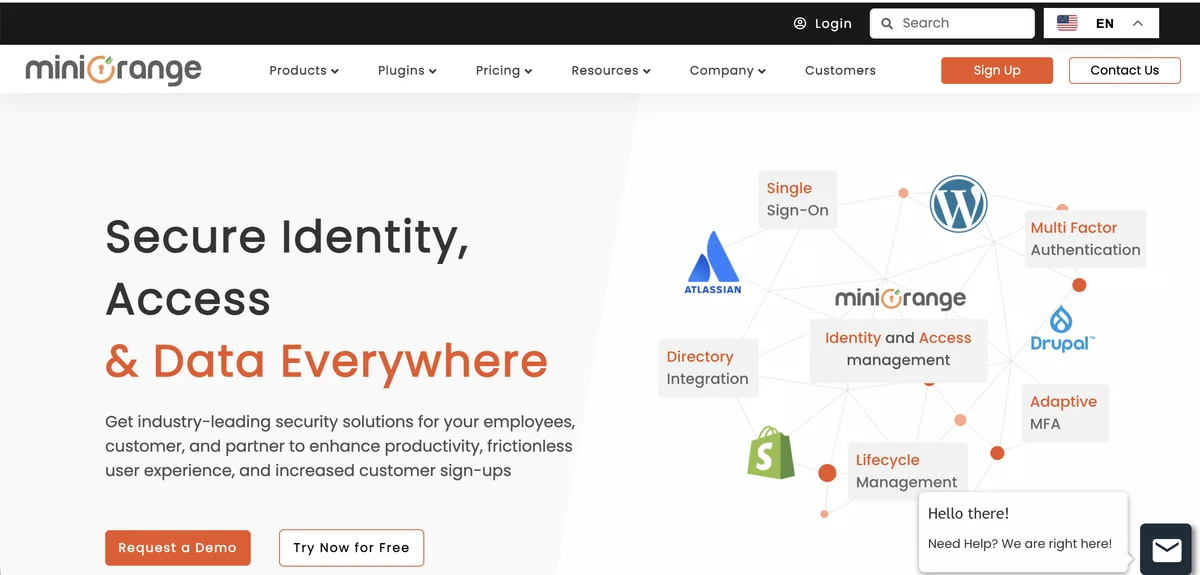
MiniOrange approaches Deel access reviews through SCIM-based user lifecycle management and provisioning governance. For mid-market organizations that use Deel for contractor and employee management but don’t need a full enterprise IGA deployment, the $2-$3/user/month pricing makes basic access governance accessible without the six-figure implementation investment that platforms like SailPoint or Saviynt require.
The SCIM provisioning gateway handles automated Deel deprovisioning as part of the offboarding chain: when a contractor’s status changes in a connected HRIS and syncs to MiniOrange, Deel access is removed alongside other connected applications. The Jira-based Access Governance Automation app provides a structured request and approval workflow for Deel access, with policy-based routing that sends requests to the correct approver based on predefined rules, and granular action logging for compliance documentation.
MiniOrange’s 6,000+ integrations and rapid deployment make it practical for organizations that need foundational Deel lifecycle governance without long implementation cycles. The tradeoff is clear: native access certification campaigns are less mature than dedicated IGA platforms, advanced risk analytics are limited, and the core access governance workflow has a Jira dependency that not every organization will want to take on.
Pros:
- $2-$3/user/month makes Deel access governance viable for smaller organizations
- SCIM deprovisioning automates Deel access removal as part of offboarding
- Jira-based workflow provides structured request approval and audit logging
Cons:
- Native access certification workflows are less capable than standalone IGA platforms
- Primary governance automation requires Jira, which creates a tool dependency
- Risk analytics and anomaly detection are limited compared to modern IGA tools
G2 Rating: 4.5/5 (264 reviews) · Capterra Rating: 4.5/5 (36 reviews)
Avatier
Avatier’s Access Certification Snapshot lets administrators scope review projects specifically to the Deel user population and role criteria that matter most. For organizations where the primary Deel concern is Org Admin and Sensitive Data Viewer access rather than the full user base, that focused approach is more efficient than running a blanket campaign that certifies every Deel user regardless of what they can actually reach.
Delta Access Certification is relevant for companies with active Deel contractor populations that are always in motion. Rather than re-certifying every Deel user assignment from scratch each quarter, reviewers only work through what changed since the last campaign. Multi-platform reviewer access lets Deel managers complete attestations from Teams, Slack, mobile, or desktop without needing to log into a separate governance portal, which typically improves campaign completion rates when reviewers work across environments.
Avatier’s containerized Docker architecture supports deployment on any cloud, on-premise, or hybrid, giving IT teams flexibility when Deel sits in a mixed infrastructure environment. The all-inclusive pricing model covers SSO, IGA, password management, and lifecycle automation together, which can simplify consolidation for organizations managing those capabilities across separate tools. The main trade-off is limited analyst recognition, which can complicate internal procurement approvals at organizations that require Gartner or Forrester validation before purchasing.
Pros:
- Access Certification Snapshot enables scoped reviews targeting high-risk Deel roles
- Delta Certification narrows recurring campaigns to changed access, not full re-review
- Multi-platform reviewer access via Teams, Slack, mobile, and desktop
Cons:
- No Gartner or Forrester recognition; can create friction in enterprise procurement
- Interface can overwhelm new users; training recommended before broad rollout
- Reporting customization more limited than some competing platforms
G2 Rating: 4.6/5 (31 reviews)
How to Choose the Right Deel Access Review Platform
The decision comes down to what Deel governance problem your organization is actually trying to solve.
For IT teams managing a broad SaaS stack alongside Deel, a platform that handles both access governance and SaaS spend visibility reduces tool overhead. Torii fits mid-market organizations that want license management, shadow IT discovery, and access certification in one system. The pre-built Deel integration and automated reviewer routing reduce operational overhead for teams running quarterly certification campaigns without a dedicated IAM engineer.
For compliance-heavy environments or organizations connecting Deel to other sensitive finance and HR systems, purpose-built IGA tools are a better fit. ConductorOne and Lumos both deploy faster than legacy platforms and offer modern AI-driven certification workflows suited to Deel’s layered role structure. Saviynt and Omada are stronger when Deel is one piece of a broader governance program requiring PAM, cross-application SoD enforcement, or multi-framework compliance reporting.
Okta is the natural path for organizations already using it as the IdP for Deel SSO, extending that relationship into formal certification without a separate tool. MiniOrange and Avatier both offer cost-effective options for organizations that need functional Deel access governance without enterprise IGA-level pricing commitments.
Regardless of platform, start with the roles that carry the most exposure. Org Admins and Sensitive Data Viewers can access payroll records, compensation history, banking details, and national ID documents across your entire workforce. Stale access in those roles is where the real risk lives.
Before running your first campaign, export your current Deel admin lists: all Organization Admins, active Payers, and users with Sensitive Data Viewer assignments. Cross-reference that list against current employment records, noting anyone who has changed roles, ended a contract, or separated from the company. That targeted audit covers the highest-risk accounts and gives you a baseline for the fuller access certification campaigns that follow.
Frequently Asked Questions
Export current Deel admin lists (Org Admins, active Payers, Sensitive Data Viewers), cross-reference with employment records, note role changes or separations, prioritize high-risk accounts, configure certification cadence, and include API tokens and HR integration credentials in scope.
Prioritize Org Admins, Payers and Sensitive Data Viewers first, as they control billing, payroll submission, compensation, banking information, and PII access. Start with those roles and remove or re-certify stale assignments before broader campaigns.
Standard campaigns often miss API tokens, HR integration credentials, and third-party provisioning secrets. They also overlook role expiration, contractor churn, and offboarding gaps, leaving hidden PII and payroll access unreviewed unless integrations and tokens are explicitly included in scope.
Tools range from AI-native certification engines to enterprise IGA suites and lightweight lifecycle managers. Choose based on implementation speed, AI anomaly detection, fine-grained entitlement review, PAM for API credentials, cost, and whether Deel is a primary governance focus.
Automation reduces access creep via SCIM deprovisioning, event-triggered reviews, delta (changed-only) recertifications, AI anomaly flagging, and automated reviewer routing. These steps cut manual work, speed remediation, and ensure contractors or role changes trigger timely access removals.
Evaluate Deel field coverage (user attributes, group roles, license types), audit evidence retention, integration breadth, AI capabilities, deployment time, cost, and whether the product handles API/PAM credentials, especially if Deel connects to finance or payroll systems.
Run baseline quarterly certifications for broad coverage, and complement them with event-triggered or continuous micro-certifications for departures, role changes, and anomalous access. Continuous triggers catch fast-moving contractor churn and reduce accumulated risk between scheduled reviews.