

Confluence User Access Reviews: 9 Leading Vendors in 2026
 Chris Shuptrine
•
Feb 10, 2026
•
18 min read
Chris Shuptrine
•
Feb 10, 2026
•
18 min read
Compare nine identity governance platforms for Confluence access reviews in 2026. Find tools for wiki compliance, space permissions, and certifications.
Ask about this article
Opens Claude in a new tab to answer, using this article as the source.
Confluence wikis collect institutional knowledge that most organizations underestimate until an audit forces them to confront who actually has access. Engineering teams document architecture decisions, HR stores policy handbooks, product managers maintain roadmaps, and legal teams keep contract templates all within a platform that hands out space-level permissions through a decentralized admin model. By 2026, the average mid-market company runs dozens of Confluence spaces where sensitive content sits behind permissions that nobody has reviewed since the spaces were first created.
Confluence uses a three-layer permission model with global, space, and page-level controls. When a user belongs to multiple groups, the most permissive setting wins. This additive approach means permissions silently expand over time as people join groups for temporary projects and never get removed. Space admins manage their own permissions independently, creating governance blind spots that centralized IT teams cannot see without dedicated tooling.
Spreadsheet-based quarterly reviews cannot keep pace with how quickly Confluence permissions drift. Someone gets added to the Engineering space during an incident response and retains access to post-mortems containing vulnerability details for months afterward. Contractors keep viewing company strategy documents long after their engagements wrap up. The identity governance platforms below connect to Confluence through APIs and identity provider integrations to automate certification campaigns, flag orphaned accounts, and produce audit evidence that satisfies SOC 2 and ISO 27001 requirements for systematic access reviews.
★ = low · ★★ = medium · ★★★ = high
| Tool | Ease | Cost | AI Capabilities | Reviews |
|---|---|---|---|---|
| Torii | ★★★ | ★★ | ★★★ | ★★★ |
| Veza | ★★ | ★ | ★★★ | ★ |
| Zluri | ★★ | ★★ | ★★ | ★★ |
| SAP Cloud IAG | ★ | ★ | ★★ | ★★ |
| SailPoint | ★ | ★ | ★★★ | ★★★ |
| One Identity | ★ | ★★ | ★★ | ★★ |
| Saviynt | ★★ | ★★ | ★★★ | ★ |
| CloudEagle | ★★ | ★★ | ★★ | ★★ |
| Avatier | ★★ | ★★★ | ★★ | ★ |
Table of Contents
- Torii
- Veza
- Zluri
- SAP Cloud Identity Access Governance
- SailPoint IdentityIQ
- One Identity
- Saviynt
- CloudEagle
Torii
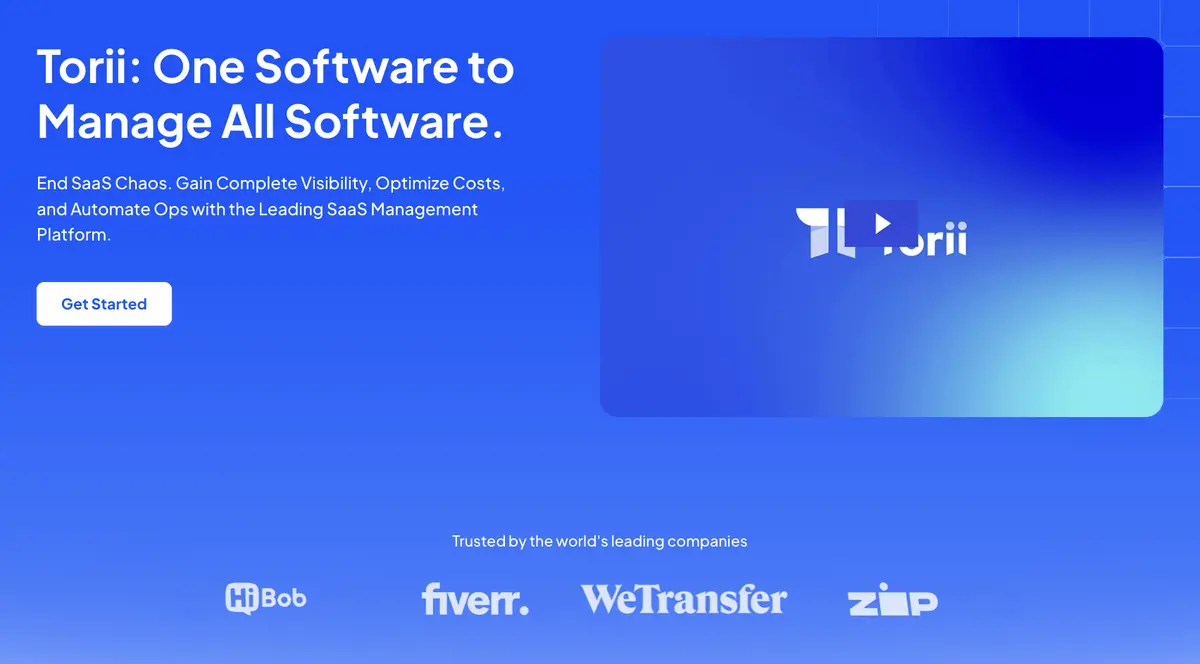
Torii approaches Confluence governance as part of a broader SaaS management strategy rather than treating it as an isolated compliance checkbox. The platform connects to Confluence through its direct integration library and pulls employee names, email addresses, job titles, departments, user status, license assignments, and license types into a centralized dashboard. This visibility across Torii’s 170+ integrations means you can review Confluence access alongside every other SaaS application in your stack during the same certification campaign.
Where Torii stands out for Confluence environments is its AI-powered discovery engine that identifies accounts across SSO, browser extension data, and financial records. This matters because Confluence usage often extends beyond what your identity provider sees, especially when teams share spaces with external collaborators or create service accounts for automation workflows. Torii catches these shadow accounts and flags them for review alongside your formally provisioned users.
The platform’s in-place attestation workflow lets reviewers certify Confluence access without switching between tools. Managers receive Slack notifications when reviews are due, approve or revoke access directly from the alert, and Torii logs every decision with timestamps for your auditors. Automated license reclamation workflows can downgrade or remove Confluence licenses from inactive users, directly reducing your Atlassian spend while tightening your security posture.
Pros:
- Combined SaaS management and identity governance means Confluence reviews happen alongside your entire application portfolio in one platform
- AI discovery finds shadow Confluence accounts that exist outside your identity provider
- In-place attestations with Slack integration make the review process fast for busy managers
- Automated license reclamation recovers unused Confluence seats and cuts Atlassian costs
Cons:
- Enterprise pricing starts at $2.50 per employee per month, which is not the cheapest option for smaller teams
- Cloud-only platform focused on SaaS and shadow IT, so organizations with on-premise Confluence Data Center deployments may need supplemental tooling
G2 Rating: 4.5/5 (302 reviews) Capterra Rating: 4.9/5 (26 reviews)
Veza
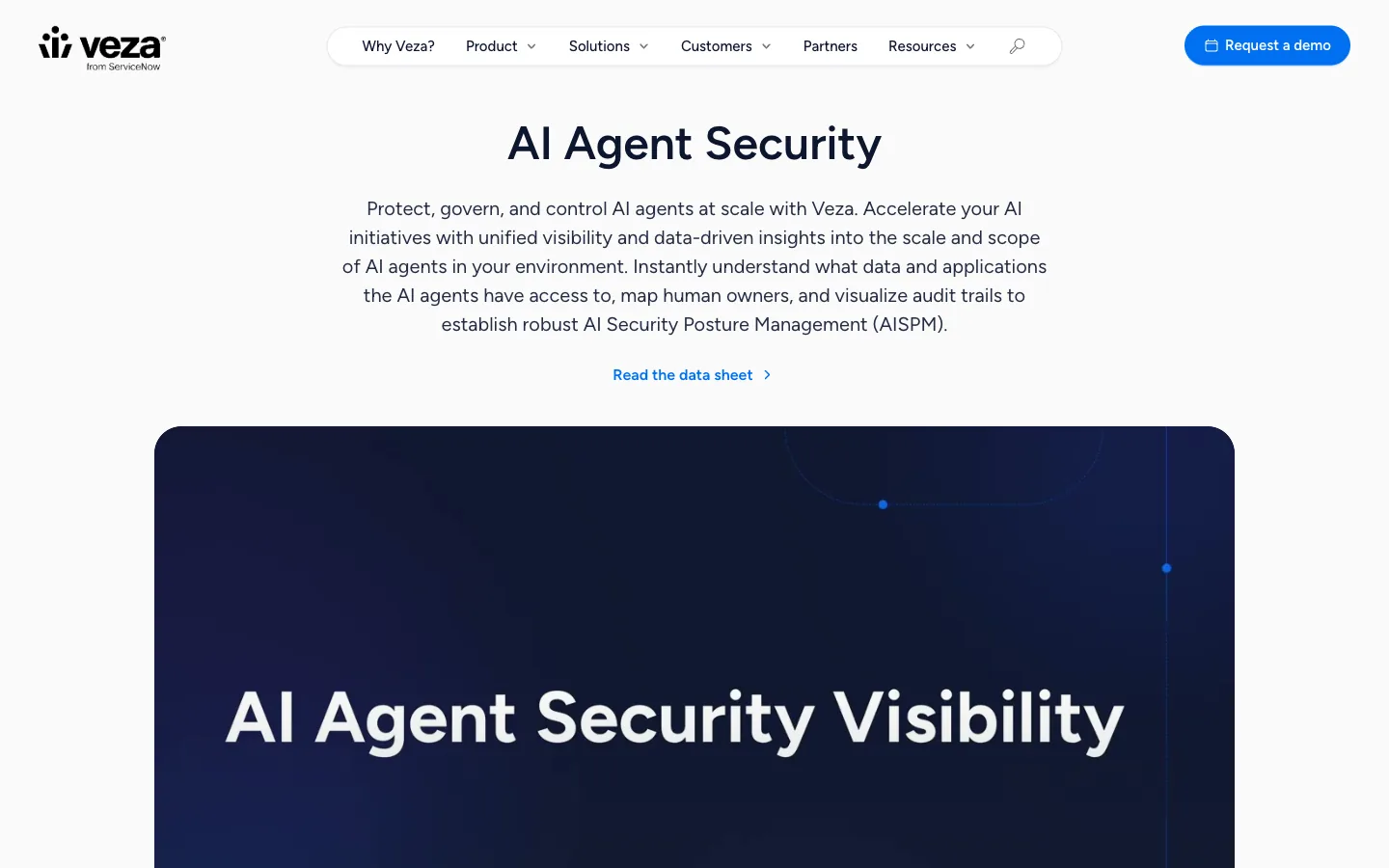
Veza brings authorization graph technology to Confluence access reviews, mapping the actual permission relationships between users, groups, spaces, and pages rather than just showing role assignments. For a platform like Confluence where permissions cascade across three layers, this graph-based visibility helps reviewers understand why someone has access to a particular space, not just that they do. The platform translates complex Confluence permission sets into plain-language descriptions showing Create, Read, Update, and Delete capabilities.
Their agentless integration approach means connecting Veza to your Confluence environment takes minutes rather than weeks. The platform pulls in both human and non-human identities, catching service accounts and API tokens that accumulate in Confluence environments used for documentation automation. Risk-based sorting pushes the highest-risk access items to the top of review queues, so your team addresses the contractor with admin access to the finance documentation space before rubber-stamping standard viewer permissions.
Veza was acquired by ServiceNow in late 2024, which could bring deeper integration with ServiceNow ITSM workflows but also introduces uncertainty around the product roadmap. For organizations already using ServiceNow for IT service management, this acquisition could eventually create a unified governance workflow spanning access reviews and service tickets.
Pros:
- Authorization graph provides the clearest view of effective Confluence permissions across all three permission layers
- Agentless deployment means connecting to Confluence takes minutes with no infrastructure changes
- Risk-based sorting helps reviewers focus on genuinely dangerous access before routine certifications
Cons:
- No public pricing and enterprise-only sales process creates a high barrier for mid-market organizations
- Very few public reviews on G2 and Capterra make it hard to validate the vendor through peer feedback
- ServiceNow acquisition could shift product priorities away from standalone identity governance
Capterra Rating: 5.0/5 (1 review) Gartner Rating: 4.9/5 (29 reviews)
Zluri
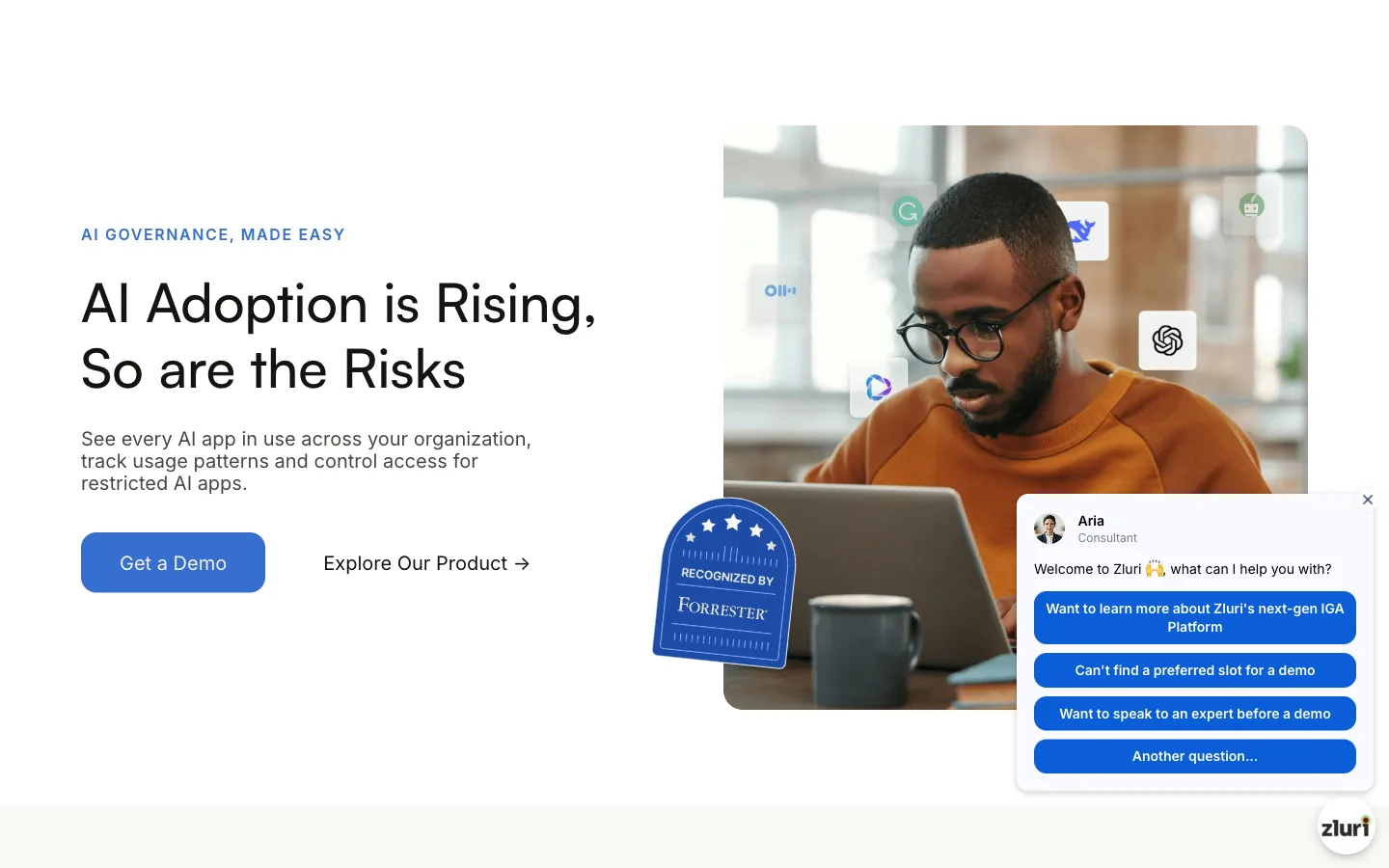
Zluri’s patented nine-method discovery engine catches Confluence usage that single-source platforms miss entirely. The platform pulls access data from SSO groups, direct API integrations, HRIS systems, browser agents, and financial records to build a complete picture of who uses Confluence and at what permission level. For organizations where Confluence adoption has grown organically with spaces created by individual teams, this multi-source approach is valuable for establishing a baseline of who actually has access before you begin formal certifications.
The platform’s access review automation handles the repetitive parts of Confluence governance that burn out IT teams. Zluri supports recurring certification campaigns, multi-level reviewer assignments, automated reminders for non-responsive reviewers, and bulk approvals for low-risk accounts that clearly belong in your Confluence environment. Users report cutting full-day audit cycles down to 30 minutes when switching from spreadsheet-based reviews to Zluri’s automated workflows.
Closed-loop remediation sets Zluri apart from platforms that stop at the certification decision. When a reviewer marks a Confluence account for removal, Zluri’s platform deprovisions that access automatically through API-based integrations rather than creating a ticket for someone else to action. This removes the gap between deciding to revoke access and actually doing it.
Pros:
- Nine discovery methods catch Confluence accounts that single-source platforms miss entirely
- Closed-loop remediation automatically deprovisions rejected Confluence access rather than just flagging it
- Users report reducing audit processes from full-day efforts to roughly 30 minutes
Cons:
- Discovery engine occasionally misidentifies applications, which can trigger unnecessary alerts during Confluence reviews
- Workflow editor navigation becomes confusing when building complex multi-step review processes
G2 Rating: 4.6/5 (175 reviews) Capterra Rating: 4.9/5 (27 reviews)
Unlike centrally managed applications, Confluence delegates space administration to individual teams. Each space admin can grant permissions independently, and because Confluence uses an additive permission model, access only expands as users join more groups. A typical mid-market Confluence instance accumulates 15-30 spaces within two years, each with its own permission matrix that nobody reviews holistically. The result is a permission surface area that grows geometrically while visibility stays flat.
SAP Cloud Identity Access Governance
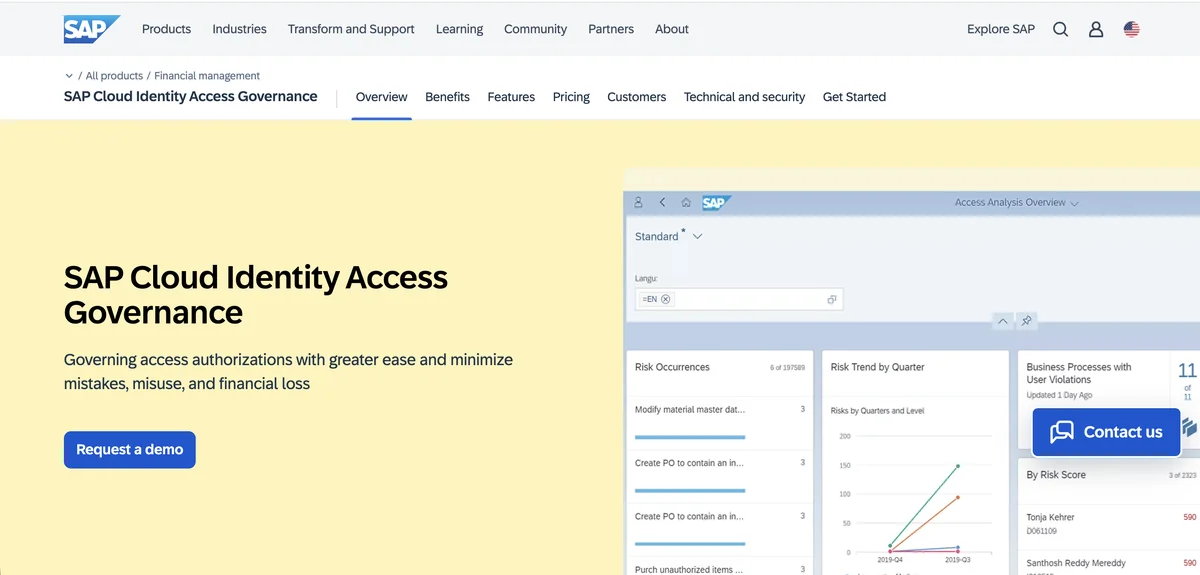
SAP Cloud Identity Access Governance extends its compliance reach beyond SAP applications to cover tools like Confluence through SCIM-based integrations. The platform’s Access Certification Service runs periodic campaigns where reviewers confirm or revoke Confluence access alongside permissions in SAP SuccessFactors, Ariba, and S/4HANA Cloud. Organizations already invested in SAP’s governance ecosystem can fold Confluence into existing certification workflows without deploying a separate tool.
The platform provides Segregation of Duties analysis that spans both SAP and non-SAP systems. If your compliance team needs to enforce policies where someone with Confluence admin access to financial documentation spaces should not also have certain SAP transaction authorizations, SAP IAG can model these cross-system SoD rules. Machine learning-based role optimization suggests cleaner permission structures based on observed access patterns across your entire application portfolio.
SAP IAG works best for enterprises that treat Confluence governance as one component of a broader SAP-centric compliance program. Organizations running Confluence alongside SAP SuccessFactors for HR and SAP Ariba for procurement benefit from unified certification campaigns that cover everything in a single review cycle.
Pros:
- Unified certification campaigns cover Confluence alongside SAP applications in a single review cycle
- Cross-system SoD rules can enforce policies spanning Confluence permissions and SAP transaction authorizations
Cons:
- Limited workflow customization compared to on-premise SAP Access Control constrains organizations with complex approval chains
- Gartner reviewers describe it as a “really complex product” with a steep learning curve that requires SAP-specific expertise
- Enterprise pricing makes this impractical for organizations that primarily need Confluence governance without a broader SAP footprint
G2 Rating: 3.0/5 (limited reviews) Gartner Rating: 4.4/5 (114 reviews)
SailPoint IdentityIQ
SailPoint connects to Confluence through its library of over 1,100 enterprise application connectors and governs Confluence permissions at the entitlement level rather than just the application level. This granular approach means certification reviewers see exactly which Confluence spaces and permission types a user holds, not just a binary “has Confluence access” determination. The platform’s AI recommendations use peer group analysis to flag when someone’s Confluence permissions deviate from what others in their role typically have.
For organizations managing Confluence alongside hundreds of other enterprise applications, SailPoint’s certification engine reduces rubber-stamping through machine learning that suggests which access rights to certify or revoke. The system compares each user against their peer group and highlights outliers. If a marketing coordinator somehow has admin permissions on the engineering architecture space, SailPoint’s outlier detection raises that for review before it becomes an audit finding.
The platform supports up to 500 Segregation of Duties policies with 50 entitlements each, which matters for organizations where Confluence contains financial planning documents or regulated content that requires strict access controls. Over 53% of Fortune 500 companies rely on SailPoint, and the platform’s maturity shows in how thoroughly it handles complex certification scenarios across hybrid environments.
Pros:
- Entitlement-level visibility into Confluence spaces and permission types goes deeper than application-level access checks
- AI-driven peer group analysis and outlier detection reduce certification fatigue and catch anomalous Confluence access
- Handles complex SoD policies spanning Confluence and hundreds of other enterprise applications
Cons:
- Average annual cost of roughly $240,000 with professional services that often double the initial software investment
- Typical deployments take six to twelve months, which is far too slow for organizations needing Confluence governance quickly
- Administrators require weeks of training and extensive development knowledge to configure the platform effectively
G2 Rating: 4.5/5 (161 reviews) Capterra Rating: 4.2/5 (21 reviews)
One Identity
One Identity governs Confluence through its Starling Connect cloud connectors, which support Atlassian products alongside Salesforce, Slack, and other SaaS applications via SCIM 2.0 standards. Their Identity Manager platform treats Confluence access certification as part of a broader attestation policy framework where organizations define which objects get reviewed, how often, and by whom. Individual attestation cases are generated for each reviewer, and every decision gets tracked through an audit-proof logging system.
What makes One Identity relevant for Confluence environments is its strength in hybrid deployments. Organizations running Confluence Data Center on-premise alongside Confluence Cloud instances can govern both from a single platform. The unified IGA plus PAM approach means you can manage standard Confluence user access and privileged admin accounts through the same policy engine, eliminating the gap that exists when organizations use separate tools for regular access reviews and privileged access governance.
Customers consistently describe One Identity as more affordable than SailPoint for comparable enterprise governance capabilities. The platform’s high customizability means attestation workflows can be configured rather than programmed, making it practical for Confluence environments where different spaces may require different review frequencies or reviewer assignments based on content sensitivity.
Pros:
- Unified IGA and PAM platform governs standard Confluence users and privileged admin accounts through one policy engine
- More cost-effective than SailPoint with comparable enterprise governance capabilities for large organizations
Cons:
- Multiple Gartner reviewers describe the attestation user experience as “old fashioned” with poor usability that frustrates end-user reviewers
- Implementation requires a partner and typically takes weeks to months with costs ranging from $5,000 to $50,000
G2 Rating: 3.5/5 (limited reviews) Capterra Rating: 5.0/5 (2 reviews)
Saviynt
Saviynt’s continuous compliance model changes how organizations approach Confluence access reviews. Rather than running periodic quarterly campaigns and hoping nothing goes wrong between cycles, Saviynt’s platform monitors Confluence permissions continuously and triggers micro-certifications when it detects risk events. If someone gets added to a sensitive Confluence space outside of normal provisioning workflows, the platform flags it immediately rather than waiting for the next scheduled review.
The platform’s Trust Scoring capability reduces reviewer workload by automating low-sensitivity approval decisions during Confluence certifications. Saviynt claims this cuts approver burden by up to 75% while maintaining 94% accuracy in predicting correct access assignments. For Confluence environments with hundreds of users across dozens of spaces, this intelligence prevents the certification fatigue that leads managers to approve everything without actually checking.
Saviynt is the only vendor that builds IGA and privileged access management on the same underlying code base. This convergence matters for Confluence environments where space administrators hold elevated permissions that require both standard certification review and privileged access governance. Organizations managing Confluence across AWS, Azure, or GCP cloud infrastructure can extend the same governance policies to their cloud platform permissions.
Pros:
- Continuous compliance with real-time micro-certifications catches Confluence permission changes between scheduled review cycles
- Trust Scoring automates low-risk Confluence approvals, reducing reviewer workload by up to 75%
- Converged IGA plus PAM on a single code base governs both standard users and Confluence space administrators
Cons:
- Mixed customer support reviews with G2 users reporting slow ticket resolution and difficulty reaching agents who understand root causes
- Platform stability concerns with users reporting workflows that break unexpectedly during certification campaigns
G2 Rating: 3.5/5 (limited reviews) Gartner Rating: 4.8/5 (185 reviews)
CloudEagle

CloudEagle approaches Confluence governance from a SaaS management angle that combines access reviews with license optimization and spend visibility. The platform’s 500+ direct integrations ranked second among vendors in the Gartner report for integration coverage, and their Confluence connector pulls user permissions, license assignments, and usage patterns into a single dashboard. This dual focus means your Confluence access review also identifies unused licenses that can be reclaimed to reduce Atlassian costs.
CloudEagle’s Slack-native workflow engine removes friction from the review process. Instead of requiring reviewers to log into a separate governance portal, the platform routes Confluence certification decisions directly into Slack channels where managers already work. Approvals, rejections, and escalations all happen within the messaging tool, which drives significantly higher review completion rates than platforms that rely on email notifications and external dashboards.
CloudEagle’s AI flags overprivileged Confluence users, inactive admin accounts, and anyone who has not logged into their Confluence workspace in 90 or more days. The platform prioritizes these high-risk items at the top of review queues so your team addresses actual security concerns before processing routine certifications for active, appropriately permissioned users.
Pros:
- Slack-native workflows for Confluence access reviews drive higher completion rates than email-based notification systems
- Combined access governance and license optimization identifies unused Confluence seats during the review process
- AI-powered risk flagging prioritizes overprivileged and inactive Confluence accounts for immediate attention
Cons:
- Users report a steep learning curve during initial setup with complex configuration that can overwhelm administrators
- Not all integrations work as seamlessly as advertised, sometimes requiring manual intervention for workflow disruptions
- No API access limits organizations that need custom reporting or want to integrate CloudEagle data with external analytics tools
G2 Rating: 4.7/5 (150+ reviews) Gartner Rating: 4.6/5 (53 reviews)
Avatier
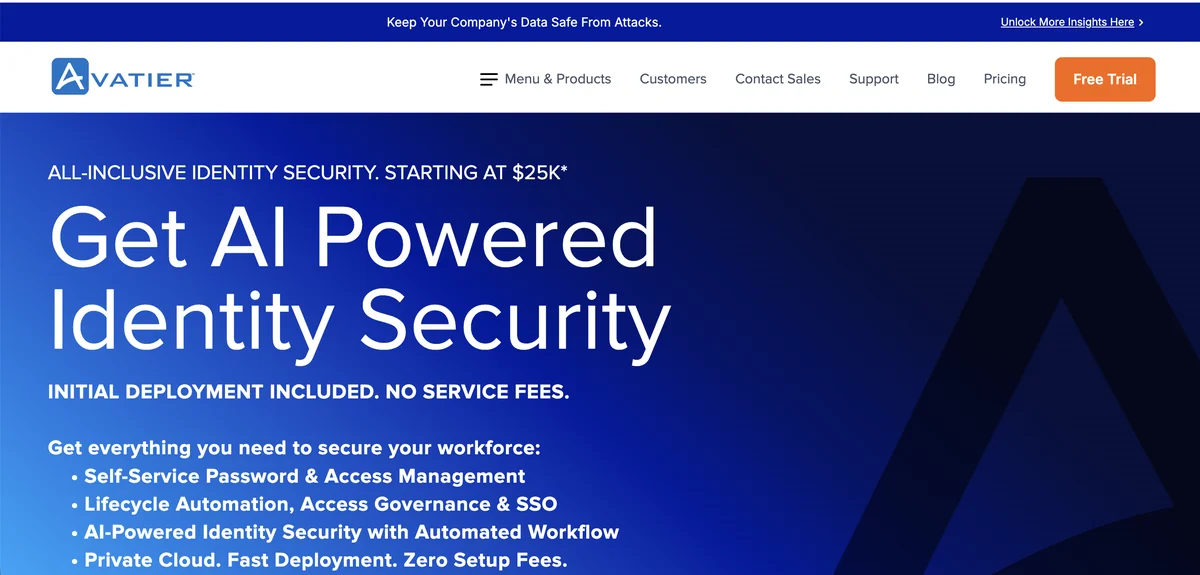
Avatier’s Identity Anywhere platform takes a containerized approach to Confluence governance that avoids vendor lock-in across cloud environments. Built on Docker containers, the platform deploys on Azure, AWS, Google Cloud, or on-premise infrastructure, which matters for organizations running Confluence Data Center in environments with strict data residency requirements. Avatier connects to Confluence through its library of 90+ pre-built connectors and supports SAML 2.0 and SCIM standards for identity synchronization.
The platform’s Delta Access Certification feature specifically addresses reviewer fatigue in Confluence environments with large user populations. Rather than asking managers to re-certify every Confluence permission during each audit cycle, delta certification only surfaces access that changed since the last review. This focused approach makes recurring Confluence certifications far less tedious and reduces the rubber-stamping that undermines the entire purpose of access reviews.
Avatier offers multi-channel review capabilities through native integrations with Microsoft Teams, Slack, Outlook, ServiceNow, and mobile apps. Managers can complete Confluence access certifications from any device, which removes the scheduling bottleneck of requiring reviewers to sit down at a desktop portal during business hours. The platform’s all-in-one approach bundles SSO, password management, and lifecycle automation alongside IGA, reducing the number of separate tools needed to manage Confluence identity workflows.
Pros:
- Delta certification reviews only changed Confluence permissions since the last audit, dramatically reducing reviewer fatigue
- Containerized architecture deploys anywhere without cloud vendor lock-in, supporting Confluence Data Center environments
Cons:
- Only 0.04% IAM market share means limited community resources, fewer third-party integrations, and no analyst recognition in Gartner or Forrester reports
- User interface complexity overwhelms new users and some workflows require multiple steps that could be streamlined
- Only 90+ connectors compared to competitors with hundreds or thousands of pre-built integrations
G2 Rating: 4.6/5 (31 reviews)
How to Choose the Right Confluence Access Review Platform
Selecting a Confluence governance tool depends on where Confluence fits within your broader identity management strategy. If your IT team manages Confluence as one of dozens or hundreds of SaaS applications, a platform that combines SaaS discovery with identity governance will deliver more value than a tool focused solely on certification workflows. If Confluence governance is primarily a compliance requirement for a regulated industry, enterprise-grade IGA platforms with deep SoD controls and audit capabilities may justify their higher cost and longer deployment timelines.
Consider how each platform handles Confluence's three-layer permission model (global, space, page). Look for tools that can surface effective permissions rather than just group memberships, since additive permissions in Confluence often grant broader access than role assignments suggest. Evaluate whether the platform integrates at the identity provider level only or can connect directly to Confluence APIs for deeper permission visibility.
Organizations prioritizing rapid deployment with combined SaaS spend visibility should evaluate Torii for its AI-powered discovery, automated license reclamation, and unified SaaS governance approach. Torii stands out as the only platform combining SaaS management and identity governance in a single solution, which means your Confluence access reviews generate license optimization insights alongside compliance evidence. For enterprises with heavy SAP investments, SAP Cloud IAG offers unified campaigns across your entire application portfolio. SailPoint and Saviynt serve organizations with complex compliance requirements who can invest in longer implementations for deeper governance controls. CloudEagle and Avatier provide strong alternatives for teams wanting Slack-native workflows or cloud-agnostic deployments respectively.
Related reading:
Frequently Asked Questions
Because Confluence uses a three-layer permission model (global, space, page) and additive logic; users joining groups for short projects often aren't removed, and decentralized space admins create blind spots that make access expand silently without centralized reviews.
Use tools that aggregate SSO, browser extension logs, financial records and Confluence API data; AI-powered discovery and multi-source connectors (SSO, HRIS, agents) reveal service accounts, external collaborators, and accounts your identity provider doesn’t show.
Look for effective-permission visibility (not just group lists), direct Confluence API integration, continuous or micro-certifications, closed-loop remediation, risk-based sorting, SoD analysis, auditor-proof logging, and convenient reviewer workflows like Slack or in-place attestations.
Mid-market teams often prefer SaaS management platforms like Torii or CloudEagle; graph-based Veza, Zluri’s multi-source discovery, Saviynt’s continuous compliance, SailPoint’s entitlement-level IGA, and One Identity or SAP IAG suit larger or SAP-centric enterprises.
Closed-loop remediation enacts revocations automatically through APIs, eliminating ticketing gaps. Micro-certifications continuously flag risky permission changes in real time, producing timely audit evidence and reducing the window where contractors or temporary reviewers retain inappropriate access.
Choose enterprise IGA like SailPoint or SAP IAG when you need deep SoD controls, entitlement-level certifications, cross-system policies (for SAP ecosystems), or have regulatory mandates; smaller or SaaS-heavy stacks typically benefit from faster, combined SaaS discovery and governance tools.