

4 Airtable Identity Governance Tools in 2026
 Chris Shuptrine
•
Sep 23, 2025
•
10 min read
Chris Shuptrine
•
Sep 23, 2025
•
10 min read

Compare four platforms for running Airtable access reviews in 2026, from SaaS governance tools to enterprise IGA solutions with automation.
Ask about this article
Opens Claude in a new tab to answer, using this article as the source.
Airtable licenses can quietly balloon when users upgrade themselves from viewer to editor status without IT approval. The platform lacks native access review features, which means organizations managing sensitive data in Airtable bases have no built-in way to certify who should retain access. Running periodic access reviews ensures only current employees hold active accounts and that their permission levels match job requirements.
Airtable Business seats cost $45 per user monthly when billed annually. A single overlooked inactive editor wastes $540 per year, and deactivated users retain ownership of bases until explicitly removed, creating hidden compliance exposure.
The access control model in Airtable operates at the workspace and base level, with no field-level permission granularity. Users fall into permission tiers ranging from owner to read-only, but administrators cannot restrict specific sections within a base without creating entirely separate workspaces. This limitation makes access reviews more important since over-provisioned users can see everything in a base they can access.
Third-party tools fill governance gaps that Airtable does not address natively. Some connect through deep API integrations to pull user data, license status, and activity patterns directly from your Airtable account. Others work through identity providers and may catch Airtable accounts through SSO sign-in data without application-specific visibility. This guide covers four platforms worth evaluating for Airtable access reviews in 2026, with details on how each handles discovery, certification workflows, and compliance reporting.
★ = low · ★★ = medium · ★★★ = high
| Tool | Ease | Cost | AI Capabilities | Reviews |
|---|---|---|---|---|
| Torii | ★★★ | ★★ | ★★★ | ★★★ |
| SAP Cloud IAG | ★★ | ★ | ★★ | ★★ |
| One Identity | ★ | ★★ | ★★ | ★★ |
| Avatier | ★★ | ★★★ | ★★ | ★ |
Table of Contents
Torii

Torii offers a native Airtable integration that syncs user data including email addresses, license status, and last visit timestamps directly from your Airtable account. The platform automatically discovers Airtable users through multiple channels including SSO authentication logs, browser extension activity, and direct API connections. This multi-source approach catches both sanctioned Airtable deployments and shadow instances that employees spin up without IT involvement.
The access review workflow in Torii routes certification requests to the right stakeholders based on application ownership rules you define. Reviewers can approve, deny, or flag access decisions without leaving Slack or email, and the system logs every action for compliance audits. Torii also tracks actual usage patterns beyond just SSO sign-in dates, which helps identify Airtable editors who authenticate but rarely interact with bases.
What sets Torii apart for Airtable governance is the combination of SaaS management and identity governance in a single platform. You get license optimization insights alongside access reviews, so a single quarterly certification campaign can both validate access rights and identify seats to reclaim from inactive users. The platform integrates with 170 other applications, letting you run cross-application access reviews that include Airtable alongside tools like Slack, Salesforce, and Google Workspace.
Pros:
- Native Airtable integration with deep user and license visibility
- AI-powered anomaly detection flags suspicious access patterns automatically
- Combined SaaS management and IGA eliminates need for multiple tools
- In-place attestations work through Slack, email, and web without context switching
Cons:
- Enterprise pricing positions it above budget tools, though ROI typically justifies cost
- Cloud-only platform without on-premise deployment options for air-gapped environments
G2 Rating: 4.5 out of 5 (302 reviews)
Capterra Rating: 4.9 out of 5 (26 reviews)
SAP Cloud Identity Access Governance
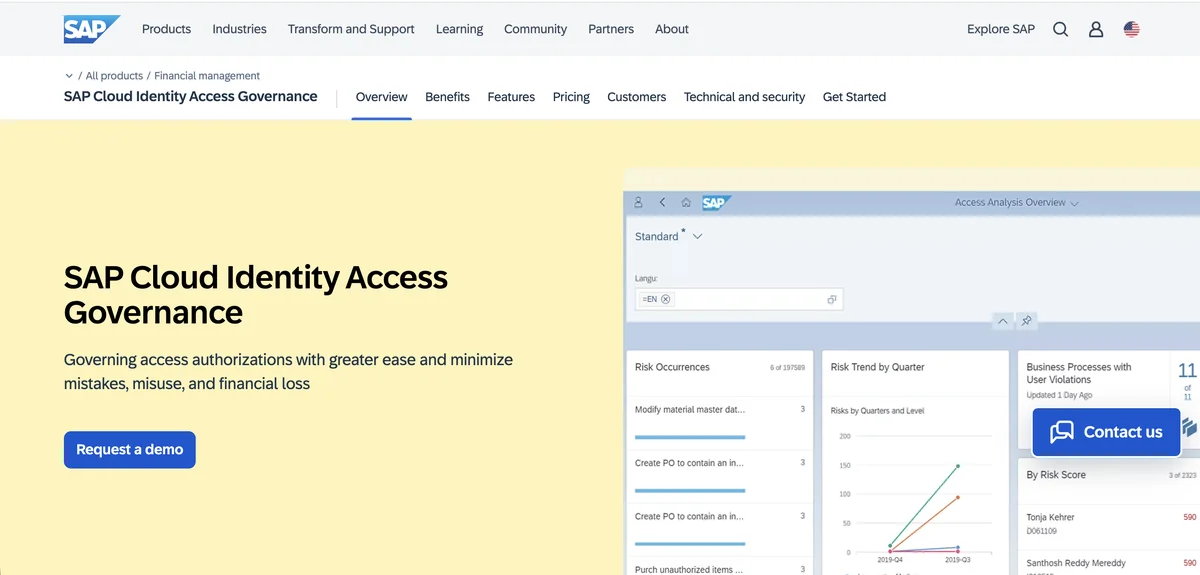
SAP Cloud Identity Access Governance targets enterprises already invested in the SAP ecosystem who need to extend governance beyond core SAP applications. The platform connects to non-SAP systems like Airtable through SCIM-based integrations and its cloud connector framework. For organizations running SAP alongside dozens of SaaS tools, this approach consolidates access reviews into a single governance layer rather than managing certifications tool by tool.
Access certification campaigns in SAP IAG support single roles, composite roles, and business roles with customizable review frequencies. The dashboard-driven interface shows campaign progress and highlights critical issues through visual prompts that help administrators track completion rates across the organization. Machine learning assists with role optimization by analyzing access patterns and suggesting streamlined permission structures that reduce over-provisioning.
The platform shines for companies with hybrid SAP landscapes spanning both cloud and on-premise deployments. The unique SAP Access Control-IAG Bridge lets organizations maintain existing on-premise GRC investments while extending governance to cloud applications including SaaS tools like Airtable. This hybrid capability is something competitors cannot match natively, though it comes with enterprise pricing and implementation complexity.
Pros:
- Strong compliance reporting with preconfigured templates for SOX and GDPR audits
- Machine learning optimizes role design and reduces access certification noise
- Hybrid bridge connects cloud governance to on-premise SAP GRC investments
Cons:
- Enterprise pricing puts it out of reach for small and mid-sized organizations
- No native Airtable connector requires custom SCIM integration work
- Steep learning curve demands specialized SAP knowledge for effective configuration
G2 Rating: 3.0 out of 5 (limited reviews)
Gartner Peer Insights: 4.4 out of 5 (114 reviews)
One Identity
One Identity provides enterprise-grade identity governance with over 6,000 pre-built application connectors through its Identity Manager and OneLogin components. The platform serves more than 11,000 organizations managing over 500 million identities globally, with particular strength in hybrid environments mixing on-premise Active Directory with cloud applications. Connecting Airtable would typically require a custom SCIM integration or routing through an identity provider that One Identity already supports.
The attestation policy framework in One Identity defines which objects get reviewed, when campaigns run, how often they recur, and who serves as the attestor for each access type. Certification types range from standard user attestation by managers to external user reviews and privileged access governance for administrative accounts. Every attestation step gets tracked in an audit-proof log that can be reconstructed during compliance examinations.
One Identity positions itself as a cost-effective alternative to SailPoint for enterprises needing unified IGA and privileged access management under one vendor. Customers report threefold reductions in manual IAM work through automation, and the platform’s high customizability lets organizations tailor attestation workflows without programming. The trade-off is a dated user interface for access certifications that multiple reviewers describe as not intuitive for end users.
Pros:
- Unified IGA and privileged access management reduces vendor sprawl
- Cost-effective compared to SailPoint and other enterprise IGA leaders
- High customizability allows complex attestation workflows without code
Cons:
- No native Airtable integration means custom connector development
- User interface for attestations feels outdated according to reviewers
- Steep learning curve requires dedicated IAM expertise and implementation partners
- Azure AD connector has known gaps in earlier platform versions
G2 Rating: 3.5 out of 5 (limited reviews)
Gartner Peer Insights: 4.4 out of 5 (155 reviews)
Avatier
Avatier takes a different approach with its containerized Identity Anywhere platform that can deploy on any cloud, on-premise, or in hybrid configurations. The platform offers over 90 pre-built connectors covering enterprise applications, directories, and cloud services, though Airtable would require a custom REST API integration. What Avatier lacks in native SaaS connectors it compensates for with deployment flexibility and competitive pricing that undercuts major IGA vendors.
Avatier deploys in 2-12 weeks, some implementations finishing in 14 days. Compare this to SailPoint at 12-18 months or One Identity requiring dedicated implementation partners and months of configuration.
The Delta Access Certification feature lets reviewers certify only objects that changed since the last audit rather than reviewing every user and permission again. This reduces reviewer fatigue significantly for organizations running quarterly access reviews where most entitlements remain static between cycles. Avatier also sends certification notifications through Teams, Slack, SMS, and mobile apps, letting managers complete access reviews from whatever platform they already use.
Customers consistently report 80-90% reductions in password and access-related help desk calls after deploying Avatier. The all-in-one platform bundles IGA, SSO, MFA, and password management together, which eliminates the integration overhead of stitching together point solutions from multiple vendors. For organizations evaluating total cost of ownership, Avatier claims 20-35% lower five-year TCO compared to Okta and potential 60% savings versus SailPoint.
Pros:
- Delta certification reviews only changed access, reducing reviewer workload
- All-in-one platform bundles IGA, SSO, and password management together
- Rapid deployment in weeks rather than months or years
Cons:
- No native Airtable connector requires custom REST API integration
- Limited analyst coverage without Gartner or Forrester recognition
- Smaller market presence means fewer community resources and third-party integrations
G2 Rating: 4.6 out of 5 (31 reviews)
TrustRadius: 9.1 out of 10
How to Choose
The right tool for Airtable access reviews depends on what else lives in your application portfolio and how much integration work you can absorb. Torii stands out as the only platform here with native Airtable connectivity that syncs user data, license status, and activity patterns without custom development. If your primary concern is governing SaaS applications alongside Airtable, the combined SaaS management and IGA approach eliminates the need for separate tools while surfacing license optimization opportunities during access reviews.
SAP Cloud IAG makes sense for organizations already running SAP applications who want consolidated governance across their entire landscape. The platform excels at hybrid SAP environments but requires enterprise budgets and specialized expertise that most mid-market teams cannot justify for SaaS governance alone. One Identity offers a cost-effective enterprise IGA alternative with strong hybrid capabilities, though the dated attestation interface and implementation complexity may frustrate teams without dedicated IAM staff.
For SaaS-centric organizations prioritizing Airtable visibility and shadow IT discovery, Torii provides the fastest path to actionable access reviews. Its AI-powered governance, automated license remediation, and native Airtable integration deliver value without custom connector work.
Avatier deserves consideration for organizations prioritizing deployment speed and total cost of ownership over native SaaS connectors. The containerized architecture avoids cloud vendor lock-in, and the Delta certification feature reduces ongoing reviewer burden. Building a custom Airtable integration adds upfront work, but the platform’s lower long-term costs may justify that investment for teams comfortable with REST API development.
Frequently Asked Questions
Periodic Airtable access reviews prevent unnoticed license and compliance costs by identifying inactive or over-provisioned editors. With Business seats at $45 monthly billed annually, an overlooked editor can cost about $540 per year, and deactivated users may still own bases unless removed.
Airtable enforces access at workspace and base levels with roles from owner to read-only. There is no field-level or section-specific permission granularity, so users granted base access can view all contained data unless you separate content across distinct workspaces.
Third-party platforms fill governance gaps by syncing user data, license status, and activity via API or SSO logs. They automate discovery, route certification campaigns to stakeholders, log attestation actions for audits, and recommend reclaiming unused seats to optimize costs.
Torii provides a native Airtable integration that consolidates API, SSO, and browser-extension signals to discover sanctioned and shadow users. It runs attestations through Slack or email, tracks usage patterns for license optimization, and unifies SaaS management with identity governance.
Choose SAP Cloud IAG if you need enterprise SAP-integrated governance and hybrid on-premise support. Pick One Identity for a customizable hybrid IGA alternative on a tighter budget. Consider Avatier when rapid deployment, Delta certification, and lower long-term TCO matter more than native connectors.
Regular certifications identify inactive editors and over-provisioned seats so IT can reclaim licenses and adjust permissions. Automated tools surface usage trends and license optimization opportunities, helping teams lower SaaS spend while maintaining compliance and eliminating hidden ownership risks.